



Saying good-bye to cable television

[email protected] (Brian X Chen)
October 24, 2016

Consider what's faced by people who want to end their TV subscriptions — what's known as cutting the cable cord. There are multiple streaming services and bills to juggle. And there are numerous streaming gadgets to choose from.
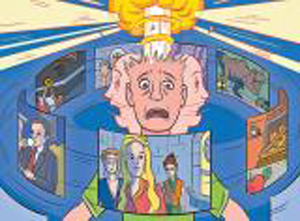
cableSo to make moving away from cable cords easier, we teamed up with the Wirecutter, the product recommendations website, to compile the definitive guide to cord-cutting. The Wirecutter tested services, streaming devices and antennas to come up with cord-cutter bundles for different types of people in 2016: movie buffs, sports addicts, fans of premium TV shows, binge watchers and families with children.

For movie buffsFor movie buffs, plenty of cord-cutting options will make any transition painless. Netflix, Amazon and Hulu all have large film libraries for streaming — Amazon's alone holds 18,400 titles, though the selection regularly changes because of agreements with content providers.

Netflix's library has shrunk over time; the company is no longer trying to offer the glut of back-catalogue movies that every service seems to have. But Netflix has tried to compensate by focusing on movies it has exclusive licenses to, including those from Disney, Marvel, Pixar and Lucas film.

Amazon focuses more on quantity, but without the exclusive titles the other services offer. Amazon, iTunes, the Google Play store and Vudu usually get digital versions of recent movies that can be purchased for $15 (Rs 1,001) to $20 (Rs 1,334), or rented for about $5 (Rs 333), even before they're available on disc.

For most people, Netflix will offer the best selection of new movies and original programming — and Google, Amazon or Apple will offer the best selection for rentals or purchases. n Best Service: Netflix plus a la carte rentals/purchases ($8 or Rs 533 to $12 or Rs 800/month)n Best Hardware: Roku Streaming Stick ($50 or Rs 3,336)n Most Affordable: Roku Streaming Stickn Also Works With: Apple TV ($149 or Rs 9,943), other Roku models

For sports addictsA subscription to either PlayStation Vue or Sling TV gets you ESPN and Fox Sports 1, depending on the package. And each system offers additional sports channels, depending on your interests.

You may also want to watch over-the-air broadcast channels, especially for NFL games. Most televisions have a built-in over-the-air tuner that brings in local major networks (ABC, CBS, Fox and NBC) using your TV hardware and an inexpensive antenna, such as the Antennas Direct ClearStream Eclipse ($40 or 2,669).

n Best Service: PlayStation Vue ($30 or Rs 2,002 to $45 or Rs 3,003/month)n Best Hardware: Fire TV ($40 or 2,669 to $100 or Rs 6,673) or Google Chromecast ($35 or Rs 2,335)n Most Affordable: Google Chromecastn Also Works With: Apple TV ($149 or Rs 9,943), Roku ($50 or Rs 3,336)

Premium network showsNo problem. HBO, Showtime and Starz can all be viewed on a phone, tablet or streaming device with a direct subscription — no cable or satellite subscription or long-term contract required. That allows access to each network's original programming and the movies each is showing, and you can watch from anywhere.

n Best Hardware: Roku Streaming Stick ($50 or Rs 3,336)n Most Affordable: Roku Streaming Stick or Google Chromecast ($35 or Rs 2,335)n Also Works With: Apple TV ($149 or Rs 9,943), other Roku models

For TV binge watchersNetflix and Amazon Instant Video are your best bets to binge-watch television shows. Each offers award-winning original content, including “House of Cards,” “Orange Is the New Black,” “Master of None,” “Unbreakable Kimmy Schmidt” and “Making a Murderer” on Netflix; and on Amazon, “Transparent,” “Mozart in the Jungle” and “The Man in the High Castle.”

All episodes are released online at once. Each service also carries recent TV series, like “Better Call Saul” and “Mr Robot,” shortly after the DVD release date. If you don't want to wait, you can usually purchase a “season pass” for current TV shows through iTunes, Amazon or Google Play at a cost of $20 or Rs 1,334 to $30 or Rs 2,002 per season usually. Google Play is generally the least expensive, offering savings of around 15 to 25 percent — and watch new episodes the day they're aired on TV. Hulu Plus focuses on current TV seasons, letting you watch them right after they air instead of when the season has ended. But it lacks many current popular shows.

n Best Service: Netflix ($8 or Rs 533 to $12 or Rs 800/month) or Amazon ($99 or Rs 6,606/year), or a la carte seasonsn Best Hardware: Roku Streaming Stick ($50 or Rs 3,336)n Most Affordable: Roku Streaming Stick

Also Works With: Fire TV ($40 or 2,669 to $100 or Rs 6,673), other Roku Models, Apple TV ($149 — Google and Amazon require an iOS or macOS device)

For children and familiesNetflix offers a wide selection of content, both educational and entertaining, along with original children's programming like the recent “Voltron” reboot. It also offers the option to create a children's profile that lets you limit viewing to particular ratings or age levels. In addition, Netflix has a new partnership with Disney that will make more Disney films available for streaming.

PBS Kids Now lets you stream recent episodes of PBS shows, and the selection is updated every week with the latest episodes of most shows. Amazon Instant Video also has children's content and its own custom children's programming, as well as FreeTime Unlimited, a selection of curated shows, apps and games for children for a monthly fee ($3 or Rs 200 for Amazon Prime members, $5 or Rs 333 for non members). However, FreeTime Unlimited is available only on Amazon's own hardware.

Sling TV also offers a children's package for those who want to stream Nick Jr., Disney Channel, Disney Junior, Cartoon Network and more.

n Best Service: Netflix ($8 or Rs 533 to $12 or Rs 800/month)n Best Hardware: Roku Streaming Stick ($50 or Rs 3,336)n Most Affordable: Roku Streaming Stick (except for FreeTime Unlimited), Amazon Fire TV ($40 or 2,669 to $100 or Rs 6,673)n Also Works With: Apple TV ($149 or Rs 9,943), other Roku models

Why it still isn't perfectThere are still downsides to cord-cutting. JD Power & Associates, a research firm that collects feedback on brands and products from consumers, said two factors made cord cutters less satisfied: customer care and value, according to J D Power.For customer care, cord cutters may run into problems more often than traditional TV subscribers, said Kirk Parsons, a senior director of telecommunications research at J D Power. The streaming content provider may be experiencing issues. Your Wi-Fi connection might be spotty, or your internet provider may be experiencing issues. It's tough to tell.

For value, cutting the cord isn't very cheap if you then subscribe to multiple services to gain access to a diverse set of content. For cable subscribers, paying one bill is less of a hassle than juggling multiple bills. And even after you subscribe to multiple streaming services, there is still some content that you may miss out on because it is available only via cable or satellite.

Comments

Add new comment

  • Coastaldigest.com reserves the right to delete or block any comments.
  • Coastaldigset.com is not responsible for its readers’ comments.
  • Comments that are abusive, incendiary or irrelevant are strictly prohibited.
  • Please use a genuine email ID and provide your name to avoid reject.
Agencies
July 25,2020

In a study conducted in 117 countries, researchers have found that the world is experiencing the most dramatic reduction in the seismic noise (the hum of vibrations in the planet's crust) in recorded history due to global COVID-19 lockdowns.

Measured by instruments called seismometers, seismic noise is caused by vibrations within the Earth, which travel like waves and the waves can be triggered by earthquakes, volcanoes, and bombs - but also by daily human activity like travel and industry.

This quiet period was likely caused by the total global effect of social distancing measures, closure of services and industry, and drops in tourism and travel, the study published in the journal Science, reported.

The new research, led by the Royal Observatory of Belgium and five other institutions around the world including Imperial College London (ICL), showed that the dampening of 'seismic noise' caused by humans was more pronounced in more densely populated areas.

"Our study uniquely highlights just how much human activities impact the solid Earth, and could let us see more clearly than ever what differentiates human and natural noise," said study co-author Stephen Hicks from ICL in the UK.

For the findings, the research team looked at seismic data from a global network of 268 seismic stations in 117 countries and found significant noise reductions compared to before any lockdown at 185 of those stations.

Researchers tracked the 'wave' of quietening between March and May as worldwide lockdown measures took hold.

The largest drops in vibrations were seen in the most densely populated areas, like Singapore and New York City, but drops were also seen in remote areas like Germany's the Black Forest and Rundu in Namibia.

Citizen-owned seismometers, which tend to measure more localised noise, noted large drops around universities and schools around Cornwall, UK and Boston, US - a drop in noise 20 per cent larger than seen during school holidays.

The findings showed that countries like Barbados, where lockdown coincided with the tourist season, saw a 50 per cent decrease in noise.

"The changes have also given us the opportunity to listen in to the Earth's natural vibrations without the distortions of human input," the study authors wrote.

Earlier in April, a study published in the journal Nature, reported at least a 30 per cent reduction in that amount of ambient human noise since lockdown began in Belgium.

Comments

Add new comment

  • Coastaldigest.com reserves the right to delete or block any comments.
  • Coastaldigset.com is not responsible for its readers’ comments.
  • Comments that are abusive, incendiary or irrelevant are strictly prohibited.
  • Please use a genuine email ID and provide your name to avoid reject.
Agencies
May 17,2020

As millions of people get hooked to online dating platforms, their proliferation has led to online romance scams becoming a modern form of fraud that have spread in several societies along with the development of social media like Facebook Dating, warn researchers.

For example, extra-marital dating app Gleeden has crossed 10 lakh users in India in COVID-19 times while dating apps like Tinder and Bumble have gained immense popularity.

According to researchers from University of Siena and Scotte University Hospital led by Dr Andrea Pozza, via a fictitious Internet profile, the scammer develops a romantic relationship with the victim for 6-8 months, building a deep emotional bond to extort economic resources in a manipulative dynamic.

"There are two notable features: on the one hand, the double trauma of losing money and a relationship, on the other, the victim's shame upon discovery of the scam, an aspect that might lead to underestimation of the number of cases," the authors wrote in a paper published in the journal Clinical Practice & Epidemiology in Mental Health.

Around 1,400 dating sites/chats have been created over the last decade in North America alone. In the UK, 23 per cent of Internet users have met someone online with whom they had a romantic relationship for a certain period and even 6 per cent of married couples met through the web.

"The online dating industry has given rise to new forms of pathologies and crime, said the authors.

The results showed that 63 per cent of social media users and 3 per cent of the general population reported having been a victim at least once.

Women, middle-aged people, and individuals with higher tendencies to anxiety, romantic idealization of affective relations, impulsiveness and susceptibility to relational addiction are at higher risk of being victims of the scam.

Online romance scams are, in other words, relationships constructed through websites for the purpose of deceiving unsuspecting victims in order to extort money from them.

The scammer always acts empathetically and attempts to create the impression in the victim that the two are perfectly synced in their shared view of life.

"The declarations of the scammer become increasingly affectionate and according to some authors, a declaration of love is made within two weeks from initial contact," the study elaborated.

After this hookup phase, the scammer starts talking about the possibility of actually meeting up, which will be postponed several times due to apparently urgent problems or desperate situations such as accidents, deaths, surgeries or sudden hospitalizations for which the unwitting victim will be manipulated into sending money to cover the momentary emergency.

Using the strategy of "testing-the-water", the scammer asks the victim for small gifts, usually to ensure the continuance of the relationship, such as a webcam, which, if successful, leads to increasingly expensive gifts up to large sums of money.

When the money arrives from the victim, the scammer proposes a new encounter.

The request for money can also be made to cover the travel costs involved in the illusory meeting. In this phase, the victim may start having second thoughts or showing doubt about the intentions of the partner and gradually decide to break off the relationship.

"In other cases, the fraudulent relationship continues or even reinforces itself as the victim, under the influence of ambivalent emotions of ardor and fear of abandonment and deception, denies or rationalizes doubts to manage their feelings," said the study.

In some cases, the scammer may ask the victim to send intimate body photos that will be used as a sort of implicit blackmail to further bind the victim to the scammer.

Once the scam is discovered, the emotional reaction of the victim may go through various phases: feelings of shock, anger or shame, the perception of having been emotionally violated (a kind of emotional rape), loss of trust in people, a sensation of disgust towards oneself or the perpetrator of the crime and a feeling of mourning.

"Understanding the psychological characteristics of victims and scammers will allow at-risk personality profiles to be identified and prevention strategies to be developed," the authors suggested.

Comments

Add new comment

  • Coastaldigest.com reserves the right to delete or block any comments.
  • Coastaldigset.com is not responsible for its readers’ comments.
  • Comments that are abusive, incendiary or irrelevant are strictly prohibited.
  • Please use a genuine email ID and provide your name to avoid reject.
Agencies
April 17,2020

New Delhi, Apr 17: The Indian Railways turned 167 years old on Thursday and for the first time ever, its trains did not carry any passengers on its birthday and instead stood idle in the yards waiting for the nationwide lockdown to end.

On this day 167 years ago, the wheels of the first passenger train in the country from Mumbai to Thane started rolling.

In 1974, Indians experienced life without trains for the first time. In May 1974 during the strike of the railways that lasted for around three weeks, drivers, station masters, guards, track staff and many others went on 'chakka jam' demanding fixed working hours for train drivers and an across-the-board pay hike.

"I can recall those times vividly. I remember that our leader George Fernandes had almost secured a deal with the then railway minister, but it fell through when it was taken to the then Prime Minister Indira Gandhi," All India Railwaymens Federation General Secretary Shiv Gopal Mishra, who was an apprentice in the railways at that time, told PTI.

"Fernandes was arrested in Lucknow. The workers went through a lot at that time. But those were days that angry workers had refused to give in and took great risks to get their demands met," he said.

However, just like this time, four decades ago too freight trains carrying essential supplies were run and the unions agreed to let some passenger trains run on the trunk routes like the Kalka Mail from Howrah to Delhi.

"Never ever in its history, there has been such a long interruption of services. Not during the World Wars, not during the 1974 railway strike, or any other national calamity or natural disaster," a railway spokesperson said.

The first Indian Railways passenger train was flagged off on April 16, 1853, from Mumbai to nearby Thane.

On Thursday, the Railway Ministry wished the railways a happy birthday on Twitter - "Today, 167 years ago with the zeal of 'never to stop' the wheels of the first passenger train from Mumbai to Thane started rolling. For the first time, passenger services are stopped for your safety. Stay indoors & make the nation victorious," it said.

Railway has suspended all passenger services since March 25 till May 3 due to the coronavirus outbreak. Around 15,523 trains run by the railways have been affected including 9,000 passenger trains and 3,000 mail express services which are run daily. It caters to over 20 million passengers every day.

According to the Union health ministry, the death toll due to coronavirus rose to 414 and the number of cases to 12,380 in the country on Thursday.

Comments

Add new comment

  • Coastaldigest.com reserves the right to delete or block any comments.
  • Coastaldigset.com is not responsible for its readers’ comments.
  • Comments that are abusive, incendiary or irrelevant are strictly prohibited.
  • Please use a genuine email ID and provide your name to avoid reject.