SC revokes ban on sale of Saridon

Agencies
September 18, 2018

New Delhi, Sep 18: The Supreme Court has temporarily revoked the ban imposed on the sale of Saridon, an analgesic for headaches.

Saridon was one among 328 drugs, which were banned by the Central government recently. These were Fixed Dose Combinations (FDCs) which were banned by the Centre to stop irrational use.

A bench of Justice Rohinton Nariman and Justice Indu Malhotra temporarily allowed the sale of Saridon, and two other drugs after the drug makers challenged recent notification issued by the Centre prohibiting the manufacture and sale of 328 FDCs.

On September 7, the Ministry of Health and Family Welfare had issued a notification prohibiting the manufacture and sale of FDCs, which has a fixed dose combination of two or more compounds. 

Comments

Add new comment

  • Coastaldigest.com reserves the right to delete or block any comments.
  • Coastaldigset.com is not responsible for its readers’ comments.
  • Comments that are abusive, incendiary or irrelevant are strictly prohibited.
  • Please use a genuine email ID and provide your name to avoid reject.
Dr G K Sudhakar Reddy
August 4,2020

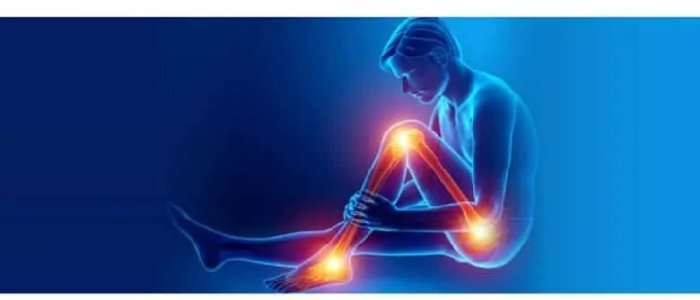
Being overweight or obese is now recognised as a serious cause of ill health and disability. There is a significant positive association between orthopaedic disorders and the level of obesity causing pain, deformity and difficulty in walking.

Excess body weight accumulation increases pressure on joints, particularly the hips, knees and ankles.

Here are a few type of  arthritis:

Osteoarthritis

It is a condition of damage/ wear and tear of the joint lining or cartilage. Obesity triggers this by loading excessive weight on the weight bearing joints like the knee and the hip. 

Knee Osteoarthritis

This is the most common arthritis especially in the Indian subcontinent.

While walking, an individual exerts 3 to 6 times pressure that of the body weight on the weight-bearing knee joint, which means in an obese with excess body weight, larger forces are exerted, which lead to higher risk of deterioration of cartilage.

In addition, there are excessive fat tissues that produce hormones and other factors that affect the joint cartilage metabolism and cause inflammation of the joints giving rise to joint pathology.  Leptin is one of the hormones causing knee osteoarthritis. 

Hip osteoarthritis

The force exerted across the hip is 3 times that of body weight. Hip osteoarthritis is caused by factors such as joint injury, increasing age and being overweight.    

Hand osteoarthritis

The observation that obese individual has a higher risk in having hand osteoarthritis has led to a hypothesis that the metabolic effect produced by fat tissue is the underlying factor. 

Osteoporosis

It is a progressive bone condition of decrease in bone mass and density (Bone Mineral Density or BMD) which can lead to an increased risk of fracture. Recent research suggests that obesity may accelerate bone loss. It is the amount of muscle mass which is seen in an active person, which accounts for bone strengthening effects and not due to the fat seen in a heavy person.

Low back pain

Low back pain from degenerative disc disease of the lumbar spine is one of the most disabling conditions in the community and overweight and obesity have the strongest association with seeking care for low back pain.

Managing Hip and Knee Osteoarthritis

Life style changes

If one is overweight, try to lose weight by doing more physical activity and eating a healthier diet. Regular exercise keeps you active and mobile and builds up muscle, thereby strengthening the joints and can improve symptoms. 

Pain Killers

Painkillers help with pain and stiffness for short term. They don’t affect the arthritis itself and won’t repair the damage to your joint. Creams and gels can be applied directly onto painful joints.

Nutritional Supplements

Glucosamine and chondroitin are nutritional supplements. Animal studies have found that glucosamine can both delay the breakdown of and repair damaged cartilage. However, there is insufficient evidence to support the use of glucosamine in humans and one can expect only a mild-to-moderate reduction in pain

Joint injections

If pain from osteoarthritis is severe joint steroid injections are injected into the joints that can reduces swelling and pain. The injections can start working within a day or so and may improve pain for several weeks or months. 

Hyaluronic acid injections, which help to lubricate your knee joint also give short term relief. In early stages. Stem cell treatment or cartilage regeneration procedures are being tried in young people with small defects, however it is still experimental and lacks long term evidence.

Surgery

May be recommended if you have severe pain or mobility problems.

Arthroscopy

If one has frequent painful locking/stiffening episodes especially in the knee joint, an operation to wash out loose fragments of bone and other tissue as joint can be performed by a minimally invasive key hole procedure called Arthroscopy.

Arthrodesis

If hip or knee replacement is not suitable, especially in young people who do heavy manual work, one can consider an operation known as an arthrodesis, which fuses your joint in a permanent position. This means that your joint will be stronger and much less painful, although you will no longer be able to move it.

Osteotomy

In young, active people in whom a knee joint replacement would fail due to excessive use one can consider an operation called an osteotomy. This involves adding or removing a small section of bone either above or below your knee joint.  This helps realign your knee so your weight is no longer focused on the damaged part of your knee. An osteotomy can relieve your symptoms of osteoarthritis, although you may still need knee replacement surgery eventually as you grow old

Joint replacement surgery

Joint replacement therapy is most commonly carried out to replace hip and knee joints. It involves replacing a damaged, worn or diseased joint with an artificial joint made of special plastics and metal.

For most people, a replacement hip or knee will last for at least 20 years, especially if it is cared for properly and not put under too much strain.

Dr G K Sudhakar Reddy is a Sr Consultant Orthopaedic Surgeon at Citizens Speciality Hospitals, Hyderabad


Comments

Add new comment

  • Coastaldigest.com reserves the right to delete or block any comments.
  • Coastaldigset.com is not responsible for its readers’ comments.
  • Comments that are abusive, incendiary or irrelevant are strictly prohibited.
  • Please use a genuine email ID and provide your name to avoid reject.
Agencies
July 7,2020

The World Health Organization (WHO) is reviewing a report that suggested its advice on the novel coronavirus needs updating after some scientists told the New York Times there was evidence the virus could be spread by tiny particles in the air.

The WHO says the Covid-19 disease spreads primarily through small droplets, which are expelled from the nose and mouth when an infected person breaths them out in coughs, sneezes, speech or laughter and quickly sink to the ground.

In an open letter to the Geneva-based agency, 239 scientists in 32 countries outlined the evidence they say shows that smaller exhaled particles can infect people who inhale them, the newspaper said on Saturday.

Because those smaller particles can linger in the air longer, the scientists - who plan to publish their findings in a scientific journal this week - are urging WHO to update its guidance, the Times said.

"We are aware of the article and are reviewing its contents with our technical experts," WHO spokesman Tarik Jasarevic said in an email reply on Monday to a Reuters request for comment.

The extent to which the coronavirus can be spread by the so-called airborne or aerosol route - as opposed to by larger droplets in coughs and sneezes - remains disputed.

Any change in the WHO's assessment of the risk of transmission could affect its current advice on keeping one-metre physical distancing. Governments, which also rely on the agency for guidance policy, may also have to adjust public health measures aimed at curbing the spread of the virus.

"Especially in the last couple of months, we have been stating several times that we consider airborne transmission as possible but certainly not supported by solid or even clear evidence," Benedetta Allegranzi, the WHO's technical lead for infection prevention and control, was quoted as saying in the New York Times.

WHO guidance to health workers, dated June 29, says that SARS-CoV-2, the virus that causes Covid-19, is primarily transmitted between people through respiratory droplets and on surfaces.

But airborne transmission via smaller particles is possible in some circumstances, such as when performing intubation and aerosol-generating procedures, it says.

Medical workers performing such procedures should wear heavy-duty N95 respiratory masks and other protective equipment in an adequately ventilated room, the WHO says.

Officials at South Korea's Centers for Disease Control said on Monday they were continuing to discuss various issues about Covid-19, including the possible airborne transmission. They said more investigations and evidence were needed.

Comments

Add new comment

  • Coastaldigest.com reserves the right to delete or block any comments.
  • Coastaldigset.com is not responsible for its readers’ comments.
  • Comments that are abusive, incendiary or irrelevant are strictly prohibited.
  • Please use a genuine email ID and provide your name to avoid reject.
Agencies
May 17,2020

Geneva, May 17: Spraying disinfectant on the streets, as practised in some countries, does not eliminate the new coronavirus and even poses a health risk, the World Health Organization (WHO) warned on Saturday.

In a document on cleaning and disinfecting surfaces as part of the response to the virus, the WHO says spraying can be ineffective. "Spraying or fumigation of outdoor spaces, such as streets or marketplaces, is... not recommended to kill the Covid-19 virus or other pathogens because disinfectant is inactivated by dirt and debris," explains the WHO.

"Even in the absence of organic matter, chemical spraying is unlikely to adequately cover all surfaces for the duration of the required contact time needed to inactivate pathogens." The WHO said that streets and pavements are not considered as "reservoirs of infection" of Covid-19, adding that spraying disinfectants, even outside, can be "dangerous for human health".

The document also stresses that spraying individuals with disinfectants is "not recommended under any circumstances".

"This could be physically and psychologically harmful and would not reduce an infected person's ability to spread the virus through droplets or contact," said the document.

Spraying chlorine or other toxic chemicals on people can cause eye and skin irritation, bronchospasm and gastrointestinal effects, it adds.

The organisation is also warning against the systematic spraying and fumigating of disinfectants on to surfaces in indoor spaces, citing a study that has shown it to be ineffective outside direct spraying areas.

"If disinfectants are to be applied, this should be done with a cloth or wipe that has been soaked in disinfectant," it says.

The SARS-CoV-2 virus, the cause of the pandemic that has killed more than 300,000 people worldwide since its appearance in late December in China, can attach itself to surfaces and objects.

However, no precise information is currently available for the period during which the viruses remain infectious on the various surfaces.

Studies have shown that the virus can stay on several types of surfaces for several days. However, these maximum durations are only theoretical because they are recorded under laboratory conditions and should be "interpreted with caution" in the real-world environment.

Comments

Add new comment

  • Coastaldigest.com reserves the right to delete or block any comments.
  • Coastaldigset.com is not responsible for its readers’ comments.
  • Comments that are abusive, incendiary or irrelevant are strictly prohibited.
  • Please use a genuine email ID and provide your name to avoid reject.

