


Aakash 3 may come with SIM slot, more exciting apps

January 1, 2013

New Delhi, Jan 1: The third version of low cost tablet "Aakash" will be a delight for its users as developers are likely to equip it with a SIM slot and more exciting apps, all within the existing price band.

About 50 lakh "Aakash 3" tablets are expected to be rolled out in the next phase, the global tender for which may be floated in February, 2013.

According to committee members engaged in developing the third version of Aakash, the endeavour will be to make the product as indigenous as possible and involve multiple vendors.aakash
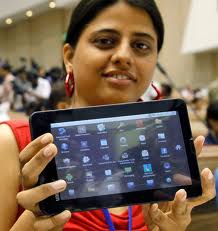
“Our ultimate aim is to imbibe the usage of tablets in the education system and create an ecosystem for this,” said Deepak B. Phatak, committee member and professor in IIT- Bombay"s Department of Computer Science and Engineering.

According to Mr. Phatak, computer giants world over are amazed with the device and there is a keen interest among several vendors to participate in this venture.

Aakash 3 will have a faster processor supporting both Linux and Android operating systems and come with advanced memory, he said.

“It could also have a SIM card slot so that people can use it as a communication device,” Mr. Phatak said.

Apart from Mr. Phatak, Prof Ashok Jhunjhunwala of IIT-Madras along with hundreds of students and other partners are also involved in making the new Aakash 3.

One of the aims of students involved in the project is to develop an application for the tablet that can tell pulse rate among many others.

It will also have a larger distribution and servicing system so that owners can get their tablets repaired locally.

Playing down controversies suggesting that several of the tablet"s components were of Chinese make, Mr. Phatak said emphasis has been placed on adding value to the product with the objective of enhancing its efficacy among students.

He also suggested two models for Aakash 3 — one for schools and the other for colleges.

The most recent version, Aakash 2, developed by IIT-Bombay along with C-DAC (Centre for Development of Advanced Computing), was launched by President Pranab Mukherjee in November.

The tablet is available for students at subsidised rate of Rs. 1,130 while the government purchases it at Rs. 2,263.

Comments

Add new comment

  • Coastaldigest.com reserves the right to delete or block any comments.
  • Coastaldigset.com is not responsible for its readers’ comments.
  • Comments that are abusive, incendiary or irrelevant are strictly prohibited.
  • Please use a genuine email ID and provide your name to avoid reject.
Agencies
May 22,2020

Kochi, May 22: During the nationwide COVID-19 lockdown, Kerala recorded the highest number of cyber attacks followed by Punjab and Tamil Nadu, a study by anti-virus software firm K7 Computing said on Thursday.

In a statement issued in Chennai, the company said its K7 Computing's Cyber Threat Report, a comprehensive analysis of cyber attacks during the lockdown has found that Kerala recorded the highest number of cyber attacks during this period. The report analyses various cyber attacks within India during the pandemic and reveals that threat actors targeted the state with COVID-themed attacks aimed at exploiting user trust.

In Kerala, regions like Kottayam, Kannur, Kollam, and Kochi saw the highest hits with 462, 374, 236, and 147 attacks respectively, while the state as a whole saw around 2,000 attacks during the period - the highest thus far in the country.

This was followed by Punjab with 207 attacks and Tamil Nadu with 184 attacks, the company said.

The sudden surge in the frequency of attacks witnessed from February 2020 to mid-April 2020 indicates that scamsters across the world were exploiting the widespread panic around coronavirus at both the individual and corporate level.

These attacks aimed to compromise computers and mobile devices to gain access to users' confidential data, banking details, and cryptocurrency accounts.

The key threats seen during this period ranged from phishing attacks to rogue apps disguised as COVID-19 information apps that targeted users' sensitive data. Phishing attacks were noticed more in Tier-II and Tier-III cities while the metros fared better. Smaller cities saw over 250 attacks being blocked per 10,000 users.

Users from Ghaziabad and Lucknow seem to have faced almost 6 and 4 times the number of attacks as Bengaluru users.

According to the statement, a majority of the recorded attacks were phishing attacks with sophisticated campaigns that could easily snare even the most educated users. These attacks were aimed at heightening users' fears and creating a sense of urgency to take action.

K7 Labs noticed phishing attacks where scamsters posed as representatives of the United States Department of Treasury, the World Health Organization (WHO), and the Centres for Disease Control and Prevention (CDC), the company said.

Users were encouraged to visit links that would automatically download malware on the host computer such as the Agent Tesla keylogger or Lokibot information-stealing malware, infamous banking Trojans such as Trickbot or Zeus Sphinx, and even disastrous ransomware.

Other attacks included infected COVID-19 Android apps like CoronaSafetyMask that scam users with promises of masks for an upfront payment; the spyware app Project Spy; and seemingly genuine apps that are infected with dangerous malware like banking Trojans such as Ginp, Anubis and Cerberus.

"Covid-19 has created an ideal situation for various threat actors to target individuals and enterprises alike. The panic caused by the stringent lockdown measures and rapid spread of this virus has left many people looking for more information on the situation," J. Kesavardhanan, Founder and CEO of K7 Computing was quoted as saying in the statement.

"Threat actors exploit this fear to their advantage and scam users into downloading malicious software and divulging sensitive information like banking codes. The need to be cyber cautious has never been greater. This is more so in the case of corporates who have adopted a work from home policy hurriedly without adequate cyber hygiene. We have seen an increase in attacks on enterprises and SME employees as well," he added.

Such attacks are expected to continue till normalcy returns. Social engineering attacks targeted at winning users' trust will gain momentum.

Healthcare institutions, well-known government offices, and international organisations will continue to be a prime target throughout the pandemic, the statement said.

Comments

Add new comment

  • Coastaldigest.com reserves the right to delete or block any comments.
  • Coastaldigset.com is not responsible for its readers’ comments.
  • Comments that are abusive, incendiary or irrelevant are strictly prohibited.
  • Please use a genuine email ID and provide your name to avoid reject.
Agencies
May 10,2020

In the wake of the gas leak at a factory in Visakhapatnam, the National Disaster Management Authority (NDMA) has issued detailed guidelines for restarting industries after the lockdown and the precautions to be taken for the safety of the plants as well as the workers.

In a communication to all states and union territories, the NDMA said due to several weeks of lockdown and the closure of industrial units, it is possible that some of the operators might not have followed the established standard operating procedures.

As a result, some of the manufacturing facilities, pipelines, valves may have residual chemicals, which may pose risk. The same is true for the storage facilities with hazardous chemicals and flammable materials, it said.

The NDMA guidelines said while restarting a unit, the first week should be considered as the trial or test run period after ensuring all safety protocols.

Companies should not try to achieve high production targets. There should be 24-hour sanitisation of the factory premises, it said.

The factories need to maintain a sanitisation routine every two-three hours especially in the common areas that include lunch rooms and common tables which will have to be wiped clean with disinfectants after every single use, it added.

For accommodation, the NDMA said, sanitisation needs to be performed regularly to ensure worker safety and reduce the spread of contamination.

To minimise the risk, it is important that employees who work on specific equipment are sensitised and made aware of the need to identify abnormalities like strange sounds or smell, exposed wires, vibrations, leaks, smoke, abnormal wobbling, irregular grinding or other potentially hazardous signs which indicate the need for immediate maintenance or if required shutdown, it said.

At least 11 people lost their lives and about 1,000 others were exposed to a gas leak at a factory in Andhra Pradesh''s Visakhapatnam on May 7.

The incident took place after it restarted operations when the government allowed industrial activities in certain sectors following several weeks of lockdown.

The lockdown was first announced by Prime Minister Narendra Modi on March 24 for 21 days in a bid to combat the coronavirus threat. The lockdown was then extended till May 3 and again till May 17.

Comments

Add new comment

  • Coastaldigest.com reserves the right to delete or block any comments.
  • Coastaldigset.com is not responsible for its readers’ comments.
  • Comments that are abusive, incendiary or irrelevant are strictly prohibited.
  • Please use a genuine email ID and provide your name to avoid reject.
Agencies
March 10,2020

New Delhi, Mar 10: Crisis-hit Yes Bank on Tuesday said that it has enabled inward IMPS and NEFT services.

The move allows people to send money from other bank accounts to their Yes Bank account through IMPS (Immediate Payment Service) and NEFT (National Electronic Funds Transfer) mode.

In a tweet, the bank also said that Yes Bank customers can pay their credit card dues and loan obligations from other bank accounts.

"Inward IMPS/NEFT services have now been enabled. You can make payments towards YES BANK Credit Card dues and loan obligations from other bank accounts. Thank you for your co-operation. @RBIA @FinMinIndia," said tweet.

Last week Yes Bank was placed under moratorium and a withdrawal cap of Rs 50,000 was imposed till April 3.

The administrator of Yes Bank, Prashant Kumar and Rajnish Kumar, the Chairman of the State Bank of India are hopeful that moratorium would be lifted within a week.

As per the Reserve Bank of India (RBI) draft reconstruction scheme for the crisis-hit private lender, the SBI will take up 49 per cent in the bank by investing Rs 2,450 crore.

The new board of directors will stand constituted from the appointed date. It will comprise a CEO and MD, non-executive chairman and non-executive directors. The SBI will have nominee directors appointed on the board of the reconstructed bank.

The RBI may appoint additional directors to the board, who shall continue in office for one year, or until an alternate board is constituted by Yes Bank.

The SBI will not reduce its holding below 26 per cent before completion of three years from the date of infusion of the capital.

Comments

Add new comment

  • Coastaldigest.com reserves the right to delete or block any comments.
  • Coastaldigset.com is not responsible for its readers’ comments.
  • Comments that are abusive, incendiary or irrelevant are strictly prohibited.
  • Please use a genuine email ID and provide your name to avoid reject.