



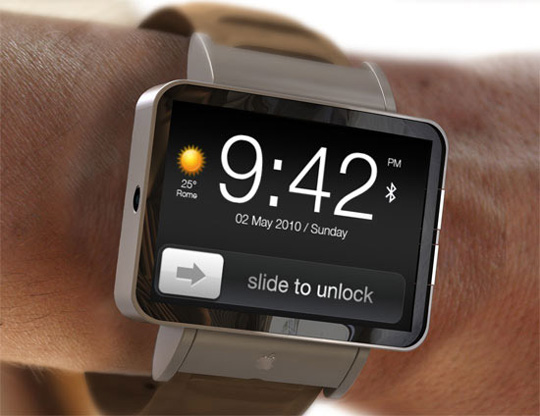
 The gadget industry seems to have decided that 2013 will be the year of the smartwatch, says David Pogue.
Every time you look, our computers have moved closer to us. In the beginning, they existed only in corporate headquarters. Then came the desktop PC – three feet away. Then the laptop – one foot. Then the smartphone – in our pockets. What"s next – computers on our wrists?
The central idea is sound. You already have an iPhone or Android phone. Wouldn"t it be neat if your watch could communicate with it wirelessly?
Imagine: the watch could beep or vibrate whenever you get an incoming call, text message or email. No more, “Sorry I didn"t get your call; my phone was in my backpack.” No more fumbling for your phone when that would be inconvenient or unsafe – like while you"re skiing, skateboarding or driving.
These watches can also make your phone beep loudly when it"s lost in the house. That"s much quicker than using Find My iPhone, which involves logging into a website.
They can also serve as a digital “leash”: if you wander away, accidentally leaving your phone on some restaurant table, the watch buzzes to warn you.
I tested the Meta Watch ($180 or Rs 9,882), Cookoo ($130 or Rs 7,137), Casio G-Shock GB-6900 ($180 or Rs 9,882), Martian ($300 or Rs 16,471), and I"m Watch ($400 or Rs 21,961, coming in July). More contenders, like a Kickstarter favourite, Pebble Watch, are on the way. (The Martian, Cookoo and Meta Watch also began life on Kickstarter, the website where inventors seek financing from the public.) Even Apple is said to be toying with an iWatch.
The designs are all over the map. Some have touch screens. Some look like regular analogue watches; others are basically iPod Nanos with straps. Some require daily charging; others take watch batteries.
They do have some things in common. First, these early smartwatches are thick and chunky – a desirable quality in a stew, maybe, but not for the delicate of wrist.
Second, they communicate with your phone over Bluetooth. You have to “pair” the watch to your phone on the first day – and whenever you exit Airplane Mode. Most models require a companion phone app for this purpose.
Most of these watches use Bluetooth 4.0, which means your phone will lose only a small amount of battery charge each day – maybe 5 or 10 percent – but only recent models, like the iPhone 4S and 5, are compatible.
Finally, the instruction manuals are terrible or nonexistent; it"s as if, in their zeal to make these things work, the companies forgot all about explaining it to you. Wrists ready? Here we go.
Casio G-shock GB-6900
This watch closely resembles Casio"s other G-Shocks: popular, masculine, rugged, waterproof digitals.
But this one can beep or vibrate when calls or emails come to your iPhone (Android is in the works) – though not, alas, text messages. There"s no Caller ID; a cramped scrolling display says only “Incoming call.” For email, the sender"s address scrolls slowly. You can dismiss these alerts with a double-tap on the glass – that"s the only thing this watch"s “touch screen” does.
The watch can also set itself as you cross time zones by checking in with your phone.
These limited functions are solid and power-stingy; one watch battery lasts two years. The watch has four buttons – the usual user-hostile digital watch assortment, like Mode, Adjust and Split/Reset – but they get the job done.
Cookoo Watch
The round face and analogue hands offer spartan good looks; only the watch"s alarming thickness (three-quarters of an inch) and four edge buttons let you know that it"s not a Swatch.
There"s no screen. Instead, icons dimly appear on the watch"s black background as notifications of incoming calls, calendar reminders or Facebook posts. (email and text notifications are coming soon, says the company.)
If you want to know what they are or who they"re from, you have to get out your phone.
The Cookoo offers a bidirectional “find” feature and a low-phone-battery warning; it can also set off your phone"s camera by remote control, which is great for self-portraits. There"s also a weird emphasis on “dropping pins” – telling your Facebook friends where you are, for example.
A standard watch battery lasts nine months, and the price is reasonable. But there are lots of rough edges and missing features.
Meta Watch
The text and graphics are white-on-silver, which is sometimes hard to read. The setup instructions for iPhone are ludicrously complex. The phone alerts you when text messages or calls come in, but notifications for email, appointments, Facebook posts, tweets and alarms are “coming soon.”
No instructions come with the watch, and even the online help page doesn"t tell you what the watch"s six buttons do.
That"s too bad, because there"s some promise here. The Frame model ($200 or Rs 10,980) isn"t much thicker than a real watch. (The $180 or Rs 9,882 Strata model is plastickier.) Both last about five days on a charge.
You charge the watch by clamping a USB clip onto it; the bottom jaw touches contacts on the watch. You can wear the Meta Watch swimming or showering.
The watch also runs widgets – the three Home screens hold four each – like stocks and weather. Someday, the company hopes, app writers will create new functions. For now, though, this watch feels like a prototype.
I"m Watch
Although this weirdly named watch runs an ancient version of Android, it looks like an iPod Nano on your wrist.
It"s the only contender with true touch-screen operation. You swipe through pages of tiny icons: Facebook and Twitter-reading apps, a compass, a calculator, address book, music player and so on. An online app store offers a couple of dozen very simple apps, some for a price. Unfortunately, the I"m is big, baffling, buggy and slow, and the battery doesn"t last a day. You"re supposed to be able to use it to make calls, but you get nothing but garbled snippets.
Here"s a better name for this watch: I"m Unfinished.
Martian Watch
This classy-looking watch has analogue hands; a crisp, bright scrolling line of text appears only when the watch has something to say. It notifies you of text messages, incoming calls, email, Twitter or Facebook posts.
On the iPhone, until the companion app is ready at the end of March, the Find Phone feature doesn"t work, and the only notifications are for text messages.
Even then, you see only the first 40 characters of text messages and the first 20 of Facebook/Twitter posts; the email alert shows only how many new messages you have, not what they are.
Cool: you can decline an incoming call by shaking your wrist a certain way. The watch can set off your phone"s camera remotely, and it can read incoming texts aloud. One USB charge lasts several days.
By far the most astonishing feature, though, is that the Martian is a full-blown speakerphone. It communicates with Android"s voice-dialling feature or, even more flexibly, the iPhone"s Siri.
You press the top button and say, for example, “Call mom"s cellphone,” and bingo – you"re having a phone conversation with your mother through your watch. You can also dictate text messages and emails or check your calendar by voice, all thanks to Siri. Audio is surprisingly clear on both ends, though it"s not powerful enough for loud places.
But seriously: what a giddy, useful feature. This is it, people: Dick Tracy. James Bond. The future.
Otherwise, though, you have to wonder if there"s a curse on this blossoming category. Why are these smartwatches so buggy, half-baked and delayed? The Casio and Martian watches are worth considering. But if you ask the other watches what time it is, they"ll tell you: too soon.

Comments
It's actually very complicated in this busy life to listen news on Television, thus I simply use the web for that reason, and get the hottest
information.
My web blog: business: http://www.bwcommunity.com/groups/bring-money-and-success/
Add new comment