


Scientists Develop Oral Vaccine Against Salmonella Infection

December 20, 2016

Houston, Dec 20: Scientists, including one of Indian origin, have developed an oral vaccine against Salmonella - the deadly bacteria responsible for one of the most common food-borne illnesses in the world.
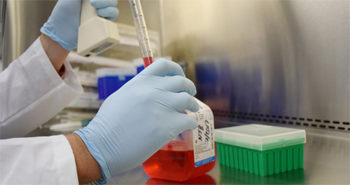
5-teamdevelopsOral vaccination is simplest and least invasive way to protect people against salmonella infection, researchers said.

Taking this vaccine by mouth also has the added advantage of using the same pathway that salmonella uses to wreak havoc on the digestive system, they said.

"In the current study, we analysed the immune responses of mice that received the vaccination by mouth as well as how they responded to a lethal dose of salmonella," said Ashok Chopra, professor at The University of Texas Medical Branch at Galveston (UTMB) in the US.

"We found that the orally administered vaccines produced strong immunity against salmonella, showing their potential for future use in people," said Mr Chopra.

There is no vaccine currently available for salmonella poisoning. Antibiotics are the first choice in treating salmonella infections, but the fact that some strains of salmonella are quickly developing antibiotic resistance is a serious concern.

"Another dangerous aspect of salmonella is that it can be used as a bioweapon - this happened in Oregon when a religious cult intentionally contaminated restaurant salad bars and sickened 1,000 people," researchers said.

Salmonella is responsible for one of the most common food-borne illnesses in the world. In the US alone, the Centres for Disease Control and Prevention estimates that there are about 1.4 million cases with 15,000 hospitalisations and 400 deaths each year.

It is thought that for every reported case, there are about 39 undiagnosed infections. Overall, the number of salmonella cases in the US has not changed since 1996.

Salmonella infection in people with compromised immune systems and children under the age of three are at increased risk of invasive non-typhoidal salmonellosis, which causes systemic infection. There are about one million cases globally per year, with a 25 per cent fatality rate.

In earlier studies, the UTMB researchers developed potential vaccines from three genetically mutated versions of the salmonella bacteria, that is Salmonella Typhimurium, that were shown to protect mice against a lethal dose of salmonella. In these studies, the vaccines were given as an injection.

The findings were published in the journal Frontiers in Cellular and Infection Microbiology.

Comments

Add new comment

  • Coastaldigest.com reserves the right to delete or block any comments.
  • Coastaldigset.com is not responsible for its readers’ comments.
  • Comments that are abusive, incendiary or irrelevant are strictly prohibited.
  • Please use a genuine email ID and provide your name to avoid reject.
Agencies
May 10,2020

Washington D.C., May 9: Do the middle age feel much stressful now, and seems to have changed over time, if compared to the life in the 90s? Well, this recent study indicates that it might be true.

The study has signalled to the fact that life may become more stressful majorly for middle-aged people than it was in the 1990s. The researchers reached this analysis even before the novel coronavirus started sweeping the globe.

A team of researchers led by Penn State found that across all ages, there was a slight increase in daily stress in the 2010s compared to the 1990s. But when researchers restricted the sample to people between the ages of 45 and 64, there was a sharp increase in daily stress.

"On average, people reported about 2 percent more stressors in the 2010s compared to people in the past," said David M. Almeida, professor of human development and family studies at Penn State.

"That's around an additional week of stress a year. But what really surprised us is that people at mid-life reported a lot more stressors, about 19 percent more stress in 2010 than in 1990. And that translates to 64 more days of stress a year."

Almeida said the findings were part of a larger project aiming to discover whether health during the middle of Americans' lives has been changing over time.

"Certainly, when you talk to people, they seem to think that daily life is more hectic and less certain these days," Almeida said.

For the study, the researchers collected data from 1,499 adults in 1995 and 782 different adults in 2012.

Almeida said the goal was to study two cohorts of people who were the same age at the time the data was collected but born in different decades. All study participants were interviewed daily for eight consecutive days.

During each daily interview, the researchers asked the participants about their stressful experiences throughout the previous 24 hours.

They asked questions related to arguments with family or friends or feeling overwhelmed at home or work, so and so. The participants were also asked how severe their stress was and whether those stressors were likely to impact other areas of their lives.

"We were able to estimate not only how frequently people experienced stress, but also what those stressors mean to them," Almeida said.

"For example, did this stress affect their finances or their plans for the future. And by having these two cohorts of people, we were able to compare daily stress processes in 1990 with daily stress processes in 2010," Almeida added.

After analyzing the data, the researchers found that participants reported significantly more daily stress and lower well-being in the 2010s compared to the 1990s.

Additionally, participants reported a 27 percent increase in the belief that stress would affect their finances and a 17 percent increase in the belief that stress would affect their future plans.

Almeida said he was surprised not that people were more stressed now than in the 90s, but at the age group that was mainly affected.

"We thought that with economic uncertainty, life might be more stressful for younger adults. But we didn't see that. We saw more stress for people at mid-life," Almeida said.

"And maybe that's because they have children who are facing an uncertain job market while also responsible for their own parents. So it's this generational squeeze that's making stress more prevalent for people at mid-life," he concluded.

Comments

Add new comment

  • Coastaldigest.com reserves the right to delete or block any comments.
  • Coastaldigset.com is not responsible for its readers’ comments.
  • Comments that are abusive, incendiary or irrelevant are strictly prohibited.
  • Please use a genuine email ID and provide your name to avoid reject.
Agencies
May 26,2020

Tedros Adhanom Ghebreyesus, the World Health Organisation's (WHO) Director-General, said that a clinical trial of hydroxychloroquine (HCQ) on COVID-19 patients has come to "a temporary pause", while the safety data of the the anti-malaria drug was being reviewed.

According to the WHO chief, The Lancet medical journal on May 22 had published an observational study on HCQ and chloroquine and its effects on COVID-19 patients that have been hospitalized, reports Xinhua news agency.

The authors of the study reported that among patients receiving the drug, when used alone or with a macrolide, they estimated a higher mortality rate.

"The Executive Group of the Solidarity Trial, representing 10 of the participating countries, met on Saturday (May 23) and has agreed to review a comprehensive analysis and critical appraisal of all evidence available globally," Tedros said in a virtual press conference on Monday.

The review will consider data collected so far in the Solidarity Trial and in particular robust randomized available data, to adequately evaluate the potential benefits and harms from this drug, he said.

"The Executive Group has implemented a temporary pause of the HCQ arm within the Solidarity Trial while the safety data is reviewed by the Data Safety Monitoring Board. The other arms of the trial are continuing," Tedros added.

WHO initiated the Solidarity Trial, a plan to evaluate the safety and efficacy of four drugs and drug combinations against COVID-19 more than two months ago, which include HCQ.

According to the WHO, over 400 hospitals in 35 countries are actively recruiting patients and nearly 3,500 patients have been enrolled from 17 countries under the Solidarity Trial.

Tedros added that the safety concern over the drug related only to the use of HCQ and chloroquine in COVID-19, and "these drugs are accepted as generally safe for use in patients with autoimmune diseases or malaria".

"WHO will provide further updates as we know more," he added.

Comments

Add new comment

  • Coastaldigest.com reserves the right to delete or block any comments.
  • Coastaldigset.com is not responsible for its readers’ comments.
  • Comments that are abusive, incendiary or irrelevant are strictly prohibited.
  • Please use a genuine email ID and provide your name to avoid reject.
Agencies
February 11,2020

Using smartphone for long hours every day may do you more harm than you can probably think of. Researchers have found that spending a lot of time with the device and on social media may lead to mental distress and suicidality among adolescents.

The findings, published in the journal CMAJ (Canadian Medical Association Journal) contains guidance for physicians, parents and teachers on how to help teenagers manage smartphone and social media use for a healthy balance between sleep, academic work, social activity, interpersonal relationships and online activity.

"Physicians, teachers and families need to work together with youth to decrease possible harmful effects of smartphones and social media on their relationships, sense of self, sleep, academic performance, and emotional well-being," said lead author of the study Elia Abi-Jaoude from Toronto Western Hospital in Canada.

This review of evidence, led by the Hospital for Sick Children (SickKids), focuses on smartphone use and does not consider online gaming.

"For adolescents today, who have not known a world without social media, digital interactions are the norm, and the potential benefits of online access to productive mental health information -- including media literacy, creativity, self-expression, sense of belonging and civic engagement -- as well as low barriers to resources such as crisis lines and Internet-based talking therapies cannot be discounted," the authors wrote.

The researchers recommend that doctors should ask teenagers to reduce social media use rather than eradicate it completely and encourage parents to be part of the conversations.

Parents should discuss appropriate smartphone use with teenagers to determine together how to reduce risks and set boundaries.

A recent poll from the US indicates that 54 per cent of teenagers think they spend too much time on their smartphones and about half said they were cutting back on usage.

"Encouragingly, youth are increasingly recognising the negative impact of social media on their lives and starting to take steps to mitigate it," the authors wrote.

Comments

Add new comment

  • Coastaldigest.com reserves the right to delete or block any comments.
  • Coastaldigset.com is not responsible for its readers’ comments.
  • Comments that are abusive, incendiary or irrelevant are strictly prohibited.
  • Please use a genuine email ID and provide your name to avoid reject.