


Secure, serene Hajj: King Salman hails interior minister

Agencies
August 27, 2018

Jeddah, Aug 27: King Salman sent a thank-you note to Prince Abdul Aziz bin Saud bin Naif, interior minister and chairman of the Supreme Hajj Committee, congratulating him for Al-Adha and the success of this year’s Hajj.

The king said that the comprehensive security, regulatory and traffic plans for this year’s Hajj allowed 2.3 million pilgrims “to perform their duties with ease, security and reassurance in a serene environment.”

Significant efforts had been made by government and non-government bodies to serve pilgrims, he said.

The king said he prayed for God’s acceptance of pilgrims’ prayers and their safe return to their homelands, and wished success for Islam and Muslims.

Crown Prince Mohammed bin Salman also sent a thank-you note to the prince. “We thank your Highness, provincial governors, members of the Supreme Hajj Committee, all participants in serving pilgrims, security personnel of all military sectors, governmental and non-governmental bodies for your congratulations and for what has been achieved thanks to everyone’s efforts and their readiness to serve pilgrims, under the supervision, follow-up and guidance of King Salman,” he wrote.

Earlier, the prince sent a thank-you note to the crown prince on behalf of princes, the Supreme Hajj Committee, provincial governors, members of the Interior Ministry and their co-workers, congratulating them for Al-Adha and the success of this year’s Hajj.

He said: “On my own behalf and on behalf of princes, members of the Supreme Hajj Committee, security personnel and the people who supported them from governmental and non-governmental bodies participating in this year’s Hajj work, I am honored to send you my most sincere congratulations on the pious occasion of Al-Adha, and may you be blessed with good health and wellness,” he wrote.

“I am also honored to congratulate you for the success of this year’s Hajj season, thanks to God, your Highness and King Salman’s care, support and guidance, which enabled pilgrims to perform Hajj with ease, security and reassurance with the services and facilities provided by Saudi Arabia, through an accurate implementation of Hajj’s security, preventive, regulatory and traffic plans with 2,371,675 pilgrims arriving in Arafat on the most important day of Hajj and standing in that mighty site.

“The traffic plan was implemented with accuracy; the arrival to Arafat was completed in record time, mobilization from Arafat to Muzdalifah then Mina was completed with ease and in accordance with careful organization, and the beginning of throwing pebbles, influx to the Grand Mosque to perform Tawaf Al-Ifada and completion of Hajj rituals following the guidance of the Chosen One were also performed with ease.

“The security situation was stable without the occurrence of any incidents, and was in accordance with strict discipline, immediate and careful surveillance of pilgrims’ conditions and all their movements during the performance of Hajj rituals. Health conditions were reassuring, and thanks to the exerted efforts, there was no emergence of epidemics,” he wrote.

The prince said that the success of this year’s Hajj was thanks to the “royal care and directions of King Salman and the crown prince, as well as the dedication of security personnel, members of civilian and military sectors that supported them in this Hajj season to perform this great duty.”

Comments

Add new comment

  • Coastaldigest.com reserves the right to delete or block any comments.
  • Coastaldigset.com is not responsible for its readers’ comments.
  • Comments that are abusive, incendiary or irrelevant are strictly prohibited.
  • Please use a genuine email ID and provide your name to avoid reject.
News Network
May 22,2020

Rajan Kurian with wife Berly Rajan Kurian, son Brian, daughter Bella and mother Valsa

Dubai, May 22: A 43-year-old Indian businessman won USD one million (approximately Rs 7.59 crore) in the Dubai Duty Free draw.

Rajan Kurian, who owns a construction business in Kerala, had bought the ticket online.

Mr Kurian said he was grateful for the win, considering the gloomy circumstances prevailing in the world due to the coronavirus pandemic.

"I will set aside a good part of my win to help the needy. I feel grateful with the win but I need to share it with people who need it," he said. 

Mr Kurian said some of the money will go into growing his business.

"The last few months have been tough with the COVID-19 situation. My business has come to a standstill. This money will be put to good use," he said.

An Indian expat also won a BMW motorbike in the lucky draw held on Wednesday.

A longtime resident of Dubai for 30 years now, 57-year-old Syed Hydrose Abdulla, who works as a public relations officer in a beverages company, had also bought the ticket online.

Comments

Debasisdhara
 - 
Saturday, 18 Jul 2020

Lucky prize money send me please

Add new comment

  • Coastaldigest.com reserves the right to delete or block any comments.
  • Coastaldigset.com is not responsible for its readers’ comments.
  • Comments that are abusive, incendiary or irrelevant are strictly prohibited.
  • Please use a genuine email ID and provide your name to avoid reject.
Agencies
July 31,2020

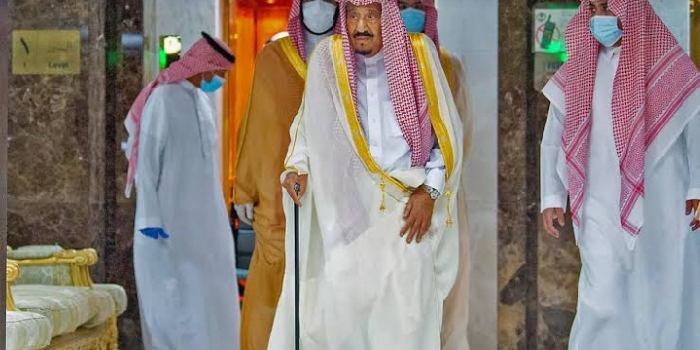
Makkah, Jul 31: Organising this year's scaled-down hajj required "double efforts" by Saudi authorities amid the coronavirus pandemic, King Salman said Friday after being discharged from hospital following gall bladder surgery.

Only up to 10,000 people already residing in the kingdom are participating in this year's pilgrimage, compared with 2019's gathering of some 2.5 million from around the world.

"Holding the ritual in the shadow of this pandemic... required reducing the numbers of pilgrims, but it obliged various official agencies to put in double efforts," 84-year-old King Salman said in a speech read out on state television by acting media minister Majid Al-Qasabi.

"The hajj this year was restricted to a very limited number of people from multiple nationalities, ensuring the ritual was completed despite the difficult circumstances," he said.

The speech came on the occasion of Eid al-Adha, the Muslim festival of sacrifice, a day after the king left hospital following a 10-day stay for surgery to remove his gall bladder.

The hajj, which began on Wednesday, is one of the five pillars of Islam and a must for able-bodied Muslims at least once in their lifetime.

Authorities implemented the "highest health precautions" during the rituals, the king said.

Pilgrims, who were all tested for the virus, are required to wear masks and observe social distancing.

For Friday's "stoning of the devil", the last major ritual of the hajj, Saudi authorities offered the pilgrims pebbles that were sanitised to protect against the pandemic.

In a sign that its strict measures were working, the health ministry reported no coronavirus cases in the holy sites on Wednesday or Thursday.

Comments

Add new comment

  • Coastaldigest.com reserves the right to delete or block any comments.
  • Coastaldigset.com is not responsible for its readers’ comments.
  • Comments that are abusive, incendiary or irrelevant are strictly prohibited.
  • Please use a genuine email ID and provide your name to avoid reject.
News Network
July 1,2020

Riyadh, Jul 1: Saudis braced Wednesday for a tripling in value added tax, another unpopular austerity measure after the twin shocks of coronavirus and an oil price slump triggered the kingdom's worst economic decline in decades.

Retailers in the country reported a sharp uptick in sales this week of everything from gold and electronics to cars and building materials, as shoppers sought to stock up before VAT is raised to 15 percent.

The hike could stir public resentment as it weighs on household incomes, pushing up inflation and depressing consumer spending as the kingdom emerges from a three-month coronavirus lockdown.

"Cuts, cuts, cuts everywhere," a Saudi teacher in Riyadh told AFP, bemoaning vanishing subsidies as salaries remain stagnant.

"Air conditioner, television, electronic items," he said, rattling off a list of items he bought last week ahead of the VAT hike.

"I can't afford these things from Wednesday."

With its vast oil wealth funding the Arab world's biggest economy, the kingdom had for decades been able to fund massive spending with no taxes at all.

It only introduced VAT in 2018, as part of a push to reduce its dependence on crude revenues.

Then, seeking to shore up state finances battered by sliding oil prices and the coronavirus crisis, it announced in May that it would triple VAT and halt a cost-of-living monthly allowance to citizens.

The austerity push underscores how Saudi Arabia's once-lavish spending is becoming a thing of the past, with the erosion of the welfare system leaving a mostly young population to cope with reduced incomes and a lifestyle downgrade.

That could pile strain on a decades-old social contract whereby citizens were given generous subsidies and handouts in exchange for loyalty to the absolute monarchy.

The rising cost of living may prompt many to ask why state funds are being lavished on multi-billion-dollar projects and overseas assets, including the proposed purchase of English football club Newcastle United.

Shopping malls in the kingdom have drawn large crowds in recent days as retailers offered "pre-VAT sales" and discounts before the hike kicks in.

A gold shop in Riyadh told AFP it saw a 70 percent jump in sales in recent weeks, while a car dealership saw them tick up by 15 percent.

Once the new rate is in place, businesses are predicting depressed sales of everything from cars to cosmetics and home appliances.

Capital Economics forecast inflation will jump up to six percent year-on-year in July, from 1.1 percent in May, as a result.

"The government ended the country's lockdown (in June) and there are signs that economic activity has started to recover," Capital Economics said in a report.

"Nonetheless, we expect the recovery to be slow-going as fiscal austerity measures bite."

The kingdom also risks losing its edge against other Gulf states, including its principal ally the United Arab Emirates, which introduced VAT at the same time but has so far refrained from raising it beyond five percent.

"Saudi Arabia is taking massive risks with contractionary fiscal policies," said Tarek Fadlallah, chief executive officer of the Middle East unit of Nomura Asset Management.

But the kingdom has few choices as oil revenue declines.

Its finances have taken another blow as authorities massively scaled back this year's hajj pilgrimage, from 2.5 million pilgrims last year to around a thousand already inside the country, and suspended the lesser umrah because of coronavirus.

Together the rites rake in some $12 billion annually.

The International Monetary Fund warned the kingdom's GDP will shrink by 6.8 percent this year -- its worst performance since the 1980s oil glut.

The austerity drive would boost state coffers by 100 billion riyals ($26.6 billion), according to state media.

But the measures are unlikely to plug the kingdom's huge budget deficit.

The Saudi Jadwa Investment group forecasts the shortfall will rise to a record $112 billion this year.

Comments

Add new comment

  • Coastaldigest.com reserves the right to delete or block any comments.
  • Coastaldigset.com is not responsible for its readers’ comments.
  • Comments that are abusive, incendiary or irrelevant are strictly prohibited.
  • Please use a genuine email ID and provide your name to avoid reject.