Senior Indian nurses in demand in South Africa for good work ethics

News Network
February 22, 2020

Johannesburg, Feb 22: To meet shortage of skilled nursing staff, private hospitals in South Africa are recruiting senior Indian nurses for their good work ethics and ability to become efficient trainers for the local staff, according to a media report.

A report at a 2018 jobs summit indicated that the country had a shortage of more than 47,000 nurses.

The shortage of the skilled nursing staff has been attributed to several factors, including preference of highly qualified nurses to emigrate or take up contract employment in countries such as the UK, the United Aarb Emirates, Saudi Arabia or New Zealand for want of higher salaries, a report in the weekly Business Times said.

Mediclinic, one of South Africa's largest private hospital groups, confirmed that it is recruiting 150 nurses from India this year.

“To supplement our training, as an internal strategy, we will continue to recruit senior registered nurses from India,” a Mediclinic spokesperson told the Business Times.

Mediclinic started recruiting nurses from India in 2005 but could not provide details about how many among the more than 8,800 nurses it employs at its hospitals are from India.

Another company, Life Healthcare SA, said it employed 135 Indian nurses between 2008 and 2014.

Top managements at the hospital groups lauded senior Indian nurses as being very efficient trainers for local staff.

“But we find that many of them prefer coming here on short-term contracts due to family commitments," a hospital executive said on the basis of anonymity.

The official said that the few who apply for long-term positions are usually young newly-qualified nurses, which is not the group in demand.

“They work hard, with a patient-oriented work ethic, and do not have the nine-to-five approach of many local nurses, especially those who are unionised," the official said.

“We would be very happy to take in more nursing staff from India," the official added.

Comments

Add new comment

  • Coastaldigest.com reserves the right to delete or block any comments.
  • Coastaldigset.com is not responsible for its readers’ comments.
  • Comments that are abusive, incendiary or irrelevant are strictly prohibited.
  • Please use a genuine email ID and provide your name to avoid reject.
International New York Times
July 7,2020

The coronavirus can stay aloft for hours in tiny droplets in stagnant air, infecting people as they inhale, mounting scientific evidence suggests.

This risk is highest in crowded indoor spaces with poor ventilation, and may help explain superspreading events reported in meatpacking plants, churches and restaurants.

It’s unclear how often the virus is spread via these tiny droplets, or aerosols, compared with larger droplets that are expelled when a sick person coughs or sneezes, or transmitted through contact with contaminated surfaces, said Linsey Marr, an aerosol expert at Virginia Tech.

Follow latest updates on the Covid-19 pandemic here

Aerosols are released even when a person without symptoms exhales, talks or sings, according to Marr and more than 200 other experts, who have outlined the evidence in an open letter to the World Health Organization.

What is clear, they said, is that people should consider minimizing time indoors with people outside their families. Schools, nursing homes and businesses should consider adding powerful new air filters and ultraviolet lights that can kill airborne viruses.

What does it mean for a virus to be airborne?

For a virus to be airborne means that it can be carried through the air in a viable form. For most pathogens, this is a yes-no scenario. HIV, too delicate to survive outside the body, is not airborne. Measles is airborne, and dangerously so: It can survive in the air for up to two hours.

For the coronavirus, the definition has been more complicated. Experts agree that the virus does not travel long distances or remain viable outdoors. But evidence suggests it can traverse the length of a room and, in one set of experimental conditions, remain viable for perhaps three hours.

How are aerosols different from droplets?

Aerosols are droplets, droplets are aerosols — they do not differ except in size. Scientists sometimes refer to droplets fewer than 5 microns in diameter as aerosols. (By comparison, a red blood cell is about 5 microns in diameter; a human hair is about 50 microns wide.)

From the start of the pandemic, the WHO and other public health organizations have focused on the virus’s ability to spread through large droplets that are expelled when a symptomatic person coughs or sneezes.

These droplets are heavy, relatively speaking, and fall quickly to the floor or onto a surface that others might touch. This is why public health agencies have recommended maintaining a distance of at least 6 feet from others, and frequent hand washing.

But some experts have said for months that infected people also are releasing aerosols when they cough and sneeze. More important, they expel aerosols even when they breathe, talk or sing, especially with some exertion.

Scientists know now that people can spread the virus even in the absence of symptoms — without coughing or sneezing — and aerosols might explain that phenomenon.

Because aerosols are smaller, they contain much less virus than droplets do. But because they are lighter, they can linger in the air for hours, especially in the absence of fresh air. In a crowded indoor space, a single infected person can release enough aerosolized virus over time to infect many people, perhaps seeding a superspreader event.

For droplets to be responsible for that kind of spread, a single person would have to be within a few feet of all the other people, or to have contaminated an object that everyone else touched. All that seems unlikely to many experts: “I have to do too many mental gymnastics to explain those other routes of transmission compared to aerosol transmission, which is much simpler,” Marr said.

Can I stop worrying about physical distancing and washing my hands?

Physical distancing is still very important. The closer you are to an infected person, the more aerosols and droplets you may be exposed to. Washing your hands often is still a good idea.

What’s new is that those two things may not be enough. “We should be placing as much emphasis on masks and ventilation as we do with hand washing,” Marr said. “As far as we can tell, this is equally important, if not more important.”

Should I begin wearing a hospital-grade mask indoors? And how long is too long to stay indoors?

Health care workers may all need to wear N95 masks, which filter out most aerosols. At the moment, they are advised to do so only when engaged in certain medical procedures that are thought to produce aerosols.

For the rest of us, cloth face masks will still greatly reduce risk, as long as most people wear them. At home, when you’re with your own family or with roommates you know to be careful, masks are still not necessary. But it is a good idea to wear them in other indoor spaces, experts said.

As for how long is safe, that is frustratingly tough to answer. A lot depends on whether the room is too crowded to allow for a safe distance from others and whether there is fresh air circulating through the room.

What does airborne transmission mean for reopening schools and colleges?

This is a matter of intense debate. Many schools are poorly ventilated and are too poorly funded to invest in new filtration systems. “There is a huge vulnerability to infection transmission via aerosols in schools,” said Don Milton, an aerosol expert at the University of Maryland.

Most children younger than 12 seem to have only mild symptoms, if any, so elementary schools may get by. “So far, we don’t have evidence that elementary schools will be a problem, but the upper grades, I think, would be more likely to be a problem,” Milton said.

College dorms and classrooms are also cause for concern.

Milton said the government should think of long-term solutions for these problems. Having public schools closed “clogs up the whole economy, and it’s a major vulnerability,” he said.

“Until we understand how this is part of our national defense, and fund it appropriately, we’re going to remain extremely vulnerable to these kinds of biological threats.”

What are some things I can do to minimize the risks?

Do as much as you can outdoors. Despite the many photos of people at beaches, even a somewhat crowded beach, especially on a breezy day, is likely to be safer than a pub or an indoor restaurant with recycled air.

But even outdoors, wear a mask if you are likely to be close to others for an extended period.

When indoors, one simple thing people can do is to “open their windows and doors whenever possible,” Marr said. You can also upgrade the filters in your home air-conditioning systems, or adjust the settings to use more outdoor air rather than recirculated air.

Public buildings and businesses may want to invest in air purifiers and ultraviolet lights that can kill the virus. Despite their reputation, elevators may not be a big risk, Milton said, compared with public bathrooms or offices with stagnant air where you may spend a long time.

If none of those things are possible, try to minimize the time you spend in an indoor space, especially without a mask. The longer you spend inside, the greater the dose of virus you might inhale.


Comments

Add new comment

  • Coastaldigest.com reserves the right to delete or block any comments.
  • Coastaldigset.com is not responsible for its readers’ comments.
  • Comments that are abusive, incendiary or irrelevant are strictly prohibited.
  • Please use a genuine email ID and provide your name to avoid reject.
coastaldigest.com news network
August 8,2020

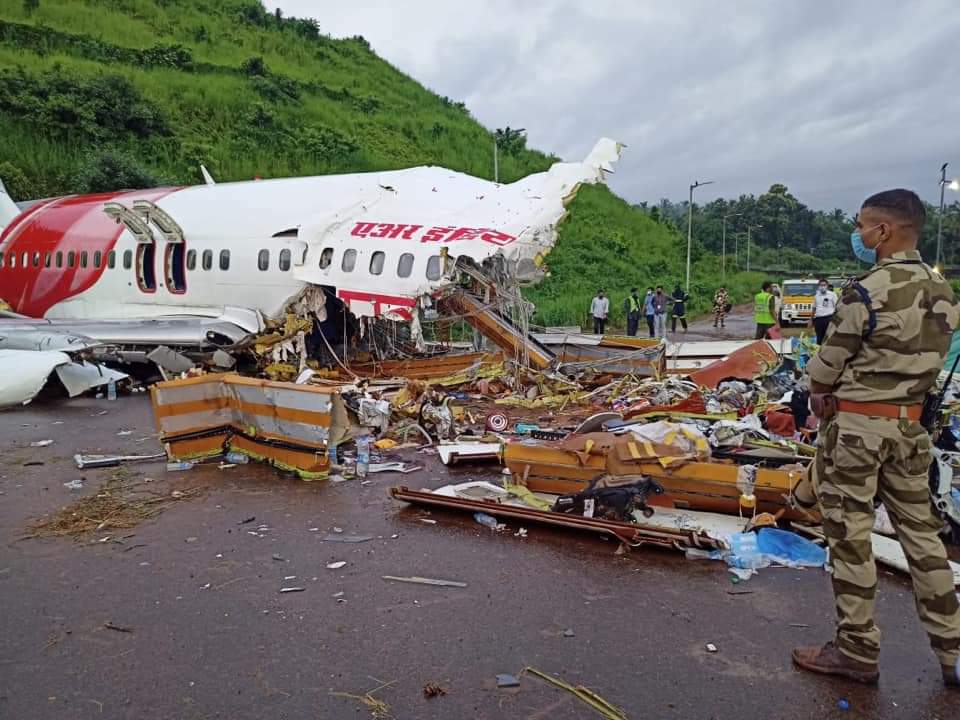
Kozhikode, Aug 8: A tailwind or crosswind could be the reason for the Air India Express flight mishap at Kozhikode international airport in Kerala, according to some aviation experts. 

Team of DGCA and AIE already reached the spot. With the death of the captain and co-pilot in the mishap, the investigation would be focusing mainly on the voice recorders and other technical aspects.

It is learnt that the ill-fated aircraft, IX 1344 with 190 onboard including crew, was initially planning to land on runway-28 of the airport. But later the pilot opted runway-10 which is toward the other direction. Pilots would be taking the decisions on the basis of inputs from ATC.

The questions now doing the rounds are what made the pilot opt runway-10 and whether the tabletop runway lacked adequate safety parameters.

An aviation expert, who didn't want to be quoted, said that Capt Deepak Sathe, who was commandeering the aircraft, was a well-experienced pilot and was also familiar with the terrains. Hence the chances of any error from his part was very unlikely. Hence a fair in-depth probe was required to find the exact cause.

Though the Kozhikode airport has an Instrument Landing System, it was of category-I for which pilot's visibility is very crucial toward a touchdown. Since it is a tabletop airport and rough weather prevailing in the region, the chances of tailwind was also high, said sources.

There had been safety concerns about the airport over quite some time. In 2011 aviation safety consultant captain Mohan Ranganathan reportedly gave a report citing the safety issues, especially the buffer zones at the end of the runway.

However, an AAI officer said that rectification steps were already done by last year by widening the Runway End Safety Area (RESA) from 90 metre to 240 metre. However, the length of the runway had to be reduced to 2,700 metre from 2,850. The AAI was also constantly pressing for increasing the runway length to 3,150 metres. But that was getting delayed due to land acquisition issues pending with the state government.

stm88 info live rtp slot

slot auto scatter hitam

Comments

Add new comment

  • Coastaldigest.com reserves the right to delete or block any comments.
  • Coastaldigset.com is not responsible for its readers’ comments.
  • Comments that are abusive, incendiary or irrelevant are strictly prohibited.
  • Please use a genuine email ID and provide your name to avoid reject.
Agencies
May 31,2020

Minneapolis, May 31: The full Minnesota National Guard was activated for the first time since World War Two after four nights of civil unrest that has spread to other U.S. cities following the death of George Floyd, a black man shown on video gasping for breath as a white Minneapolis policeman knelt on his neck.

Minnesota Governor Tim Walz said the deployment was necessary because outside agitators were using protests over Monday’s death of George Floyd to sow chaos and that he expected Saturday night’s demonstrations to be the fiercest so far.

From Minneapolis to several other major cities including New York, Atlanta and Washington, protesters clashed with police late on Friday in a rising tide of anger over the treatment of minorities by law enforcement.

“We are under assault,” Walz, a first-term governor elected from Minnesota’s Democratic-Farmer-Labor Party, told a briefing on Saturday. “Order needs to be restored. ... We will use our full strength of goodness and righteousness to make sure this ends.”

He said he believed a “tightly controlled” group of outsiders, including white supremacists and drug cartel members, were instigating some of the violence in Minnesota’s largest city, but he did not give specific evidence of this when asked by reporters.

As many as 80% of those arrested were from outside the state, Walz said. But detention records show just eight non-Minnesota residents have been booked into the Hennepin County Jail since Tuesday, and it was unclear whether all of them were arrested in connection with the Minneapolis unrest.

The Republican Trump administration suggested civil disturbances were being orchestrated from the political left.

“In many places, it appears the violence is planned, organized and driven by anarchic and left extremist groups - far-left extremist groups ... many of whom travel from outside the state to promote violence,” U.S. Attorney William Barr said in a statement.

In an extraordinary move, the Pentagon said it put military units on a four-hour alert to be ready if requested by Walz to help keep the peace.

Activists staged another round of protests on Saturday in at least a dozen major U.S. cities coast to coast, including Seattle, Los Angeles, Chicago, Cleveland, Dallas, Atlanta, New York and Atlanta.

In the nation’s capital, hundreds of demonstrators assembled near the Justice Department headquarters, then marched toward the U.S. Capitol, chanting, “Black lives matter,” and “I can’t breathe,” a rallying cry echoing Floyd’s dying words.

Many later ended up near the White House, where they faced off with shield-carrying police, some mounted on horseback.

The streets of Minneapolis were largely quiet during daylight on Saturday, though several National Guard armoured personnel carriers were seen rolling through town.

On Friday, in defiance of a newly imposed curfew, Minneapolis protesters took to the streets for a fourth night - albeit in smaller numbers than before - despite the announcement hours earlier of murder charges filed against Derek Chauvin, the policeman seen in video footage kneeling on Floyd’s neck.

Three other officers fired from the police department with Chauvin on Tuesday are also under criminal investigation in the case, prosecutors said.

The video of Floyd’s arrest - captured by an onlooker’s cellphone as he repeatedly groaned, “please, I can’t breathe” before becoming motionless - triggered an outpouring of rage that civil rights activists said has long simmered in Minneapolis and cities across the country over persistent racial bias in the U.S. criminal justice system.

‘PAINS ME SO MUCH’

The mood was sombre on Saturday in the Minneapolis neighbourhood of Lyndale, where dozens of people surveyed the damage while sweeping up broken glass and debris.

“It pains me so much,” said Luke Kallstrom, 27, a financial analyst, standing in the threshold of a fire-gutted post office. “This does not honour the man who was wrongfully taken away from us.”

Some of Friday’s most chaotic scenes were in the New York City borough of Brooklyn, where police armed with batons and pepper spray made more than 200 arrests in sometimes violent clashes. Several officers were injured, police said.

In Washington, President Donald Trump said on Saturday that if protesters who gathered the night before in Lafayette Square, across from the White House, had breached the fence, “they would have been greeted with the most vicious dogs, and most ominous weapons, I have ever seen.”

CHAOS IN ATLANTA

In Atlanta, Bernice King, the youngest daughter of slain civil rights icon Martin Luther King Jr., urged people to go home on Friday night after more than 1,000 protesters marched to the state capitol and blocked traffic on an interstate highway.

The demonstration turned violent at points. Fires burned near the CNN Center, the network’s headquarters, and windows were smashed at its lobby. Several vehicles were torched, including at least one police car.

Rapper Killer Mike, in an impassioned speech flanked by the city’s mayor and police chief, also implored angry residents to stay indoors and to mobilize to win at the ballot box.

“But it is not time to burn down your own home.”

Floyd, a Houston native who had worked security for nightclubs, was arrested on suspicion of trying to pass counterfeit money at a store to buy cigarettes on Monday evening. Police said he was unarmed. An employee who called for help had told a police dispatcher that the suspect appeared to be intoxicated.

In a striking coincidence, Floyd and Chauvin had both worked security at the same Latin nightclub in Minneapolis, though it was unlikely they ever interacted, former owner Maya Santamaria, who sold the El Nuevo Rodeo club in January, told Reuters.

Santamaria said Floyd worked inside the club on certain nights, supporting other staff with security. She said Chauvin, who worked outside the club as an off-duty cop for 16 years, had a reputation for roughing up customers, but she considered him responsible and a friend.

Comments

Add new comment

  • Coastaldigest.com reserves the right to delete or block any comments.
  • Coastaldigset.com is not responsible for its readers’ comments.
  • Comments that are abusive, incendiary or irrelevant are strictly prohibited.
  • Please use a genuine email ID and provide your name to avoid reject.