



Shiv Sena hits out at BJP, asks it to follow ‘alliance dharma’

March 13, 2014
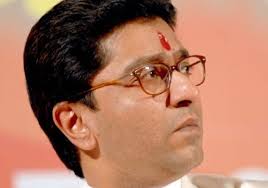
Mumbai, Mar 13: BJP today came under fresh attack from its ally Shiv Sena, which slammed it for creating a "trust deficit" by hobnobbing with Raj Thackeray-led Maharashtra Navnirman Sena in the run-up to the polls and asked it to mend its ways and follow "alliance dharma".

raj

In a hard-hitting editorial in mouthpiece 'Saamana', party president Uddhav Thackeray asked BJP to adhere to the "dharma" of the alliance and cited example of Bal Thackeray "who had rejected the offer of BJP rebel Shakarsinh Waghela in 1996 to form government of Shiv Sena in Gujarat".

"...Modi's rise in Gujarat was possible because Bal Thackeray stuck to the dharma of alliance and did not align with Waghela...The BJP leaders who tried to reach out to the Sena deserters should read this history," Uddhav said.

Uddhav also stressed that BJP wanted Modi to become prime minister of the country but for that "BJP needs to create an atmosphere of trust".

"Our ideology of Hindutva is not to gain power. We don't don the garb of Hindutva in hunger for power and there is no room for betrayal in Hindutva. Our ideology is Hindutva and will continue to be so irrespective of anyone being with us or not," the editorial said.

Uddhav said, "If BJP wants power at the Centre with Modi as prime minister, it should create an atmosphere of trust. You don't get trust if you don't create one yourself for others," he said.

The Sena president also said his party was capable of fighting its own battles. "If you sidestep and betray friends who have stood by you through thick and thin, you will be self-inflicting the label of betrayal," Uddhav said.

He referred to some reports appearing in media, saying the BJP has adopted a new policy of "tying up with one regional party and carrying out backdoor deals with another".

The pointed attack came against the backdrop of former BJP chief Nitin Gadkari's overtures to Raj Thackeray and his proposal to MNS to not contest Lok Sabha elections to prevent consolidation of votes in favour of Congress.

The development stirred the politics in Maharashtra with Shiv Sena flexing its muscles over continuation of alliance. This prompted top BJP leadership, including Rajnath Singh and BJP's PM hopeful Narendra Modi, to do firefighting by pacifying Uddhav.

Uddhav also accused BJP of adopting self-defeating tactics.

"..The party is hitting its head against the wall and has hurt itself in the process. BJP should invoke provisions of the Domestic Violence Act to treat their self-inflicted injuries.

After being told by us, Narendra Modi, Rajnath Singh, Rajiv Pratap Rudy have applied 'zandu balm', but what is the guarantee that there will be no domestic violence again," the editorial said.

Uddhav said BJP owed its national identity to regional parties like Shiv Sena.

"Despite the Hindutva wave after Rathyatra, BJP could not form government on its own even though towering leaders like A B Vajpayee and Advani leading it. It was Pramod Mahajan who deftly handled the coalition of 30-32 parties," Uddhav said.

He said there were reports of rumblings in parties tyeing-up with BJP in other states as well.

"BJP did not consult ally Kuldeep Bishnoi in Harayana while getting Om Prakash Chauthala-led Bharatiya Lok Dal into NDA fold. Similarly, BJP also did not take Chandrababu Naidu into confidence while inducting NT Rama Rao's daughter who was a Congress minister till recently," Uddhav said.

In the no-holds-barred attack, Uddhav also referred to recent inductions in NDA and BJP which have apparently not gone down well with some BJP leaders.

"Many BJP leaders are upset because of Ramvilas Paswan's entry into NDA. Advani is not happy that Yeddyuruppa has been re-inducted while Sushma Swaraj is unhappy with entry of Vinod Sharma, father of a convict in Jessica Lall murder case Manu Sharma," Uddhav said.

Comments

Add new comment

  • Coastaldigest.com reserves the right to delete or block any comments.
  • Coastaldigset.com is not responsible for its readers’ comments.
  • Comments that are abusive, incendiary or irrelevant are strictly prohibited.
  • Please use a genuine email ID and provide your name to avoid reject.
News Network
April 16,2020

United Nations, Apr 16: WHO chief Tedros Adhanom Ghebreyesus has welcomed the world health body's cooperation with India to leverage strategies that helped the country win its war against polio into the response to COVID-19 outbreak, saying such joint efforts will help defeat the pandemic.

The World Health Organization (WHO) has said it will work with India's Ministry of Health and Family Welfare to leverage the strategies that helped the country eradicate polio to fight the pandemic.

Migrants who returned to UP and Bihar were hurriedly housed in schools and panchayat buildings, which were turned into quarantine centres. However, unhygienic conditions and people running away have proved to be a problem

The WHO's national polio surveillance network will be engaged to strengthen COVID-19 surveillance and its field staff will continue to support immunization and elimination of tuberculosis and other diseases.

“Great news: @MoHFW_INDIA & @WHOSEARO initiated a systematic engagement of @WHO's national polio surveillance network, and other field staff, for India's #COVID19 response, tapping into the best practices & resources that helped win its war against polio,” the WHO director-general tweeted, referring to India's Ministry of Health and Family Welfare and World Health Organization Regional Office for South-East Asia.

According to the Johns Hopkins University data, over 2 million people are infected by the virus and more than 136,000 people have died of the disease globally.

Ghebreyesus expressed gratitude to Health and Family Welfare Minister Harsh Vardhan “for his leadership and collaboration” with WHO. “Through these joint efforts we can defeat the #coronavirus and save lives. Together!”

India eliminated polio in 2014.
According to a WHO press release, Vardhan said in New Delhi that “time and again the Government of India and WHO together have shown our ability, competence and prowess to the whole world. With our combined meticulous work, done with full sincerity and dedication, we were able to get rid of polio.”

“All of you in the field – IDSP (Integrated Disease Surveillance Project), state rapid response teams and WHO - are our ‘surveillance corona warriors'. With your joint efforts we can defeat the coronavirus and save lives,” Vardhan added.

WHO South-East Asia Regional Director Poonam Khetrapal Singh said the National Polio Surveillance Project (WHO-NPSP) played a critical role in strengthening surveillance for polio that generated useful, timely and accurate data to guide policies, strategies and interventions until transmission of the poliovirus was interrupted in the country,” adding that the other WHO field staff involved with elimination of tuberculosis and neglected tropical diseases and hypertension control initiative were also significant resources.

Singh added that “it is now time to use all your experience, knowledge and skills, with the same rigor and discipline that you showed while monitoring polio activities, to support districts with surveillance, contact tracing and containment activities.”

The WHO release said strengths of the NPSP team – surveillance, data management, monitoring and supervision, and responding to local situations and challenges – will be utilized to supplement efforts of National Centre for Disease Control, IDSP and Indian Council of Medical Research to strengthen COVID-19 surveillance.

The NPSP team will also support in sharing information and best practices and help states and districts calibrate their response based on transmission scenarios and local capacities.

The WHO field staff will continue to support immunization and surveillance and elimination of Tuberculosis and Neglected Tropical Diseases, Singh said, adding, “disease outbreaks can negatively impact progress in a range of areas, from maternal and child mortality to vaccine-preventable diseases and other treatable conditions. India had been making stupendous progress in these areas and we cannot afford for India's remarkable progress to be set back or reversed.”

Comments

Add new comment

  • Coastaldigest.com reserves the right to delete or block any comments.
  • Coastaldigset.com is not responsible for its readers’ comments.
  • Comments that are abusive, incendiary or irrelevant are strictly prohibited.
  • Please use a genuine email ID and provide your name to avoid reject.
News Network
May 6,2020

New Delhi, May 6: The death toll due to COVID-19 rose to 1,694 and the number of cases climbed to 49,391 in the country on Wednesday, registering an increase of 126 deaths and 2,958 cases in the last 24 hours, the Union Health Ministry said.

The number of active COVID-19 cases is 33,514. A total of 13,160 people have recovered and one patient has migrated, it said.

"Thus, around 28.71 per cent patients have recovered so far," a senior health ministry official said.

The total number of cases include 111 foreign nationals.

A total of 111 deaths were reported since Tuesday evening, of which 49 fatalities were reported from Gujarat, 34 from Maharashtra, 12 from Rajasthan, seven from West Bengal, three from Uttar Pradesh, two each from Punjab and Tamil Nadu and one each from Karnataka and Himachal Pradesh, the ministry said.

Of the 1,694 fatalities, Maharashtra tops the tally with 617 fatalities. Gujarat comes second with 368 deaths, followed by Madhya Pradesh at 176, West Bengal at 140, Rajasthan at 89, Delhi at 64, Uttar Pradesh at 56 and Andhra Pradesh at 36.

The death toll reached 33 in Tamil Nadu, 29 in Telengana, while Karnataka has reported 29 fatalities.

Punjab has registered 25 COVID-19 deaths, Jammu and Kashmir eight, Haryana six and Kerala and Bihar four deaths each.

Jharkhand has recorded three COVID-19 fatalities.

Meghalaya, Chandigarh, Himachal Pradesh, Odisha, Assam and Uttarakhand have reported one fatality each, according to the ministry data.

According to the health ministry data updated in the morning, the highest number of confirmed cases in the country are from Maharashtra at 15, 525, followed by Gujarat at 6,245, Delhi at 5,104, Tamil Nadu at 4,058, Rajasthan at 3,158, Madhya Pradesh at 3,049 and Uttar Pradesh at 2,880.

The number of COVID-19 cases has gone up to 1,717 in Andhra Pradesh and 1,451 in Punjab.

It has risen to 1,344 in West Bengal, 1,096 in Telengana, 741 in Jammu and Kashmir, 671 in Karnataka, 548 in Haryana and 536 in Bihar.

Kerala has reported 502 coronavirus cases so far, while Odisha has 175 cases. A total of 125 people have been infected with the virus in Jharkhand and 111 in Chandigarh.

Uttarakhand has reported 61 cases, Chhattisgarh 59 cases, Assam 43, Himachal Pradesh 42 and Ladakh 41.

Thirty-three COVID-19 cases have been reported from the Andaman and Nicobar Islands.

Tripura has registered 43 cases, Meghalaya has reported 12 and Puducherry nine, while Goa has seven COVID-19 cases.

Manipur has two cases. Mizoram, Arunachal Pradesh and Dadar and Nagar Haveli have reported a case each.

"Our figures are being reconciled with the ICMR," the ministry said on its website.

State-wise distribution is subject to further verification and reconciliation, it said.

Comments

Add new comment

  • Coastaldigest.com reserves the right to delete or block any comments.
  • Coastaldigset.com is not responsible for its readers’ comments.
  • Comments that are abusive, incendiary or irrelevant are strictly prohibited.
  • Please use a genuine email ID and provide your name to avoid reject.
News Network
January 31,2020

New Delhi, Jan 31: Substantial competition and low tariff rates by telecom operators since 2016 have led to a financial stress in the sector, the Economic Survey said on Friday.

The data price in the country came down by over 99 per cent during 2016-2019, making it among the lowest tariff in the world, according to the survey.

"Since 2016, the sector has witnessed substantial competition and price cutting by the telecom service providers (TSPs), creating financial stress in the sector. As a result, the sector is experiencing consolidation. While some operators have filed for bankruptcy, others have merged, in their quest to improve viability," the survey report said.

In April-June 2019, the price of data was Rs 7.7 per gigabyte (GB) as compared to Rs 200 per GB in June 2016, it added.

"The Average Revenue Per User (ARPU) for GSM based mobile services has also gone down substantially from Rs 126 in June 2016 to Rs 74.30 in June 2019," the survey said.

The tariff war started in the market with entry of new telecom operator Reliance Jio in September 2016.

"BSNL and MTNL are also affected by the tariff war that has impacted their cash flow resulting in mounting losses," the survey said.

The financial health of the public sector telecom firms plummeted to a level where they have been finding hard to pay employees salaries in time.

The government has drawn up a plan to revive these PSUs which is still in works.

The revival plan consists of several measures, including reduction of staff cost through voluntary retirement scheme, allotment of spectrum for 4G services, monetisation of land and building, tower and fibre assets of BSNL and MTNL, debt restructuring through sovereign guarantee bonds and ''in-principle'' approval for merger of BSNL and MTNL.

The survey said that the wireless telephony now constitutes 98.27 per cent of all subscriptions whereas share of landline telephones now stands at only 1.73 per cent where market share is dominated by private sector players.

"The overall tele-density in India stands at 90.45 per cent, the rural tele-density being 57.35 per cent and urban teledensity being 160.71 per cent at the end of September 2019. The private sector dominates with a share of 88.81 per cent (106.06 crore connections) at the end of September, 2019 while the share of public sector was 11.19 per cent (13.36 crore connections)," the survey said.

The lower price of data has also lead in surge of broadband connections and average consumption of the internet.

Total broadband connections increased by about ten times, from 6.1 crore in 2014 to 59.46 crore in June 2019, the survey said.

The number of internet subscribers (both broadband and narrowband put together) stood at 66.53 crore at the end of June 2019 as compared to 25.16 crore in 2014.

The number of mobile internet subscribers was 64.36 lakh at the end of June 2019 while the number of wireline internet subscribers was 2.17 crore.

"India is now the global leader in monthly data consumption, with average consumption per subscriber per month increasing 157 times from 62 MB in 2014 to 9.8 GB in June 2019. The cost of data has also reduced substantially, enabling affordable internet access for millions of citizens," the survey said.

Comments

Add new comment

  • Coastaldigest.com reserves the right to delete or block any comments.
  • Coastaldigset.com is not responsible for its readers’ comments.
  • Comments that are abusive, incendiary or irrelevant are strictly prohibited.
  • Please use a genuine email ID and provide your name to avoid reject.