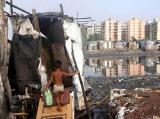
Snap action: defecate in open, find photo posted online

April 9, 2016

Mathura, Apr 9: To deter the practice of open defecation, authorities here have resorted to naming and shaming offenders by posting their pictures on social media.

defegateDistrict authorities today inspected several villages here under the Swachh Bharat initiative and took action against offenders.

They even posted their pictures on WhatsApp to deter such habits. "A total of 18 villages were inspected and 36 officials have been assigned to this task," Chief Development Officer Manish Kumar Verma said.

"Several persons were caught defecating in the open. Villagers were also made aware of the ills of this practice," he said.

The CDO said efforts are being made to make the villages free of open defecation by April 15, adding that they were looking to accomplish the same target with 150 villages of the district by August 15.

Comments

AK
 - 
Saturday, 9 Apr 2016

The Govt should also provide the Toilets & water facilities to the POOR before defaming them

Add new comment

  • Coastaldigest.com reserves the right to delete or block any comments.
  • Coastaldigset.com is not responsible for its readers’ comments.
  • Comments that are abusive, incendiary or irrelevant are strictly prohibited.
  • Please use a genuine email ID and provide your name to avoid reject.
News Network
June 15,2020

Sitamarhi, Jun 15: Eyewitness accounts from locals in Bihar's Sitamarhi district recount the brutality and intimidation by Nepal's security personnel who on June 12 had resorted to unprovoked firing on a group of people at the international border, which left one Indian dead and two others injured.

"18-20 shots were fired for over one hour and everyone is in shock even now," said Nitish Kumar, a resident of Jankinagar recalling the incident that took place early on Friday morning.

Nepal's Armed Police Force (APF) opened fire at the Lalbandi-Jankinagar border in which three men - Vikesh Yadav, Umesh Ram and Uday Thakur - suffered gunshot injuries. Vikash Yadav succumbed to his injuries on Friday itself.

Another person Lagan Kishore, who was at the border with his family to meet his daughter-in-law, a Nepali national and her family, said he was detained by the APF personnel who dragged him to the other side of the border.

Lagan Kishore said that the Nepali personnel abused and hit him with rifle butts and even abused his son and later resorted to firing.

Several residents of Jankinagar, who spoke to media, termed the incident as "unfortunate and shocking".

Nitish Kumar recalled: "A family was here to meet their in-laws (Nepali nationals). The daughter-in-law was talking to her family while her husband and her father-in-law sat a little distance away. Suddenly I saw Nepali personnel abusing her husband who complained about it to his father. All of a sudden the Nepali forces started thrashing them and then opened fire. They also took the father into custody."

"We were all shocked. I could hear about 18-20 gunshots fired over a period of one hour," Kumar said.

Another local, Ajit Kumar, said he was perplexed with the behaviour of the Nepali Police.

"There used to be no problems earlier. We don't understand what happened to the Nepal Police that day. The firing is unfortunate. If this continues, how will people in the border area live?" he questioned.

Ajit Kumar stated that such an incident has taken place for the first time. "People from here go to work in fields in Nepal and their people come to work in our fields. Such a thing has happened for the first time. About 80 per cent of our people are married to Nepalis," he said.

Many people who live in the adjoining districts of Bihar, which shares over 600 kilometres of border with Nepal, have relatives on either side of the border.

Meanwhile, Nepali police have claimed that Lagan Kishore, who was taken into custody following the firing by APF and handed over to Indian Security Forces at no man's land on June 13, was detained for trying to snatch a weapon from one of their personnel during an altercation.

However, both Kishore and his family have denied the claims and said he was "dragged" across the border and was beaten.

Kishore said that during the firing he had rushed towards the Indian side but Nepalese personnel hit him with rifle butt and took him to Nepal's Sangrampur. He was also asked to confess that he was taken into custody from the Nepali side.

"We ran to return to India when they started firing, but they dragged me from the Indian side, hit me with a rifle butt and took me to Nepal's Sangrampur. They told me to confess that I was brought there from Nepal. I told them you can kill me but I was brought there from India," said Kishore.

Kishore's son also said that Nepali personnel started abusing them and hit him and his father.

Speaking to ANI, Kishore's son said, "We went to meet my brother-in-law. Security personnel started abusing me but I could not understand their language. However, my brother's wife asked them to not abuse. After that, they came to the Indian side and hit me. I told my father about the incident and he confronted them."

"They started beating him and called fellow personnel who started firing and dragged my father from the Indian side, hit him with a rifle butt and took him to Nepal''s Sangrampur," he said.

Relations have become strained between India and Nepal after the latter released a map showing parts of Indian Territory-Lipulekh, Kalapani and Limpiyadhura as its own.

Comments

Add new comment

  • Coastaldigest.com reserves the right to delete or block any comments.
  • Coastaldigset.com is not responsible for its readers’ comments.
  • Comments that are abusive, incendiary or irrelevant are strictly prohibited.
  • Please use a genuine email ID and provide your name to avoid reject.
News Network
January 9,2020

Mumbai, Jan 9: India's weddings are famously lavish -- lasting days and with hundreds if not thousands of guests -- but this season many families are cutting costs even if it risks their social standing.

It is symptomatic of a sharp slowdown in the world's fifth-largest economy, with Indians spending less on everything from daily essentials to once-in-a-lifetime celebrations.

Growth has hit a six-year low and unemployment a four-decade high under Prime Minister Narendra Modi. Prices are rising too, squeezing spending on everything from shampoo to mobile data.

Chartered accountant Palak Panchamiya, for example, has already slashed the budget on her upcoming Mumbai nuptials by a third, trimming spending on clothing and the guest list.

"Initially I chose a dress that cost 73,000 rupees ($1,000)," Panchamiya told news agency as she picked through outfits at a recent marriage trade fair.

"But my partner felt it was too expensive, and so now I am here reworking my options and looking for something cheaper."

India's massive wedding industry is worth an estimated $40-50 billion a year, according to research firm KPMG.

The celebrations can last a week and involve several functions, a dazzling variety of cuisines, music and dance performances, and lots of gifts.

Foreigners can even buy tickets to some events.

But these days, except for the super-rich -- a recent Ambani family wedding reportedly cost $100 million -- extravagance is out and frugality is in as families prioritise saving.

"Earlier Indian weddings were like huge concerts, but now things have changed," said Maninder Sethi, founder of Wedding Asia, which organises marriage fairs around the country.

Cracks emerged in 2016 when the Indian wedding season, which runs from September to mid-January, was hit by the government's shock withdrawal of vast amounts of banknotes from circulation in a bid to crack down on undeclared earnings.

Mumbai-based trousseau maker Sapna Designs Studio shut for months as the economy was turned on its head by Modi's move.

"No exhibitions were happening and there were no avenues for us to sell either," said Vishal Hariyani, owner of the clothing studio.

Hopes for a recovery proved short-lived when the cash ban was followed by a botched rollout of a nationwide goods and services tax (GST) in 2017 that saw many small-scale businesses close.

Since then, keeping his studio afloat has been a challenge, with consumers increasingly reluctant to spend too much, says Hariyani.

"We customise our clothes as per their budgets, and now week-long weddings have been converted to just a 36-hour ceremony," he told news agency.

"We have to pay GST, pay workers and even offer discounts to customers," he added.

"The whole economy has slowed down and reduced spending on weddings is a by-product of that. Everyone except the super-rich are affected," Pradip Shah from IndAsia Fund Advisors told news agency.

"It is reflective of how sombre the mood is," he said.

In a country where families traditionally spend heavily on weddings -- including taking on debt in some cases -- the downturn is also a source of sadness and shame, with elaborate celebrations often seen as a measure of social status.

"We haven't even invited our neighbours. It is embarrassing but the current situation doesn't offer us much respite," 52-year-old Tara Shetty said ahead of her son's wedding.

"In my era, we always spent a lot and had thousands of people attending the weddings," she explained.

"My wedding was supremely grand, and now my son's is the polar opposite."

Comments

Add new comment

  • Coastaldigest.com reserves the right to delete or block any comments.
  • Coastaldigset.com is not responsible for its readers’ comments.
  • Comments that are abusive, incendiary or irrelevant are strictly prohibited.
  • Please use a genuine email ID and provide your name to avoid reject.
Agencies
June 15,2020

New Delhi, Jun 15: Average temperature of India experienced a rise of 0.7 degree Celsius, along with decline in rainfall, significant increase in frequency of very severe cyclonic storms and droughts in over a decade due to human activities, the Ministry of Earth Sciences in its research report said.

The contentions were made in a report issued by the ministry on the impact of climate change. It will be published by Union Minister Harsh Vardhan on June 19.

According to the report, "Since the middle of the twentieth century, India witnessed rise in temperature; decrease in monsoon; rise in extreme temperature and rainfall, droughts, and sea levels; and increase intensity of severe cyclones.

The report, prepared by researchers of the Centre for Climate Change Research, a cell under The Ministry's Indian Institute of Tropical Meteorology, Pune, further stated that there is compelling scientific evidence that human activities have influenced these changes in regional climate.

India's average temperature has risen by around 0.7 degrees Celsius during 1901-2018, it said, adding that the rise is largely on account of GHG-induced warming and partially offset by forcing due to anthropogenic aerosols.

It states that the average temperature over India is projected to rise by 4.4 degrees Celsius, while the intensity of heat waves is likely to increase by 3-4 times by the end of the century.

In the 30-year period between 1986 and 2015, temperatures of the warmest day and the coldest night of the year have risen by about 0.63 degrees Celsius and 0.4 degree Celsius.

According to the report, by the end of the century, the temperatures of the warmest day and the coldest night are projected to rise by approximately 4.7 degrees Celsius and 5.5 degrees Celsius, respectively.

Alarmingly, sea surface temperature of the tropical Indian Ocean has also risen by one degrees Celsius on average during 1951-2015.

"The frequency of very severe cyclonic storms during the post-monsoon season has increased significantly (+1 event per decade) during the last two decades (2000-2018)," it added.

This came in the backdrop of Cyclone 'Amphan' and 'Nisarga' which made landfalls on May 20 and June 3 and killed several people, flattened villages, and destroyed farms.

"This is the first-ever climate change assessment report for India. This report will be very useful for policy makers, researchers, social scientists, economists, and students," said M. Rajeevan, secretary, the Ministry of Earth Sciences.

Besides this, the report also highlighted various other unnerving data on climate change in the country. Both the frequency and extent of droughts have increased significantly during 1951-2016.

The overall decrease of seasonal "summer monsoon rainfall" during the last 6-7 decades has led to an increased propensity for droughts over India.

"In particular, areas over central India, southwest coast, southern peninsula and north-eastern India have experienced more than 2 droughts per decade, on average, during this period. The area affected by drought has also increased by 1.3 per cent per decade over the same period."

The Hindu Kush Himalayas (HKH) also experienced a temperature rise of about 1.3 degree Celsius during 1951-2014.

Several areas of the Himalayas have experienced a declining trend in snowfall and also retreat of glaciers in recent decades. By the end of the twenty-first century, its annual mean surface temperature is projected to increase by about 5.2 degree Celsius.

The summer monsoon precipitation from June to September over India has also declined by around 6 per cent from 1951 to 2015, with notable decreases over the Indo-Gangetic Plains and the Western Ghats, the report further states.

Comments

Add new comment

  • Coastaldigest.com reserves the right to delete or block any comments.
  • Coastaldigset.com is not responsible for its readers’ comments.
  • Comments that are abusive, incendiary or irrelevant are strictly prohibited.
  • Please use a genuine email ID and provide your name to avoid reject.