



Soon, a blood test to detect shaken baby syndrome

April 11, 2017

Washington, Apr 11: A team of scientists has come up with a new medical test that may help identify infants who may have had bleeding of the brain as a result of abusive head trauma, sometimes referred to as shaken baby syndrome.
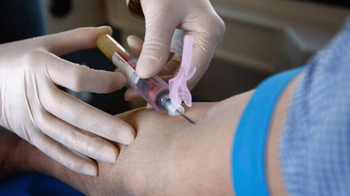
bloodDeveloped by the researchers at Children's Hospital of Pittsburgh of UPMC and University of Pittsburgh School of Medicine, the serum-based test, which needs to be validated in a larger population and receive regulatory approval before being used in clinical practice, would be the first of its kind to be used to detect acute intracranial hemorrhage or bleeding of the brain.

Infants who test positive would then have further evaluation via brain imaging to determine the source of the bleeding. "Abusive head trauma (AHT) is the leading cause of death from traumatic brain injury in infants and the leading cause of death from physical abuse in the United States," said senior author Rachel Berger.

However, approximately 30 percent of AHT diagnoses are missed when caretakers provide inaccurate histories or when infants have nonspecific symptoms such as vomiting or fussiness. Missed diagnoses can be catastrophic as AHT can lead to permanent brain damage and even death.

The researchers collaborated with Axela, a Canadian molecular diagnostics company, to develop a sensitive test that could reduce the chances of a missed diagnosis by using a combination of three biomarkers along with a measure of the patient's level of hemoglobin, the protein that carries oxygen in blood.

Axela's automated testing system allowed the researchers to measure multiple biomarkers simultaneously using an extremely small amount of blood, an important characteristic of a test designed to be used in infants.

The test correctly detected acute intracranial hemorrhage because of abusive head trauma approximately 90 percent of the time, a much higher rate than the sensitivity of clinical judgement, which is approximately 70 percent.

"The test is not intended to replace clinical judgement, which is crucial," said Berger. "Rather, we believe that it can supplement clinical evaluation and in cases where symptoms may be unclear, help physicians make a decision about whether an infant needs brain imaging."

The specificity of the test or the ability to correctly identify an infant without bleeding of the brain who would not require further evaluation was 48 percent. The researchers aimed for the test to be highly sensitive rather than maximizing accuracy, since missing a diagnosis has more serious consequences than performing brain imaging in babies without the condition.

"This study illustrates the benefits of being able to perform highly sensitive tests at the point of care," said co-author Paul Smith. The science behind the test is described in JAMA Pediatrics.

Comments

Add new comment

  • Coastaldigest.com reserves the right to delete or block any comments.
  • Coastaldigset.com is not responsible for its readers’ comments.
  • Comments that are abusive, incendiary or irrelevant are strictly prohibited.
  • Please use a genuine email ID and provide your name to avoid reject.
Agencies
February 20,2020

The health and future of every child and adolescent worldwide is under immediate threat from ecological degradation, climate change and exploitative marketing practices that push fast food, sugary drinks, alcohol and tobacco at children, said a new report on Wednesday.

No single country is adequately protecting children's health, their environment and their futures, according to the report by a commission of over 40 child and adolescent health experts from around the world.

The commission, convened by the World Health Organization (WHO), the United Nations children's agency, Unicef, and medical journal the Lancet, found that while the poorest countries need to do more to support their children's ability to live healthy lives, excessive carbon emissions --disproportionately from wealthier countries -- threaten the future of all children.

"Despite improvements in child and adolescent health over the past 20 years, progress has stalled, and is set to reverse," said former Prime Minister of New Zealand and Co-Chair of the Commission, Helen Clark.

"It has been estimated that around 250 million children under five years old in low- and middle-income countries are at risk of not reaching their developmental potential, based on proxy measures of stunting and poverty. But of even greater concern, every child worldwide now faces existential threats from climate change and commercial pressures," Clark said.

The report, titled "A Future for the World's Children?", includes a new global index of 180 countries, comparing performance on child flourishing and sustainability, with a proxy for greenhouse gas emissions, and equity, or income gaps.

India ranked 131 among the 180 countries in the index.

The index shows that children in Norway, the Republic of Korea, and the Netherlands have the best chance at survival and well-being, while children in the Central African Republic, Chad, Somalia, Niger and Mali face the worst odds.

However, when the authors took per capita CO2 emissions into account, the top countries trail behind: Norway ranked 156, the Republic of Korea 166, and the Netherlands 160.

Each of the three emits 210 per cent more CO2 per capita than their 2030 target.

The US, Australia, and Saudi Arabia are among the ten worst emitters.

If global warming exceeds 4 degree Celsius by the year 2100 in line with current projections, this would lead to devastating health consequences for children, due to rising ocean levels, heatwaves, proliferation of diseases like malaria and dengue, and malnutrition, said the report.

The only countries on track to beat CO2 emission per capita targets by 2030, while also performing fairly (within the top 70) on child flourishing measures are: Albania, Armenia, Grenada, Jordan, Moldova, Sri Lanka, Tunisia, Uruguay and Vietnam.

The report also revealed the distinct threat posed to children from harmful marketing. Evidence suggests that children in some countries see as many as 30,000 advertisements on television alone in a single year, while youth exposure to vaping (e-cigarettes) advertisements increased by more than 250 per cent in the US over two years, reaching more than 24 million young people.

Children's exposure to commercial marketing of junk food and sugary beverages is associated with purchase of unhealthy foods and overweight and obesity, linking predatory marketing to the alarming rise in childhood obesity, said the report.

The number of obese children and adolescents increased from 11 million in 1975 to 124 million in 2016 - an 11-fold increase, with dire individual and societal costs.

Comments

Add new comment

  • Coastaldigest.com reserves the right to delete or block any comments.
  • Coastaldigset.com is not responsible for its readers’ comments.
  • Comments that are abusive, incendiary or irrelevant are strictly prohibited.
  • Please use a genuine email ID and provide your name to avoid reject.
Agencies
February 10,2020

Washington D.C, Feb 10: Children's vulnerability towards depression, anxiety, impulsive behaviour, and poor cognitive performance could be determined by considering the hours of sleep they manage to get.

Sleep states are active processes that support the reorganisation of brain circuitry. This makes sleep especially important for children, whose brains are developing and reorganising rapidly.

In a study by researchers from the University of Warwick -- recently published in the journal Molecular Psychiatry -- cases of 11,000 children aged between 9 and 11 years from the Adolescent Brain Cognitive Development dataset were analyzed to find out the relationship between sleep duration and brain structure.

The study was carried out by researchers Professor Jianfeng Feng, Professor Edmund Rolls, Dr. Wei Cheng and colleagues from the University of Warwick's Department of Computer Science and Fudan University.

Measures of depression, anxiety, impulsive behaviour and poor cognitive performance in the children were associated with shorter sleep duration. Moreover, the depressive problems were associated with short sleep duration one year later.

The reduced brain volume of areas such as orbitofrontal cortex, prefrontal, and temporal cortex, precuneus, and supramarginal gyrus was found to be associated with the shorter sleep duration.

Professor Jianfeng Feng, from the University of Warwick's Department of Computer Science, comments: "The recommended amount of sleep for children 6 to 12 years of age is 9-12 hours. However, sleep disturbances are common among children and adolescents around the world due to the increasing demand on their time from school, increased screen time use, and sports and social activities."

A previous study showed that about 60 per cent of adolescents in the United States receive less than eight hours of sleep on school nights.

Professor Jianfeng Feng further added: "Our findings showed that the total score for behavior problems in children with less than 7 hours sleep was 53 per cent higher on average and the cognitive total score was 7.8 per cent lower on average than for children with 9-11 hours of sleep. It highlights the importance of enough sleep in both cognition and mental health in children."

Professor Edmund Rolls from the University of Warwick's Department of Computer Science also commented: "These are important associations that have been identified between sleep duration in children, brain structure, and cognitive and mental health measures, but further research is needed to discover the underlying reasons for these relationships."

Comments

Add new comment

  • Coastaldigest.com reserves the right to delete or block any comments.
  • Coastaldigset.com is not responsible for its readers’ comments.
  • Comments that are abusive, incendiary or irrelevant are strictly prohibited.
  • Please use a genuine email ID and provide your name to avoid reject.
Agencies
April 21,2020

The Lockdown is not a cure but a critical strategy to prevent the geographical spread of COVID-19.

While pandemics at this level involves actual life threatening situations for individual's or significant others in one's immediate circle, it envisages a marked disruption in routine life. Even after the pandemic has been contained and will come to pass; it's aftermath will leave a trailblazer which demands planning and implementation of a post pandemic reconstruction of society with potentially traumatic experiences varying in intensity, multiplicity and duration.

Degree of Trauma

It would do well for each one of us to realise that the pandemic is "potentially traumatic", since not everyone will experience COVID -19 as a traumatic event in their lives. Yet, there will be those who may develop post pandemic stress reactions, depression and related dysfunction and pathological reactions while still other exhibit healthy reactions to the same set of circumstances.

"Psychological reactions to the pandemic can be distilled into four distinct prototypical patterns, namely, Resilience, Recovery, Chronic and Delayed patterns which may vary in intensity, multiplicity, and duration. Resilient individual have an ability to bounce back from adversity and experience modest or little disruption in normal functioning and are able to maintain a relatively stable, healthy levels of psychological functioning even after enduring the pandemic. Recovery pattern is characterised by relatively rapid reduction in symptoms and return to normal functioning whereas chronic pattern is characterised by symptoms and dysfunction of a long duration," says Pune-based military psychologist Lt Col Dr Samir Rawat.

Challenges at the Individual and Community Levels

From a psychological perspective, post pandemic reconstruction would entail catering to the problems, concerns and needs of those adversely impacted by the COVID -19 with stress symptoms typically characterised by individual's experiencing an overwhelming trauma of the pandemic (for example, recurring nightmares/ breaking into a cold sweat, flashback of stressful events, increasing irritability, low frustration tolerance or emotional numbing).

It could also manifest in depressive symptoms which may result in lack of interest or diminished pleasure in activities and things which you earlier liked to do, feelings of worthlessness or even survivor guilt in case of a loss of a loved one due to COVID-19, fleeting thoughts of death and suicidal ideation. Physical symptoms, on the other hand could be a decrease in appetite, weight and sleep problems, inability to focus and lack of concentration.

Undoubtedly, the pandemic will cause a financial loss of varying magnitude to many, especially the marginalised and economically disadvantaged strata of daily wage earners; it will also lead to loss of jobs (already beginning to show), homelessness, occupational difficulties and new challenges in interpersonal relations at work and on the home front, besides physical health problems and psychological barriers with new norms of accepted social behaviour (social distancing, handshakes, an obsession for cleanliness to name a few).

Emotional battles

Many factors may influence whether individuals come out stronger and more resilient or surrender to the pandemic. Emotion Regulation is one such long term critical factor that can play an important role in contributing to varying degrees of adaptation with negative or positive outcomes. While we know that primary emotions are fear, anger, disgust, joy, anticipation, acceptance, sadness and surprise, other basic emotions include wonder, love, desire, joy, hatred, sadness, attachment, disgust, rage and even expectancy .

To be able to regulate these emotions and avoid negativity , especially on social media platforms is likely to increase efforts in emotion regulation which involves initiating, increasing or maintaining an emotional response.

This means by regulating or on the other hand by stopping, decreasing or avoiding an emotional response, that is, by down-regulating, depending on the individual's objectives and goals or his /her ability to regulate emotions in the valued and given direction.

"One of the best ways to regulate emotions is through cognitive restructuring wherein we change the way we think; after all it is not the event but the interpretation of the event which is perceived as stressful and finding meaning promotes resilience and reduces risk and vulnerability to stress," advises Dr Rawat.

Adding, "Clearly, we need to have a psychological plan to prevent, mitigate and minimise negative outcomes by post pandemic reconstruction of society at an individual and community level all over the country; this has to be integrated by all leaders across verticals in diverse domains."

Comments

Add new comment

  • Coastaldigest.com reserves the right to delete or block any comments.
  • Coastaldigset.com is not responsible for its readers’ comments.
  • Comments that are abusive, incendiary or irrelevant are strictly prohibited.
  • Please use a genuine email ID and provide your name to avoid reject.