



Soon find nutritional value of food from restaurants on app

January 19, 2017

New Delhi, Jan 19: Consumers can soon find out the nutritional value of their food while ordering it from a restaurant or dining at home as the Union Health Ministry is set to launch a mobile app to provide this information.
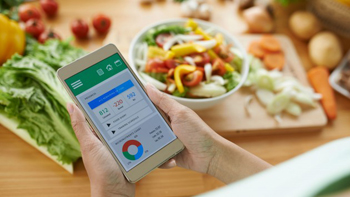
calorieThe proposed app will be linked to the revised Indian Food Composition Tables-2017, which was unveiled today by Union Health Minister J P Nadda, who termed it a "historic" moment as India now joined the league of nations having its own complete food composition database.

Developed by National Institute of Nutrition (NIN), under Indian Council of Medical Research (ICMR), the IFCT-2017 provides nutritional information on 151 discrete food components for 528 key foods.

The data originates from regional composite samples averaged from six geographical regions of the country.

"(We are exploring) If we can simplify this heavy two-kg book and translate into an app which a common man can understand. If a person has pizza, how much he has added, has he added any protien, or added calories or carbohydrates? "If we are able to develop that, we will be able to translate healthy food practices for a common man through this app. This will be a tedious task," Nadda said while addressing International Symposium on 'Food composition in Nutrition and Health'.

He said he has asked the ICMR to convert this (book) into a mobile app as the present document has been written in a scientific language and it is hard for a common man to understand.

"We have asked it to be made into a common language. So that a common man can understand and in his day-to-day life, the food that he takes, what are the nutrient components, he can get it. We want that it comes out with an app.

"ICMR and NIN is working on it. We will come out with it soon. Common man can also get this scientifically written data in common language," he said.

The book not only provides data of regular nutrients in foods but also on a while range of bioactive substance.

Vitamin D2 content in plant foods is presented here for the first time in the world.

Nadda said it is going to help the researchers as they can ascertain how with less economic input, maximum nutritional food can be given and also help the policy makers to think how a common man can be given food with maximum nutritional values.

Policy makers and researchers will also get good insights into what people are consuming in India.

Comments

Add new comment

  • Coastaldigest.com reserves the right to delete or block any comments.
  • Coastaldigset.com is not responsible for its readers’ comments.
  • Comments that are abusive, incendiary or irrelevant are strictly prohibited.
  • Please use a genuine email ID and provide your name to avoid reject.
Agencies
February 11,2020

Using smartphone for long hours every day may do you more harm than you can probably think of. Researchers have found that spending a lot of time with the device and on social media may lead to mental distress and suicidality among adolescents.

The findings, published in the journal CMAJ (Canadian Medical Association Journal) contains guidance for physicians, parents and teachers on how to help teenagers manage smartphone and social media use for a healthy balance between sleep, academic work, social activity, interpersonal relationships and online activity.

"Physicians, teachers and families need to work together with youth to decrease possible harmful effects of smartphones and social media on their relationships, sense of self, sleep, academic performance, and emotional well-being," said lead author of the study Elia Abi-Jaoude from Toronto Western Hospital in Canada.

This review of evidence, led by the Hospital for Sick Children (SickKids), focuses on smartphone use and does not consider online gaming.

"For adolescents today, who have not known a world without social media, digital interactions are the norm, and the potential benefits of online access to productive mental health information -- including media literacy, creativity, self-expression, sense of belonging and civic engagement -- as well as low barriers to resources such as crisis lines and Internet-based talking therapies cannot be discounted," the authors wrote.

The researchers recommend that doctors should ask teenagers to reduce social media use rather than eradicate it completely and encourage parents to be part of the conversations.

Parents should discuss appropriate smartphone use with teenagers to determine together how to reduce risks and set boundaries.

A recent poll from the US indicates that 54 per cent of teenagers think they spend too much time on their smartphones and about half said they were cutting back on usage.

"Encouragingly, youth are increasingly recognising the negative impact of social media on their lives and starting to take steps to mitigate it," the authors wrote.

Comments

Add new comment

  • Coastaldigest.com reserves the right to delete or block any comments.
  • Coastaldigset.com is not responsible for its readers’ comments.
  • Comments that are abusive, incendiary or irrelevant are strictly prohibited.
  • Please use a genuine email ID and provide your name to avoid reject.
Agencies
May 25,2020

Singapore, May 25: COVID-19 patients are no longer infectious after 11 days of getting sick even though some may still test positive, according to a new study by infectious disease experts in Singapore.

A positive test "does not equate to infectiousness or viable virus," a joint research paper by Singapore's National Centre for Infectious Diseases and the Academy of Medicine, Singapore said. The virus "could not be isolated or cultured after day 11 of illness."

The paper was based on a study of 73 patents in the city-state.

The latest findings may have implications on the country's patient discharge policy. The discharge criteria is currently based on negative test results rather than infectiousness.

Singapore's strategy on managing COVID-19 patients is guided by the latest local and international clinical scientific evidence, and the Ministry of Health will evaluate if the latest evidence can be incorporated into its patient clinical management plan, according to a report by the Straits Times.

So far, 13,882, or about 45% of the total 31,068 Covid-19 patients in Singapore have been discharged from hospitals and community facilities. Singapore reported 642 new Covid-19 cases as of noon on Saturday.

The government has been actively screening pre-school staff as it prepares to reopen pre-schools from June 2. On Friday, two pre-school employees tested positive for the novel coronavirus, bringing the total number of confirmed cases among pre-school staff to seven, according to the Ministry of Health.

Comments

Add new comment

  • Coastaldigest.com reserves the right to delete or block any comments.
  • Coastaldigset.com is not responsible for its readers’ comments.
  • Comments that are abusive, incendiary or irrelevant are strictly prohibited.
  • Please use a genuine email ID and provide your name to avoid reject.
Agencies
June 19,2020

While coughing, fever and difficulty in breathing are common symptoms of COVID-19, a new case study has found that pink eye is also a reason to be tested for the disease.

The study, published in the Canadian Journal of Ophthalmology, determined that conjunctivitis and keratoconjunctivitis can also be primary symptoms of COVID-19.

The researchers noted that in March, a 29-year-old woman arrived at the Royal Alexandra Hospital's Eye Institute of Alberta with a severe case of conjunctivitis and minimal respiratory symptoms.

After the patient had undergone several days of treatment with little improvement -- and after it had been determined that the woman had recently returned home from Asia -- a resident ordered a COVID-19 test.

The test came back positive, according to the researchers.

"What is interesting in this case, and perhaps very different to how it had been recognised at that specific time, was that the main presentation of the illness was not a respiratory symptom. It was the eye," said Carlos Solarte, an assistant professor at the University of Alberta in Canada.

"There was no fever and no cough, so we weren't led to suspect COVID-19 at the beginning. We didn't know it could present primarily with the eye and not with the lungs," Solarte said.

Academic studies at the outset of the pandemic identified conjunctivitis as a secondary symptoms in about 10 to 15 per cent of COVID-19 cases, he said.

Since then, scientists have gained greater knowledge of how the virus can transmit through and affect the body's mucous membrane system, of which the conjunctiva -- the clear, thin membrane that covers the front surface of the eye -- is an extension.

While the finding provides important new health information for the public, it also makes eye exams more complicated for ophthalmologists and staff, the researchers noted.

"The patient in this case eventually recovered well without any issues. But several of the residents and staff who were in close contact with the patient had to be under quarantine," said Solarte.

"Fortunately, none who were involved in her care also tested positive," he said.

Patients coming into an eye clinic with conjunctivitis and keratoconjunctivitis are now treated as potential cases of COVID-19 and extra precautions are taken by staff, according to the researchers.

Comments

Add new comment

  • Coastaldigest.com reserves the right to delete or block any comments.
  • Coastaldigset.com is not responsible for its readers’ comments.
  • Comments that are abusive, incendiary or irrelevant are strictly prohibited.
  • Please use a genuine email ID and provide your name to avoid reject.