Sri Lanka bans covering the face with veils after terror attacks

Agencies
April 29, 2019

Colombo, Apr 29: Sri Lanka government has imposed ban on covering of the face with veils, in a manner that prevents identification of a person. The rule announced by the President’s Media Division yesterday will come into force in the island nation today.

The development comes a week after blood thirsty terrorists carried out deadly blasts that killed more than 250 people and injured over 500 people in the country.

President Maithripala Sirisena said he was using emergency powers to ban any form of face covering in public.

"The ban is to ensure national security... No one should obscure their faces to make identification difficult," the statement said.

It could be recalled here that recently local Islamic clerics had urged Muslim women not to cover their faces amid fears of a backlash after the bombings carried out by terrorists affiliated to ISIS.

Muslims in the majority Buddhist nation account for about 10 percent of its 21 million population.

According to Islam, women should cover their entire body except face and hands. Though covering face is not part of hijab, some women among Muslims cover their faces by wearing niqab.

Comments

George W bush
 - 
Tuesday, 30 Apr 2019

the biggest terrorist in the world is George W bush who is christein....did they banned christein nun wearing hijab..who created terror ?


dont need to cry for christ people they are born gaddar...

AU, Mangalore
 - 
Monday, 29 Apr 2019

Did they find any evidence that terrorists were wearing niqab(face cover). if yes, why dint questioned in the most popular places where security is welly organised? what is the moto behind banning the face cover?? Terrorists have no religion, no humanity and they are not at all human!! This life is not end for anyone..

Add new comment

  • Coastaldigest.com reserves the right to delete or block any comments.
  • Coastaldigset.com is not responsible for its readers’ comments.
  • Comments that are abusive, incendiary or irrelevant are strictly prohibited.
  • Please use a genuine email ID and provide your name to avoid reject.
coastaldigest.com news network
June 8,2020

Hubballi, June 8: If everything goes as expected, the railway station in Hubballi, the commercial capital of the state and also the headquarters of South Western Railway (SWR), will have the world’s longest railway platform next year.

E Vijaya, chief public relation officer of SWR, said the work is being done as part of doubling between Hubballi and Bengaluru. 

“At present, Hubballi has five platforms, and the number will be increased to eight. Inspection carriage line is getting converted to full platform. 

Platform No. 1 will be extended from 550m to 1,400m with 10m width. At present, Gorakhpur’s 1,366m platform is the world’s longest facility,” the officer said.

She added that one more entry point is coming up at Gadag Road. “Rs 90 crore is being spent on the works related to full yard, signalling, electrical and building. 

The works, started in November 2019, will be completed in the next one year,” said Vijaya.

Comments

Add new comment

  • Coastaldigest.com reserves the right to delete or block any comments.
  • Coastaldigset.com is not responsible for its readers’ comments.
  • Comments that are abusive, incendiary or irrelevant are strictly prohibited.
  • Please use a genuine email ID and provide your name to avoid reject.
coastaldigest.com news network
June 8,2020

Bengaluru, Jun 8: Karnataka recorded 308 new COVID-19 cases in the past 24 hours, with the majority of patients being domestic returnees, raising the state's tally to 5,760 an official said, here on Monday. "Over 308 new cases were reported from Sunday 5 pm to Monday 5 pm," said the health official.

Like everyday Maharashtra returnees accounted for 96 per cent (267 cases) of the 277 new cases. Majority infections in Karnataka nowadays are returnees, mostly from the state's northern neighbour.

A few returnees also came from Tamil Nadu, Telangana and Andhra Pradesh. There was one international returnee, a 23-year-old man from Dakshina Kannada, who came from the UAE. Only 24 new infections were contacts of earlier cases.

On Monday, cases spiked in Kalaburagi, Yadgir, Bidar, Udupi, Bengaluru Urban, Ballari and Gadag.

Among the new cases, Kalaburagi contributed (99), followed by Yadgir (66), Bidar (48), Udupi (45), Bengaluru Urban (18), Ballari (8), Gadag (6), Shivamogga and Dharwad (4 each), Hassan and Dakshina Kannada (3 each), Bagalkote (2) and Koppal and Ramnagar (1 each). Four patients are suffering from Influenza-Like Illness (ILI).

Meanwhile, record 387 patients got discharged in the past 24 hours. On Monday, three persons - A 67-year-old man, a 48-year-old woman and another 65-year-old woman, all from Bengaluru Urban, succumbed to coronavirus.

Of all the cases, 3,175 are active, 2,519 discharged, 64 dead and 14 in the ICU.

In the past 24 hours, Karnataka tested 8,779 people. Of this, 8,231 reports returned negative. A number of tests were lower than other days. In total, 3.93 lac samples have been tested so far, of which 3.8 lac have returned negative.

Currently, Udupi is leading the state's COVID-19 burden with 628 active cases, followed by Kalaburagi (539), Yadgir (488), Raichur (276) and Bengaluru Urban (176) among others.

Bengaluru Urban has accounted for 18 deaths, followed by Kalaburagi (7), Bidar, Vijayapura, Davangere and Dakshina Kannada (6 each) and Chikkaballapur (3 each), among others.

Comments

Add new comment

  • Coastaldigest.com reserves the right to delete or block any comments.
  • Coastaldigset.com is not responsible for its readers’ comments.
  • Comments that are abusive, incendiary or irrelevant are strictly prohibited.
  • Please use a genuine email ID and provide your name to avoid reject.
Agencies
July 31,2020

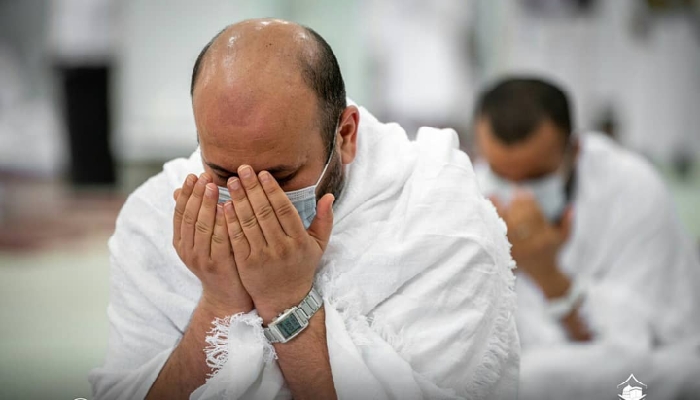
Mount Arafat, July 30: Muslim pilgrims converged Thursday on Saudi Arabia's Mount Arafat for the climax of this year's hajj, the smallest in modern times and a sharp contrast to the massive crowds of previous years.

A tight security cordon has been erected all around the foot of the rocky hill outside Mecca, also known as Jabal al-Rahma or Mount of Mercy.

Pilgrims, donning masks and observing social distancing, were brought in buses from neighbouring Mina, state television showed, as Saudi authorities impose measures to prevent a coronavirus outbreak.

They were subject to temperature checks and attended a sermon -- which state media said was translated into 10 languages -- before they set off on the climb to the summit for hours of Koran recitals and prayers to atone for their sins.

The scene was strikingly different to last year's ritual when a sea of pilgrims ascended Mount Arafat, marshalled by tens of thousands of stewards in a bid to prevent any crushes.

After sunset prayers, pilgrims will make their way down Mount Arafat to Muzdalifah, another holy site where they will sleep under the stars to prepare for the final stage of hajj, the symbolic "stoning of the devil".

It takes place on Friday and also marks the beginning of Eid al-Adha, the festival of sacrifice.

The hajj, one of the five pillars of Islam and a must for able-bodied Muslims at least once in their lifetime, is usually one of the world's largest religious gatherings.

But only up to 10,000 people already residing in the kingdom will participate in this year's ritual, compared with 2019's gathering of some 2.5 million from around the world.

"You are not our guests but those of God, the custodian of the two holy mosques (Saudi Arabia's King Salman) and the nation," Hajj Minister Mohammad Benten said in a video released by the media ministry on Wednesday.

Security cordon

A security cordon has been thrown around the holy sites to prevent any security breaches, an interior ministry spokesman said.

Riyadh faced strong criticism in 2015 when some 2,300 worshippers were killed in the deadliest stampede in the gathering's history.

But this year, those risks are greatly reduced by the much smaller crowd.

The pilgrims have all been tested for the virus, and foreign journalists were barred from this year's hajj, usually a huge global media event.

As part of the rites completed over five days in the holy city of Mecca and its surroundings, the pilgrims converged on Mount Arafat after spending the night in Mina.

A district of Mecca, Mina sits in a narrow valley surrounded by rocky mountains, and is transformed each year into a vast encampment for pilgrims.

They began the hajj on Wednesday with their first "tawaf", the circumambulation of the Kaaba, a large structure in Mecca’s Grand Mosque towards which Muslims around the world pray.

The Kaaba is draped in a black cloth embroidered in gold with Koranic verses and known as the kiswa, which is changed each year during the pilgrimage.

Pilgrims were brought inside the mosque in small batches, walking along paths marked on the floor, in sharp contrast to the normal sea of humanity that swirls around the Kaaba during hajj.

Comments

Add new comment

  • Coastaldigest.com reserves the right to delete or block any comments.
  • Coastaldigset.com is not responsible for its readers’ comments.
  • Comments that are abusive, incendiary or irrelevant are strictly prohibited.
  • Please use a genuine email ID and provide your name to avoid reject.




