



Sudan’s military removes Omar Al-Bashir from power and declares state of emergency

Agencies
April 11, 2019

Khartoum, Apr 12: Sudan’s military has removed Omar Al-Bashir from power after 30 years and declared a state of emergency.

The move brings to an end the divisive and autocratic reign of one of Africa and the Arab world’s longest serving leaders.

It follows months of escalating protests against his rule that have been met with a brutal response by the security forces. Dozens of people have been killed.

But while many celebrated the coup, protests leaders expressed their anger at the military intervention and called for the demonstrations to continue.

In a televised address, Ahmed Awad Ibn Auf, the first vice president and defense minister of Sudan, announced the suspension of the Sudanese constitution and creation of a transitional military council, which will lead the country for two years. Elections would be held after the transition period, Auf added.

“We, the transitional government, bear the responsibility to protect our citizens,” he said “We hope our population will bear the same responsibility.”

Auf, who was sworn in as the head of the council late on Thursday, blamed the 75-year-old leader for his own downfall.

KEY DEVELOPMENTS

*Defense minister announces toppling of the regime and a state of emergncy

*Omar Al-Bashir, who ruled for 30 years, detained at a ‘secure place’

*Transitional military council to run the country for two years, followed by elections

*Political prisoners released and ceasefire declared across country

*Tens of thousands celebrate but protest leaders unhappy, vow to continue demonstrations

-------

“The regime continued to make false promises in response to the demands of the people,” Auf said.

Wearing military uniform and talking calmly to the camera for almost 10 minutes, Auf offered to reassure the Sudanese people, saying the judicial system will remain the same. He called on all armed groups to join the government and protect the people.

A massive crowd of jubilant Sudanese people thronged squares and streets of central Khartoum ahead of the announcement.

But the protestors’ Alliance for Freedom and Change said the regime had "conducted a military coup by bringing back the same faces and the same institutions which our people rose against.”

It urged people “to continue their sit-in in front of army headquarters and across all regions and in the streets.”

Alaa Salah, who became an icon of the protest movement after a video of her leading demonstrators' chants outside army headquarters went viral, said: “The people do not want a transitional military council.”

“Change will not happen with Bashir's entire regime hoodwinking Sudanese civilians through a military coup,” she tweeted. “We want a civilian council to head the transition.”

The son of the head of Sudan’s main opposition party said Al-Bashir was under house arrest along with a “number of Muslim Brotherhood leaders,” Al-Hadath TV reported.

Al-Bashir was at the presidential residence under “heavy guard,” Reuters reported, while it was announced the transitional council would be headed by Auf.

Sudan's army warned it would enforce a night-time curfew, state media reported, as protesters vowed to continue demonstrating against a military council set up after president Omar Al-Bashir was toppled.

The curfew runs "from 10:00 pm to 4:00 am, and all must adhere to it for their own safety," the army said in a statement carried by the official SUNA news agency, adding that it was "doing its duty to keep them and their properties secure".

International reaction to the situation was cautious on Thursday.

The US said it supported a peaceful and democratic Sudan and believes the Sudanese people should be allowed a peaceful transition sooner than two years from now.

"The Sudanese people should determine who leads them in their future," State Department spokesman Robert Palladino said. "The Sudanese people have been clear that they have been demanding a civilian-led transition."

British Foreign Secretary Jeremy Hunt said two years of potential military rule in Sudan “is not the answer" for “real change” in the country.

Hunt tweeted that Sudan needs "a swift move to an inclusive, representative, civilian leadership" and an end to violence.

The US and five European countries — France, UK, Germany, Belgium and Poland — calling for a UN Security Council meeting on Sudan, which will be a closed-door session to be held on Friday. The European Union has called for peaceful and civilian transition.

Al-Bashir has an International Criminal Court arrest warrant against him for the death of an estimated 300,000 people in the Darfur region.

The country’s national intelligence and security service also announced the release of all political prisoners numbering about 5,000, the country’s state news agency reported.

One of those released was Mohammed Naji Elasam, a spokesman for the Sudanese Professionals Association (SPA), the main organizer of protests being held across Sudan since December, witnesses said. Elasam had been detained for more than three months.

Meanwhile, Sudanese protesters stormed a building of the powerful intelligence services in the eastern cities of Port Sudan and Kassala after the officers refused to release the detainees there, witnesses said.

“Protesters stormed the building and looted all the equipment that was there,” a witness from Kasala told AFP by telephone.

The military earlier deployed troops around the defence ministry and on major roads and bridges in the capital.

Al-Arabiya TV also reported that soldiers have raided the headquarters of Al-Bashir’s Islamic Movement in Khartoum.

Airports in Khartoum and Port Sudan were closed, which prompted Saudi carriers Saudia and Flynas to announce on Twitter that they had suspended all flights to and from Sudan.

Protesters gathered in front of the military headquarters as military vehicles were deployed on key roads and bridges in Khartoum. They were reportedly shouting “It has fallen, we won,” Reuters said.

The protests, which erupted in December, have become the biggest challenge yet to Bashir’s three decades of iron-fisted rule.

Crowds of demonstrators have spent five nights defiantly camped outside the sprawling headquarters complex, which also houses Bashir’s official residence and the defense ministry.

There has been an often festive mood at the sit-in with protesters singing dancing to the tunes of revolutionary songs. State television and radio played patriotic music, reminding older Sudanese of how military takeovers unfolded during previous episodes of civil unrest.

Comments

Add new comment

  • Coastaldigest.com reserves the right to delete or block any comments.
  • Coastaldigset.com is not responsible for its readers’ comments.
  • Comments that are abusive, incendiary or irrelevant are strictly prohibited.
  • Please use a genuine email ID and provide your name to avoid reject.
Agencies
May 19,2020

Ramallah, May 19: India has given USD 2 million in aid to the United Nations Relief and Works Agency working for the welfare of Palestinian refugees in support of its core programmes and services, including education and health, amidst the coronavirus crisis.

India had increased its annual contribution to the UNRWA from USD 1.25 million in 2016 to USD 5 million in 2019. It pledged another USD 5 million for 2020 which opens its way to become a member of the agency's advisory commission, according to official sources.

The United Nations Relief and Works Agency (UNRWA) applauded India's financial support to keep its basic services operating, especially under the challenges posed by the COVID-19 pandemic.

The contribution was presented to the UN agency by the Representative of India (ROI) to the State of Palestine, Sunil Kumar.

"On behalf of the agency, I would like to express my deep appreciation to the Government of India for advancing part of its contribution, which will help UNRWA address cash flow challenges," Marc Lassouaoui, chief of the Donor Relations at the agency said.

"The continued determination and commitment of India in support of the Palestine refugees is commendable, in particular under the current circumstances brought on us by COVID-19," he said.

"On behalf of the Government of India, I would like to express my appreciation for the commendable work and endeavours carried out by the UNRWA. We believe that our contribution will support the agency's activities in providing the needed assistance to Palestinian refugees, and assist in achieving their full human development potential," Kumar said.

India's contribution will support the agency's "dire" financial situation due to the funding gaps that risk its core services to the Palestinian refugees in the fields of education and health.

About 3.1 million Palestine refugees depend on health services provided by the UNRWA. At the same time, the agency's schools educate 526,000 students every year, of which half are female.

The agency was created in December 1949 by the UN to support the relief and human development of Palestinian refugees.

The UNRWA definition of “refugee” covers Palestinians who fled or were expelled from their homes during the 1948 War.

Meanwhile, India is preparing medical supplies for the Palestinians to help them in their fight against the coronavirus which is likely to reach the Palestine soon, the Indian mission in the West Bank said in a statement.

Prime Minister Narendra Modi last month spoke to Palestinian President Mahmoud Abbas over phone and discussed the challenges posed by the COVID-19 pandemic. He appreciated efforts being made by the Palestinian Authority (PA) to protect its population and assured all possible support from India.

External Affairs Minister S Jaishankar later talked to his Palestinian counterpart Riad Malki and reiterated India's commitment to support Palestine in its battle against the global pandemic.

So far, 554 COVID-19 cases have been detected in the West Bank under PA and east Jerusalem, with two casualties.

Twenty people were found infected with the virus in Gaza, of which 14 are said to have recovered.

Separately, 17 agreements have been signed under an India-Palestine development partnership between the two sides in the fields of agriculture, health care, information technology, youth affairs, consular affairs, women empowerment and media in the past five years.

New Delhi is to provide an assistance of around USD 72 million through these agreements in projects like the post-2014 war reconstruction efforts in Gaza, construction of five schools, setting up a centre of excellence for information and communication technologies at Al-Quds University and developing a satellite centre in Ramallah.

Comments

Add new comment

  • Coastaldigest.com reserves the right to delete or block any comments.
  • Coastaldigset.com is not responsible for its readers’ comments.
  • Comments that are abusive, incendiary or irrelevant are strictly prohibited.
  • Please use a genuine email ID and provide your name to avoid reject.
News Network
April 24,2020

Riyadh, Apr 24: As many as eleven Indian nationals have died due to COVID-19 in Saudi Arabia.

"As per information available with the Embassy as of April 22, eleven Indian nationals (four in Madinah, three in Makkah, two in Jeddah, one in Riyadh and one in Dammam) have passed away due to COVID-19 in Saudi Arabia," the Embassy of India in Saudi Arabia said in a press release on Wednesday.

It urged the Indian community to remain calm and avoid spreading of rumours amid the COVID-19 crisis.

"The Embassy also reiterates the need for the community to remain calm and avoid spreading of rumours that may create panic. It is important that social media is not used to disseminate false messages and spread hatred along communal lines that can vitiate the atmosphere," the Embassy said.

"As stated by Prime Minister Narendra Modi, COVID-19 does not see race, religion, colour, caste, creed, language or borders before striking, and our response and conduct should attach primacy to unity and brotherhood," it said.

Moreover, several measures on the supply of food, medicines and other emergency assistance to Indians in need are being implemented across the Kingdom.

Earlier, Indian Ambassador to Saudi Arabia, Ausaf Sayeed on April 22 had interacted with Indian community volunteers from the smaller towns all across the Kingdom to discuss the impact of the COVID-19 situation, and evaluate the implementation of various measures to ensure the welfare of Indian nationals.

Comments

Add new comment

  • Coastaldigest.com reserves the right to delete or block any comments.
  • Coastaldigset.com is not responsible for its readers’ comments.
  • Comments that are abusive, incendiary or irrelevant are strictly prohibited.
  • Please use a genuine email ID and provide your name to avoid reject.
Agencies
August 2,2020

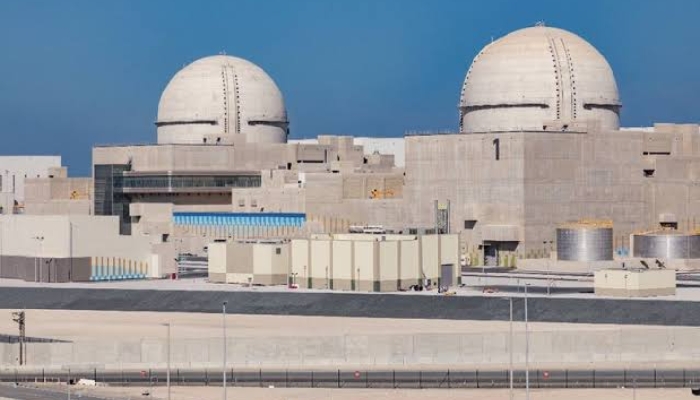
Dubai, Aug 2: The United Arab Emirates (UAE) announced on Saturday that it has started operations in the first of four reactors at the Barakah nuclear power station - the first nuclear power plant in the Arab world.

Emirates Nuclear Energy Corporation (ENEC), which is building and operating the plant with Korea Electric Power Corporation (KEPCO) said in a press release that its subsidiary Nawah Energy Company "has successfully started up Unit 1 of the Barakah Nuclear Energy Plant, located in the Al Dhafrah Region of Abu Dhabi".

That signals that Unit 1, which had fuel rods loaded in March, has achieved "criticality" - a sustained fission chain reaction.

"The start-up of Unit 1 marks the first time that the reactor safely produces heat, which is used to create steam, turning a turbine to generate electricity," said ENEC.

Barakah, which was originally scheduled to open in 2017, has been dogged by delays and is billions of dollars over budget. It has also raised myriad concerns among nuclear energy veterans who are concerned about the potential risks Barakah could visit upon the Arabian Peninsula, from an environmental catastrophe to a nuclear arms race.

Paul Dorfman, an honorary senior research fellow at the Energy Institute, University College London and founder and chair of the Nuclear Consulting Group, has criticised the Barakah reactors' "cheap and cheerful" design that he says cuts corners on safety.

Dorfman authored a report (PDF) last year detailing key safety features Barakah's reactors lack, such as a "core catcher" to literally stop the core of a reactor from breaching the containment building in the event of a meltdown. The reactors are also missing so-called Generation III Defence-In-Depth reinforcements to the containment building to shield against a radiological release resulting from a missile or fighter jet attack.

Both of these engineering features are standard on new reactors built in Europe, says Dorfman.

There have been at least 13 aerial attacks on nuclear facilities in the Middle East - more than any other region on earth.

The vulnerability of critical infrastructure in the Arabian Peninsula was further laid bare last year after Saudi Arabia's oil facilities at Abqaiq and Khurais were attacked by 18 drones and seven cruise missiles - an assault that temporarily knocked out more than half of the kingdom's oil production.

On Saturday, Dorfman reiterated his concern that there is no regional protocol in place to determine liability should an accident or incident at Barakah result in radioactive contamination spreading from the UAE to its neighbours. 

"Given Barakah has started up, because of all the well-rehearsed nuclear safety and security problems, it may be critically important that the Gulf states collectively evolve a Nuclear Accident Liability Convention, so that if anything does go wrong, victim states may have some sort of redress," Dorfman told Al Jazeera. 

The UAE has substantial oil and gas reserves, but it has made huge investments in developing alternative energy sources, including nuclear and solar.

Experts though have questioned why the UAE - which is bathed in sunlight and wind - has pushed ahead with nuclear energy - a far more expensive and riskier option than renewable energy sources.

When the UAE first announced Barakah in 2009, nuclear power was cheaper than solar and wind. But by 2012 - when the Emirates started breaking ground to build the reactors - solar and wind costs had plummeted dramatically.

Between 2009 and 2019, utility-scale average solar photovoltaic costs fell 89 percent and wind fell 43 percent, while nuclear jumped 26 percent, according to an analysis by the financial advisory and asset manager Lazard.

There are also concerns about the potential for Barakah to foment nuclear proliferation in the Middle East - a region rife with geopolitical fault lines and well-documented history of nuclear secrecy.

The UAE has sought to distance itself from the region's bad behaviour by agreeing not to enrich its own uranium or reprocess spent fuel. It has also signed up to the United Nation's nuclear watchdog's Additional Protocol, significantly enhancing inspection capabilities, and secured a 123 Agreement with the United States that allows bilateral civilian nuclear cooperation.

Comments

Add new comment

  • Coastaldigest.com reserves the right to delete or block any comments.
  • Coastaldigset.com is not responsible for its readers’ comments.
  • Comments that are abusive, incendiary or irrelevant are strictly prohibited.
  • Please use a genuine email ID and provide your name to avoid reject.