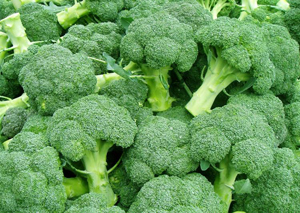
Sulforaphane in Broccoli May Help Diabetics by Controlling Blood Sugar Levels

Agencies
June 16, 2017

Jun 16: According to researchers, broccoli may help people with type 2 diabetes manage their blood sugar levels. To keep you blood sugar levels in check, it is good to switch to foods that are high in fiber and vitamins.broccoli

They should also have a low glycemic index score which means that they won't cause sudden spikes in your blood sugar levels. Broccoli fulfills all these parameters which naturally makes it a superfood for diabetics, but this latest research has something more to add to it.

The humble broccoli, which is often disliked by many people for being boring, is now being touted as a superfood vegetable. It stands out as one of the best sources of Vitamin C (more than oranges!), full of fiber and phytochemicals, low in calories and is also rich in calcium.

Broccoli is good for your heart and has become popular for its anti-cancer properties. A new study, published in the journal Science Translational Medicine, shows that it may have some health benefits for diabetics too.

The study indicates that broccoli contains a compound called sulforaphane which may help reverse the disease signature. Experiments were conducted on rats and they showed that this compound reduced glucose production by liver cells that were growing in culture and shifted the liver gene expression away from a diseased state in the rats with diabetes.

The team constructed a signature for Type 2 diabetes based on 50 genes and then used publically available expression data sets to screen 3,852 compounds for drugs that potentially reverse the disease.

Sulforaphane was provided as concentrated broccoli sprout extract to 97 obese patients with type 2 diabetes during a 12-week randomised placebo-controlled trial. The results showed that it significantly reduced fasting blood glucose and glycated hemoglobin (HbA1c).

The researchers, therefore, conclude that broccoli may act as a secret weapon against diabetes. Previous studies have shown that sulforaphane encourages production of enzymes that protect the blood vessels which can also help in reducing the risk of cardiovascular diseases such as heart attacks and strokes in diabetics which are common side-effects of the ailment.

Comments

Add new comment

  • Coastaldigest.com reserves the right to delete or block any comments.
  • Coastaldigset.com is not responsible for its readers’ comments.
  • Comments that are abusive, incendiary or irrelevant are strictly prohibited.
  • Please use a genuine email ID and provide your name to avoid reject.
Agencies
March 25,2020

The practice of washing your hands for 20 seconds is one of the best preventive measures you can take to avoid the spread of any virus including coronavirus as recommended by the WHO.

The modern day concept of handwashing was introduced by Hungaraian doctor Ignaz Semmelweis, in 19-th century Vienna. Semmelweis proposed the practice of washing hands with chlorinated lime solutions in 1847 while working in the city's general hospital.

Decades later, in the modern times too the practise has not lost it's relevance. To connect with savvy consumers the message is being sent through social media? But social media can also be a dark place where misinformation is rampant; consumers can end up being misguided and compromised on sensitive issues like health and hygiene.

Dettol, recently kickstarted its #HandWashChallenge on TikTok aiming to raise awareness on four simple steps of handwashing. Strategically aimed at creating awareness among audience, a unique song has been created pairing it extremely well with the hashtag #HandWashChallenge. The hashtag filter has a branded Dettol strip across the top with the hashtag and names the steps involved in washing hands. The user can dance out the steps to the challenge and share it with their friends to further amplify the message on hygiene and safety.

Commenting on the same, Pankaj Duhan, Chief Marketing Officer, RB Health South Asia said, "We are elated with the response to the #HandWashChallenge, it has definitely become one of the most successfully led initiatives by any of our brands at RB. Understanding the consumer's mindset is of the utmost importance to us, therefore our campaign communication is built in a way that creates meaningful conversations to drive awareness amongst consumers. The participation by TikTok users across India has helped deliver the right message in a more engaging and interactive manner.

"I personally would like to encourage more and more people to join this global health & hygiene educational exercise. Together, let us all build a healthier nation, four steps at a time."

He further said, "Over the past couple of weeks we have witnessed a lot of misinformation floating around hygiene practices, especially over the internet. Realizing the gravity of the issue and being the responsible brand, we felt it was our prerogative to initiate this awareness campaign."

The campaign witnessed several quirky activities on each day leading to increased consumer interest. Joining the force were some of Bollywood's popular celebrities like Kartik Aaryan and Urvashi Rautela among several other TikTok influencers who have millions of followers on the platform. As part of Phase II, Dettol plans to take the challenge global by encouraging more users to participate while the audience worldwide.

The challenge has witnessed over 18 Billion views and generated over 123K user participation videos in one week of starting the campaign.

Comments

Add new comment

  • Coastaldigest.com reserves the right to delete or block any comments.
  • Coastaldigset.com is not responsible for its readers’ comments.
  • Comments that are abusive, incendiary or irrelevant are strictly prohibited.
  • Please use a genuine email ID and provide your name to avoid reject.
News Network
May 13,2020

California, May 13: A fasting-mimicking diet could be more effective at treating some types of cancer when combined with vitamin C, suggests a new study conducted by the scientists from USC and the IFOM Cancer Institute in Milan.

In studies on mice, researchers found that the combination delayed tumour progression in multiple mouse models of colorectal cancer; in some mice, it caused disease regression. The results were published in the journal Nature Communications.

"For the first time, we have demonstrated how a completely non-toxic intervention can effectively treat an aggressive cancer," said Valter Longo, the study senior author and the director of the USC Longevity Institute at the USC Leonard Davis School of Gerontology and professor of biological sciences at the USC Dornsife College of Letters, Arts and Sciences.

"We have taken two treatments that are studied extensively as interventions to delay ageing-- a fasting-mimicking diet and vitamin C -- and combined them as a powerful treatment for cancer," added Longo.

The researchers said that while fasting remains a challenging option for cancer patients, a safer, more feasible option is a low-calorie, plant-based diet that causes cells to respond as if the body were fasting.

Their findings suggest that a low-toxicity treatment of fasting-mimicking diet plus vitamin C has the potential to replace more toxic treatments.

Results of prior research on the cancer-fighting potential of vitamin C have been mixed. Recent studies, though, are beginning to show some efficacy, especially in combination with chemotherapy.

In this new study, the research team wanted to find out whether a fasting-mimicking diet could enhance the high-dose vitamin C tumour-fighting action by creating an environment that would be unsustainable for cancer cells but still safe for normal cells.

"Our first in vitro experiment showed remarkable effects. When used alone, fasting-mimicking diet or vitamin C alone reduced cancer cell growth and caused a minor increase in cancer cell death. But when used together, they had a dramatic effect, killing almost all cancerous cells," said Longo.

Longo and his colleagues detected this strong effect only in cancer cells that had a mutation that is regarded as one of the most challenging targets in cancer research.

These mutations in the KRAS gene signal the body is resisting most cancer-fighting treatments, and they reduce a patient's survival rate. KRAS mutations occur in approximately a quarter of all human cancers and are estimated to occur in up to half of all colorectal cancers.

The study also provided clues about why previous studies of vitamin C as a potential anticancer therapy showed limited efficacy. By itself, a vitamin C treatment appears to trigger the KRAS-mutated cells to protect cancer cells by increasing levels of ferritin, a protein that binds iron.

But by reducing levels of ferritin, the scientists managed to increase vitamin C's toxicity for the cancer cells. Amid this finding, the scientists also discovered that colorectal cancer patients with high levels of the iron-binding protein have a lower chance of survival.

"In this study, we observed how fasting-mimicking diet cycles are able to increase the effect of pharmacological doses of vitamin C against KRAS-mutated cancers," said Maira Di Tano, a study co-author at the IFOM, FIRC Institute of Molecular Oncology in Milan, Italy.

"This occurs through the regulation of the levels of iron and of the molecular mechanisms involved in oxidative stress. The results particularly pointed to a gene that regulates iron levels: heme-oxygenase-1," added Tano.

The research team's prior studies showed that fasting and a fasting-mimicking diet slow cancer's progression and make chemotherapy more effective in tumour cells while protecting normal cells from chemotherapy-associated side effects. The combination enhances the immune system's anti-tumour response in breast cancer and melanoma mouse models.

The scientists believe cancer will eventually be treated with low-toxicity drugs in a manner similar to how antibiotics are used to treat infections that kill particular bacteria, but which can be substituted by other drugs if the first is not effective.

To move toward that goal, they say they needed to first test two hypotheses: that their non-toxic combination interventions would work in mice, and that it would look promising for human clinical trials.

In this new study, they said that they've demonstrated both. At least five clinical trials, including one at USC on breast cancer and prostate cancer patients, are now investigating the effects of the fasting-mimicking diets in combination with different cancer-fighting drugs.


Comments

Add new comment

  • Coastaldigest.com reserves the right to delete or block any comments.
  • Coastaldigset.com is not responsible for its readers’ comments.
  • Comments that are abusive, incendiary or irrelevant are strictly prohibited.
  • Please use a genuine email ID and provide your name to avoid reject.
Agencies
February 23,2020

Los Angeles, Feb 23: According to researchers, if administered quickly, a common medication that reduces bleeding could be a treatment for bleeding stroke.

The Spot Sign and Tranexamic Acid on Preventing ICH Growth - Australasia Trial (STOP-AUST) was a multicenter, prospective, randomized, double-blind, placebo-controlled, phase 2 clinical trial using the antifibrinolytic agent tranexamic acid in people with intracerebral hemorrhage (ICH).

ICH is a severe form of acute stroke with few treatment options.

Tranexamic acid is currently used to treat or prevent excessive blood loss from trauma, surgery, tooth removal, nosebleeds and heavy menstruation. For this study, one hundred patients with active brain bleeding were given either intravenous tranexamic acid or placebo within 4.5 hours of symptom onset.

Researchers analyzed brain CT scans taken during the 24-hour period after treatment with tranexamic acid or placebo.

Researchers found a trend towards reduced hemorrhage expansion in the group treated with tranexamic acid, especially in those treated within 3 hours of the brain bleed. However, this trend was not statistically significant. The finding was consistent with previous research using the medication.

"Further trials using tranexamic acid are ongoing and focusing on ultra-early treatment - within 2 hours. 

This is where the greatest opportunity for intervention appears to be. Tranexamic acid is inexpensive, safe and widely available. Our results and others provide great impetus for further, focused research using this treatment," Nawaf Yassi said.

Larger trials focused on patient outcomes are required for this therapy to enter routine clinical practice.

Comments

Add new comment

  • Coastaldigest.com reserves the right to delete or block any comments.
  • Coastaldigset.com is not responsible for its readers’ comments.
  • Comments that are abusive, incendiary or irrelevant are strictly prohibited.
  • Please use a genuine email ID and provide your name to avoid reject.