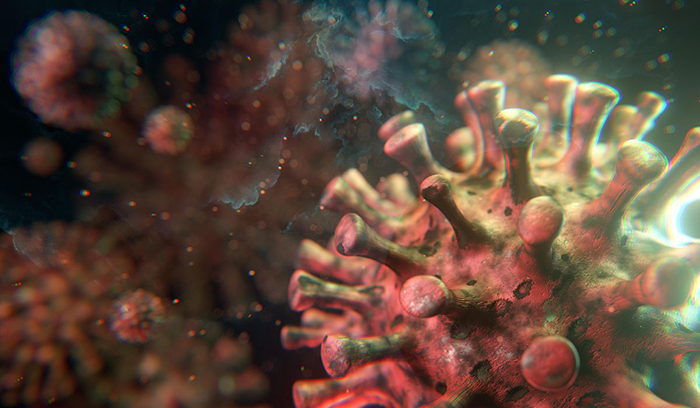
'Superbug from India resistant to all available antibiotics'

January 16, 2017

Washington, Jan 16: A woman in the US died after being infected by a superbug during her visit to India, say doctors who found that the "nightmare" bacteria was resistant to all available antibiotics.
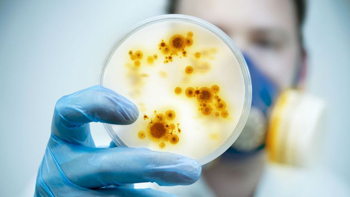
bacteriaThe infection was caused by carbapenem-resistant Enterobacteriaceae (CRE), a multidrug-resistant organism associated with high mortality.

While CRE are not new to the US, what was new in this case is that the infection was resistant or non-susceptible to all available antimicrobial drugs, researchers said.

The 70-year-old patient in the US was admitted to an acute care hospital last year after an extended trip to India.

She was given a primary diagnosis of systemic inflammatory response syndrome, likely resulting from an infected right hip seroma. The infection was serious; none of the 14 antibiotics physicians used to treat the woman worked.

After the CRE - identified as Klebsiella pneumoniae - was confirmed by lab testing, an isolate from a wound specimen was sent to the CDC for further susceptibility testing and to determine the mechanism of resistance.

That testing confirmed the presence of New Delhi metallo-beta-lactamase (NDM-1), an enzyme that directly breaks down carbapenems, a powerful class of antibiotics that are often used to treat multidrug-resistant infections.

The US Centres for Disease Control and Prevention's antimicrobial testing showed the isolate was resistant to 26 different antibiotics, including all aminoglycosides and polymixins - another class of last-resort antibiotics.

It was also intermittently resistant to tigecycline, an antibiotic developed specifically to overcome drug-resistant organisms. Essentially, there were no treatment options.

Meanwhile, the patient's condition was deteriorating quickly. She died of septic shock in early September last year, less than two months after admission. The woman had been in India for two years and had been hospitalised at least four times there for a right femur fracture and a subsequent hip fracture.

"We feel comfortable saying that she most likely obtained the bug in India," said Lei Chen, senior epidemiologist with the Washoe County Health District in the US.

CRE have been labelled as a "nightmare" bacteria not only because they are already resistant to most antibiotics, but also because they spread easily in hospital settings.

The enzymes that enable resistance are carried on mobile pieces of DNA known as plasmids that can spread to other types of bacteria. NDM-1 enzyme is particularly mobile, researchers said.

"It's what we call a promiscuous plasmid, that seems to move easily between species," said Alex Kallen, a CDC medical epidemiologist.

When CRE bacteria enter the bloodstream, they can be deadly. CRE bacteria kill up to half of patients who get bloodstream infections from them.

NDM-1 was originally identified in 2009 in a Swedish patient who had been hospitalised in India.

The research was published in CDC's Morbidity and Mortality Weekly Report (MMWR).

Comments

Add new comment

  • Coastaldigest.com reserves the right to delete or block any comments.
  • Coastaldigset.com is not responsible for its readers’ comments.
  • Comments that are abusive, incendiary or irrelevant are strictly prohibited.
  • Please use a genuine email ID and provide your name to avoid reject.
Agencies
August 2,2020

Washington, Aug 2: Children under the age of five have between 10 to 100 times greater levels of genetic material of the coronavirus in their noses compared to older children and adults, a study in JAMA Pediatrics said Thursday.

Its authors wrote this meant that young children might be important drivers of Covid-19 transmission within communities -- a suggestion at odds with the current prevailing narrative.

The paper comes as the administration of US President Donald Trump is pushing hard for schools and daycare to reopen in order to kickstart the economy.

Between March 23 and April 27, researchers carried out nasal swab tests on 145 Chicago patients with mild to moderate illness within one week of symptom onset.

The patients were divided into three groups: 46 children younger than five-years-old, 51 children aged five to 17 years, and 48 adults aged 18 to 65 years.

The team, led by Dr Taylor Heald-Sargent of the Ann & Robert H. Lurie Children's Hospital, observed, "a 10-fold to 100-fold greater amount of SARS-CoV-2 in the upper respiratory tract of young children."

15 countries with the highest number of cases, deaths due to the Covid-19 pandemic

The authors added that a recent lab study had demonstrated that the more viral genetic material was present, the more infectious virus could be grown.

It has also previously been shown that children with high viral loads of the respiratory syncytial virus (RSV) are more likely to spread the disease.

"Thus, young children can potentially be important drivers of SARS-CoV-2 spread in the general population," the authors wrote.

"Behavioral habits of young children and close quarters in school and daycare settings raise concern for SARS-CoV-2 amplification in this population as public health restrictions are eased," they concluded.

The new findings are at odds with the current view among health authorities that young children -- who, it has been well established, are far less likely to fall seriously ill from the virus -- don't spread it much to others either.

However, there has been fairly little research on the topic so far.

One recent study in South Korea found children aged 10 to 19 transmitted Covid-19 within households as much as adults, but children under nine transmitted the virus at lower rates.

Comments

Add new comment

  • Coastaldigest.com reserves the right to delete or block any comments.
  • Coastaldigset.com is not responsible for its readers’ comments.
  • Comments that are abusive, incendiary or irrelevant are strictly prohibited.
  • Please use a genuine email ID and provide your name to avoid reject.
Agencies
March 16,2020

New Delhi, Mar 16: A recent survey across 140 districts of the country shows that about 54 per cent of Indians are finding travelling to be unsafe as the deadly coronavirus (COVID-19) pandemic sweeps globally.

The big worry that people have is community transmission, something that researchers from around the world have approximated at 10 per cent of total infections and more common in places like Wuhan in China, South Korea, Iran and Italy.

The months of March to June have historically been high travel season for most Indians, largely due to the summer vacations in schools. "But it seems that Indians do not want to take a chance with this rather scary virus and are either cancelling or postponing their travel plans," concluded the survey by LocalCircles.

The survey gathered more than 22,000 responses from participants in tier one, two and three cities. It said 48 per cent Indians plan to cancel their international business travel for the next four months.

Besides, nearly 38 per cent of respondents said they had to pay cancellation fee to the website, travel agent, airline or railways.

"These are testing times for the entire travel and tourism industry -- airlines, hotels, travel agents as well as small tour and taxi operators. The best solution at this point is to adjust cost structures, stay flexible and work with a collective approach to minimise the period of impact to both citizens and business," said LocalCircles.

Comments

Add new comment

  • Coastaldigest.com reserves the right to delete or block any comments.
  • Coastaldigset.com is not responsible for its readers’ comments.
  • Comments that are abusive, incendiary or irrelevant are strictly prohibited.
  • Please use a genuine email ID and provide your name to avoid reject.
Agencies
March 27,2020

New Delhi, Mar 27: The Centre has restricted sale and distribution of "hydroxychloroquine" declaring it as an essential drug to treat the COVID-19 patients and meet the requirements of emergency arising due to the pandemic.

The Ministry of Health and Family Welfare on Thursday made the announcement making it clear that the order "shall come into force on the date of its publication in the official Gazette".

In the order, the government declared that the Central government is "satisfied that the drug hydroxychloroquine is essential to meet the requirements of emergency arising due to pandemic COVID-19 and in the public interest, it is necessary and expedient to regulate and restrict the sale and distribution of the drug 'hydroxychloroquine' and preparation based thereon for preventing their misuse".

"Now, therefore, in exercise of the powers conferred by Section 26B of the Drugs and Cosmetics Act, 1940 (23 of 1940), the Central government hereby directs that sale by retail of any preparation containing the drug Hydroxychloroquine shall be in accordance with the conditions for sale of drugs specified in Schedule H1 to the Drugs and Cosmetics Rules, 1945."

The order came at a time when the novel coronavirus claimed 16 lives and infected over 600 people across India.

The announcement regarding ban of sale and distribution of the drug was made by the government earlier but it issued an official Gazette notification on Thursday signalling that hydroxychloroquine -- an anti-Malaria drug -- will work as a medicine for treating coronavirus infected patients as well.

Recently, the national task force for COVID-19 constituted by Indian Council for Medical Research (ICMR) has recommended hydroxy-chloroquine as a preventive medication.

Comments

Add new comment

  • Coastaldigest.com reserves the right to delete or block any comments.
  • Coastaldigset.com is not responsible for its readers’ comments.
  • Comments that are abusive, incendiary or irrelevant are strictly prohibited.
  • Please use a genuine email ID and provide your name to avoid reject.