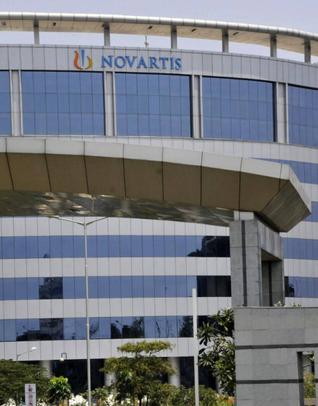
Supreme Court dismisses plea of Novartis for patent of cancer drug

April 1, 2013

New Delhi/Mumbai, Apr 1: The Supreme Court on Monday dismissed Swiss drugmaker Novartis AG's attempt to win patent protection for its cancer drug Glivec, a serious blow to Western pharmaceutical firms who are increasingly focusing on India to drive sales.

The decision also sets a benchmark for several intellectual property disputes in India, where many patented drugs are unaffordable for most of its 1.2 billion people.Novartis
India's domestic drugs market is the 14th largest globally, but with annual growth of 13-14 per cent and the world's second biggest population, it has massive potential at a time when traditional developed markets have slowed down.

The Supreme Court's landmark ruling is likely to affect several other companies and their branded medicines.

Pfizer Inc's cancer drug Sutent and Roche Holding AG's hepatitis C treatment Pegasys lost their patented status in India last year, and Monday's ruling will make it tougher for them to win back patent protection.

"Henceforth, multinational pharma companies are likely to want that their patents are first recognised in India before launch of a patented product," said Ameet Hariani, managing partner at Mumbai-based law firm Hariani & Co.

Novartis has previously said that it needs legal certainty if it is to plan further investment in drug research in India.

The ruling is a boost for healthcare activists who want the government to make medicines cheaper in a country where patented drugs constitute under 10 per cent of total drug sales.

Novartis has been fighting since 2006 to win a patent for an amended form of Glivec. In 2009 it took its challenge against a law that bans patents on newer but not radically different forms of known drugs to the Supreme Court.

India has refused protection for Glivec on the grounds that it is not a new medicine but an amended version of a known compound. By contrast, the newer form of Glivec has been patented in nearly 40 countries including the United States, Russia and China.

The Supreme Court decided that Glivec does not satisfy the "novelty" aspect, Pravin Anand, lawyer for Novartis, told reporters.

Shares in Novartis India Ltd, the Indian unit of the drugmaker, fell over 5 per cent after the verdict.

Comments

Add new comment

  • Coastaldigest.com reserves the right to delete or block any comments.
  • Coastaldigset.com is not responsible for its readers’ comments.
  • Comments that are abusive, incendiary or irrelevant are strictly prohibited.
  • Please use a genuine email ID and provide your name to avoid reject.
News Network
January 31,2020

New Delhi, Jan 31: Substantial competition and low tariff rates by telecom operators since 2016 have led to a financial stress in the sector, the Economic Survey said on Friday.

The data price in the country came down by over 99 per cent during 2016-2019, making it among the lowest tariff in the world, according to the survey.

"Since 2016, the sector has witnessed substantial competition and price cutting by the telecom service providers (TSPs), creating financial stress in the sector. As a result, the sector is experiencing consolidation. While some operators have filed for bankruptcy, others have merged, in their quest to improve viability," the survey report said.

In April-June 2019, the price of data was Rs 7.7 per gigabyte (GB) as compared to Rs 200 per GB in June 2016, it added.

"The Average Revenue Per User (ARPU) for GSM based mobile services has also gone down substantially from Rs 126 in June 2016 to Rs 74.30 in June 2019," the survey said.

The tariff war started in the market with entry of new telecom operator Reliance Jio in September 2016.

"BSNL and MTNL are also affected by the tariff war that has impacted their cash flow resulting in mounting losses," the survey said.

The financial health of the public sector telecom firms plummeted to a level where they have been finding hard to pay employees salaries in time.

The government has drawn up a plan to revive these PSUs which is still in works.

The revival plan consists of several measures, including reduction of staff cost through voluntary retirement scheme, allotment of spectrum for 4G services, monetisation of land and building, tower and fibre assets of BSNL and MTNL, debt restructuring through sovereign guarantee bonds and ''in-principle'' approval for merger of BSNL and MTNL.

The survey said that the wireless telephony now constitutes 98.27 per cent of all subscriptions whereas share of landline telephones now stands at only 1.73 per cent where market share is dominated by private sector players.

"The overall tele-density in India stands at 90.45 per cent, the rural tele-density being 57.35 per cent and urban teledensity being 160.71 per cent at the end of September 2019. The private sector dominates with a share of 88.81 per cent (106.06 crore connections) at the end of September, 2019 while the share of public sector was 11.19 per cent (13.36 crore connections)," the survey said.

The lower price of data has also lead in surge of broadband connections and average consumption of the internet.

Total broadband connections increased by about ten times, from 6.1 crore in 2014 to 59.46 crore in June 2019, the survey said.

The number of internet subscribers (both broadband and narrowband put together) stood at 66.53 crore at the end of June 2019 as compared to 25.16 crore in 2014.

The number of mobile internet subscribers was 64.36 lakh at the end of June 2019 while the number of wireline internet subscribers was 2.17 crore.

"India is now the global leader in monthly data consumption, with average consumption per subscriber per month increasing 157 times from 62 MB in 2014 to 9.8 GB in June 2019. The cost of data has also reduced substantially, enabling affordable internet access for millions of citizens," the survey said.

Comments

Add new comment

  • Coastaldigest.com reserves the right to delete or block any comments.
  • Coastaldigset.com is not responsible for its readers’ comments.
  • Comments that are abusive, incendiary or irrelevant are strictly prohibited.
  • Please use a genuine email ID and provide your name to avoid reject.
Agencies
August 4,2020

Ayodhya,  Aug 4: Various religious ceremonies have been conducted for the past 108 days by saints in Ayodhya and Prime Minister Narendra Modi will take part in `muhurat puja' at 12.44 pm on Wednesday as part of 'bhoomi pujan' for construction of a grand Ram temple.

PM Modi will arrive at 12:30 pm at the Ramjanmbhoomi and take part in various prayers including the main "bhoomi pujan".

Govind Giriji Maharaj, treasurer of Shri Ramjanmbhoomi Teerth Kshetra Trust, said that the religious ceremonies will begin from 8:30 am in the morning and will continue till 12:30 pm.

"The Prime Minister will arrive at 12:30 pm and he will offer `puja' for 15 minutes and take 'sankalp'. First Lord Ganesh will be worshipped then he will offer prayers of eight shilas. Some prayers at shilas we have conducted already," Giri told said.

"The muhrat of pooja is at 12: 44 pm. He will say words 'prathisthapayami' and it is crucial to be done in that muhrat," he said.

Elaborating on the rituals to be performed tomorrow by the Prime Minister, the trust member said that most important is `Kurm Shila' .

"The most important is Kurm Shila - this is right beneath the place where Ram Lalla will be seated. It is this ceremony that we are conducting tomorrow. A cone of Bakul tree wood will be kept in ceremony. This isn't an ordinary cone, it is made of various metals including gold and silver. 

A lotus with nine gems too will be part of pujan which will be offered to this cone by the Prime Minister," he said.

"These are intrinsic to main bhumi pujan. The first religious ceremony was of Devi Kali. There are two devi kalis here, `choti' and `badi'. She is kuldevi, family's goddess of Sita. Today we held Ramarchan ceremony," said Giri.

The Vedic pundits who are involved in religious ceremonies have come from Delhi, Mathura and Kashi.

Asked about the absence of Nepal's religious head of Janaki Mandir, he said that there are many, including 20 religious heads, who would not able to come because they can't leave their seat in Chaturmas.

On the design of temple, Giri said, the old design will remain as it is except a rise in height.

"The structure has become popular and we will keep it. Keeping in mind the modernisation of architecture, we have raised height from 128 feet to 161 feet and instead of three peaks we will have five peaks," he said.

Kanchi Pithadhishvar Maharaj has sent silver coins as souvenirs for every sadhu participating in it, Giri said.

Invitations have been sent to 175 people, including 135 saints of 35 religious organisations to attend the foundation stone-laying ceremony of Ram temple.

The construction of Ram temple will begin in Ayodhya after the ceremony to lay the foundation stone.

Comments

Add new comment

  • Coastaldigest.com reserves the right to delete or block any comments.
  • Coastaldigset.com is not responsible for its readers’ comments.
  • Comments that are abusive, incendiary or irrelevant are strictly prohibited.
  • Please use a genuine email ID and provide your name to avoid reject.
News Network
March 9,2020

New Delhi, Mar 9: Petrol and diesel prices registered a drop across the country on Monday as global oil prices plummeted around 30 per cent after Saudi Arabia slashed prices and set plans for a dramatic increase in crude production in April.

In New Delhi, petrol price fell by 24 paise intra-day and stood at Rs 70.59 per litre. Diesel in the national capital was retailed at Rs 63.26 per litre on Monday as against Rs 63.51 on Sunday.

The retail price of petrol in Kolkata saw a drop of 23 paise to Rs 73.28 per litre. The diesel price fell by 25 paise in the eastern metropolitan city to retail at Rs 65.59 per litre.

In Mumbai, petrol price was Rs 76.29 per litre as against Rs 76.53 a day earlier. Diesel was retailed at Rs 66.24 per litre, 26 paise lower than on Sunday.

In Chennai, petrol was retailed at Rs 73.33 per litre, 25 paise lower than a day earlier. Diesel price saw a fall of 26 paise to retail at Rs 66.75 per litre in the southern metropolitan.

Global crude oil prices fell by as much as a third following Saudi Arabia's move to start a price war with Russia amid worries over the spread of coronavirus.

Brent crude futures were down 13.29 dollars or 29 per cent at 31.98 dollars a barrel by 04:33 hrs GMT after earlier dropping to 31.02 dollars, their lowest since February 12, 2016.

Brent futures were on track for their biggest daily decline since January 17, 1991 at the start of the first Gulf War.

Comments

Add new comment

  • Coastaldigest.com reserves the right to delete or block any comments.
  • Coastaldigset.com is not responsible for its readers’ comments.
  • Comments that are abusive, incendiary or irrelevant are strictly prohibited.
  • Please use a genuine email ID and provide your name to avoid reject.