



Surya Namaskar: A walkover to superstition

[email protected] (Abdul Rashid Agwan)
March 3, 2015

Firstly in Madhya Pradesh and now in Rajasthan, Surya Namaskar has been made obligatory in schools. While in the former state this peculiar form of Yoga has been prescribed only for government schools, in the latter the move has gone beyond by asking private schools as well to observe it. Accordingly, millions of children of 48,000 schools in Rajasthan including 20,000 private schools and a large number of institutions in MP are officially instructed to hold the so-called sun salutation at the beginning of school activities every day.
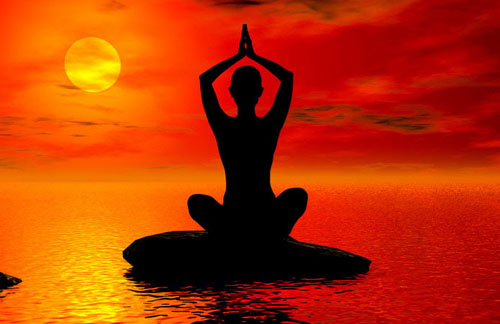
surya

It is exceptionally queer and alarming that all brands of secular sections, socialists, communists, atheists and religious minorities, except Muslims and Christians, are reticent on the promulgation of a superstitious order in the age of science and enlightenment. From among Hindus only Arya Samajists have opposed the move. Even the resistance is confused and half-hearted. It seems that the vast majority of the country is either waiting, as a proverbial silent majority, for emergence of any critical situation or it has given an unthought-of walkover to a quasi-science measure.

The Rajasthan education minister has accepted that Surya Namaskar, yoga and meditation are made mandatory in all secondary and senior secondary schools and informed the media that no one has opposed the sanction in the state. Suwalal, director of Secondary Education in Rajasthan, said, "The order is aimed at improving the educational environment along with strengthening mental and physical fitness." However, facts are contrary to the claim. Some expert comments may be considered here.

According to the American Yoga Association, “Yoga exercises are not recommended for children under 16 because their bodies’ nervous and glandular systems are still growing, and the effect of Yoga exercises on these systems may interfere with natural growth.” Most students of secondary and senior secondary students fall in that age range.

A caution from one alternative medicine site warns that meditation instruction in tender ages can cause physiological or psychological harm - such as: mania, psychosis, hallucination, depression and suicidal tendency, nervous breakdown, sudden surge of heart rates, chronic pain, and split personalities.

Dr. James G. Garrick, an orthopedic surgeon and director of the Center for Sports Medicine at St. Francis Hospital in San Francisco, said that his clinic saw 39 patients with yoga injuries in 2002, up from 11 in 2001. Most of the injuries patients suffered were to the knee, followed by lower back and shoulder. The injuries result from people trying to stretch their bodies into difficult poses that are beyond their physical limitations. Experts are of the opinion that inverted Asanas including Padahastasana should be avoided in glaucoma, inflammatory diseases in the head region and severe hypertension.

Art of Living, the well-known champion of Yoga in the country, instructs, “If you are suffering from persistent back pain, any other pain in the body or some chronic physical problem, it is advisable to consult a doctor before beginning the practice.”

The common guess is that the governments of MP and Rajasthan have not conducted any medical checkup of the students for giving them clearance for yogic exercises nor they have followed age-specific advices of experts. It is not clear whether the policymakers have made provision for compensation if any wrong happens with any student during the celebrated exercise. It can be imagined that the concerning departments would not have developed any monitoring mechanism to watch health complications apprehended to occur as a consequence of human error and system failure. It is the responsibility of the government to fix compensation in case of any ravage.

It should be noted that the tradition of Surya Namaskar is embedded in age old superstitions around the sun worship. There was a time when mankind was not aware about stars larger than the sun. It was not known at that time that the sun is not a divinity but a large ball of hydrogen gas which burns, changes to helium and thus illuminates the world. Ancient people were unaware that many kinds of sunrays are, in fact, harmful for life on the earth. They were ignorant about the existence of UVA and UVB rays which originate from the sun and penetrate the atmosphere and play an important role in conditions such as premature skin aging, eye damage (including cataracts), and skin cancers and that they also suppress the immune system, reducing one’s ability to fight off these and other maladies. They did not know, it is the ozone layer which saves all kinds of life from harmful radiation of the sun in the absence of which life would not have been possible on the earth. So the ignorant man started worshipping the sun as a central power in the perceived universe. In fact, ozone layer deserves more of human reverence than the sun itself so long as sustenance of life is concerned.

Science has made it possible to grapple with truth and reality more intensely. Yet, there are people who appear uninterested to prefer science over quasi-science and fact over fiction and history over mythology. That too is happening now in the name of education!

The country has seen a few years back an orchestrated and wide spread drama of milk-drinking Ganesha by using the science of siphon. Thank God, the scientific community came forward to blew up the ‘divine miracle’ before the event could go into popular memory. The same forces are active in other guise but the present silence of the scientific community is really astonishing.

The conservative sections of the country have started imposing superstitious beliefs just after attaining power at the center. Gujarat’s BJP government made it mandatory to observe Saraswati Pujan on the day of Basant Panchami and other state governments of the party are playing with educational system at the cost of enlightenment through other gimmicks.

It is in record that Raja Bhavan Rao Srinivas of Aundh preached Surya Namaskar for the first time in the schools of his small state in Maratha region through his 1928 composition, "The Ten Point Way of Health". The earliest direct reference to Sun Salutation has been traced in “A Short History of Aryan Medical Science” published in 1896 by Simhaji, a lesser known Hindu writer. These two instances make it evident that Surya Namaskar has nothing to do with mainstream Hinduism or some ancient Hindu traditions but its comparatively recent inventors definitely have sun worship in mind as its objective. Simhaji wrote, “Some of the Hindus set aside a portion of their daily worship for making salutations to the Sun by prostrations.” The Art of Living suggests 12 mantras for each of a dozen exercises during Surya Namaskar, with the beginning of ‘Oam’ and the ending of ‘Namaha’ while the middle part comprising any synonym of the deity Sun. ‘Namah’ is equivalent of the Persian word ‘Namaz’.

The assertion of Surya Namaskar is neither a wholesome exercise, at least for children, nor it is prescribed in Hinduism as something essential even for Hindus, what to talk of others. Sun worship is its prime objective and it requires incantation of mantras of Hindu sacred books during performance. Thus, it encroaches upon religious liberty of non-Hindus and monotheists and appears to be a backdoor project for Ghar Wapsi. This practice is as ridiculous as nude sun bath prevalent among many people who also proffer many justifications for their superstitious belief.

We are not living in the age of Raja Srinivas nor are we subjects of any modern regency. We are living in the age of science and are citizens of a country where freedom reigns supreme. Imposition of an obsolete sectarian practice on all people of a state is nothing but a disrespect to and denial of that freedom.

Instead of inculcating superstitious worship in the educational systems of Madhya Pradesh and Rajasthan, the BJP governments should promote quality education there. Both these states have been traditionally placed among BIMRU states of the country, which are spotted for their rampant backwardness. MP stands 28th and Rajasthan 33rd among 35 states and union territories of the country in terms of literacy. Rajasthan now stands the lowest in female literacy according to 2011 census, showing a decline from 30th position of 2001 census to the abyss. The state is not progressing educationally; rather it is on the fall. It is advisable for Vasundhara Raje as a woman chief minister of educationally the most backward part of India to better work for elevating female literacy in the state to some respectable heights rather than playing with Hinduist hoaxes.

In a recent statement, the former central minister and ex-president of BJP Professor Murli Manohar Joshi has appreciated the Muslim form of prayer (Namaz) as a “good yoga”. There is a provision of Ashtang Yoga in ancient Hindu traditions which is identical to Namaz. Therefore, the governments inclined to introduce Surya Namaskar for the cross-sections of students should allow Namaz in schools for Muslim students and Ashtanga Yoga for Hindu students, as both are better than the Surya Namaskar invented by a Raja for his subjects.

The people who are agitating and resisting the superstitious move of the conservative governments of BJP need to plead their case in the name of science and rationality apart from the angle of religious liberty. Moreover, the matter should be undertaken from a human rights viewpoint in the wake of potential harms of yogic practices in tender ages and perhaps beyond.
rasheed

[Contributor is an activist, writer on contemporary issues and author of many books including his recent thought-provoking work “Islam in 21st Century: The Dynamics of Change and Future-making”.]

Comments

Add new comment

  • Coastaldigest.com reserves the right to delete or block any comments.
  • Coastaldigset.com is not responsible for its readers’ comments.
  • Comments that are abusive, incendiary or irrelevant are strictly prohibited.
  • Please use a genuine email ID and provide your name to avoid reject.
Ram Puniyani
February 13,2020

Forthcoming Census and RSS campaign

Currently massive protests are going on against NPR, NCR and CAA. At the same time we are going to begin the process of decadal census in 2021. Already RSS is active in promoting NPR, NCR and CAA. At the same time RSS wants that Adivasis should register themselves as Hindus rather than ticking the column of ‘Others’. As per their spokesperson in the 2011 census many Adivasis groups ticked that column because of which the population of Hindus came down to by 0.7 percent point to come down to 79.8 %. This has sent signals to this Hindu nationalist organization and is planning to ensures that Adivasis tick the column of Hindus in this census.

As such RSS has a very clever attitude in defining the term Hindu. The first formulation was by Savakakar who said that all those who regard the land east of Indus as their Holy land and Father land are Hindus. This left out Muslims and Christians, and brought all others in the ambit of Hindu fold. From the decade of 1980s due to electoral compulsions they have been trying to articulate that all those who are living in India are Hindus. Murli Manohar Joshi stated that Muslims are Ahmadiya Hindus and Christians are Christi Hindus. Recently there was a controversy when they restated that Sikhs are not a separate religion but are a sect of Hinduism. Many Sikh organizations stood up to say that Sikhism is a religion by itself and recalled the book of Kahan Singh Nabha, “Hum Hindu Nahin”

As far as Adivasis are concerned in contrast to what is being planned by Hindu nationalist RSS, many Adivasis groups have been meeting from last couple of years to demand just the contrary. As per them there should be a column where they can tick their identity of Adivasis.  There are active campaigns among Adivasis groups to uphold their Adivasi identity in Census. As per them in the first census which was conducted in Independent India, the column, Aborigines, was there, which was later removed forcing them to club themselves with other religions.

After 1951 in addition to Hindu, Muslim, Sikh, Christian, Jain and Buddha, the column ‘others’ was also there which was removed in 2011. Even during British period if you look at the censuses of the British era (from 1871 to 1931); there was provision for tribes to choose Aborigine as an option. There are nearly 83 religious practices being followed by Adivasis. Few major of these are Sarna, Gondi, Punem, Adi, and Koya. What they share in common is that they are animists, worship nature and spirit of ancestors; do not have priestly class or Holy Scriptures and Gods and Goddesses characteristic of the broad Hindu pantheon.

RSS as per its political agenda of Hindu Nation regards them as Vanvasi. They pontificate that they have been part of Hindu society who were driven away to forests to escape the forcible conversion being done by the Muslim invaders. This concoction is contrary to the interpretations based on the studies from population genetics. The Hindu nationalist argues that Aryans have been the original inhabitants of the country from where they spread to other parts of the World. The book by Tony Joseph, ‘Early Indians’ tells us that away from the race theory, we are all mixed up. The first inhabitants in our land were the ones who emigrated from South Asia over Sixty thousand years ago.

The Indo-Aryans came here nearly three thousand years ago and they pushed the aborigines to the forests and hills and that’s what constitutes the Adivasi community of India.

Hindu Nationalists like all the nationalists who construct their nationalism around their religion claim to be the most original inhabitants of the land, and their interpretations of past are molded according to that. RSS right from beginning has not been using the word Adivasi, it calls them Vanvasi. As per its agenda it wants them to be part of Hindu fold, despite Adivasis themselves saying that they are not Hindus, they have beliefs and practices which are far away from Hinduism in whatever form.

To enhance its political reach from the decades of 1980s in particular its work in Adivasis areas has been intensified. While ‘Vanvasis Kalyan Ashram’, part of RSS Combine which was formed much earlier, it was in the decades of 1980s that their work was jacked up by sending more Pracharaks in Adivasi areas. We see that in Gujarat, Dangs and nearby area, Swami Aseemanand, in MP, centered around Jhabua-the followers of Asaram Bapu and in Orissa Swami Laxmananad stationed them. They saw Christian missionaries working in the field of education and health as an obstacle to Hinduization of Adivasis. Their propaganda against Christian missionaries led to the ghastly murder of Pastor Graham Stains. It was this propaganda which led to anti Christian violence in various forms, the most horrific being the Kandhamal violence of 2008.

In order to culturally co-opt them into the fold of Hinduism they began series of religious congregations, Kumbhs. Shabri Kumbh in Dangs and many other Adivasis predominant areas created an atmosphere of fear, Adivasis were asked to be part of it, saffron flags were distributed and they were made to put it in their houses. Two religious icons were popularized in these areas, one was Shabri and other was Hanuman. To cap it all, Ekal Vidyalayas, started spreading RSS’s interpretation of history in these areas. The other angle of the whole thing is that Adivasis are living in the areas rich in minerals, which the BJP supporter Corporate World wants to take over.

World over aborigines have similar pattern. They are animists and what they practice is a culture as such. Many have converted to other religions out of their choice for sure, but finally in these matters what is important is the self perception. Hemant Soren the Chief Minister of Jharkhand pointed out that “Adivasis are not Hindus. ”Keeping that in mind; the column of Aborigines needs to find its place in our census forms.

Comments

Add new comment

  • Coastaldigest.com reserves the right to delete or block any comments.
  • Coastaldigset.com is not responsible for its readers’ comments.
  • Comments that are abusive, incendiary or irrelevant are strictly prohibited.
  • Please use a genuine email ID and provide your name to avoid reject.
Ram Puniyani
February 10,2020

Noam Chomsky is one of the leading peace workers in the world. In the wake of America’s attack on Vietnam, he brought out his classic formulation, ‘manufacturing consent’. The phrase explains the state manipulating public opinion to have the public approve of it policies—in this case, the attack of the American state on Vietnam, which was then struggling to free itself from French colonial rule.

In India, we are witness to manufactured hate against religious minorities. This hatred serves to enhance polarisation in society, which undermines India’s democracy and Constitution and promotes support for a Hindu nation. Hate is being manufactured through multiple mechanisms. For example, it manifests in violence against religious minorities. Some recent ghastly expressions of this manufactured hate was the massive communal violence witnessed in Mumbai (1992-93), Gujarat (2002), Kandhamal (2008) and Muzaffarnagar (2013). Its other manifestation was in the form of lynching of those accused of having killed a cow or consumed beef. A parallel phenomenon is the brutal flogging, often to death, of Dalits who deal with animal carcasses or leather.

Yet another form of this was seen when Shambhulal Regar, indoctrinated by the propaganda of Hindu nationalists, burned alive Afrazul Khan and shot the video of the heinous act. For his brutality, he was praised by many. Regar was incited into the act by the propaganda around love jihad. Lately, we have the same phenomenon of manufactured hate taking on even more dastardly proportions as youth related to Hindu nationalist organisations have been caught using pistols, while police authorities look on.

Anurag Thakur, a BJP minster in the central government recently incited a crowd in Delhi to complete his chant of what should happen to ‘traitors of the country...” with a “they should be shot”. Just two days later, a youth brought a pistol to the site of a protest at Jamia Millia Islamia university and shouted “take Azaadi!” and fired it. One bullet hit a student of Jamia. This happened on 30 January, the day Nathuram Godse had shot Mahatma Gandhi in 1948. A few days later, another youth fired near the site of protests against the CAA and NRC at Shaheen Bagh. Soon after, he said that in India, “only Hindus will rule”.

What is very obvious is that the shootings by those associated with Hindu nationalist organisations are the culmination of a long campaign of spreading hate against religious minorities in India in general and against Muslims in particular. The present phase is the outcome of a long and sustained hate campaign, the beginning of which lies in nationalism in the name of religion; Muslim nationalism and Hindu nationalism. This sectarian nationalism picked up the communal view of history and the communal historiography which the British introduced in order to pursue their ‘divide and rule’ policy.

In India what became part of “social common sense” was that Muslim kings had destroyed Hindu temples, that Islam was spread by force, and that it is a foreign religion, and so on. Campaigns, such as the one for a temple dedicated to the Hindu god Rama to be built at the site where the Babri masjid once stood, further deepened the idea of a Muslim as a “temple-destroyer”. Aurangzeb, Tipu Sultan and other Muslim kings were tarnished as the ones who spread Islam by force in the subcontinent. The tragic Partition, which was primarily due to British policies, and was well-supported by communal streams also, was entirely attributed to Muslims. The Kashmir conflict, which is the outcome of regional, ethnic and other historical issues, coupled with the American policy of supporting Pakistan’s ambitions of regional hegemony, (which also fostered the birth of Al-Qaeda), was also attributed to the Muslims.

With recurring incidents of communal violence, these falsehoods went on going deeper into the social thinking. Violence itself led to ghettoisation of Muslims and further broke inter-community social bonds. On the one hand, a ghettoised community is cut off from others and on the other hand the victims come to be presented as culprits. The percolation of this hate through word-of-mouth propaganda, media and re-writing of school curricula, had a strong impact on social attitudes towards the minorities.

In the last couple of decades, the process of manufacturing hate has been intensified by the social media platforms which are being cleverly used by the communal forces. Swati Chaturvedi’s book, I Am a Troll: Inside the Secret World of the BJP’s Digital Army, tells us how the BJP used social media to spread hate. Whatapp University became the source of understanding for large sections of society and hate for the ‘Other’, went up by leaps and bounds. To add on to this process, the phenomenon of fake news was shrewdly deployed to intensify divisiveness.

Currently, the Shaheen Bagh movement is a big uniting force for the country; but it is being demonised as a gathering of ‘anti-nationals’. Another BJP leader has said that these protesters will indulge in crimes like rape. This has intensified the prevalent hate.

While there is a general dominance of hate, the likes of Shambhulal Regar and the Jamia shooter do get taken in by the incitement and act out the violence that is constantly hinted at. The deeper issue involved is the prevalence of hate, misconceptions and biases, which have become the part of social thinking.

These misconceptions are undoing the amity between different religious communities which was built during the freedom movement. They are undoing the fraternity which emerged with the process of India as a nation in the making. The processes which brought these communities together broadly drew from Gandhi, Bhagat Singh and Ambedkar. It is these values which need to be rooted again in the society. The communal forces have resorted to false propaganda against the minorities, and that needs to be undone with sincerity.

Combating those foundational misconceptions which create hatred is a massive task which needs to be taken up by the social organisations and political parties which have faith in the Indian Constitution and values of freedom movement. It needs to be done right away as a priority issue in with a focus on cultivating Indian fraternity yet again.

Comments

Add new comment

  • Coastaldigest.com reserves the right to delete or block any comments.
  • Coastaldigset.com is not responsible for its readers’ comments.
  • Comments that are abusive, incendiary or irrelevant are strictly prohibited.
  • Please use a genuine email ID and provide your name to avoid reject.
Ram Puniyani
February 4,2020

As democracy is seeping in slowly all over the world, there is an organization which is monitoring the degree of democracy in the individual countries, The Economist Intelligence Unit. As such in each country there are diverse factors which on one hand work to deepen it, while others weaken it. Overall there is a march from theoretical democracy to substantive one. The substantive democracy will herald not just the formal equality, freedom and community feeling in the country but will be founded on the substantive quality of these values. In India while the introduction of modern education, transport, communication laid the backdrop of beginning of the process, the direction towards deepening of the process begins with Mahatma Gandhi when he led the non-cooperation movement in 1920, in which average people participated. The movement of freedom for India went on to become the ‘greatest ever mass movement’ in the World.

The approval and standards for democracy were enshrined in Indian Constitution, which begins ‘We the people of India’, and was adopted on 26th January 1950. With this Constitution and the policies adopted by Nehru the process of democratization started seeping further, the dreaded Emergency in 1975, which was lifted later restored democratic freedoms in some degree. This process of democratisation is facing an opposition since the decade of 1990s after the launch of Ram Temple agitation, and has seen the further erosion with BJP led Government coming to power in 2014. The state has been proactively attacking civil liberties, pluralism and participative political culture with democracy becoming flawed in a serious way. And this is what got reflected in the slipping of India by ten places, to 51st, in 2019. On the index of democracy India slipped down from the score of 7.23 to 6.90. The impact of sectarian BJP politics is writ on the state of the nation, country.

Ironically this lowering of score has come at a time when the popular protests, the deepening of democracy has been given a boost and is picking up with the Shaheen Bagh protests. The protest which began in Shaheen Bagh, Delhi in the backdrop of this Government getting the Citizenship amendment Bill getting converted into an act and mercilessly attacking the students of Jamia Milia Islamia, Aligarh Muslim University along with high handed approach in Jamia Nagar and neighbouring areas.  From 15th December 2019, the laudable protest is on.

It is interesting to note that the lead in this protest has been taken by the Muslim women, from the Burqa-Hijab clad to ‘not looking Muslim’ women and was joined by students and youth from all the communities, and later by the people from all the communities. Interestingly this time around this Muslim women initiated protest has contrast from all the protests which earlier had begun by Muslims. The protests opposing Shah Bano Judgment, the protests opposing entry of women in Haji Ali, the protests opposing the Government move to abolish triple Talaq. So far the maulanas from top were initiating the protests, with beard and skull cap dominating the marches and protests. The protests were by and large for protecting Sharia, Islam and were restricted to Muslim community participating.

This time around while Narendra Modi pronounced that ‘protesters can be identified by their clothes’, those who can be identified by their external appearance are greatly outnumbered by all those identified or not identified by their appearance.

The protests are not to save Islam or any other religion but to protect Indian Constitution. The slogans are structured around ‘Defence of democracy and Indian Constitution’. The theme slogans are not Allahu Akbar’ or Nara-E-Tadbeer’ but around preamble of Indian Constitution. The lead songs have come to be Faiz Ahmad Faiz’s ‘Hum Dekhenge’, a protest against Zia Ul Haq’s attempts to crush democracy in the name of religion. Another leading protest song is from Varun Grover, ‘Tanashah Aayenge…Hum Kagaz nahin Dikhayenge’, a call to civil disobedience against the CAA-NRC exercise and characterising the dictatorial nature of the current ruling regime.

While BJP was telling us that primary problem of Muslim women is Triple talaq, the Muslim women led movements has articulated that primary problem is the very threat to Muslim community. All other communities, cutting across religious lines, those below poverty line, those landless and shelter less people also see that if the citizenship of Muslims can be threatened because of lack of some papers, they will be not far behind in the victimization process being unleashed by this Government.

While CAA-NRC has acted as the precipitating factor, the policies of Modi regime, starting from failure to fulfil the tall promises of bringing back black money, the cruel impact of demonetisation, the rising process of commodities, the rising unemployment, the divisive policies of the ruling dispensation are the base on which these protest movements are standing. The spread of the protest movement, spontaneous but having similar message is remarkable. Shaheen Bagh is no more just a physical space; it’s a symbol of resistance against the divisive policies, against the policies which are increasing the sufferings of poor workers, the farmers and the average sections of society.

What is clear is that as identity issues, emotive issues like Ram Temple, Cow Beef, Love Jihad and Ghar Wapasi aimed to divide the society, Shaheen Bagh is uniting the society like never before. The democratisation process which faced erosion is getting a boost through people coming together around the Preamble of Indian Constitution, singing of Jan Gan Man, waving of tricolour and upholding the national icons like Gandhi, Bhagat Singh, Ambedkar and Maulana Azad. One can feel the sentiments which built India; one can see the courage of people to protect what India’s freedom movement and Indian Constitution gave them.

Surely the communal forces are spreading canards and falsehood against the protests. As such these protests which is a solid foundation of our democracy. The spontaneity of the movement is a strength which needs to be channelized to uphold Indian Constitution and democratic ethos of our beloved country.

Comments

Add new comment

  • Coastaldigest.com reserves the right to delete or block any comments.
  • Coastaldigset.com is not responsible for its readers’ comments.
  • Comments that are abusive, incendiary or irrelevant are strictly prohibited.
  • Please use a genuine email ID and provide your name to avoid reject.