


Swiss money trail: From gold & diamond to stocks & bitcoins

June 29, 2014

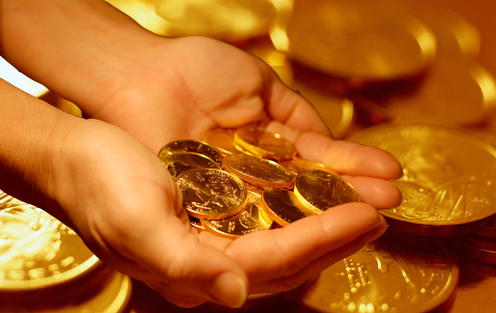
Swiss GoldZurich/New Delhi, Jun 29: As Switzerland commits to cooperate in India's fight against black money, a new strategy of 'layering' through gold and diamond trade has come to light at Swiss banks to thwart any attempt for identification of real beneficiary owners of funds entrusted with them.

The activities and avenues being used for such 'layering' include diamond trade, gold and other jewellery exports, stock market transactions through use of complex funds, as also the fund transfer through new-age virtual currencies like bitcoin.

At a time when Switzerland has been facing intense pressure to act on the alleged use of Swiss banks for stashing black money by Indians, the government data of the Alpine nation shows that India has become the top destination for its gold exports with trade worth close to 6 billion Swiss francs (about Rs 40,000 crore) since the beginning of this year.

According to government and banking sources, there is a growing suspicion that a portion of gold and diamond trade is being used to route funds from Swiss banks to India and other destinations.

At the same time, the banks in Switzerland are now getting an undertaking signed by their clients, where the customer agrees to take responsibility for any possible regulatory or administrative compliance with international norms.

The development regarding alleged use of diamond and gold trade, as also stock market transactions and bitcoins, for layering of black money comes at a time when there has been an intense debate about Swiss authorities' assistance in India's fight against black money, which has been a politically sensitive issue in the country.

A senior Swiss government official recently said that Switzerland was ready to help India with data under its 'spontaneous information exchange' initiative on a proactive basis, although the European country continues to resist any information-sharing on requests based on 'stolen data'.

The statement triggered a major debate and Switzerland's Secretariat for International Financial Matters (SIF) issued a public statement on this matter. Some reports went on to suggest that Swiss authorities have already shared a list of Indians alleged to have stashed black money, but any such development was denied by both the government.

When contacted, SIF spokesperson Mario Tuor confirmed that the Swiss authorities "are in contact with the Indian government", but refused to share further details.

In reply to emailed queries, Tuor said that Switzerland is looking forward to working together with the new government in India in its fight against tax evasion.

Tuor, however, refused to comment on his reported remarks that Switzerland has not shared any list with India, neither it was preparing one for sharing with the Indian authorities.

The other routes being tapped by some Swiss bankers and their clients for 'layering' of their funds include art works, as also virtual currencies, they added.

'Layering' is generally second stage of money laundering process and this involves moving illicit funds around the financial system through a complex series of transactions to complicate the paper trail.

This 'layering' typically takes place between the first stage -- 'placement' of black money in the financial system either in cash vaults, or through a series of cash or sham financial transactions -- and before the final 'integration' stage when money is put back into the financial system through various transactions for the benefit of its final recipient.

The latest data compiled by Switzerland's Federal Customs Administration (FCA) shows that exports to India of gold, silver and coins to India has been rising consistently since January this year (981 million Swiss francs) and reached 1.2 billion Swiss francs (about Rs 8,000 crore) in May 2014.

Moreover, India accounted for over 32 per cent of entire Swiss exports of such items during May, up from just about 14 per cent at the beginning of this year. In the process, India has overtaken China as biggest destination for Swiss gold exports. Interestingly, Switzerland's overall gold export figures have fallen in recent months, but exports to India are rising.

Under global pressure, Switzerland decided earlier this year to provide country-wise breakdown of its gold trade.

The Financial Action Task Force (FATF), a global financial crimes combating body, had also said in one of its recent reports that India is one of the five countries where instances have been found that trade accounts of diamond business are being used to launder illegal funds.

Switzerland is also in the process of easing its various regulations, including those related to sharing of information with foreign jurisdictions in cases of suspected tax evasion and other financial crimes.

When asked whether India would be a beneficiary for automatic information exchange once a revised Tax Administrative Assistance Act comes into force in August, SIF spokesperson declined to give any direct answer and said it would depend on various developments within the country.

"Switzerland is actively taking part in international efforts aimed at better combating tax fraud and evasion such as the development of a worldwide standard for automatic exchange of information. Like India, Switzerland has endorsed the declaration on automatic exchange of information..." Tuor said.

On specific query that whether India would benefit, the spokesperson said that Switzerland would first wait until the new global standard on automatic exchange in tax matters has been defined by the OECD and accepted by the G20.

"Secondly, the Swiss government will propose how to implement the new standard in Switzerland. Thirdly, the Swiss parliament will decide on the government's proposals... I can't give you any further details," Tuor said.

Comments

Add new comment

  • Coastaldigest.com reserves the right to delete or block any comments.
  • Coastaldigset.com is not responsible for its readers’ comments.
  • Comments that are abusive, incendiary or irrelevant are strictly prohibited.
  • Please use a genuine email ID and provide your name to avoid reject.
News Network
June 18,2020

Amsterdam, Jun 18: A statue of Mahatma Gandhi has been vandalised here in the capital of Netherlands by unknown miscreants with graffiti and spray painting, amid a wave of attacks on controversial figures following the protests around the world after the custodial killing of African-American George Floyd, according to media reports.

The statue of Gandhi on the Churchilllaan in Amsterdam was covered with red paint and the pedestal has 'racist' and an abbreviation for an expletive against the police chalked on it, Metro, the Dutch newspaper, reported.

According to alderman Rutger Groot Wassink, the municipality will file a declaration for daubing.

"Obviously, we are opposed to any form of vandalism and daubing of these things is completely unacceptable," the city official was quoted as saying by the AD.nl.

"It is logical that we will file a declaration, the image will be cleaned," Wassink said.

It is not yet known who is behind the daubing. An employee of the Kunstwacht, who provides maintenance and repairs, says that the cleaning work can take hours.

A 75-year-old man saw the daubs on Wednesday and called the municipality. “I have lived here for forty years and I have never experienced this. I have been watching the statue for years," the man said.

Since the death of 46-year-old Floyd on May 25 in Minneapolis, US, and subsequent worldwide Black Lives Matter protests, there has been much debate about street names and statues of people with a colonial past. All over the world, statues of controversial historical figures are brought down or defaced.

Recently, images and buildings have been defaced in various places that refer to the colonial past of the Netherlands, including the Tropenmuseum in Amsterdam and the statue of Piet Hein in Rotterdam. These are anti-racist expressions that follow the death of Floyd through a white police officer, Metro reported.

Gandhi was known as a champion of human rights and non-violence. But in his twenties, which he spent in South Africa, he still called black people “troublesome, very dirty and they live like beasts” and found that the white people were the “dominant race”. Later he renounced those ideas, the report added.

The statue was unveiled on the Churchillaan on October 2, 1990 in honour of Gandhi's 121st birthday.

The design was made by the sculptor Karel Gomes, who died in 2016. At the time, the plan for the statue came from the Hindu organisation Triveda.

Gandhi is depicted walking, featuring robes around the body, slippers on the feet, a book in one hand and a stick in the other.

Comments

Add new comment

  • Coastaldigest.com reserves the right to delete or block any comments.
  • Coastaldigset.com is not responsible for its readers’ comments.
  • Comments that are abusive, incendiary or irrelevant are strictly prohibited.
  • Please use a genuine email ID and provide your name to avoid reject.
News Network
June 24,2020

Washington, Jun 24: An Indian restaurant in the Sante Fe City of New Mexico, owned by a Sikh, was broken into and vandalised with hate messages scrawled on its walls, a media report said Tuesday.

The damage caused to India Palace restaurant is estimated to be worth USD 100,000, local Santa Fe Reporter said adding that the vandalisation is being investigated by local police and the FBI.

Sikh American Legal Defense and Education Fund (SALDEF) has condemned the incident.

"This kind of hate and violence is unacceptable and swift action must be taken to ensure the safety and security of all Americans," said Kiran Kaur Gill SALDEF executive director.

According to the local daily, tables were overturned, glassware was smashed into piles on the floor, wine racks were emptied, a statue of a goddess was beheaded and computers were stolen.

The vandals also turned over and destroyed food warmers while the front desk area was devastated, plates smashed and the kitchen rendered completely unusable, it said.

"I walked into the kitchen, I saw everything and I was like, hold on, what? What is going on here?" owner Baljit Singh told Santa Fe Reporter. "White power," "Trump 2020," "go home," and far worse were spray-painted on walls, doors, counters and any other available surface.

"Some phrases contained threats of violence and derogatory racial slurs," the daily said.

"Santa Fe is a peaceful town, and the Sikh community has lived here, beautifully integrated, since the 60s," said SALDEF board member Simran Singh, who lives minutes away from the restaurant.

"Tensions have flared recently with the reinvigoration of the Black Lives Matter movement and the removal of statues associated with Spanish colonisers of this area, who committed a number of atrocities," he said.

"Nevertheless, we are seeing an outpouring of love and support around the city and in my experience, our neighbors love and appreciate us, as we love and appreciate them," he added.

SALDEF said that it has seen an unprecedented rise in hate crimes including the April 29 incident wherein a Sikh American Lakhwant Singh was brutally attacked by a man identified as Eric Breeman in Lakewood, Colorado.

Lakhwant Singh was told to "go back to your country," while being attacked. No formal hate crime charges have been brought against the attacker.

Comments

Add new comment

  • Coastaldigest.com reserves the right to delete or block any comments.
  • Coastaldigset.com is not responsible for its readers’ comments.
  • Comments that are abusive, incendiary or irrelevant are strictly prohibited.
  • Please use a genuine email ID and provide your name to avoid reject.
News Network
February 26,2020

Feb 26: Looking out over the world’s largest cricket stadium, the seats jammed with more than 100,000 people, India’s prime minister heaped praise on his American visitor.

“The leadership of President Trump has served humanity,” Prime Minister Narendra Modi said Monday, highlighting Trump’s fight against terrorism and calling his 36-hour visit to India a watershed in India-U.S. relations.

The crowds cheered. Trump beamed.

“The ties between India and the U.S. are no longer just any other partnership,” Modi said. “It is a far greater and closer relationship.”

India, it seems, loves Donald Trump. It seemed obvious from the thousands who turned out to wave as his motorcade snaked through the city of Ahmedabad, and from the tens of thousands who filled the city’s new stadium. It seemed obvious from the hug that Modi gave Trump after he descended from Air Force One, and from the hundreds of billboards proclaiming Trump’s visit.

But it’s not so simple.

Because while Trump is genuinely popular in India, his clamorous and carefully choreographed welcome was also about Asian geopolitics, China’s growing power and a masterful Indian politician who gave his American visitor exactly what he wanted.

Modi “is doing this not necessarily because he loves Trump,” said Tanvi Madan, the director of the India Project at the Brookings Institution in Washington, D.C. “It’s very much about Trump as the leader of the U.S. and recognizing what it is that Trump himself likes.”

Trump likes crowds — big crowds — and the foot soldiers of India’s political parties have long known how to corral enough people to make any politician look popular. In a city like Ahmedabad, the capital of Modi’s home state of Gujarat and the center of his power base, it wouldn’t take much effort to fill a cavernous sports stadium. It was more surprising that a handful of seats remained empty, and that some in the stands had left even before Trump had finished his speech.

For India, good relations with the U.S. are deeply important: They signal that India is a serious global player, an issue that has long been important to New Delhi, and help cement an alliance that both nations see as a counterweight to China’s rise.

“For both countries, their biggest rival is China,” said John Echeverri-Gent, a professor at the University of Virginia whose research often focuses on India. “China is rapidly expanding its presence in the Indian Ocean, which India has long considered its backyard and its exclusive realm for security concerns.”

“It’s very clearly a major concern for both India and the United States,” he said.

Trump isn’t the first U.S. president that Modi has courted. In 2015, then-President Barack Obama was the first American chief guest at India’s Republic Day parade, a powerful symbolic gesture. Obama also got a Modi hug, and the media in both countries were soon writing about the two leaders’ “bromance.”

Trump is popular in India, even if some of that is simply because he’s the U.S. president. A 2019 Pew Research Center poll showed that 56% of Indians had confidence in Trump’s abilities in world affairs, one of only a handful of countries where he has that level of approval. But Obama was also popular: Before he left office, he had 58% approval in world affairs among Indians.

The Pew poll also indicated that Trump’s support was higher among supporters of Modi’s Hindu nationalist party.

That’s not surprising. Both men have fired up their nationalist bases with anti-Muslim rhetoric and government policies, from Trump’s travel bans to Modi’s crackdown in Kashmir, India’s only Muslim-majority state.

And Trump’s Indian support is far from universal. Protests against his trip roiled cities from New Delhi to Hyderabad to the far northeastern city of Gauhati, although those demonstrations were mostly overshadowed by protests over a new Indian citizenship law that Modi backs.

Modi, who is widely popular in India, has faced weeks of protests over the law, which provides fast track naturalization for some foreign-born religious minorities — but not Muslims. While Trump talked about ties with India on Tuesday, Hindus and Muslims fought in violent clashes that left at least 10 people dead over two days.

In some ways, Modi and Trump are powerful echoes of each other.

They have overlapping political styles. Both are populists who see themselves as brash, rule-breaking outsiders who disdain their countries’ traditional elites. Both are seen by their critics as having authoritarian leanings. Both surround themselves with officials who rarely question their decisions.

But are they friends?

Trump says yes. “Really, we feel very strongly about each other,” he said at a New Delhi press briefing.

But many observers aren’t so sure.

“The question is how much of this is real chemistry, as opposed to what I’d call planned chemistry” orchestrated for diplomatic reasons, said Madan. “It’s so hard to know if you’re not in the room.”

Certainly, Modi understands America’s importance to India. While the two countries continue to bicker about trade issues, the prime minister organized a welcome that impressed even India’s news media, which have watched countless choreographed mass political rallies.

“There is no other country for whose leader India would hold such an event, and for which an Indian prime minister would lavish such rhetoric,” the Hindustan Times said in an editorial.

“The spectacle and the sound were worth a thousand agreements.”

Comments

Add new comment

  • Coastaldigest.com reserves the right to delete or block any comments.
  • Coastaldigset.com is not responsible for its readers’ comments.
  • Comments that are abusive, incendiary or irrelevant are strictly prohibited.
  • Please use a genuine email ID and provide your name to avoid reject.