



Taking fish oil during pregnancy may lower child's asthma risk

December 30, 2016

Toronto , Dec 30: Taking supplements of omega-3 fatty acids found in cold water fish during pregnancy may reduce the risk of asthma in the child by almost one third, a new study has claimed.
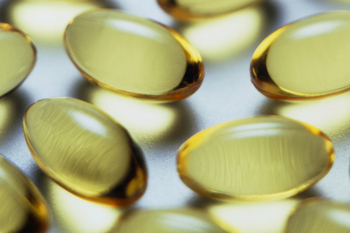
fishoilResearchers found that women who were prescribed 2.4 grams of long-chain omega-3 supplements during the third trimester of pregnancy reduced their children's risk of asthma by 31 per cent.

Long-chain omega-3 fatty acids, which include eicosapentaenoic acid (EPA) and docosahexaenoic acid (DHA), are found in cold water fish, and are key to regulating human immune response.

"We have long suspected there was a link between the anti-inflammatory properties of long-chain omega-3 fats, the low intakes of omega-3 in Western diets and the rising rates of childhood asthma," said Professor Hans Bisgaard of Copenhagen Prospective Studies on Asthma in Childhood (COPSAC) in Denmark.

"This study proves that they are definitively and significantly related," said Bisgaard.

The study used rapid analytical techniques developed and performed at the University of Waterloo in Canada to measure levels of EPA and DHA in pregnant women's blood.

"Measuring the levels of omega-3 fatty acids in blood provides an accurate and precise assessment of nutrient status," said Ken Stark, professor at Waterloo, who led the testing.

The testing also revealed that women with low blood levels of EPA and DHA at the beginning of the study benefited the most from the supplements.

For these women, it reduced their children's relative risk of developing asthma by 54 per cent.

"The proportion of women with low EPA and DHA in their blood is even higher in Canada and the United States as compared with Denmark. So we would expect an even greater reduction in risk among North American populations," said Stark.

"Identifying these women and providing them with supplements should be considered a front-line defence to reduce and prevent childhood asthma," Stark added.

Researchers analysed blood samples of 695 Danish women at 24 weeks' gestation and one week after delivery.

They then monitored the health status of each participating child for five years, which is the age asthma symptoms can be clinically established.

"Asthma and wheezing disorders have more than doubled in Western countries in recent decades. We now have a preventative measure to help bring those numbers down," said Bisgaard.

Currently, one out of five young children suffer from asthma or a related disorder before school age.

The study was published in the New England Journal of Medicine.

Comments

Add new comment

  • Coastaldigest.com reserves the right to delete or block any comments.
  • Coastaldigset.com is not responsible for its readers’ comments.
  • Comments that are abusive, incendiary or irrelevant are strictly prohibited.
  • Please use a genuine email ID and provide your name to avoid reject.
News Network
February 26,2020

New York, Feb 26:  A new wearable sensor that works in conjunction with artificial intelligence (AI) technology could help doctors remotely detect critical changes in heart failure patients days before a health crisis occurs, says a study.

The researchers said the system could eventually help avert up to one in three heart failure readmissions in the weeks following initial discharge from the hospital and help patients sustain a better quality of life.

"This study shows that we can accurately predict the likelihood of hospitalisation for heart failure deterioration well before doctors and patients know that something is wrong," says the study's lead author Josef Stehlik from University of Utah in the US.

"Being able to readily detect changes in the heart sufficiently early will allow physicians to initiate prompt interventions that could prevent rehospitalisation and stave off worsening heart failure," Stehlik added.

According to the researchers, even if patients survive, they have poor functional capacity, poor exercise tolerance and low quality of life after hospitalisations.

"This patch, this new diagnostic tool, could potentially help us prevent hospitalizations and decline in patient status," Stehlik said.

For the findings, published in the journal Circulation: Heart Failure, the researchers followed 100 heart failure patients, average age 68, who were diagnosed and treated at four veterans administration (VA) hospitals in Utah, Texas, California, and Florida.

After discharge, participants wore an adhesive sensor patch on their chests 24 hours a day for up to three months.

The sensor monitored continuous electrocardiogram (ECG) and motion of each subject.

This information was transmitted from the sensor via Bluetooth to a smartphone and then passed on to an analytics platform, developed by PhysIQ, on a secure server, which derived heart rate, heart rhythm, respiratory rate, walking, sleep, body posture and other normal activities.

Using artificial intelligence, the analytics established a normal baseline for each patient. When the data deviated from normal, the platform generated an indication that the patient's heart failure was getting worse.

Overall, the system accurately predicted the impending need for hospitalization more than 80 per cent of the time.

On average, this prediction occurred 10.4 days before a readmission took place (median 6.5 days), the study said.

Comments

Add new comment

  • Coastaldigest.com reserves the right to delete or block any comments.
  • Coastaldigset.com is not responsible for its readers’ comments.
  • Comments that are abusive, incendiary or irrelevant are strictly prohibited.
  • Please use a genuine email ID and provide your name to avoid reject.
Agencies
March 25,2020

The practice of washing your hands for 20 seconds is one of the best preventive measures you can take to avoid the spread of any virus including coronavirus as recommended by the WHO.

The modern day concept of handwashing was introduced by Hungaraian doctor Ignaz Semmelweis, in 19-th century Vienna. Semmelweis proposed the practice of washing hands with chlorinated lime solutions in 1847 while working in the city's general hospital.

Decades later, in the modern times too the practise has not lost it's relevance. To connect with savvy consumers the message is being sent through social media? But social media can also be a dark place where misinformation is rampant; consumers can end up being misguided and compromised on sensitive issues like health and hygiene.

Dettol, recently kickstarted its #HandWashChallenge on TikTok aiming to raise awareness on four simple steps of handwashing. Strategically aimed at creating awareness among audience, a unique song has been created pairing it extremely well with the hashtag #HandWashChallenge. The hashtag filter has a branded Dettol strip across the top with the hashtag and names the steps involved in washing hands. The user can dance out the steps to the challenge and share it with their friends to further amplify the message on hygiene and safety.

Commenting on the same, Pankaj Duhan, Chief Marketing Officer, RB Health South Asia said, "We are elated with the response to the #HandWashChallenge, it has definitely become one of the most successfully led initiatives by any of our brands at RB. Understanding the consumer's mindset is of the utmost importance to us, therefore our campaign communication is built in a way that creates meaningful conversations to drive awareness amongst consumers. The participation by TikTok users across India has helped deliver the right message in a more engaging and interactive manner.

"I personally would like to encourage more and more people to join this global health & hygiene educational exercise. Together, let us all build a healthier nation, four steps at a time."

He further said, "Over the past couple of weeks we have witnessed a lot of misinformation floating around hygiene practices, especially over the internet. Realizing the gravity of the issue and being the responsible brand, we felt it was our prerogative to initiate this awareness campaign."

The campaign witnessed several quirky activities on each day leading to increased consumer interest. Joining the force were some of Bollywood's popular celebrities like Kartik Aaryan and Urvashi Rautela among several other TikTok influencers who have millions of followers on the platform. As part of Phase II, Dettol plans to take the challenge global by encouraging more users to participate while the audience worldwide.

The challenge has witnessed over 18 Billion views and generated over 123K user participation videos in one week of starting the campaign.

Comments

Add new comment

  • Coastaldigest.com reserves the right to delete or block any comments.
  • Coastaldigset.com is not responsible for its readers’ comments.
  • Comments that are abusive, incendiary or irrelevant are strictly prohibited.
  • Please use a genuine email ID and provide your name to avoid reject.
Agencies
May 25,2020

Singapore, May 25: COVID-19 patients are no longer infectious after 11 days of getting sick even though some may still test positive, according to a new study by infectious disease experts in Singapore.

A positive test "does not equate to infectiousness or viable virus," a joint research paper by Singapore's National Centre for Infectious Diseases and the Academy of Medicine, Singapore said. The virus "could not be isolated or cultured after day 11 of illness."

The paper was based on a study of 73 patents in the city-state.

The latest findings may have implications on the country's patient discharge policy. The discharge criteria is currently based on negative test results rather than infectiousness.

Singapore's strategy on managing COVID-19 patients is guided by the latest local and international clinical scientific evidence, and the Ministry of Health will evaluate if the latest evidence can be incorporated into its patient clinical management plan, according to a report by the Straits Times.

So far, 13,882, or about 45% of the total 31,068 Covid-19 patients in Singapore have been discharged from hospitals and community facilities. Singapore reported 642 new Covid-19 cases as of noon on Saturday.

The government has been actively screening pre-school staff as it prepares to reopen pre-schools from June 2. On Friday, two pre-school employees tested positive for the novel coronavirus, bringing the total number of confirmed cases among pre-school staff to seven, according to the Ministry of Health.

Comments

Add new comment

  • Coastaldigest.com reserves the right to delete or block any comments.
  • Coastaldigset.com is not responsible for its readers’ comments.
  • Comments that are abusive, incendiary or irrelevant are strictly prohibited.
  • Please use a genuine email ID and provide your name to avoid reject.