



Tesla CEO Elon Musk Says Criticism of Self-Driving Cars Can Kill People

October 21, 2016

Oct 21: Self-driving cars hold the promise of saving thousands of lives each year on US roads. But does pointing out flaws with the technology effectively put people in danger?
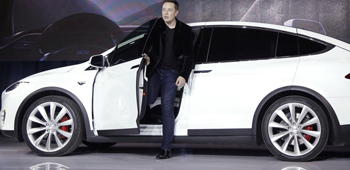
ElonThat claim was put forth Wednesday by Tesla Motors CEOElon Musk, who criticised the media for harping on the relatively few crashes involving Tesla's semi-autonomous driving system called Autopilot, while saying little about the about the 1.2 million people who die worldwide each year in human-driven vehicles.

"If, in writing some article that's negative, you effectively dissuade people from using autonomous vehicles, you're killing people," said Musk, who expects his self-driving technology to be at least twice as safe as cars driven by humans.

The comments came as Musk announced that all new Tesla vehicles - including the lower-cost Model 3 - will have the hardware needed to drive themselves. The talk is bold but experts say it's premature until self-driving cars prove they're better drivers than humans under any circumstances.

"Over time, after the technology has established itself, one would expect there would be a decrease in fatalities," says Raj Rajkumar, a computer engineering professor at Carnegie Mellon University who leads its autonomous vehicle research. "But this is too premature to make this claim. Tesla's technology is known to be imperfect."

In May, an Ohio man using Autopilot died when his Tesla Model S failed to spot a tractor-trailer crossing a divided highway. Neither the car nor the driver braked, and the Model S crashed into the side of the trailer. Federal investigators are looking into Autopilot's role in the crash.

There is evidence, however, that one day Musk could be proven to be right. While currently there is little data showing that fully autonomous cars would reduce deaths, there are studies that show computer controls can cut fatalities. The Insurance Institute for Highway Safety said it determined from 2016 police data that forward collision warning alone reduced front-into-rear crashes by 27 percent. Automatic braking cut the rear crashes in half and reduced injuries by almost 60 percent.

Tesla's Autopilot, introduced last year, can maintain a set speed and distance and keep the car in its lane. But the technology works mainly on highways and must be monitored by the driver. Autopilot will turn itself off if drivers have their hands off the wheel for too long.

Musk says Autopilot has already shown itself to be safer than humans. He tweeted earlier this month that Tesla vehicles have been driven 222 million miles in Autopilot mode, with one confirmed driver death. By comparison, the US fatality rate in 2014 was 2.16 deaths per 200 million miles traveled, according to government data.

The new autonomous system has been in testing for more than a year, and Musk said Wednesday it could cut worldwide deaths in half if all cars used it.

Rajkumar was skeptical and called the Tesla announcement "marketing hype." He said people should be skeptical of Tesla's claims because of the Florida crash. Self-driving technology "still needs to prove itself," he said, adding that it has trouble operating in dense urban traffic and inclement weather.

Consumer Reports magazine also is concerned about semi-autonomous systems such as those that allow a car to steer itself. The magazine believes automakers like Tesla "should take stronger steps to ensure that vehicles with these systems are designed, deployed, and marketed safely," it said in a statement.

One criticism of Autopilot is that the system gives drivers a false sense of security, causing them to be distracted and unprepared to take control in an emergency. The German government has told Tesla to stop using the Autopilot name because it implies that cars can drive themselves.

Musk disagrees, saying the term has been used in aviation to describe a system that assists pilots.

The new Tesla vehicles will use Tesla-developed software and have more sensors. They'll have eight cameras - compared to one in previous models - as well as advanced sonar and greater computing capacity. Tesla says the system is fully autonomous and can work on city streets as well as highways. Buyers can pay $3,000 for Autopilot or $8,000 for the full self-driving system.

Tesla owners, though, won't be able to give up control of their cars just yet. The company will gradually roll out autonomous capability in software updates every few months, once there's enough data to prove it's safe, Musk said. The updates also would have to meet safety regulations in the U.S. and elsewhere.

Comments

Add new comment

  • Coastaldigest.com reserves the right to delete or block any comments.
  • Coastaldigset.com is not responsible for its readers’ comments.
  • Comments that are abusive, incendiary or irrelevant are strictly prohibited.
  • Please use a genuine email ID and provide your name to avoid reject.
Agencies
February 29,2020

Ahmedabad, Feb 29: The presence of two feral pigeons onboard a GoAir flight at the airport in Ahmedabad in Gujarat created a flutter among the amused passengers, even though the avian surprise did not lead to any untoward incident or delay in the flight.

The incident took place on Friday when the passengers were boarding the Ahmedabad-Jaipur flight.

"Two pigeons had found their way inside the flight G8 702 while the passengers were boarding," an airline statement said on Saturday.

"The crew immediately shooed away the birds. The flight took off at its scheduled time at 5 p.m.," it added.

Comments

Add new comment

  • Coastaldigest.com reserves the right to delete or block any comments.
  • Coastaldigset.com is not responsible for its readers’ comments.
  • Comments that are abusive, incendiary or irrelevant are strictly prohibited.
  • Please use a genuine email ID and provide your name to avoid reject.
Agencies
February 5,2020

San Francisco, Feb 5: After a German artist, Simon Weckert, demonstrated how he "hacked" Google Maps with 99 smartphones and a wagon to create "virtual traffic jams" on the streets of Berlin, Google responded to the incident saying it "appreciates" creative use of maps.

Admitting that it has not quite cracked travelling by wagon, the tech giant also hinted that it might use cases like this to improve how its maps work.

"We appreciate seeing creative uses of Google Maps like this as it helps us make maps work better over time," 9to5Google quoted a Google spokesperson as saying.

In a YouTube video, Weckert showed that he put 99 smartphones with Google Maps onto a small wagon cart and then wheeled that cart around various streets in Berlin, including outside the Google office, Android Authority reported on Monday.

The smartphones "apparently fooled Google Maps" into thinking that there was a high concentration of users on those streets.

Because the second-hand phones were in a cart, Maps was further tricked into believing that the traffic was slow-moving.

As a result, the navigation app started showing virtual traffic jams by turning green streets to red in the online navigational tool, showcasing how digital technology can have a real impact on the real world.

"Traffic data in Google Maps is refreshed continuously thanks to information from a variety of sources, including aggregated anonymised data from people who have location services turned on and contributions from the Google Maps community," the Google spokesperson said.

"We've launched the ability to distinguish between cars and motorcycles in several countries including India, Indonesia and Egypt, though we haven't quite cracked travelling by wagon," the statement added. After a German artist, Simon Weckert, demonstrated how he "hacked" Google Maps with 99 smartphones and a wagon to create "virtual traffic jams" on the streets of Berlin, Google responded to the incident saying it "appreciates" creative use of maps.

Admitting that it has not quite cracked travelling by wagon, the tech giant also hinted that it might use cases like this to improve how its maps work.

"We appreciate seeing creative uses of Google Maps like this as it helps us make maps work better over time," 9to5Google quoted a Google spokesperson as saying.

In a YouTube video, Weckert showed that he put 99 smartphones with Google Maps onto a small wagon cart and then wheeled that cart around various streets in Berlin, including outside the Google office, Android Authority reported on Monday.

The smartphones "apparently fooled Google Maps" into thinking that there was a high concentration of users on those streets.

Because the second-hand phones were in a cart, Maps was further tricked into believing that the traffic was slow-moving.

As a result, the navigation app started showing virtual traffic jams by turning green streets to red in the online navigational tool, showcasing how digital technology can have a real impact on the real world.

"Traffic data in Google Maps is refreshed continuously thanks to information from a variety of sources, including aggregated anonymised data from people who have location services turned on and contributions from the Google Maps community," the Google spokesperson said.

"We've launched the ability to distinguish between cars and motorcycles in several countries including India, Indonesia and Egypt, though we haven't quite cracked travelling by wagon," the statement added.

Comments

Add new comment

  • Coastaldigest.com reserves the right to delete or block any comments.
  • Coastaldigset.com is not responsible for its readers’ comments.
  • Comments that are abusive, incendiary or irrelevant are strictly prohibited.
  • Please use a genuine email ID and provide your name to avoid reject.
Agencies
May 14,2020

Social media platform WhatsApp assured the Supreme Court on Wednesday that it will not roll out its payment services without complying with all payment regulations and norms in the country.

A bench headed by Chief Justice S.A. Bobde and comprising Justices Indu Malhotra and Hrishikesh Roy took up the matter through video conferencing. Senior advocate Kapil Sibal, representing the social media platform, said "WhatsApp Inc makes a statement on behalf of his client that they will not go ahead with the payments' scheme without complying with all the regulations in force."

The statement was made during the hearing of a petition seeking a ban on payment through WhatsApp, as it does not conform to the data localization norms. The top court took the assurance made by WhatsApp on record.

WhatsApp made the statement during the hearing of a plea seeking a ban on its payment service, for not being in line with data localization norms.

In 2018, WhatsApp was granted a beta licence to launch its payment service, but a dedicated and separate app is yet to be launched. A petition was moved in the apex court that WhatsApp's existing model for its payments service should be declared inconsistent with the Unified Payment Interface (UPI) Scheme, as a separate dedicated app has not been offered by the company.

The petitioner NGO, Good Governance Chambers, argued that the National Payments Corporation of India (NPCI) and the Reserve Bank of India (RBI) must change its model on the lines of the UPI payment scheme, and its operations may be suspended until these conditions are met.

The apex court today asked the Centre, Facebook and WhatsApp to file their replies within three weeks and it will take up the matter thereafter. The court noted that the government may process the applications filed by WhatsApp in accordance with the law and there is no stay on the same. Facebook was represented by senior advocate Arvind Datar.

The petitioner argued that lapses have been found in relation to WhatsApp's claims of having a secure and safe technological interface for securing sensitive user data.

Comments

Add new comment

  • Coastaldigest.com reserves the right to delete or block any comments.
  • Coastaldigset.com is not responsible for its readers’ comments.
  • Comments that are abusive, incendiary or irrelevant are strictly prohibited.
  • Please use a genuine email ID and provide your name to avoid reject.