



Tesla pausing factory for Model 3 preparation this month

February 9, 2017

Detroit/San Francisco, Feb 9: Tesla Inc said on Wednesday it will shut down production at its California assembly plant for a week this month to prepare for production of its high-volume Model 3 sedan, moving the company closer to meeting its target to start production in July.
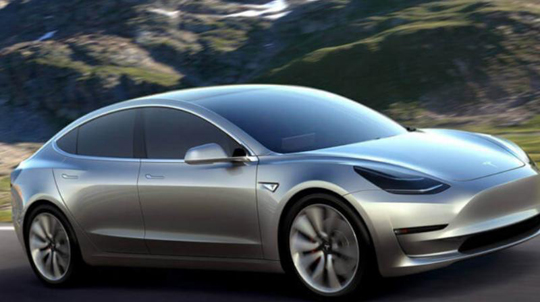
Tesla

Tesla said the "brief, planned" pause would allow the company to add capacity to the existing paint shop to prepare it for the Model 3, and other general maintenance.

"This will allow Tesla to begin Model 3 production later this year as planned and enable us to start the ramp towards 500,000 vehicles annually in 2018," said a Tesla spokesman.

He added that the pause was not expected to have a material impact on first-quarter production or delivery figures, as the company had added production days to compensate.

Separately, sources told Reuters that the luxury electric carmaker planned to begin test-building the Model 3 on Feb. 20.

Tesla Chief Executive Elon Musk last year told investors and more than 370,000 customers who put deposits down for a Model 3 that he intended to start building the cars in July 2017. At the time, many analysts and suppliers said the timeline was too ambitious and would be difficult to achieve, pointing to Tesla's history of missing aggressive production targets.

If Tesla succeeds in starting pilot production of the sedan at its factory in Fremont, California on Feb. 20, as people familiar with the matter told Reuters, the company would be able to share the news with shareholders two days later when it reports fourth-quarter results and better answer any questions about the Model 3 rollout.

'Stoke the fan base'

The sources did not know how many of the highly anticipated vehicles Tesla aimed to build in February, but it would likely be a small number to test the assembly system and the quality of vehicle parts.

"What better way to stoke the fan base and Wall Street than to wheel out pre-production models" ahead of the earnings announcement, said one person familiar with Tesla's plans who spoke on condition of anonymity.

The Tesla spokesman declined to comment on the company's production schedule.

Musk had told investors last year that the company could miss the July 2017 startup target if suppliers do not meet deadlines.

Tesla has a lot riding on the Model 3, which is priced at roughly $35,000 before government incentives. If successful, the sedan could raise Tesla beyond a niche luxury player in the automotive sector.

Tesla has not had a profitable year since going public in 2010, though the company's $41.4 billion market capitalization now equals that of Nissan Motor Co Ltd , which reported a profit of $4.7 billion last year.

Musk's bold approach to cars, space exploration and clean energy has fueled investor enthusiasm for Tesla, but skeptics are waiting to see if Musk can fulfill his promise of producing 500,000 cars per year by 2018.

That would expand Tesla's annual production by four to five times compared to 2016 levels. In its fourth quarter, Tesla produced 24,882 vehicles.

Tesla disclosed in May that it had taken 373,000 refundable $1,000 deposits for the Model 3, underscoring its appeal ahead of production. The company has not since updated that number. Total sales of fully electric vehicles last year in the United States amounted to just 84,275 vehicles, according to data compiled by the Electric Drive Transportation Association.

Moving Design Target

Sources with knowledge of the Model 3 timeline had called it extremely aggressive, with challenges compounded by Tesla making last-minute changes to the car's design. Such design tweaks can delay production, and add cost as suppliers rework tools and molds to meet new specifications.

Musk said in July the design of the Model 3 was complete. The car, he told shareholders earlier in May, would be "easy to make" and free of the complicated design that led to production delays in the Model X sports utility vehicle.

It is common practice for automakers to make minor adjustments to a "finished" design for a variety of reasons, ranging from fit and finish to safety.

One source said last week that design changes were still underway for the Model 3, which could potentially hinder the ramp-up to full production. Tesla declined to comment on whether the design was still being tinkered with.

Tesla's previous launches for the Model S sedan and Model X sports utility vehicle were marked by production delays and initial quality issues.

That track record meant some analysts were skeptical that Musk would launch production by July. "We assume 0 Model 3 deliveries in '17," Barclays analyst Brian Johnson wrote in a Jan. 3 note, while Morgan Stanley's Adam Jonas in a Jan. 19 note said he expected a "soft launch" of the Model 3 to be delayed until late 2017.

Comments

Add new comment

  • Coastaldigest.com reserves the right to delete or block any comments.
  • Coastaldigset.com is not responsible for its readers’ comments.
  • Comments that are abusive, incendiary or irrelevant are strictly prohibited.
  • Please use a genuine email ID and provide your name to avoid reject.
Agencies
March 10,2020

New Delhi, Mar 10: Crisis-hit Yes Bank on Tuesday said that it has enabled inward IMPS and NEFT services.

The move allows people to send money from other bank accounts to their Yes Bank account through IMPS (Immediate Payment Service) and NEFT (National Electronic Funds Transfer) mode.

In a tweet, the bank also said that Yes Bank customers can pay their credit card dues and loan obligations from other bank accounts.

"Inward IMPS/NEFT services have now been enabled. You can make payments towards YES BANK Credit Card dues and loan obligations from other bank accounts. Thank you for your co-operation. @RBIA @FinMinIndia," said tweet.

Last week Yes Bank was placed under moratorium and a withdrawal cap of Rs 50,000 was imposed till April 3.

The administrator of Yes Bank, Prashant Kumar and Rajnish Kumar, the Chairman of the State Bank of India are hopeful that moratorium would be lifted within a week.

As per the Reserve Bank of India (RBI) draft reconstruction scheme for the crisis-hit private lender, the SBI will take up 49 per cent in the bank by investing Rs 2,450 crore.

The new board of directors will stand constituted from the appointed date. It will comprise a CEO and MD, non-executive chairman and non-executive directors. The SBI will have nominee directors appointed on the board of the reconstructed bank.

The RBI may appoint additional directors to the board, who shall continue in office for one year, or until an alternate board is constituted by Yes Bank.

The SBI will not reduce its holding below 26 per cent before completion of three years from the date of infusion of the capital.

Comments

Add new comment

  • Coastaldigest.com reserves the right to delete or block any comments.
  • Coastaldigset.com is not responsible for its readers’ comments.
  • Comments that are abusive, incendiary or irrelevant are strictly prohibited.
  • Please use a genuine email ID and provide your name to avoid reject.
Agencies
February 5,2020

San Francisco, Feb 5: After a German artist, Simon Weckert, demonstrated how he "hacked" Google Maps with 99 smartphones and a wagon to create "virtual traffic jams" on the streets of Berlin, Google responded to the incident saying it "appreciates" creative use of maps.

Admitting that it has not quite cracked travelling by wagon, the tech giant also hinted that it might use cases like this to improve how its maps work.

"We appreciate seeing creative uses of Google Maps like this as it helps us make maps work better over time," 9to5Google quoted a Google spokesperson as saying.

In a YouTube video, Weckert showed that he put 99 smartphones with Google Maps onto a small wagon cart and then wheeled that cart around various streets in Berlin, including outside the Google office, Android Authority reported on Monday.

The smartphones "apparently fooled Google Maps" into thinking that there was a high concentration of users on those streets.

Because the second-hand phones were in a cart, Maps was further tricked into believing that the traffic was slow-moving.

As a result, the navigation app started showing virtual traffic jams by turning green streets to red in the online navigational tool, showcasing how digital technology can have a real impact on the real world.

"Traffic data in Google Maps is refreshed continuously thanks to information from a variety of sources, including aggregated anonymised data from people who have location services turned on and contributions from the Google Maps community," the Google spokesperson said.

"We've launched the ability to distinguish between cars and motorcycles in several countries including India, Indonesia and Egypt, though we haven't quite cracked travelling by wagon," the statement added. After a German artist, Simon Weckert, demonstrated how he "hacked" Google Maps with 99 smartphones and a wagon to create "virtual traffic jams" on the streets of Berlin, Google responded to the incident saying it "appreciates" creative use of maps.

Admitting that it has not quite cracked travelling by wagon, the tech giant also hinted that it might use cases like this to improve how its maps work.

"We appreciate seeing creative uses of Google Maps like this as it helps us make maps work better over time," 9to5Google quoted a Google spokesperson as saying.

In a YouTube video, Weckert showed that he put 99 smartphones with Google Maps onto a small wagon cart and then wheeled that cart around various streets in Berlin, including outside the Google office, Android Authority reported on Monday.

The smartphones "apparently fooled Google Maps" into thinking that there was a high concentration of users on those streets.

Because the second-hand phones were in a cart, Maps was further tricked into believing that the traffic was slow-moving.

As a result, the navigation app started showing virtual traffic jams by turning green streets to red in the online navigational tool, showcasing how digital technology can have a real impact on the real world.

"Traffic data in Google Maps is refreshed continuously thanks to information from a variety of sources, including aggregated anonymised data from people who have location services turned on and contributions from the Google Maps community," the Google spokesperson said.

"We've launched the ability to distinguish between cars and motorcycles in several countries including India, Indonesia and Egypt, though we haven't quite cracked travelling by wagon," the statement added.

Comments

Add new comment

  • Coastaldigest.com reserves the right to delete or block any comments.
  • Coastaldigset.com is not responsible for its readers’ comments.
  • Comments that are abusive, incendiary or irrelevant are strictly prohibited.
  • Please use a genuine email ID and provide your name to avoid reject.
News Network
April 28,2020

Los Angeles, Apr 28: People who experience loss of smell as one of the COVID-19 symptoms are likely to have a mild to moderate clinical course of the disease, according to a study which may help health care providers determine which patients require hospitalisation.

The findings, published in the journal International Forum of Allergy & Rhinology, follows an earlier study that validated the loss of smell and taste as indicators of infection with the novel coronavirus, SARS-CoV-2.

According to the scientists from the University of California (UC) San Diego Health in the US, patients who reported loss of smell were 10 times less likely to be hospitalised for COVID-19 compared to those without the symptom.

"One of the immediate challenges for health care providers is to determine how to best treat persons infected by the novel coronavirus," said Carol Yan, first author of the current study and rhinologist from the UC San Diego Health.

"If they display no or mild symptoms, can they return home to self-quarantine or will they likely require hospitalisation? These are crucial questions for hospitals trying to efficiently and effectively allocate finite medical resources," Yan said.

The findings, according to the researchers, suggest that loss of smell may be predictive of a milder clinical course of COVID-19.

"What's notable in the new findings is that it appears that loss of smell may be a predictor that a SARS-CoV-2 infection will not be as severe, and less likely to require hospitalisation," Yan said.

"If an infected person loses that sense, it seems more likely they will experience milder symptoms, barring other underlying risk factors," she added.

Risk factors for COVID-19 previously reported by other studies include age, and underlying medical conditions, such as chronic lung disease, serious heart conditions, diabetes, and obesity.

In the current study, the scientists made a retrospective analysis between March 3 and April 8 including 169 patients who tested positive for COVID-19 at UC San Diego Health.

They assessed olfactory and gustatory data for 128 of the 169 patients, 26 of whom required hospitalisation.

According to the researchers, patients who were hospitalised for COVID-19 treatment were significantly less likely to report anosmia or loss of smell -- 26.9 per cent compared to 66.7 per cent for COVID-19-infected persons treated as outpatients.

Similar percentages were found for loss of taste, known as dysgeusia, they said.

"Patients who reported loss of smell were 10 times less likely to be admitted for COVID-19 compared to those without loss of smell," said study co-author Adam S. DeConde.

"Moreover, anosmia was not associated with any other measures typically related to the decision to admit, suggesting that it's truly an independent factor and may serve as a marker for milder manifestations of Covid-19," DeConde said.

The researchers suspect that the findings hint at some of the physiological characteristics of the infection.

"The site and dosage of the initial viral burden, along with the effectiveness of the host immune response, are all potentially important variables in determining the spread of the virus within a person and, ultimately, the clinical course of the infection," DeConde said.

If the SARS-CoV-2 virus initially concentrates in the nose and upper airway, where it impacts olfactory function, that may result in an infection that is less severe and sudden in onset, decreasing the risk of overwhelming the host immune response, respiratory failure, and hospitalisation, the scientists added.

"This is a hypothesis, but it's also similar to the concept underlying live vaccinations," DeConde explained.

"At low dosage and at a distant site of inoculation, the host can generate an immune response without severe infection," he added.

Loss of smell, according to the study, might also indicate a robust immune response which has been localised to the nasal passages, limiting effects elsewhere in the body.

Citing the limitations of the study, the scientists said they relied upon self-reporting of anosmia from participants, which posed a greater chance of recall bias among patients once they had been diagnosed with COVID-19.

They added that patients with more severe respiratory disease requiring hospitalisation may not be as likely to recognise or recall the loss of smell.

So the researchers said more expansive studies are needed for validating the results.

Comments

Add new comment

  • Coastaldigest.com reserves the right to delete or block any comments.
  • Coastaldigset.com is not responsible for its readers’ comments.
  • Comments that are abusive, incendiary or irrelevant are strictly prohibited.
  • Please use a genuine email ID and provide your name to avoid reject.