



These pesky caterpillars seem to digest plastic bags

April 26, 2017

Washington, Apr 26: The shopping bag is an infamous source of plastic pollution. The 2010 documentaryBag It' estimated that Americans use 102 billion plastic bags per year. Bags are persistent. Plastic at the waste dump can last for an estimated 1,000 years. And they are pernicious.
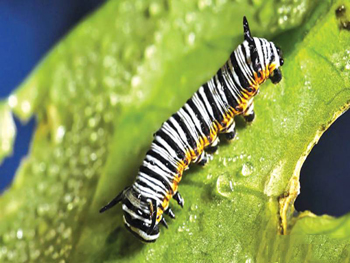
caterpillarA wild baby manatee named Emoji died in a Florida zoo in February after filling its guts with plastic bags and other litter. To curb our reliance on cheap plastic, Washington began levying 5-cent bag fees in 2009. Several other municipalities have followed suit.

Of course, plastic bags are useful, too.

Federica Bertocchini, a biologist at Spain's Institute of Biomedicine and Biotechnology of Cantabria and a hobbyist beekeeper, used such a bag to collect pests called wax worms. The caterpillars, the larvae of the moth Galleria mellonella, had infested her hives, chowing down on honey and wax.

She plucked the wax worms from the beehives and dropped the caterpillars into a plastic bag — only to find “the worms all around and the plastic bag full of holes,” as Bertocchini wrote in an email to The Washington Post. Bertocchini is an expert in embryonic development, not in caterpillars or things that chew through plastic.

But the accidental discovery was too intriguing to pass up. The scientist contacted her colleagues at the University of Cambridge, Paolo Bombelli and Christopher Howe. “Once we saw the holes the reaction was immediate: that is it, we need to investigate this.”

As the three scientists reported Monday in the journal Current Biology, the wax worms aren't simply chewing the plastic into tiny bits. Instead, it appears that the animals — or something inside them — can digest polyethylene, a common plastic, producing ethylene glycol.

“It was very exciting to find this, mainly because me and Paolo and Chris have been talking about this plastic biodegradation issue for a few years,” Bertocchini said.

Their study was the most recent entry in a growing body of literature that suggests some organisms can process plastic. In 2015, scientists at Stanford University reported that mealworms, the beetle larvae used as fishing bait (and occasionally dusted with barbecue seasoning, as in eco-friendly snacks), can turn styrofoam into carbon dioxide and droppings. In 2016, Japanese researchers discovered that microbes living close to a bottle-recycling plant could metabolise plastic.

Compared with the bacteria found near the recycling facility, “the wax worm is way faster, really faster,” Bertocchini said. (When degrading plastic, though, speed is a relative term.) In the new study, it took 100 worms roughly 12 hours to eat their way through 92 milligrams of plastic, the mass of about three or four grains of rice.

To determine that the true source of wax worm power came from their guts, not their mandibles, Bertocchini and her colleagues reduced the caterpillars to a paste. They spread the stuff on a plastic sample. Over the span of 14 hours, the caterpillar schmear degraded 13 per cent of the polyethylene mass.

Bertocchini speculated that the wax worms' predilection for honeycombs allowed the animals to process plastic. Wax itself is “a complex mixture of molecules”, she said. Wax also contains a chemical bond found in polyethylene. “It may be that for this reason the worm evolved a molecular mechanism to break this bond.”

The new report did not prove that the caterpillars were the responsible organisms. “At this point in time, we do not know if the caterpillars themselves are producing a digestive enzyme or might it be bacteria in their gut,” wrote Bombelli, a biochemist at the University of Cambridge, to The Washington Post. “Or it might be a bit of both!”

(Nor did the study convince all biodegradation experts that animals can fully digest plastic. To the Atlantic, University of Michigan chemical engineer Ramani Narayan, who was not involved with this work, expressed concerns that wax worms could exacerbate problems by leaving tiny plastic crumbs in their wake. “Biodegradation isn't a magical solution to plastics waste management,” Narayan said.)

But the authors of the new study do not envision dumping buckets of larvae over the world's landfills. Instead, they are attempting to home in on the wax worm digestive process. “If one molecule, one enzyme, is responsible for this reaction,” Bombelli said, “we can aim at the isolation of the molecule.”

That would be the first of several major hurdles the scientists would need to clear, to scale plastic biodegradation beyond a caterpillar curiosity. Once the researchers find the responsible enzymes and related genes, they would then need to “understand the optimal enzymatic condition,” Bombelli said. Which is to say, what temperature and other conditions work best for worm-inspired digestion? What's more, an industrial scale requires a “cost-effective way of mass production.” Perhaps, the biochemist said, engineered E. coli, common bacteria found in our own guts, could be coaxed into producing wax worm enzymes.

Comments

Add new comment

  • Coastaldigest.com reserves the right to delete or block any comments.
  • Coastaldigset.com is not responsible for its readers’ comments.
  • Comments that are abusive, incendiary or irrelevant are strictly prohibited.
  • Please use a genuine email ID and provide your name to avoid reject.
Agencies
January 3,2020

Giving each and every app access to personal information stored on Android smartphones such as your contacts, call history, SMS and photos may put you in trouble as bad actors can easily use these access to spy on you, send spam messages and make calls anywhere at your expense or even sign you up for a premium "service", researchers from cybersecurity firm Kaspersky have warned.

But one can restrict access to such information as Android lets you configure app permissions. 

Giving an app any of these permissions generally means that from now on it can obtain information of this type and upload it to the Cloud without asking your explicit consent for whatever it intends to do with your data.

Therefore, security researchers recommend one should think twice before granting permissions to apps, especially if they are not needed for the app to work. 

For example, most games have no need to access your contacts or camera, messengers do not really need to know your location, and some trendy filter for the camera can probably survive without your call history, Kaspersky said. 

While decision to give permission is yours, the fewer access you hand out, the more intact your data will be.

Here's what you should know to protect your data.

SMS: An app with permission to send and receive SMS, MMS, and WAP (Wireless Application Protocol) push messages, as well as view messages in the smartphone memory will be able to read all of your SMS correspondence, including messages with one-time codes for online banking and confirming transactions.

Using this permission, the app can also send spam messages in your name (and at your expense) to all your friends. Or sign you up for a premium "service." You can see and conrol which apps have these rights by going to the settings of your phone.

Calendar: With permission to view, delete, modify, and add events in the calendar, prying eyes can find out what you have done and what you are doing today and in the future. Spyware loves this permission.

Camera: Permission to access the camera is necessary for the app to take photos and record video. But apps with this permission can take a photo or record a video at any moment and without warning. Attackers armed with embarrassing images and other dirt on you can make life a misery, according to Kaspersky.

Contacts: With permission to read, change, and add contacts in your address book, and access the list of accounts registered in the smartphone, an app can send your entire address book to its server. Even legitimate services have been found to abuse this permission, never mind scammers and spammers, for whom it is a windfall.

This permission also grants access to the list of app accounts on the device, including Google, Facebook, and many other services.

Phone: Giving access to your phone means permission to view and modify call history, obtain your phone number, cellular network data, and the status of outgoing calls, add voicemail, access IP telephony services, view numbers being called with the ability to end the call or redirect it to another number and call any number.

This permission basically lets the app do anything it likes with voice communication. It can find out who you called and when or prevent you from making calls (to a particular number or in general) by constantly terminating calls. 

It can eavesdrop on your conversations or, of course, make calls anywhere at your expense, including to pay-through-the-nose numbers, Kaspersky warned.

Comments

Add new comment

  • Coastaldigest.com reserves the right to delete or block any comments.
  • Coastaldigset.com is not responsible for its readers’ comments.
  • Comments that are abusive, incendiary or irrelevant are strictly prohibited.
  • Please use a genuine email ID and provide your name to avoid reject.
News Network
May 7,2020

Toronto, May 7: Scientists have uncovered how bats can carry the MERS coronavirus without getting sick, shedding light on what triggers coronaviruses, including the one behind the COVID-19 pandemic, to jump to humans.

According to the study, published in the journal Scientific Reports, coronaviruses like the Middle East respiratory syndrome (MERS) virus, and the COVID19-causing SARS-CoV-2 virus, are thought to have originated in bats.

While these viruses can cause serious, and often fatal disease in people, bats seem unharmed, the researchers, including those from the University of Saskatchewan (USask) in Canada, said.

"The bats don't get rid of the virus and yet don't get sick. We wanted to understand why the MERS virus doesn't shut down the bat immune responses as it does in humans," said USask microbiologist Vikram Misra.

In the study, the scientists demonstrated that cells from an insect-eating brown bat can be persistently infected with MERS coronavirus for months, due to important adaptations from both the bat and the virus working together.

"Instead of killing bat cells as the virus does with human cells, the MERS coronavirus enters a long-term relationship with the host, maintained by the bat's unique 'super' immune system," said Misra, one of the study's co-authors.

"SARS-CoV-2 is thought to operate in the same way," he added.

Stresses on bats, such as wet markets, other diseases, and habitat loss, may have a role in coronavirus spilling over to other species, the study noted.

"When a bat experiences stress to their immune system, it disrupts this immune system-virus balance and allows the virus to multiply," Misra said.

The scientists, involved in the study, had earlier developed a potential treatment for MERS-CoV, and are currently working towards a vaccine against COVID-19.

While camels are the known intermediate hosts of MERS-CoV, they said bats are suspected to be the ancestral host.

There is no vaccine for either SARS-CoV-2 or MERS, the researchers noted.

Follow latest updates on the COVID-19 pandemic here

"We see that the MERS coronavirus can very quickly adapt itself to a particular niche, and although we do not completely understand what is going on, this demonstrates how coronaviruses are able to jump from species to species so effortlessly," said USask scientist Darryl Falzarano, who co-led the study.

According to Misra, coronaviruses rapidly adapt to the species they infect, but little is known on the molecular interactions of these viruses with their natural bat hosts.

An earlier study had shown that bat coronaviruses can persist in their natural bat host for at least four months of hibernation.

When exposed to the MERS virus, the researchers said, bat cells adapt, not by producing inflammation-causing proteins that are hallmarks of getting sick, but instead by maintaining a natural antiviral response.

On the contrary, they said this function shuts down in other species, including humans.

The MERS virus, the researchers said, also adapts to the bat host cells by very rapidly mutating one specific gene.

These adaptations, according to the study, result in the virus remaining long-term in the bat, but being rendered harmless until something like a disease, or other stressors, upsets this balance.

In future experiments, the scientists hope to understand how the bat-borne MERS virus adapts to infection and replication in human cells.

"This information may be critical for predicting the next bat virus that will cause a pandemic," Misra said.

Comments

Add new comment

  • Coastaldigest.com reserves the right to delete or block any comments.
  • Coastaldigset.com is not responsible for its readers’ comments.
  • Comments that are abusive, incendiary or irrelevant are strictly prohibited.
  • Please use a genuine email ID and provide your name to avoid reject.
Agencies
June 18,2020

New Delhi, Jun 18: Vodafone Idea on Thursday told the Supreme Court that it has incurred Rs 1 lakh crore losses as it insisted it is not in a position to furnish bank guarantees.

A bench comprising Justices Arun Mishra, S. Abdul Nazeer, and M.R. Shah, taking up the adjusted gross revenue (AGR) matter through video conferencing, directed the telecom companies to submit their financial documents and books for the last 10 years.

Asking Vodafone if it was a foreign company, the bench said that how can the company say it would not furnish any bank guarantee.

"What if you fly away overnight in future without paying anything?" it asked.

Senior advocate Mukul Rohatgi, representing Vodafone Idea, denied his client is a completely foreign firm and cited before the bench its tie-ups and investments.

Vodafone owes over Rs 58,000 crore as AGR dues and so far, has paid close to Rs 7,000 crore.

Rohatgi contended before the court that the telecom company is in a tough situation, and cannot furnish any fresh bank guarantee, as profits have eluded the company in past many quarters. He submitted before the bench that Rs 15,000 crore bank guarantees are lying with the government, and his client's losses are over Rs 1 lakh crore.

"I cannot offer any more surety," he informed the bench.

Justice Mishra noted that this is public money and these dues should be recovered. "Do not tell us that you will pay if you were to make profits... the money must come," he noted.

Justice Shah observed that the telecom industry is the only industry which earned during the Covid-19 pandemic. "After all, this money will be used for public welfare", he said.

Rohatgi argued that his client would have to fold up if orders were issued to clear dues tomorrow. "11,000 employees will have to go without notice, as we cannot pay them," he added.

Senior advocate Abhishek Manu Singhvi, appearing for Bharti Airtel, contended before the court that out of Rs 21,000 crore AGR dues, the company has already deposited a sum of Rs 18,000 crore.

He argued that his client has given a bank guarantee, in excess of demand, to DoT, and supported the proposal for phased repayment of remaining AGR dues. He insisted that the company needs to sit down with the government and calculate the dues. Airtel owes Rs 25,976 crore after paying Rs 18,000 crore, as per the government.

Senior advocate Arvind Datar, representing Tata Telecom, informed the bench that his client has paid Rs 6,504 crore in AGR dues so far, and furnishing a bank guarantee may adversely impact investments in the sector.

The total AGR dues are close to Rs 1.5 lakh crore.

The top court will now take up the matter in the third week of July.

Comments

Add new comment

  • Coastaldigest.com reserves the right to delete or block any comments.
  • Coastaldigset.com is not responsible for its readers’ comments.
  • Comments that are abusive, incendiary or irrelevant are strictly prohibited.
  • Please use a genuine email ID and provide your name to avoid reject.