



Third country's Army may enter Kashmir on behalf of Pak: China

Agencies
July 10, 2017

Beijing, Jul 10: A "third country's" Army could enter Kashmir at Pakistan's request, using the "same logic" the Indian Army used to stop the Chinese military from constructing a road in the Doklam area in the Sikkim sector on behalf of Bhutan, an analyst at a Chinese think tank said.
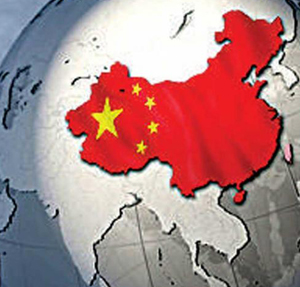
china"Even if India were requested to defend Bhutan's territory, this could only be limited to its established territory, not the disputed area," Long Xingchun, Director at the Centre for Indian Studies at China West Normal University, said in the article he wrote in the Global Times.

"Otherwise, under India's logic, if the Pakistani government requests, a third country's Army can enter the area disputed by India and Pakistan, including India-controlled Kashmir," the article said.

The Chinese state media have carried a barrage of critical articles on the Doklam standoff criticising India, but this was the first time Pakistan and Kashmir have been brought into the narrative.

"Indian troops invaded China's Doklam area in the name of helping Bhutan, but in fact the invasion was intended to help India by making use of Bhutan," it said, referring to the June 30 statement issued by India's External Affairs Ministry.

China and India have been engaged in a standoff in the Doklam area near the Bhutan tri-junction for the past three weeks after a Chinese Army's construction party attempted to build a road. Doka La is the Indian name for the region which Bhutan recognises as Doklam, while China claims it as part of its Donglang region. Of the 3,488-km-long India-China border from Jammu and Kashmir to Arunachal Pradesh, a 220-km section falls in Sikkim.

"For a long time, India has been talking about international equality and non-interference in the internal affairs of others, but it has pursued hegemonic diplomacy in South Asia, seriously violating the UN Charter and undermining the basic norms of international relations," it said.

"Through mass immigration to Sikkim, ultimately leading to control of the Sikkim parliament, India annexed Sikkim as one of its states," it alleged. "This incursion reflects that India fears China can quickly separate mainland India from northeast India through military means, dividing India into two pieces," it said.

"In this case, northeast India might take the opportunity to become independent. India has interpreted China's infrastructure construction in Tibet as having a geopolitical intention against India. India itself is unable to do the same for its northeastern part, so it is trying to stop China's road construction," it said.

"India's incursion, based on its own strategic judgment, is a clear violation of international law," the article said, claiming that the western countries will not unconditionally support India as they have a wide range of "common interests" with China. "As for the territorial dispute between China and Bhutan, it should be resolved by both sides and India must respect Bhutan's sovereignty," it said.

"China can show the region and the international community or even the UN Security Council its evidence to illustrate China's position. It highlights China's sincerity and effort to maintain peace as a responsible big power. It will never resort to force till it is the last choice," it said.

Another article in the same daily said India must desist using the "Dalai Lama card" and mess up relations with China.

Referring to reports that the "Tibetan national flag," a pro-independence symbol adopted by the Tibetan government-in- exile, was unfurled on the shores of Bangong Lake, known as Pangong Tso Lake in India's in Ladakh region, the article said the timing on the incident coincided with the standoff between the two militaries in Doklam area and whether Indian authorities instigated the political activity of Tibetan separatists to exert pressure on China.

"The lake sits astride India and China, with the Line of Actual Control passing through it. It's the first time the Tibetan exile administration in northern India has flown the flag at this location," it said.

"The timing of the flag-hoisting on Indian territory has sparked wide speculation over whether the Indian authorities instigated the political activity of Tibetan separatists to exert pressure on China. Although the involvement of New Delhi remains unclear, we hope they did not send any signal of approval," it said.

"New Delhi publicly promises not to allow any anti-China political activities by Tibetan exiles on Indian territory. But it has long used the Tibet question as a diplomatic card in dealing with Beijing," it said.

"When the Indian government attaches great importance to its relationship with China, it keeps a tight grip on anti- China political activities on its soil. However, when it is dissatisfied or has conflicts with Beijing, the Tibet card is played up. But India may overestimate the influence of Tibetan exiles," it said.

"With the rise of China and as Tibet becomes better off, Tibetan independence runs counter to the will of Tibetans. The space for Tibetan separatists has been largely squeezed as more Western countries have snubbed the Dalai Lama. The Tibet card is gradually losing its value," it said.

"If New Delhi is pulling the strings of the Tibetan exiles' political act of flag-hoisting, it will only have burned itself. Both border issues and the Tibet question concern China's core interests and China won't yield to provocations," it said. Given the ongoing border spat, Indian should "act prudently" to avoid escalating tensions, it said.

Comments

Add new comment

  • Coastaldigest.com reserves the right to delete or block any comments.
  • Coastaldigset.com is not responsible for its readers’ comments.
  • Comments that are abusive, incendiary or irrelevant are strictly prohibited.
  • Please use a genuine email ID and provide your name to avoid reject.
News Network
May 21,2020

London, May 21: Working mothers in Europe and the United States are taking on most of the extra housework and childcare created by lockdown - and many are struggling to cope, a survey showed on Thursday.

Women with children now spend an average 65 hours a week on the unpaid chores - nearly a third more than fathers - according to the Boston Consulting Group, which questioned parents in five countries.

"Women have been doing too much household work for too long, and this crisis is pushing them to a point that's simply unsustainable," Rachel Thomas, of U.S.-based women's rights group LeanIn.Org, said in response to the data.

"We need a major culture shift in our homes and in our companies ... We should use this moment to build a better way to work and live – one that's fair for everybody."

Researchers say fallout from the pandemic weighs on women in a host of ways, be it in rising domestic violence or in lower wages, as some women cut paid work to take on the new duties.

With lockdowns shutting schools and keeping citizens at home, creating a mountain of domestic work, public campaigns from Georgia to Mexico have urged men to do their fair share.

But women, who on average already do more at home than men, are now shouldering most of the new coronavirus burden, too, said the survey of more than 3,000 working parents in the United States, Britain, Italy, Germany and France.

Women's unpaid hours at home have nearly doubled to 65 hours a week, said the survey, against 50 logged by an average father.

British women are more likely to support others in the COVID-19 pandemic and are finding it harder to stay positive, according to separate analysis released this week by polling firm Ipsos MORI and feminist organisation The Fawcett Society.

It is "no surprise" to see women do more childcare and housekeeping on top of their day jobs, Jacqui Hunt of women's rights group Equality Now, told the Thomson Reuters Foundation.

However, there are "hopeful signs" that men in West Africa are sharing more childcare during the pandemic in a shift in social norms, found a small rapid analysis by humanitarian organisation CARE International released on Wednesday.

Comments

Add new comment

  • Coastaldigest.com reserves the right to delete or block any comments.
  • Coastaldigset.com is not responsible for its readers’ comments.
  • Comments that are abusive, incendiary or irrelevant are strictly prohibited.
  • Please use a genuine email ID and provide your name to avoid reject.
Agencies
March 31,2020

Months after the outbreak of COVID-19 in Wuhan city of central China, families of those deceased, who contracted the contagious infection, stood in long queues at funeral homes demanding to receive the cremated ashes of their loved ones.

Now this has spurred questions about the actual tally of COVID-19 related casualties in Wuhan, in a renewed pressure on the Chinese government that is already struggling to control its containment narrative of the pandemic spread.

Chinese media outlet Caixin showed how trucks carrying 2,500 urns with the ashes of the deceased COVID-19 cases were being shipped in a funeral home last week. Another picture published revealed how 3,500 urns were stacked within these funeral homes. It is therefore unclear how many urns have been filled in.

According to media reports, workers at several funeral parlors declined to provide any details as to how many urns were waiting to be collected, saying they either did not know or were not authorised to share the number.

Some families said they had been forced to wait for several hours to pick up the ashes. The photos circulated as mass deaths from the virus spiked in cities across the west, including Milan, Madrid and New York, where hospitals were erecting tents to handle the overflow as global infections soar past 500,000, with 24,000 dead.

According to Chinese government figures, 2,535 people in Wuhan have died of the virus. The announcement that a lockdown in place since January would be lifted came after the country said its tally of new cases had hit zero and stepped up diplomatic outreach to other countries hard hit by the virus, sending some of them medical supplies.

But some in China have been skeptical of the accuracy of the official tally, particularly given Wuhan's overwhelmed medical system, authorities' attempts to cover up the outbreak in its initial stages, and multiple revisions to the way official cases are counted.

Residents on social media have demanded disciplinary action against top Wuhan officials.

Many people who died had Covid-19 symptoms, but weren't tested and excluded from the official case tally, Caixin said. There were also patients who died of other diseases due to a lack of proper treatment when hospitals were overwhelmed dealing with those who had the coronavirus.

There were 56,007 cremations in Wuhan in the fourth quarter of 2019, according to data from the city's civil affairs agency. The number of cremations was 1,583 higher than those in the fourth quarter of 2018 and 2,231 higher than the fourth quarter of 2017.

Two locals in Wuhan who have lost family members to the virus said online that they were informed they had to be accompanied by their employers or officials from neighborhood committees when picking up the urns, likely as a measure against public gatherings.

COVID-19 is affecting 199 countries and territories around the world. Over 664,000 coronavirus cases have been registered globally out of which 30,890 have succumbed to the infection.

Comments

Add new comment

  • Coastaldigest.com reserves the right to delete or block any comments.
  • Coastaldigset.com is not responsible for its readers’ comments.
  • Comments that are abusive, incendiary or irrelevant are strictly prohibited.
  • Please use a genuine email ID and provide your name to avoid reject.
News Network
July 20,2020

Islamabad, Jul 20: Six advisors of Pakistan Prime Minister Imran Khan posses dual citizenships and several of top 20 aides have admitted of owning movable and immovable assets worth millions of dollars abroad.

The list was published on the official website of Pakistan government's cabinet division.
All the dual nationals were working as special assistants to the prime minister (SAPM). 

These people include SAPM on Overseas Pakistanis Syed Zulfiqar Abbas Bukhari (UK), SAPM on Power Division Shahzad Qasim (US), SAPM on Petroleum Nadeem Babar (US), SAPM on Political Affairs Shahbaz Gill (US), SAPM on Parliamentary Coordination Nadeem Afzal Gondal (Canada) and SAPM on Digital Pakistan Tania Aidrus (Canadian citizenship by birth).

According to Gulf News report, the wealthiest SAPM is Power Division and Mineral Resources Assistant Shahzad Syed Qasim who has assets worth over Rs 4 billion followed by SAPM on Petroleum Nadeem Babar with assets worth Rs 2.75 billion. Meanwhile, Adviser for Overseas Pakistanis Syed Zulfiqar Abbas Bukhari's net assets is estimated over Rs 2 billion.

Giving further details of the wealthiest SAPM, the official website stated that the PM's aide on Power Division and Coordination of Marketing and Development of Mineral Resources owns assets in Pakistan, UAE and US. His three properties in UAE include two villas in Jumeirah Golf Estates and Sienna Lakes, Jumeirah Golf Estates and an apartment at Park Towers, DIFC - all worth Dh20,688,000. He has three cars in the UAE worth Dh400,000 and in the US, he has property worth US$865,000 while he has Rs 4 billion in various local and foreign bank accounts and retirement funds including $2.1 million in US.

Meanwhile, Nadeem Babbar, who is Special Assistant on Petroleum Division, owns assets worth over Rs 2.7 billion, including several properties in Pakistan and abroad and stakes in more than 30 local and foreign companies.

The Gulf News further reported that in the list Dr Moeed Yusuf's, Special Assistant to the Prime Minister on National Security Division and Strategic Policy Planning, the name was also included but was later withdrawn as it was clarified that he had the US residency and only holds the citizenship of Pakistan as per the affidavit submitted to the government. "I have not returned to the US since I took up my current responsibility, have no employment or income in the US nor do I have any millions worth properties abroad" Dr Yusuf was quoted as saying.

The latest list on PM Imran Khan's advisors possessing dual nationalities has sparked strong criticisms by the Opposition leaders.

Comments

Add new comment

  • Coastaldigest.com reserves the right to delete or block any comments.
  • Coastaldigset.com is not responsible for its readers’ comments.
  • Comments that are abusive, incendiary or irrelevant are strictly prohibited.
  • Please use a genuine email ID and provide your name to avoid reject.