


Thousands of non-Muslims evacuated as violence flares in northwest Myanmar

Agencies
August 27, 2017

Yangon/Cox's Bazar, Aug 27: Myanmar's government said it has evacuated at least 4,000 non-Muslim villagers amid ongoing clashes in northwestern Rakhine state, as thousands more Rohingya Muslims sought to flee across the border to Bangladesh on Sunday.

The death toll from the violence that erupted on Friday with coordinated attacks by Rohingya insurgents has climbed to 98, including some 80 insurgents and 12 members of the security forces, the government said.

Fighting involving the military and hundreds of Rohingya across northwestern Rakhine continued on Saturday with the fiercest clashes taking place near the major town of Maungdaw, according to residents and the government.

Bracing for more violence, thousands of Rohingya - mostly women and children - were trying to forge the Naf river separating Myanmar and Bangladesh and the land border. Reuters reporters at the border could hear gunfire from the Myanmar side on Sunday.

Around 2,000 people have been able to cross into Bangladesh since Friday, according to estimates by Rohingya refugees living in the makeshift camps on the Bangladeshi side of the border.

The violence marked a dramatic escalation of a conflict that has simmered in the region since last October, when a similar but much smaller Rohingya attack prompted a brutal military operation beset by allegations of serious human rights abuses.

While the chaos and lack of access made detailed assessments difficult, experts said the latest attacks were so widespread they appeared to be more akin to a movement or an uprising, rather than a regular insurgent offensive.

One army source said the military was also struggling to differentiate.

"All the villagers become insurgents, what they're doing is like a revolution," said the source in Rakhine. "They don't care if they die or not. We can't tell who of them are insurgents."

CHALLENGE FOR SUU KYI

The treatment of approximately 1.1 million Muslim Rohingya in mainly Buddhist Myanmar has emerged as the biggest challenge for national leader Aung San Suu Kyi. Suu Kyi on Friday condemned the raids in which insurgents wielding guns, sticks and homemade bombs assaulted 30 police stations and an army base.

The Nobel Peace Prize laureate has been accused by some Western critics of not speaking out for the long-persecuted Muslim minority.

Win Myat Aye, Myanmar's minister for social welfare, relief and resettlement, told Reuters late on Saturday that 4,000 "ethnic villagers" who had fled their villages had been evacuated, referring to non-Muslim residents of the area.

The ministry is arranging facilities for them in places including Buddhist monasteries, government offices and local police stations in major cities.

"We are providing food to the people cooperating with the state government and local authorities," said Win Myat Aye. He was unable to describe the government's plans to help Rohingya civilians.

Rakhine residents in ethnically mixed or non-Muslim towns have readied knives and sticks to defend themselves. Many were stranded in their villages located in Muslim-majority areas as clashes continued and some roads had been mined, residents said.

People from Maungdaw and another town, Buthidaung, said on Sunday they worried food supply routes had been temporarily cut off.

"Buthidaung will face shortages of food, because no ships have arrived since the fighting started. It is also difficult to send food to the villagers stuck in other areas," Arakan National Party regional lawmaker, Tun Aung Thein, told Reuters by telephone from the town.

"BREAKING POINT"

The Myanmar army operation following attacks last year was heavily criticised internationally amid reports of civilian killings, rape and arson that a United Nations investigation said probably constituted crimes against humanity. Suu Kyi is blocking the U.N.-mandated probe into the allegations.

The Rohingya have for years endured apartheid-like conditions in northwestern Myanmar - they are denied citizenship and face severe restrictions on their movements. Many Myanmar Buddhists regard them as illegal immigrants from Bangladesh.

Observers worry that the latest attacks, across a wider area than October's violence and with many more people involved, represent a "breaking point" many Rohingya reached with the help of a charismatic insurgent leader, Ata Ullah.

Ata Ullah leads the Arakan Rohingya Salvation Army (ARSA) which instigated the October attacks and claimed responsibility for the latest offensive.

Myanmar declared ARSA, previously known as Harakah al-Yaqin, a terrorist organisation in the wake of the attacks.

Across the border, Bangladesh's foreign ministry said it was concerned thousands of "unarmed Myanmar nationals" were planning to enter the country.

Rohingya have been fleeing Myanmar to Bangladesh since the early 1990s and there are now around 400,000 in the country, where they are a source of tension between the two nations who both regard them as the other country's citizens.

The Myanmar army operation following attacks last year was heavily criticised internationally amid reports of civilian killings, rape and arson that a United Nations investigation said probably constituted crimes against humanity. Suu Kyi is blocking the U.N.-mandated probe into the allegations.

The Rohingya have for years endured apartheid-like conditions in northwestern Myanmar - they are denied citizenship and face severe restrictions on their movements. Many Myanmar Buddhists regard them as illegal immigrants from Bangladesh.

Observers worry that the latest attacks, across a wider area than October's violence and with many more people involved, represent a "breaking point" many Rohingya reached with the help of a charismatic insurgent leader, Ata Ullah.

Ata Ullah leads the Arakan Rohingya Salvation Army (ARSA) which instigated the October attacks and claimed responsibility for the latest offensive.

Myanmar declared ARSA, previously known as Harakah al-Yaqin, a terrorist organisation in the wake of the attacks.

Across the border, Bangladesh's foreign ministry said it was concerned thousands of "unarmed Myanmar nationals" were planning to enter the country.

Rohingya have been fleeing Myanmar to Bangladesh since the early 1990s and there are now around 400,000 in the country, where they are a source of tension between the two nations who both regard them as the other country's citizens.
Comments

mark sebastin
 - 
Sunday, 27 Aug 2017

line up everyone and shoot on their head . they are jihadists ....

Add new comment

  • Coastaldigest.com reserves the right to delete or block any comments.
  • Coastaldigset.com is not responsible for its readers’ comments.
  • Comments that are abusive, incendiary or irrelevant are strictly prohibited.
  • Please use a genuine email ID and provide your name to avoid reject.
News Network
February 22,2020

Johannesburg, Feb 22: To meet shortage of skilled nursing staff, private hospitals in South Africa are recruiting senior Indian nurses for their good work ethics and ability to become efficient trainers for the local staff, according to a media report.

A report at a 2018 jobs summit indicated that the country had a shortage of more than 47,000 nurses.

The shortage of the skilled nursing staff has been attributed to several factors, including preference of highly qualified nurses to emigrate or take up contract employment in countries such as the UK, the United Aarb Emirates, Saudi Arabia or New Zealand for want of higher salaries, a report in the weekly Business Times said.

Mediclinic, one of South Africa's largest private hospital groups, confirmed that it is recruiting 150 nurses from India this year.

“To supplement our training, as an internal strategy, we will continue to recruit senior registered nurses from India,” a Mediclinic spokesperson told the Business Times.

Mediclinic started recruiting nurses from India in 2005 but could not provide details about how many among the more than 8,800 nurses it employs at its hospitals are from India.

Another company, Life Healthcare SA, said it employed 135 Indian nurses between 2008 and 2014.

Top managements at the hospital groups lauded senior Indian nurses as being very efficient trainers for local staff.

“But we find that many of them prefer coming here on short-term contracts due to family commitments," a hospital executive said on the basis of anonymity.

The official said that the few who apply for long-term positions are usually young newly-qualified nurses, which is not the group in demand.

“They work hard, with a patient-oriented work ethic, and do not have the nine-to-five approach of many local nurses, especially those who are unionised," the official said.

“We would be very happy to take in more nursing staff from India," the official added.

Comments

Add new comment

  • Coastaldigest.com reserves the right to delete or block any comments.
  • Coastaldigset.com is not responsible for its readers’ comments.
  • Comments that are abusive, incendiary or irrelevant are strictly prohibited.
  • Please use a genuine email ID and provide your name to avoid reject.
Agencies
July 28,2020

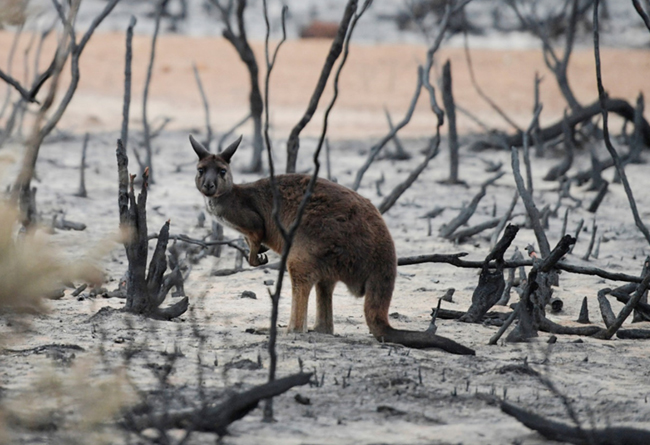
Sydney, Jul 28: Nearly 3 billion koalas, kangaroos and other native Australian animals were killed or displaced by bushfires in 2019 and 2020, a study by the World Wide Fund for Nature (WWF) said on Tuesday, triple the group's earlier estimates.

Some 143 million mammals, 2.46 billion reptiles, 180 million birds and 51 million frogs were impacted by the country's worst bushfires in decades, the WWF said.

When the fires were still blazing, the WWF estimated the number of affected animals at 1.25 billion. The fires destroyed more than 11 million hectares (37 million acres) across the Australian southeast, equal to about half the area of the United Kingdom.

"This ranks as one of the worst wildlife disasters in modern history," said WWF-Australia Chief Executive Officer Dermot O'Gorman in a statement.

The project leader Lily Van Eeden, from the University of Sydney, said the research was the first continent-wide analysis of animals impacted by the bushfires, and "other nations can build upon this research to improve understanding of bushfire impacts everywhere".

The total number included animals which were displaced because of destroyed habitats and now faced lack of food and shelter or the prospect of moving to habitat that was already occupied.

The main reason for raising the number of animal casualties was that researchers had now assessed the total affected area, rather than focusing on the most affected states, they said.

After years of drought made the Australian bush unusually dry, the country battled one of its worst bushfire seasons ever from September 2019 to March 2020, resulting in 34 human deaths and nearly 3,000 homes lost.

Comments

Add new comment

  • Coastaldigest.com reserves the right to delete or block any comments.
  • Coastaldigset.com is not responsible for its readers’ comments.
  • Comments that are abusive, incendiary or irrelevant are strictly prohibited.
  • Please use a genuine email ID and provide your name to avoid reject.
News Network
March 3,2020

Mar 3: Just hours after the ending of a week-long “reduction” in violence that was crucial for Donald Trump’s peace deal in Afghanistan, the Taliban struck again: On Monday, they killed three people and injured about a dozen at a football match in Khost province. This resumption of violence will not surprise anyone actually invested in peace for that troubled country. The point of the U.S.-Taliban deal was never peace. It was to try and cover up an ignominious exit for the U.S., driven by an election-bound president who feels no responsibility toward that country or to the broader region.

Seen from South Asia, every point we know about in the agreement is a concession by Trump to the Taliban. Most importantly, it completes a long-term effort by the U.S. to delegitimize the elected government in Kabul — and, by extension, Afghanistan’s constitution. Afghanistan’s president is already balking at releasing 5,000 Taliban prisoners before intra-Afghan talks can begin — a provision that his government did not approve.

One particularly cringe-worthy aspect: The agreement refers to the Taliban throughout  as “the Islamic Emirate of Afghanistan that is not recognized by the United States as a state and is known as the Taliban.” This unwieldy nomenclature validates the Taliban’s claim to be a government equivalent to the one in Kabul, just not the one recognised at the moment by the U.S. When read together with the second part of the agreement, which binds the U.S. to not “intervene in [Afghanistan’s] domestic affairs,” the point is obvious: The Taliban is not interested in peace, but in ensuring that support for its rivals is forbidden, and its path to Kabul is cleared.

All that the U.S. has effectively gotten in return is the Taliban’s assurance that it will not allow the soil of Afghanistan to be used against the “U.S. and its allies.” True, the U.S. under Trump has shown a disturbing willingness to trust solemn assurances from autocrats; but its apparent belief in promises made by a murderous theocratic movement is even more ridiculous. Especially as the Taliban made much the same promise to an Assistant Secretary of State about Osama bin Laden while he was in the country plotting 9/11.

Nobody in the region is pleased with this agreement except for the Taliban and their backers in the Pakistani military. India has consistently held that the legitimate government in Kabul must be the basic anchor of any peace plan. Ordinary Afghans, unsurprisingly, long for peace — but they are, by all accounts, deeply skeptical about how this deal will get them there. The brave activists of the Afghan Women’s Network are worried that intra-Afghan talks will take place without adequate representation of the country’s women — who have, after all, the most to lose from a return to Taliban rule.

But the Pakistani military establishment is not hiding its glee. One retired general tweeted: “Big victory for Afghan Taliban as historic accord signed… Forced Americans to negotiate an accord from the position of parity. Setback for India.” Pakistan’s army, the Taliban’s biggest backer, longs to re-install a friendly Islamist regime in Kabul — and it has correctly estimated that, after being abandoned by Trump, the Afghan government will have sharply reduced bargaining power in any intra-Afghan peace talks. A deal with the Taliban that fails also to include its backers in the Pakistani military is meaningless.

India, meanwhile, will not see this deal as a positive for regional peace or its relationship with the U.S. It comes barely a week after Trump’s India visit, which made it painfully clear that shared strategic concerns are the only thing keeping the countries together. New Delhi remembers that India is not, on paper, a U.S. “ally.” In that respect, an intensification of terrorism targeting India, as happened the last time the U.S. withdrew from the region, would not even be a violation of Trump’s agreement. One possible outcome: Over time the government in New Delhi, which has resolutely sought to keep its ties with Kabul primarily political, may have to step up security cooperation. Nobody knows where that would lead.

The irresponsible concessions made by the U.S. in this agreement will likely disrupt South Asia for years to come, and endanger its own relationship with India going forward. But worst of all, this deal abandons those in Afghanistan who, under the shadow of war, tried to develop, for the first time, institutions that work for all Afghans. No amount of sanctimony about “ending America’s longest war” should obscure the danger and immorality of this sort of exit.

Comments

Add new comment

  • Coastaldigest.com reserves the right to delete or block any comments.
  • Coastaldigset.com is not responsible for its readers’ comments.
  • Comments that are abusive, incendiary or irrelevant are strictly prohibited.
  • Please use a genuine email ID and provide your name to avoid reject.