TN Agrees to Share Water with Kerala

December 12, 2013

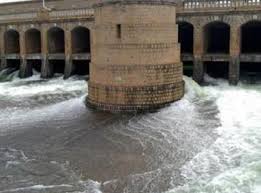
TN_AgreesCoimbatore, Dec 12: Tamil Nadu has agreed to release water to Kerala as per the Parambikulam Aliyar Project (PAP) agreement for irrigation this year. The agreement was reached at a meeting in the city on Wednesday.

As per the PAP agreement between the two States, signed decades ago, Tamil Nadu has to release 7.25 TMC of water from Aliyar dam near Pollachi and 12.3 TMC of water from Sholayar dam in Valparai to Kerala throughout the year.

Tamil Nadu released to Kerala 9.3 TMC from Sholayar dam and 3.5 TMC from Aliyar dam between July and November this year, sources said.

Officials of both States have agreed to share the remaining water from the dam. Kerala’s share would be released before end of June next year.

“The storage in the dam is enough and the remaining water would be released to Kerala without delay,” said a Tamil Nadu official.

Earlier, Kerala officials had demanded the ‘arrears’, water which was not released to them last year.

Comments

Add new comment

  • Coastaldigest.com reserves the right to delete or block any comments.
  • Coastaldigset.com is not responsible for its readers’ comments.
  • Comments that are abusive, incendiary or irrelevant are strictly prohibited.
  • Please use a genuine email ID and provide your name to avoid reject.
News Network
January 9,2020

Srinagar, Jan 9: Envoys from 15 countries including the United States were shown around Srinagar on Thursday, the first visit by New Delhi-based diplomats since the government stripped Kashmir of its semi-autonomous status and began a harsh crackdown five months ago.

The diplomats were driven by Indian authorities in a motorcade amid tight security from the airport to the military headquarters in Srinagar, where they were briefed on the security situation, an army officer said. He spoke on condition of anonymity as he was not authorized to speak to reporters.

They also held discussions with civil society members and some Kashmiri politicians, said Raveesh Kumar, spokesman for the Ministry of External Affairs (MEA).

The objective of the visit, organized by the Union government, was for the envoys to see first-hand “how things have progressed and how normalcy has been restored to a large extent'' in Kashmir since August, Kumar told reporters in New Delhi.

In October, a group of European Parliament members had visited the region, which is claimed by both India and Pakistan.

The delegation that visited Kashmir on Thursday included US ambassador to India Kenneth Juster and diplomats from Bangladesh, Vietnam, Norway, the Maldives, South Korea, Morocco, Niger, Nigeria, Argentina, the Philippines, Fiji, Uzbekistan, Peru and Togo.

Offices, shops and businesses were open in Srinagar on the cold winter day, but the diplomats did not stop to talk to people as they moved to different venues of their meetings.

They were to fly to Jammu, the winter capital of Kashmir, later Thursday and return to New Delhi on Friday.

Congress leader Jairam Ramesh pointed out the oddity of taking foreign diplomats to the troubled state but not allowing allowing Indian political leaders to freely visit it.

The National Conference said it was "disappointed" with the way the government brought envoys from various countries to "endorse" its "claims of normalcy" in the union territory. The party alleged that it was no more than a "guided tour" with access limited to "handpicked individuals who toe the government line".

“The NC wishes to ask these envoys that if the situation in Jammu & Kashmir is "normal", then why are scores of people, including three former chief ministers, under detention for almost 160 days and why have the people been denied access to the internet for over 5 months?" a statement issued by the party said.

Kumar dismissed as unfounded criticism of the visit, and said more such visits to Kashmir by New Delhi-based diplomats are likely in the near future.

Comments

Add new comment

  • Coastaldigest.com reserves the right to delete or block any comments.
  • Coastaldigset.com is not responsible for its readers’ comments.
  • Comments that are abusive, incendiary or irrelevant are strictly prohibited.
  • Please use a genuine email ID and provide your name to avoid reject.
Agencies
July 29,2020

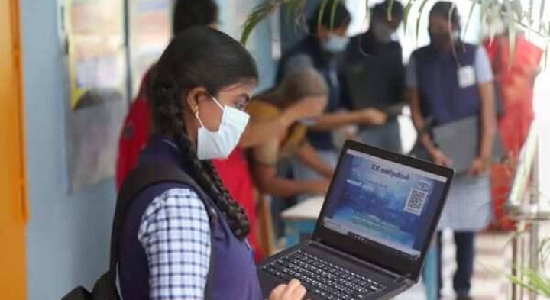
New Delhi, Jul 29: The new National Education Policy (NEP) approved by the Union Cabinet on Wednesday is set to usher in a slew of changes with the vision of creating an education system that contributes directly to transforming the country, providing high-quality education to all, and making India a global knowledge superpower.

The draft of the NEP by a panel headed by former Indian Space Research Organisation (ISRO) chief Kasturirangan and submitted to the Union Human Resource Development Minister Ramesh Pokhriyal when he took charge last year. The new NEP replaces the one formulated in 1986.

Some of the key highlights of the New Education Policy are:-

The policy aims to enable an individual to study one or more specialized areas of interest at a deep level, and also develop character, scientific temper, creativity, spirit of service, and 21st century capabilities across a range of disciplines including sciences, social sciences, arts, humanities, among others.

It identified the major problems facing the higher education system in the country and suggested changes such as moving towards multidisciplinary universities and colleges, with more institutions across India that offer medium of instruction in local/Indian languages, a more multidisciplinary undergraduate education, among others. 

The governance of such institutions by independent boards having academic and administrative autonomy has also been suggested.

Under the suggestions for institutional restructuring and consolidation, it has suggested that by 2040, all higher education institutions (HEIs) shall aim to become multidisciplinary institutions, each of which will aim to have 3,000 or more students, and by 2030 each or near every district in the country there will be at least one HEI.

The aim will be to increase the Gross Enrolment Ratio in HEIs including vocational education from 26.3 per cent (2018) to 50 per cent by 2035.

Single-stream HEIs will be phased out over time, and all will move towards becoming vibrant multidisciplinary institutions or parts of vibrant multidisciplinary HEI clusters.

It also pushes for more holistic and multidisciplinary education to be provided to the students.

Comments

Add new comment

  • Coastaldigest.com reserves the right to delete or block any comments.
  • Coastaldigset.com is not responsible for its readers’ comments.
  • Comments that are abusive, incendiary or irrelevant are strictly prohibited.
  • Please use a genuine email ID and provide your name to avoid reject.
Agencies
January 4,2020

New Delhi, Jan 4: "Sovereign, socialist, secular, democratic republic" is how India is referred to in the preamble of the Constitution. However, J Nandakumar, a key RSS leader and All India Convenor Prajna Pravah, a Sangh offshoot, wants India to reconsider the inclusion of the word "secular", claiming secularism is a "western, Semitic concept".

In an exclusive interview to news agency, Nandakumar said: "Secularism is a western, Semitic concept. It came into existence in the West. It was actually against Papal dominance."

He argued that India does not need a secular ethos as the nation has moved "way beyond secularism" since it believes in universal acceptance as against the western concept of tolerance.

The RSS functionary on Thursday released a book here named "Hindutva in the changing times". The book launch event was also attended by senior RSS functionary Krishna Gopal.

Nandakumar, who has attacked the Mamata Banerjee government in his book for alleged "Islamisation of West Bengal", told IANS: "We have to see whether we need to put up a board of being secular, or that whether we should prove this through our behaviour, actions and roles."

It is for society to take a call on this, rather than by any political class, on whether the preamble to the Indian Constitution should continue to have the word "secular" in it or not, he added.

In between signing his books and obliging wannabe Hindutva cadres with selfies, Nandakumar said that the very existence of the word "secular" in the preamble was not necessary and how the constitution founders too were against it.

"Baba Saheb Ambedkar, Ladi Krishnaswamy Aiyaar -- all debated against it and said it (secular) wasn't necessary to be included in the preamble. That time it was demanded, discussed and decided not to include it," he said.

Ambedkar's opinion was, however, disregarded when Indira Gandhi "bulldozed" the word "secular", in 1976, said the head of the Prajna Pravah, an umbrella body of several right-wing think-tanks

As Nandakumar prepared to return to his base in Kerala, where, he emphasises, the RSS has its work cut out in the "fight against the Kunnor model", he said that the inclusion of "secular" was done with the intent to damage the concept of Hindutva.

"It was to demolish, destroy the overarching principle of Hindutva that binds us together", he said.

Asked whether the Sangh would pressurise the BJP, which has 303 seats in the Lok Sabha, to omit "secular" from the Constitution preamble, Nandakumar smilingly refused to reply.


Comments

Add new comment

  • Coastaldigest.com reserves the right to delete or block any comments.
  • Coastaldigset.com is not responsible for its readers’ comments.
  • Comments that are abusive, incendiary or irrelevant are strictly prohibited.
  • Please use a genuine email ID and provide your name to avoid reject.