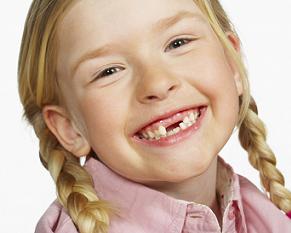
Tooth loss may lead to memory decline

December 20, 2014

Tooth lossLondon, Dec 20: The memory and walking speeds of older adults who have lost all of their natural teeth decline more rapidly than in those who still have some of their own teeth, finds research.

"Tooth loss could be used as an early marker of mental and physical decline in older age, particularly among 60-74 year-olds," said lead author Georgios Tsakos from University College London. "There are many factors likely to influence this decline, such as lifestyle and psychosocial factors, which are amenable to change," Tsakos added.

The study looked at 3,166 adults aged 60 or over and compared their performance in tests of memory and walking speed. The results showed that the people with none of their own teeth performed approximately 10 percent worse in both memory and walking speed tests than the people with teeth.

These links between older adults in England losing all natural teeth and having poorer memory and worse physical function 10 years later were more evident in adults aged 60 to 74 years than in those aged 75 and older.

"We find that common causes of tooth loss and mental and physical decline are often linked to socioeconomic status, highlighting the importance of broader social determinants such as education and wealth to improve the oral and general health of the poorest members of society," said Tsakos.

The study was published in the Journal of the American Geriatrics Society.

Comments

Add new comment

  • Coastaldigest.com reserves the right to delete or block any comments.
  • Coastaldigset.com is not responsible for its readers’ comments.
  • Comments that are abusive, incendiary or irrelevant are strictly prohibited.
  • Please use a genuine email ID and provide your name to avoid reject.
Agencies
July 24,2020

Colorado, Jul 24: A new study has found that physical stress in one's job may be associated with faster brain ageing and poorer memory.

Aga Burzynska, an assistant professor in the Department of Human Development and Family Studies, and her research team connected occupational survey responses with brain-imaging data from 99 cognitively normal older adults, age 60 to 79. They found that those who reported high levels of physical stress in their most recent job had smaller volumes in the hippocampus and performed poorer on memory tasks. The hippocampus is the part of the brain that is critical for memory and is affected in both normal ageing and in dementia.

Their findings were published this summer in Frontiers in Human Neuroscience under the research topic 'Work and Brain Health Across the Lifespan.'

"We know that stress can accelerate physical ageing and is the risk factor for many chronic illnesses," Burzynska said. "But this is the first evidence that occupational stress can accelerate brain and cognitive ageing."

She added that it is important to understand how occupational exposures affect the ageing of our brains.

"An average American worker spends more than eight hours at work per weekday, and most people remain in the workforce for over 40 years," Burzynska said. "By pure volume, occupational exposures outweigh the time we spend on leisure social, cognitive and physical activities, which protect our ageing minds and brains."

Physical demands at work

Burzynska explained that the association between "physical stress" and brain/memory were driven by physical demands at work. These included excessive reaching, or lifting boxes onto shelves, not necessarily aerobic activity. This is important because earlier work by Burzynska and her colleagues showed that leisure aerobic exercise is beneficial for brain health and cognition, from children to very old adults. Therefore, the researchers controlled for the effects of leisure physical activity and exercise.

As expected, leisure physical activity was associated with greater hippocampal volume, but the negative association with physical demands at work persisted.

"This finding suggests that physical demands at work may have parallel yet opposing associations with brain health," Burzynska explained. "Most interventions for postponing cognitive decline focus on leisure, not on your job. It's kind of unknown territory, but maybe future research can help us make some tweaks to our work environment for long-term cognitive health."

She added that the results could have important implications for society.

"Caring for people with cognitive impairment is so costly, on economic, emotional and societal levels," Burzynska said. "If we can support brain health earlier, in middle-aged workers, it could have an enormous impact."

The researchers considered and corrected for several other factors that could be related to work environment, memory and hippocampus, such as age, gender, brain size, educational level, job title, years in the occupation and general psychological stress.

One piece of the puzzle

"The research on this topic is so fragmented," Burzynska said. "One previous study linked mid-life managerial experience with greater hippocampus volume in older age. Another showed that taxi drivers had larger hippocampi than a city's bus drivers, presumably due to the need to navigate. In our study, job complexity and psychological stress at work were not related to hippocampal volume and cognition. Clearly, our study is just one piece of the puzzle, and further research is needed."

The magnetic resonance imaging (MRI) data used for the study was collected at the University of Illinois Urbana-Champaign between 2011 and 2014.

CSU researchers now can collect MRI data with the new 3T scanner at the University's Translational Medicine Institute.

With this new capability, Burzynska, along with Michael Thomas and Lorann Stallones of CSU's Department of Psychology, is launching a new project, "Impact of Occupational Exposures and Hazards on Brain and Cognitive Health Among Aging Agricultural Workers," which will involve collecting MRI brain scans and identifying risk and protective factors that could help the agricultural community age successfully. The project recently obtained funding as an Emerging Issues Short-Term Project from the High Plains Intermountain Center for Agricultural Health and Safety.

The Department of Human Development and Family Studies is part of CSU's College of Health and Human Sciences.


Comments

Add new comment

  • Coastaldigest.com reserves the right to delete or block any comments.
  • Coastaldigset.com is not responsible for its readers’ comments.
  • Comments that are abusive, incendiary or irrelevant are strictly prohibited.
  • Please use a genuine email ID and provide your name to avoid reject.
Agencies
June 24,2020

New Delhi, Jun 24: Expanding the testing criterion for coronavirus, the Indian Council of Medical Research has said it should be made widely available to all symptomatic individuals across the country.

"Since test, track and treat' is the only way to prevent spread of infection and save lives, it is imperative that testing should be made widely available to all symptomatic individuals in every part of the country and contact tracing mechanisms for containment of infection are further strengthened," it said in an advisory on 'Newer Additional Strategies for COVID-19 Testing' on Tuesday.

In its revised testing strategy for COVID-19 issued on May 18, the Indian Council of Medical Research (ICMR) had advised testing for all symptomatic Influenza-like illness (ILI) among returnees and migrants within seven days of illness.

All hospitalised patients who develop ILI symptoms, symptomatic individuals living within hotspots or containment zones and healthcare and frontline workers involved in containment and mitigation of coronavirus were also advised testing.

The apex health research body has also advised authorities to enable all government and private hospitals, offices and public sector units to perform antibody-based COVID-19 testing for surveillance to help allay fears and anxiety of healthcare workers and office employees.

The earlier advisories on rapid antibody testing advisories had focused on areas reporting clusters (containment zones), large migration gatherings/evacuees centers and testing of symptomatic ILI individuals at facility level.

Besides, the ICMR on Tuesday also recommended deployment of rapid antigen detection tests for COVID-19 in combination with RT-PCR tests in all containment zones, all central and state government medical colleges and government hospitals, all private hospitals approved by the National Accreditation Board for Hospitals and Healthcare (NABH), all NABL-accredited and ICMR approved private labs, for COVID-19 testing.

All hospitals, laboratories and state governments intending to perform the point-of-care antigen tests need to register with ICMR to obtain the login credentials for data entry.

"ICMR advises all state governments, public and private institutions concerned to take required steps to scale up testing for COVID-19 by deploying combination of various tests as advised," the advisory added.

Comments

Add new comment

  • Coastaldigest.com reserves the right to delete or block any comments.
  • Coastaldigset.com is not responsible for its readers’ comments.
  • Comments that are abusive, incendiary or irrelevant are strictly prohibited.
  • Please use a genuine email ID and provide your name to avoid reject.
Agencies
May 23,2020

Food with high water content is highly prescribed by doctors to stay hydrated during the summers, a season that summons a wave of soaring temperatures, higher than 40-degrees.

A much-loved fruit in India, apples are hydrating heros' in such a situation. A heatwave can affect human health in a varied manner and to maintain ideal body temperature in this soaring summer, one must remain adequately hydrated, be protected from the sun and maintain hygiene.

Working professionals and people who must step out in summers, are prone to the heatwave impact. Pediatric experts and doctors agree on the benefits of drinking water and eating fruits, especially, apples. 'An apple a day, keeps the doctor away' is true as they are rich in a number of vitamins with great anti-inflammatory benefits and many other essential minerals. Washington Apple Commission spells how apples can prove to be a summer-friendly fruit.

People often don't realise the danger of exposing themselves to extreme heat. Older adults, young children, and people with chronic illnesses are most at greater risk for serious problems. The nutrition benefits of apples may help not only in avoiding such illnesses but may also protect against many such conditions.

As popular as apples are as a fruit, they are enriched in antioxidants, dietary fibers, vitamins and a range of other nutrients that are greatly beneficial in maintaining good health. The fruit is rich in soluble fibers which may help prevent several health conditions and may lower the risk of major diseases such as heat strokes, diabetes and cancer.

The soluble fiber also promotes weight loss and improves gut health. The prebiotic effects of apples help feed the good bacteria in the gut, thus, improving digestion.

Apples are made of 85 percent water and contain vitamins, fibres and antioxidants. A high fibre content is a particularly beneficial property of apples, as improper digestion is a major health concern in the tropical climatic region. Apples are also enriched in antioxidants that help protect the lungs from oxidative damage and help oxygen flow through the blood.

Apple-based recipes

Make interesting snacks, dessert, beverages and savoury meals with this miraculous fruit during summers.

Salted apple caramel galette

Caramel apples get a grown-up makeover with this Salted Caramel Apple Galette. Warm, gooey, and delicious, this pastry is loaded with apples and homemade caramel. It's a sophisticated take on a childhood favorite and since it's easier to make than pie, it's perfect for summer get-togethers.

Caramel apple pie ice-cream sandwiches

Nothing is better at a cookout on a warm day than a cold, refreshing ice cream sandwich. In Caramel Apple Pie Ice Cream Sandwiches, the comforting flavor of apple pie is recreated in a creamy frozen banana-based ice cream studded with apple and date pieces. Then that scoop of ice cream is sandwiched between two pieces of no-bake cinnamon oat cookie dough.

Comments

Add new comment

  • Coastaldigest.com reserves the right to delete or block any comments.
  • Coastaldigset.com is not responsible for its readers’ comments.
  • Comments that are abusive, incendiary or irrelevant are strictly prohibited.
  • Please use a genuine email ID and provide your name to avoid reject.