


Top Donald Trump aide in frequent contact with Russia's ambassador

January 14, 2017

Washington, Jan 14: President-elect Donald Trump's national security adviser and Russia's ambassador to the US have been in frequent contact in recent weeks, including on the day the Obama administration hit Moscow with sanctions in retaliation for election-related hacking, a senior U.S. official said Friday.
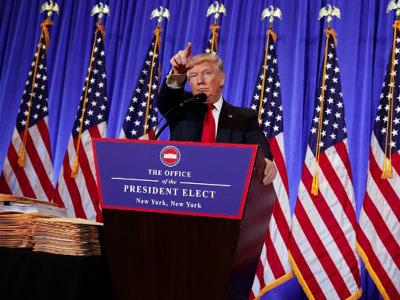
aideAfter initially denying that Flynn and Ambassador Sergey Kislyak spoke Dec. 29, a Trump official said late Friday that the transition team was aware of one call on the day President Barack Obama imposed sanctions.

It's not unusual for incoming administrations to have discussions with foreign governments before taking office. But repeated contacts just as Obama imposed sanctions would raise questions about whether Trump's team discussed — or even helped shape — Russia's response.

Russian President Vladimir Putin unexpectedly did not retaliate against the US for the move, a decision Trump quickly praised.

More broadly, Flynn's contact with the Russian ambassador suggests the incoming administration has already begun to lay the groundwork for its promised closer relationship with Moscow. That effort appears to be moving ahead, even as many in Washington, including Republicans, have expressed outrage over intelligence officials' assessment that Putin launched a hacking operation aimed at meddling in the US election to benefit Trump.

In an interview published Friday evening by The Wall Street Journal, Trump said he might do away with Obama's sanctions if Russia works with the US on battling terrorists and achieving other goals.

"If Russia is really helping us, why would anybody have sanctions?" he asked.

During a news conference Wednesday, Trump highlighted his warmer rapport with the Russian leader.

"If Putin likes Donald Trump, I consider that an asset, not a liability, because we have a horrible relationship with Russia," he said.

The sanctions targeted the GRU and FSB, leading Russian intelligence agencies that the U.S. said were involved in the hacking of the Democratic National Committee and other groups. The U.S. also kicked out 35 Russian diplomats who it said were actually intelligence operatives.

Trump has been willing to insert himself into major foreign policy issues during the transition, at times contradicting the current administration and diplomatic protocol. He accepted a call from Taiwan's president, ignoring the longstanding "One China" policy that does not recognize the island's sovereignty. He also publicly urged the U.S. to veto a United Nations Security Council resolution condemning Israeli settlements, then slammed the Obama administration for abstaining and allowing the measure to pass.

Questions about Trump's friendly posture toward Russia have deepened since the election, as he has dismissed US intelligence agencies' assertions about Russia's role in the hacking of Democratic groups. In briefing Trump on their findings, intelligence officials also presented the president-elect with unsubstantiated claims that Russia had amassed compromising personal and financial allegations about him, according to a separate U.S. official who spoke on the condition of anonymity because the official was not allowed to publicly discuss the matter.

The Senate Intelligence Committee announced late Friday that it would investigate possible contacts between Russia and people associated with U.S. political campaigns as part of a broader investigation into Moscow's meddling in the 2016 presidential election.

Trump acknowledged for the first time this week that he accepts that Russia was behind the hacking. But he questioned whether officials were leaking information about their meetings with him, warning that would be a "tremendous blot" on their record.

Flynn's own ties with Russia have worried some Republicans who are more skeptical of the Kremlin than Trump appears to be. After leaving his position as director of the Defense Intelligence Agency in 2014, Flynn made appearances on RT, a state-run Russian television network. In 2015, he was paid to attend an RT gala in Moscow, where he sat next to Putin.

As national security adviser, Flynn will work in the West Wing close to the Oval Office and will have frequent access to Trump. Unlike Trump's nominees to lead the Pentagon, State Department and other national security agencies, Flynn's post does not require Senate confirmation.

Flynn's contacts with the Russian ambassador were first reported by Washington Post columnist David Ignatius. The U.S. official who spoke to The Associated Press was not authorized to confirm the contacts publicly and insisted on anonymity.

The Trump team's account of Flynn's contacts with the Russian envoy changed throughout the day Friday.

Trump spokesman Sean Spicer initially said there was one phone call between Flynn and Kislyak on Dec. 28, as well as a Christmas greeting via text messages over the holidays. He said sanctions were not part of the discussions.

Later Friday, a transition official said Flynn and Kislyak had spoken by phone on Dec. 29, following a text message from the ambassador the day before. During the call, the Russian ambassador invited U.S. officials to a conference on Syria later this month that is being held in Kazakhstan, according to the transition official, who was not authorized to publicly discuss the matter and insisted on anonymity.

The official also confirmed a phone call between the men earlier in December.

The US official who spoke to the AP Friday described the contacts between Flynn and Kislyak as "very frequent."

It's unclear how US officials became aware of the contacts between Flynn and Kislyak, who has served as Russia's envoy to the US since 2008. U.S. monitoring of Russian officials' communication within the United States is known to be common.

Flynn has spoken with other foreign officials since Trump won the November election, as have incoming White House senior advisers Steve Bannon and Jared Kushner, Trump's son-in-law. State Department spokesman Mark Toner said he saw nothing inappropriate in Trump's transition team contacting Russian or any other foreign officials.

Comments

Add new comment

  • Coastaldigest.com reserves the right to delete or block any comments.
  • Coastaldigset.com is not responsible for its readers’ comments.
  • Comments that are abusive, incendiary or irrelevant are strictly prohibited.
  • Please use a genuine email ID and provide your name to avoid reject.
Agencies
March 29,2020

A shrimp seller at the wet market in the Chinese city of Wuhan believed to be the centre of the coronavirus pandemic, may be the first person to have tested positive for the disease, a media report said on Saturday.

The report by the London-based Metro newspaper said that 57-year-old woman, named by the Wall Street Journal as Wei Guixian, was selling shrimp at the Huanan Seafood Market when she developed what she thought was a cold last December.

Chinese digital news outlet, The Paper has said that she may be epatient zero'.

Wei was told by doctors her illness was "ruthless" and other workers at the market had come to the Wuhan Union Hospital with the same symptoms, the Metro newspaper report quoted the outlet as saying.

"Every winter, I suffer from the flu, so I thought it was the flu," the woman was quoted as saying by The Paper news outlet.

The shrimp seller added that she believed she contracted the coronavirus from the shared toilet in the market.

She said the fatal disease would have killed fewer people if the government had acted sooner.

Wuhan Municipal Health Commission has confirmed that Wei was among the first 27 people to test positive for the coronavirus.

It said she was one of 24 cases with direct links to the market, the Metro newspaper reported.

Though Wei may be "patient zero", it does not mean she is the first person to have contracted the virus, added the Metro report.

Chinese researchers have claimed that the first person diagnosed with the airborne virus had no contact with the seafood market and was identified on December 1, 2019.

Wei was later quarantined when a connection was made between the bug and the market before recovering in January.

As of Saturday, the global number of coronavirus cases stood at 104,837 with 27,862 deaths, according to the latest update by the Washington-based Johns Hopkins University.

The US has the highest number of cases at 104,837, followed by Italy 86,498 and China 81,948.

Italy has recorded the highest number of fatalities with 9,134 deaths, followed by Spain and China, at 5,138 and 3,299, respectively.

Comments

Add new comment

  • Coastaldigest.com reserves the right to delete or block any comments.
  • Coastaldigset.com is not responsible for its readers’ comments.
  • Comments that are abusive, incendiary or irrelevant are strictly prohibited.
  • Please use a genuine email ID and provide your name to avoid reject.
News Network
June 17,2020

Vienna, Jun 17: Austrian police fined a man 500 euros for loudly breaking wind after officers stopped him earlier this month to check his identity.

The police defended the massive fine saying he had deliberately emitted a "massive flatulence," lifting his backside from the bench where he was sitting.

The accused complained of what he called the disproportionate and unjustified fine when he gave his account of the June 5 events on the O24 news website.

In reply to social media commentaries that followed, the police in the Austrian capital justified their reaction on Twitter.

"Of course, nobody is put on the spot if one slips out by accident," the police said.

However, in this case, the police said, the young man had appeared "provocative and uncooperative" in general.

He then "slightly raised himself from the bench, looked at the officers and patently, in a completely deliberate way, emitted a massive flatulence in their immediate proximity."

Comments

Add new comment

  • Coastaldigest.com reserves the right to delete or block any comments.
  • Coastaldigset.com is not responsible for its readers’ comments.
  • Comments that are abusive, incendiary or irrelevant are strictly prohibited.
  • Please use a genuine email ID and provide your name to avoid reject.
News Network
May 21,2020

London, May 21: Working mothers in Europe and the United States are taking on most of the extra housework and childcare created by lockdown - and many are struggling to cope, a survey showed on Thursday.

Women with children now spend an average 65 hours a week on the unpaid chores - nearly a third more than fathers - according to the Boston Consulting Group, which questioned parents in five countries.

"Women have been doing too much household work for too long, and this crisis is pushing them to a point that's simply unsustainable," Rachel Thomas, of U.S.-based women's rights group LeanIn.Org, said in response to the data.

"We need a major culture shift in our homes and in our companies ... We should use this moment to build a better way to work and live – one that's fair for everybody."

Researchers say fallout from the pandemic weighs on women in a host of ways, be it in rising domestic violence or in lower wages, as some women cut paid work to take on the new duties.

With lockdowns shutting schools and keeping citizens at home, creating a mountain of domestic work, public campaigns from Georgia to Mexico have urged men to do their fair share.

But women, who on average already do more at home than men, are now shouldering most of the new coronavirus burden, too, said the survey of more than 3,000 working parents in the United States, Britain, Italy, Germany and France.

Women's unpaid hours at home have nearly doubled to 65 hours a week, said the survey, against 50 logged by an average father.

British women are more likely to support others in the COVID-19 pandemic and are finding it harder to stay positive, according to separate analysis released this week by polling firm Ipsos MORI and feminist organisation The Fawcett Society.

It is "no surprise" to see women do more childcare and housekeeping on top of their day jobs, Jacqui Hunt of women's rights group Equality Now, told the Thomson Reuters Foundation.

However, there are "hopeful signs" that men in West Africa are sharing more childcare during the pandemic in a shift in social norms, found a small rapid analysis by humanitarian organisation CARE International released on Wednesday.

Comments

Add new comment

  • Coastaldigest.com reserves the right to delete or block any comments.
  • Coastaldigset.com is not responsible for its readers’ comments.
  • Comments that are abusive, incendiary or irrelevant are strictly prohibited.
  • Please use a genuine email ID and provide your name to avoid reject.