


Top Donald Trump aide in frequent contact with Russia's ambassador

January 14, 2017

Washington, Jan 14: President-elect Donald Trump's national security adviser and Russia's ambassador to the US have been in frequent contact in recent weeks, including on the day the Obama administration hit Moscow with sanctions in retaliation for election-related hacking, a senior U.S. official said Friday.
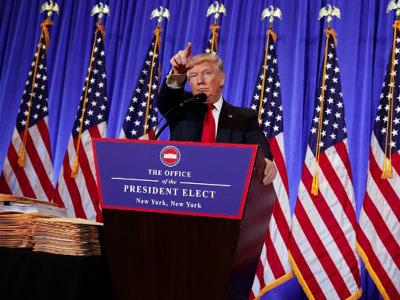
aideAfter initially denying that Flynn and Ambassador Sergey Kislyak spoke Dec. 29, a Trump official said late Friday that the transition team was aware of one call on the day President Barack Obama imposed sanctions.

It's not unusual for incoming administrations to have discussions with foreign governments before taking office. But repeated contacts just as Obama imposed sanctions would raise questions about whether Trump's team discussed — or even helped shape — Russia's response.

Russian President Vladimir Putin unexpectedly did not retaliate against the US for the move, a decision Trump quickly praised.

More broadly, Flynn's contact with the Russian ambassador suggests the incoming administration has already begun to lay the groundwork for its promised closer relationship with Moscow. That effort appears to be moving ahead, even as many in Washington, including Republicans, have expressed outrage over intelligence officials' assessment that Putin launched a hacking operation aimed at meddling in the US election to benefit Trump.

In an interview published Friday evening by The Wall Street Journal, Trump said he might do away with Obama's sanctions if Russia works with the US on battling terrorists and achieving other goals.

"If Russia is really helping us, why would anybody have sanctions?" he asked.

During a news conference Wednesday, Trump highlighted his warmer rapport with the Russian leader.

"If Putin likes Donald Trump, I consider that an asset, not a liability, because we have a horrible relationship with Russia," he said.

The sanctions targeted the GRU and FSB, leading Russian intelligence agencies that the U.S. said were involved in the hacking of the Democratic National Committee and other groups. The U.S. also kicked out 35 Russian diplomats who it said were actually intelligence operatives.

Trump has been willing to insert himself into major foreign policy issues during the transition, at times contradicting the current administration and diplomatic protocol. He accepted a call from Taiwan's president, ignoring the longstanding "One China" policy that does not recognize the island's sovereignty. He also publicly urged the U.S. to veto a United Nations Security Council resolution condemning Israeli settlements, then slammed the Obama administration for abstaining and allowing the measure to pass.

Questions about Trump's friendly posture toward Russia have deepened since the election, as he has dismissed US intelligence agencies' assertions about Russia's role in the hacking of Democratic groups. In briefing Trump on their findings, intelligence officials also presented the president-elect with unsubstantiated claims that Russia had amassed compromising personal and financial allegations about him, according to a separate U.S. official who spoke on the condition of anonymity because the official was not allowed to publicly discuss the matter.

The Senate Intelligence Committee announced late Friday that it would investigate possible contacts between Russia and people associated with U.S. political campaigns as part of a broader investigation into Moscow's meddling in the 2016 presidential election.

Trump acknowledged for the first time this week that he accepts that Russia was behind the hacking. But he questioned whether officials were leaking information about their meetings with him, warning that would be a "tremendous blot" on their record.

Flynn's own ties with Russia have worried some Republicans who are more skeptical of the Kremlin than Trump appears to be. After leaving his position as director of the Defense Intelligence Agency in 2014, Flynn made appearances on RT, a state-run Russian television network. In 2015, he was paid to attend an RT gala in Moscow, where he sat next to Putin.

As national security adviser, Flynn will work in the West Wing close to the Oval Office and will have frequent access to Trump. Unlike Trump's nominees to lead the Pentagon, State Department and other national security agencies, Flynn's post does not require Senate confirmation.

Flynn's contacts with the Russian ambassador were first reported by Washington Post columnist David Ignatius. The U.S. official who spoke to The Associated Press was not authorized to confirm the contacts publicly and insisted on anonymity.

The Trump team's account of Flynn's contacts with the Russian envoy changed throughout the day Friday.

Trump spokesman Sean Spicer initially said there was one phone call between Flynn and Kislyak on Dec. 28, as well as a Christmas greeting via text messages over the holidays. He said sanctions were not part of the discussions.

Later Friday, a transition official said Flynn and Kislyak had spoken by phone on Dec. 29, following a text message from the ambassador the day before. During the call, the Russian ambassador invited U.S. officials to a conference on Syria later this month that is being held in Kazakhstan, according to the transition official, who was not authorized to publicly discuss the matter and insisted on anonymity.

The official also confirmed a phone call between the men earlier in December.

The US official who spoke to the AP Friday described the contacts between Flynn and Kislyak as "very frequent."

It's unclear how US officials became aware of the contacts between Flynn and Kislyak, who has served as Russia's envoy to the US since 2008. U.S. monitoring of Russian officials' communication within the United States is known to be common.

Flynn has spoken with other foreign officials since Trump won the November election, as have incoming White House senior advisers Steve Bannon and Jared Kushner, Trump's son-in-law. State Department spokesman Mark Toner said he saw nothing inappropriate in Trump's transition team contacting Russian or any other foreign officials.

Comments

Add new comment

  • Coastaldigest.com reserves the right to delete or block any comments.
  • Coastaldigset.com is not responsible for its readers’ comments.
  • Comments that are abusive, incendiary or irrelevant are strictly prohibited.
  • Please use a genuine email ID and provide your name to avoid reject.
News Network
January 22,2020

Davos, Jan 22: President Donald Trump has said that the US is watching the developments between India and Pakistan over Kashmir "very closely" and repeated his offer to "help" resolve the longstanding dispute between the two neighbours as he met Prime Minister Imran Khan on the sidelines of the World Economic Forum here in the Swiss ski resort.

Addressing the media with the Pakistan Prime Minister prior to their private meeting on Tuesday, President Trump asserted that trade and borders were both critical points for discussion, while Khan said that for him, Afghanistan was the top priority.

Trump told Khan, whom he referred to as "my friend", that he would speak to Prime Minister Narendra Modi about the ongoing Kashmir issue. The US president is expected to visit India in the coming weeks, marking his first visit after taking up his post in the White House.

"What's going on between Pakistan and India … if we can help, we certainly will be willing to. We have been watching it very closely and it's an honour to be here with my friend," he said.

"The Pakistan-India conflict is a very big issue for us in Pakistan and we expect the US to always play its part in deescalating the tensions, because no other country can," Khan said.

President Trump has repeatedly offered to mediate following India's August 5 decision to revoke the special status to Jammu and Kashmir and bifurcate the state into two Union Territories, evoking strong reaction from Pakistan which has been trying to internationalise the Kashmir issue.

New Delhi has defended the move, saying Jammu and Kashmir is an integral part of India and the issue was strictly internal to the country, and the special status provisions only gave rise to terrorism in Jammu and Kashmir.

"The country took the decision of abrogation of Article 370, which had only given separatism and terrorism to that state," Prime Minister Narendra Modi said at a function in October last year.

This is the third meeting between Trump and Khan since Pakistan premier assumed office in 2018 and it came against the backdrop of Pakistan Foreign Minister Shah Mehmood Qureshi's recent trip to the US, amid reports that the US and Afghan Taliban were close to striking a peace deal.

"There are issues we want to talk about. The main issue is Afghanistan because it concerns the US and Pakistan. Fortunately, we are on the same page. Both of us are interested in peace there and an orderly transition in Afghanistan with talks with Taliban and the government," Khan said.

When a reporter asked Trump if he would visit Pakistan considering he was already set to visit India, the US president said he was meeting the Pakistan premier in Davos.

"Well, we're visiting right now. So we don't really have to. I wanted to say that from a relationship standpoint, we got a great relationship. From the standpoint our two countries, we're getting along very well. I would say we've never been closer with Pakistan the way we're right now. And this is a big statement," Trump said.

Khan left for Switzerland to attend the World Economic Forum and meet the world leaders, including President Trump, on the sidelines of the annual event which kicked off at the ski resort town of Davos on Tuesday.

The four-day summit marks the 50th anniversary of the forum.

A total of 53 heads of State are on the guest list. Nearly 3,000 participants from 118 countries are expected to attend the event during which political leaders, business executives, heads of international organisations and civil society representatives are set to deliberate on contemporary economic, geopolitical, social and environmental issues.

Comments

Add new comment

  • Coastaldigest.com reserves the right to delete or block any comments.
  • Coastaldigset.com is not responsible for its readers’ comments.
  • Comments that are abusive, incendiary or irrelevant are strictly prohibited.
  • Please use a genuine email ID and provide your name to avoid reject.
News Network
April 12,2020

Washington, Apr 12: The US has overtaken Italy as the country with the highest number of deaths due to COVID-19 pandemic with the fatalities crossing 20,000, according to Johns Hopkins University data, as the novel coronavirus continues to wreak havoc across the globe.

The deadly coronavirus, that originated in China in December last year, has so far killed more than one lakh people across the globe. The United States on Saturday became the country with the highest number of deaths at 20,597, surpassing Italy's 19,468 fatalities.

More than 5.3 lakh Americans have tested positive for coronavirus, which is about the same for the next four countries put together: Spain (163,027), Italy (152,271), Germany (125,452) and France (93,790). In terms of fatalities, the US and Italy are followed by Spain (16,606), France (13832) and United Kingdom (9,875), the varsity data showed.

New York City, the financial capital of the world, has emerged as the epicenter of coronavirus in the world. A city of 8.3 million, which is one of the most densely populated cities in the US, by Saturday night had as many as 8,627 deaths and more than 180,000 people had tested positive for COVID-19.

President Donald Trump has declared a national emergency and all the 50 States have been notified with major disaster declaration. More than 95 per cent of the country's 330 million population are under stay-at-home order. Trump has deployed more than 50,000 personnel from the armed forces in fight against COVID-19.

After an initial two-week social mitigation measures, that includes social distancing, the measures have been extended till April 30. Initially, members of the White House Task Force on Coronavirus had projected between one and two lakhs deaths. Now, they have dropped the projection to 60,000 deaths, mainly due to the successful implementation of these measures.

"The people of our country have gone through a lot. But we did it the right way. And we look like we'll be coming in on the very, very low side, really below the lowest, the lowest side of the curve of death," Trump told Fox News on Saturday night.

Trump asserted that situation was improving in places like New York, where there is a drop in new patients. Responding to a question, he said he wanted the country to open up as soon as possible.

However, he has not taken a decision so far, even as some media reports said that he the President was looking for early May.

"I think it's going to be the toughest decision that I've ever made. I really, hopefully that I ever will have to make. But it's certainly the toughest decision that I've ever made. I hope that I'm going to make the right decision," Trump said, adding that he will be making a decision reasonably soon.

"We're setting up a council now of some of the most distinguished leaders in virtually every field including politics and business and medical. We'll be making that decision fairly soon," Trump said.

Meanwhile, The New York Times reported that its investigations have revealed that the president was warned about a potential pandemic but that internal divisions, lack of planning and his faith in his own instincts led to a halting response.

According to The Washington Post, coronavirus is killing about one in 10 hospitalised middle-aged patients and four in 10 older than 85 in the United States. It is particularly lethal to men even when taking into account common chronic diseases that exacerbate risk.

Globally, the novel coronavirus has killed 108,862 people and infected over 1.7 million people globally. The US has the highest number of infections at 529,887, according to Johns Hopkins University data.

Comments

Add new comment

  • Coastaldigest.com reserves the right to delete or block any comments.
  • Coastaldigset.com is not responsible for its readers’ comments.
  • Comments that are abusive, incendiary or irrelevant are strictly prohibited.
  • Please use a genuine email ID and provide your name to avoid reject.
News Network
January 3,2020

Islamabad, Jan 3: The United Arab Emirates has extended USD 200 million aid to Pakistan for the development of the small and medium-sized enterprises in the country, Finance Adviser to Prime Minister Imran Khan said.

The announcement came after Abu Dhabi Crown Prince Sheikh Mohamed Bin Zayed Al Nahyan concluded his one-day visit to the country on Thursday.

"The money will be spent on small business promotion and jobs. This support is testimony to the expanding economic relations and friendship between our countries," the adviser, Abdul Hafeez Shaikh, on Thursday said.

The Crown Prince directed the Khalifa Fund for Enterprise Development to allocate USD 200 million in order to assist the Pakistani government's efforts to create a stable and balanced national economy that will help achieve the country's sustainable development, Dawn News reported on Friday.

During the visit, the prince met Prime Minister Khan and held talks on bilateral, regional and international issues.

The UAE is Pakistan's largest trading partner in the Middle East and a major source of investments. The UAE is also among Pakistan's prime development partners in education, health and energy sectors.

It hosts more than 1.6 million expatriate Pakistani community, which contributes remittances of around USD 4.5 billion annually to the GDP.

This is the Crown Prince's second visit to Pakistan since Khan took office in August 2018. He had last visited Pakistan on January 6 last year, just weeks after his country offered USD 3 billion financial assistance to Pakistan to deal with its balance of payment crisis.

The Crown Prince's visit was considered by experts as an attempt to woo Pakistan against the backdrop of recent developments when Saudi Arabia and UAE apparently used pressure to stop Pakistan from attending the Kuala Lumpur summit held last month.

The summit from December 19-21 was seen by Saudis as an attempt to create a new bloc in the Muslim world that could become an alternative to the dysfunctional Organisation of Islamic Cooperation led by the Gulf Kingdom.

Comments

Add new comment

  • Coastaldigest.com reserves the right to delete or block any comments.
  • Coastaldigset.com is not responsible for its readers’ comments.
  • Comments that are abusive, incendiary or irrelevant are strictly prohibited.
  • Please use a genuine email ID and provide your name to avoid reject.