


Top Donald Trump aide in frequent contact with Russia's ambassador

January 14, 2017

Washington, Jan 14: President-elect Donald Trump's national security adviser and Russia's ambassador to the US have been in frequent contact in recent weeks, including on the day the Obama administration hit Moscow with sanctions in retaliation for election-related hacking, a senior U.S. official said Friday.
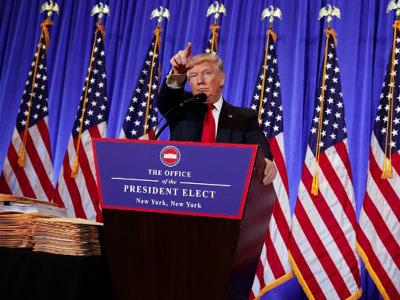
aideAfter initially denying that Flynn and Ambassador Sergey Kislyak spoke Dec. 29, a Trump official said late Friday that the transition team was aware of one call on the day President Barack Obama imposed sanctions.

It's not unusual for incoming administrations to have discussions with foreign governments before taking office. But repeated contacts just as Obama imposed sanctions would raise questions about whether Trump's team discussed — or even helped shape — Russia's response.

Russian President Vladimir Putin unexpectedly did not retaliate against the US for the move, a decision Trump quickly praised.

More broadly, Flynn's contact with the Russian ambassador suggests the incoming administration has already begun to lay the groundwork for its promised closer relationship with Moscow. That effort appears to be moving ahead, even as many in Washington, including Republicans, have expressed outrage over intelligence officials' assessment that Putin launched a hacking operation aimed at meddling in the US election to benefit Trump.

In an interview published Friday evening by The Wall Street Journal, Trump said he might do away with Obama's sanctions if Russia works with the US on battling terrorists and achieving other goals.

"If Russia is really helping us, why would anybody have sanctions?" he asked.

During a news conference Wednesday, Trump highlighted his warmer rapport with the Russian leader.

"If Putin likes Donald Trump, I consider that an asset, not a liability, because we have a horrible relationship with Russia," he said.

The sanctions targeted the GRU and FSB, leading Russian intelligence agencies that the U.S. said were involved in the hacking of the Democratic National Committee and other groups. The U.S. also kicked out 35 Russian diplomats who it said were actually intelligence operatives.

Trump has been willing to insert himself into major foreign policy issues during the transition, at times contradicting the current administration and diplomatic protocol. He accepted a call from Taiwan's president, ignoring the longstanding "One China" policy that does not recognize the island's sovereignty. He also publicly urged the U.S. to veto a United Nations Security Council resolution condemning Israeli settlements, then slammed the Obama administration for abstaining and allowing the measure to pass.

Questions about Trump's friendly posture toward Russia have deepened since the election, as he has dismissed US intelligence agencies' assertions about Russia's role in the hacking of Democratic groups. In briefing Trump on their findings, intelligence officials also presented the president-elect with unsubstantiated claims that Russia had amassed compromising personal and financial allegations about him, according to a separate U.S. official who spoke on the condition of anonymity because the official was not allowed to publicly discuss the matter.

The Senate Intelligence Committee announced late Friday that it would investigate possible contacts between Russia and people associated with U.S. political campaigns as part of a broader investigation into Moscow's meddling in the 2016 presidential election.

Trump acknowledged for the first time this week that he accepts that Russia was behind the hacking. But he questioned whether officials were leaking information about their meetings with him, warning that would be a "tremendous blot" on their record.

Flynn's own ties with Russia have worried some Republicans who are more skeptical of the Kremlin than Trump appears to be. After leaving his position as director of the Defense Intelligence Agency in 2014, Flynn made appearances on RT, a state-run Russian television network. In 2015, he was paid to attend an RT gala in Moscow, where he sat next to Putin.

As national security adviser, Flynn will work in the West Wing close to the Oval Office and will have frequent access to Trump. Unlike Trump's nominees to lead the Pentagon, State Department and other national security agencies, Flynn's post does not require Senate confirmation.

Flynn's contacts with the Russian ambassador were first reported by Washington Post columnist David Ignatius. The U.S. official who spoke to The Associated Press was not authorized to confirm the contacts publicly and insisted on anonymity.

The Trump team's account of Flynn's contacts with the Russian envoy changed throughout the day Friday.

Trump spokesman Sean Spicer initially said there was one phone call between Flynn and Kislyak on Dec. 28, as well as a Christmas greeting via text messages over the holidays. He said sanctions were not part of the discussions.

Later Friday, a transition official said Flynn and Kislyak had spoken by phone on Dec. 29, following a text message from the ambassador the day before. During the call, the Russian ambassador invited U.S. officials to a conference on Syria later this month that is being held in Kazakhstan, according to the transition official, who was not authorized to publicly discuss the matter and insisted on anonymity.

The official also confirmed a phone call between the men earlier in December.

The US official who spoke to the AP Friday described the contacts between Flynn and Kislyak as "very frequent."

It's unclear how US officials became aware of the contacts between Flynn and Kislyak, who has served as Russia's envoy to the US since 2008. U.S. monitoring of Russian officials' communication within the United States is known to be common.

Flynn has spoken with other foreign officials since Trump won the November election, as have incoming White House senior advisers Steve Bannon and Jared Kushner, Trump's son-in-law. State Department spokesman Mark Toner said he saw nothing inappropriate in Trump's transition team contacting Russian or any other foreign officials.

Comments

Add new comment

  • Coastaldigest.com reserves the right to delete or block any comments.
  • Coastaldigset.com is not responsible for its readers’ comments.
  • Comments that are abusive, incendiary or irrelevant are strictly prohibited.
  • Please use a genuine email ID and provide your name to avoid reject.
Agencies
February 4,2020

The Seattle City Council, one of the most powerful city councils in the U.S., on Monday unanimously passed a resolution condemning India’s recently-enacted Citizenship Amendment Act (CAA) and the National Register of Citizens (NRC).

Reaffirming Seattle as a welcoming city and expressing solidarity with the city’s South Asian community regardless of religion and caste, the resolution “resolves that the Seattle City Council opposes the National Register of Citizens and the Citizenship Amendment Act in India, and finds these policies to be discriminatory to Muslims, oppressed castes, women, indigenous, and LGBT people“.

Introduced by Indian American City Council member Kshama Sawant, the resolution urges the Parliament of India to uphold the Indian Constitution by repealing the CAA, and to stop the National Register of Citizens, and take steps towards helping refugees by ratifying various UN treaties on refugees.

“Seattle City’s decision to condemn CAA should be a message to all who wish to undermine pluralism and religious freedom. They cannot peddle in hate and bigotry, and expect to have international acceptability at the same time,” said Ahsan Khan, president of Indian American Muslim Council.

Thenmozhi Soundararajan of Equality Labs, which organised the community in support of the resolution, welcomed its passage. “We are proud of the Seattle City Council for standing on the right side of history today. Seattle is leading the moral consensus in the global outcry against the CAA, she said.

Soundararajan said that thousands of organizers across the country have called, e-mailed, and visited Seattle City Council members to amplify this resolution, and it sets an example to cities across the United States.

“At a time when members of the Indian ruling party sided Trump, the Muslim ban, and his war on immigrants as justification for targeting hundreds of millions of Indian minorities, Americans have a unique responsibility to stand up and speak about this human rights crisis. We are glad that Seattle is leading the way on this,” she said.

Comments

Add new comment

  • Coastaldigest.com reserves the right to delete or block any comments.
  • Coastaldigset.com is not responsible for its readers’ comments.
  • Comments that are abusive, incendiary or irrelevant are strictly prohibited.
  • Please use a genuine email ID and provide your name to avoid reject.
News Network
January 21,2020

Beijing, Jan 21: The Chinese official investigating a pneumonia outbreak stemming from a new coronavirus said the disease can spread from person to person but can be halted with increased vigilance, as authorities on Tuesday confirmed a fourth death.

Zhong Nanshan said there was no danger of a repeat of the Severe Acute Respiratory Syndrome (SARS) epidemic that killed nearly 800 people globally during a 2002-2003 outbreak, which started in China, as long as precautions were taken.

"It took only two weeks to identify the novel coronavirus," state news agency Xinhua quoted Zhong as saying late on Monday.

The outbreak was still in its early stages and China had good surveillance and quarantine systems to help control it, he added.

The outbreak has spread from the central city of Wuhan to cities including Beijing and Shanghai, with more than 200 cases reported so far. Four cases have been reported outside China - in South Korea, Thailand and Japan.

Australia on Tuesday said it would screen passengers on flights from Wuhan amid rising concerns that the virus will spread globally as Chinese travellers take flights abroad for the Lunar New Year holiday starting this week.

Authorities around the globe, including in the United States and many Asian countries, have stepped up screening of travellers from Wuhan.

Chinese authorities confirmed a total of 217 cases of the virus in China as of 6 p.m. (1000 GMT) on Monday, state television reported, 198 of which were in Wuhan.

A fourth person died on Jan. 19, the Wuhan Municipal Health Commission said. The 89-year-old man, who had underlying health diseases including coronary heart disease, developed symptoms on Jan. 13 and was admitted to hospital five days later, it added.

Zhong, who is renowned in China for his work fighting SARS in 2003, confirmed that the virus can pass from person-to-person.

Fifteen medical workers in Wuhan had been diagnosed with pneumonia, with one other suspected case, the Wuhan Municipal Health Commission said. Of the infected staff, one was in critical condition.

In Shanghai, officials on Tuesday confirmed a second case involving a 35-year-man who had visited Wuhan in early January, and said they were monitoring four other suspected cases.

The virus causes a type of pneumonia and belongs to the same family of coronaviruses as SARS. Symptoms include fever and difficulty in breathing, which are similar to many other respiratory diseases and pose complications for screening efforts.

The World Health Organisation (WHO) said on Monday an animal source appeared most likely to be the primary origin of the outbreak and that some "limited human-to-human transmission" occurred between close contacts.

The Geneva-based U.N. agency convened an emergency committee for Wednesday to assess whether the outbreak constitutes an international health emergency and what measures should be taken to manage it.

So far, the WHO has not recommended trade or travel restrictions, but a panel of independent experts could do so or make other recommendations to limit spread.

Comments

Add new comment

  • Coastaldigest.com reserves the right to delete or block any comments.
  • Coastaldigset.com is not responsible for its readers’ comments.
  • Comments that are abusive, incendiary or irrelevant are strictly prohibited.
  • Please use a genuine email ID and provide your name to avoid reject.
News Network
January 19,2020

President Donald Trump gave a new justification for killing Qassim Suleimani, telling a gathering of Republican donors that the top Iranian general was "saying bad things about our country" before the strike, which led to his decision to authorise his killing. "How much are we going to listen to?" Trump said on Friday, according to remarks from a fundraiser obtained by CNN.

With his typical dramatic flourish, Trump recounted the scene as he monitored the strikes from the White House Situation Room when Suleimani was killed. The president spoke in a ballroom at his Mar-a-Lago club in Palm Beach, Florida, at a Republican event that raised $10 million for Trump's 2020 campaign.

The January 3 killing of Suleimani prompted Iran to retaliate with missile strikes against US forces in Iraq days later and almost triggered a broad war between the two countries. "They're together sir," Trump said military officials told him. "Sir, they have two minutes and 11 seconds. No emotion. Two minutes and 11 seconds to live, sir. They're in the car, they're in an armoured vehicle. Sir, they have approximately one minute to live, sir. Thirty seconds. Ten, 9, 8 ...'"

"Then all of a sudden, boom," he said. "They're gone, sir. Cutting off, I said, where is this guy?" Trump continued. "That was the last I heard from him". It was the most detailed account that Trump has given of the drone strike, which has drawn criticism from some US lawmakers because neither the president nor his advisers have provided public information to back up their statements that Suleimani presented an "imminent" threat to US.

Trump's comments came a day after he warned Iran's supreme leader Ayatollah Ali Khamenei to be "very careful with his words". According to Trump, Khamenei's speech on Friday, in which he attacked the "vicious" US and described UK, France and Germany as "America's lackeys", was a mistake.

Comments

Add new comment

  • Coastaldigest.com reserves the right to delete or block any comments.
  • Coastaldigset.com is not responsible for its readers’ comments.
  • Comments that are abusive, incendiary or irrelevant are strictly prohibited.
  • Please use a genuine email ID and provide your name to avoid reject.