


Top Donald Trump aide in frequent contact with Russia's ambassador

January 14, 2017

Washington, Jan 14: President-elect Donald Trump's national security adviser and Russia's ambassador to the US have been in frequent contact in recent weeks, including on the day the Obama administration hit Moscow with sanctions in retaliation for election-related hacking, a senior U.S. official said Friday.
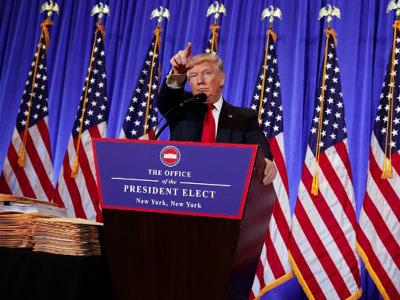
aideAfter initially denying that Flynn and Ambassador Sergey Kislyak spoke Dec. 29, a Trump official said late Friday that the transition team was aware of one call on the day President Barack Obama imposed sanctions.

It's not unusual for incoming administrations to have discussions with foreign governments before taking office. But repeated contacts just as Obama imposed sanctions would raise questions about whether Trump's team discussed — or even helped shape — Russia's response.

Russian President Vladimir Putin unexpectedly did not retaliate against the US for the move, a decision Trump quickly praised.

More broadly, Flynn's contact with the Russian ambassador suggests the incoming administration has already begun to lay the groundwork for its promised closer relationship with Moscow. That effort appears to be moving ahead, even as many in Washington, including Republicans, have expressed outrage over intelligence officials' assessment that Putin launched a hacking operation aimed at meddling in the US election to benefit Trump.

In an interview published Friday evening by The Wall Street Journal, Trump said he might do away with Obama's sanctions if Russia works with the US on battling terrorists and achieving other goals.

"If Russia is really helping us, why would anybody have sanctions?" he asked.

During a news conference Wednesday, Trump highlighted his warmer rapport with the Russian leader.

"If Putin likes Donald Trump, I consider that an asset, not a liability, because we have a horrible relationship with Russia," he said.

The sanctions targeted the GRU and FSB, leading Russian intelligence agencies that the U.S. said were involved in the hacking of the Democratic National Committee and other groups. The U.S. also kicked out 35 Russian diplomats who it said were actually intelligence operatives.

Trump has been willing to insert himself into major foreign policy issues during the transition, at times contradicting the current administration and diplomatic protocol. He accepted a call from Taiwan's president, ignoring the longstanding "One China" policy that does not recognize the island's sovereignty. He also publicly urged the U.S. to veto a United Nations Security Council resolution condemning Israeli settlements, then slammed the Obama administration for abstaining and allowing the measure to pass.

Questions about Trump's friendly posture toward Russia have deepened since the election, as he has dismissed US intelligence agencies' assertions about Russia's role in the hacking of Democratic groups. In briefing Trump on their findings, intelligence officials also presented the president-elect with unsubstantiated claims that Russia had amassed compromising personal and financial allegations about him, according to a separate U.S. official who spoke on the condition of anonymity because the official was not allowed to publicly discuss the matter.

The Senate Intelligence Committee announced late Friday that it would investigate possible contacts between Russia and people associated with U.S. political campaigns as part of a broader investigation into Moscow's meddling in the 2016 presidential election.

Trump acknowledged for the first time this week that he accepts that Russia was behind the hacking. But he questioned whether officials were leaking information about their meetings with him, warning that would be a "tremendous blot" on their record.

Flynn's own ties with Russia have worried some Republicans who are more skeptical of the Kremlin than Trump appears to be. After leaving his position as director of the Defense Intelligence Agency in 2014, Flynn made appearances on RT, a state-run Russian television network. In 2015, he was paid to attend an RT gala in Moscow, where he sat next to Putin.

As national security adviser, Flynn will work in the West Wing close to the Oval Office and will have frequent access to Trump. Unlike Trump's nominees to lead the Pentagon, State Department and other national security agencies, Flynn's post does not require Senate confirmation.

Flynn's contacts with the Russian ambassador were first reported by Washington Post columnist David Ignatius. The U.S. official who spoke to The Associated Press was not authorized to confirm the contacts publicly and insisted on anonymity.

The Trump team's account of Flynn's contacts with the Russian envoy changed throughout the day Friday.

Trump spokesman Sean Spicer initially said there was one phone call between Flynn and Kislyak on Dec. 28, as well as a Christmas greeting via text messages over the holidays. He said sanctions were not part of the discussions.

Later Friday, a transition official said Flynn and Kislyak had spoken by phone on Dec. 29, following a text message from the ambassador the day before. During the call, the Russian ambassador invited U.S. officials to a conference on Syria later this month that is being held in Kazakhstan, according to the transition official, who was not authorized to publicly discuss the matter and insisted on anonymity.

The official also confirmed a phone call between the men earlier in December.

The US official who spoke to the AP Friday described the contacts between Flynn and Kislyak as "very frequent."

It's unclear how US officials became aware of the contacts between Flynn and Kislyak, who has served as Russia's envoy to the US since 2008. U.S. monitoring of Russian officials' communication within the United States is known to be common.

Flynn has spoken with other foreign officials since Trump won the November election, as have incoming White House senior advisers Steve Bannon and Jared Kushner, Trump's son-in-law. State Department spokesman Mark Toner said he saw nothing inappropriate in Trump's transition team contacting Russian or any other foreign officials.

Comments

Add new comment

  • Coastaldigest.com reserves the right to delete or block any comments.
  • Coastaldigset.com is not responsible for its readers’ comments.
  • Comments that are abusive, incendiary or irrelevant are strictly prohibited.
  • Please use a genuine email ID and provide your name to avoid reject.
Agencies
June 26,2020

Scientists predict the world may have a COVID-19 vaccine within one year or even a few months earlier, said the Director-General of the World Health Organisation even as he underlined the importance of global cooperation to develop, manufacture and distribute vaccines.

However, making the vaccine available and distributing it to all will be a challenge and requires political will, Tedros Adhanom Ghebreyesus said on Thursday during a meeting with the European Parliament's Committee for Environment, Public Health and Food Safety.

One option would be to give the vaccine only to those that are most vulnerable to the virus.

There are currently over 100 COVID-19 vaccine candidates in various stages of development.

Adhanom Ghebreyesus said the pandemic has highlighted the importance of global solidarity and that health should not be seen as a cost but an investment.

He added that all countries in the world must strengthen primary health care and crisis preparedness and stressed the need for EU leadership globally.

While the Director-General said the situation in the EU has improved significantly, he underlined that COVID-19 is very much still circulating globally, with more than four million new cases in the last month.

Many Members of European Parliament said that the global community must cooperate including in developing, manufacturing and distributing vaccines against COVID-19 and asked when a safe vaccine could be available.

Several Members of European Parliament underlined the importance of the WHO but also said it has made mistakes in its response to the pandemic.

The Director-General admitted everyone makes mistakes and informed the members that an independent panel will evaluate the WHO response to the pandemic to learn from any mistakes made.

It will start its work soon, he said.

Comments

Add new comment

  • Coastaldigest.com reserves the right to delete or block any comments.
  • Coastaldigset.com is not responsible for its readers’ comments.
  • Comments that are abusive, incendiary or irrelevant are strictly prohibited.
  • Please use a genuine email ID and provide your name to avoid reject.
Agencies
February 10,2020

Hubei, Feb 10: The death toll in the deadly coronavirus outbreak in China and other parts of the world has reached 904, CNN reported citing Chinese authorities on Monday.

The number of infected people globally has now hit the 40,000 mark.

According to the country's health officials, the number of people, who died from coronavirus in the Hubei Province, has risen to 871.

"As of 24:00 on February 9, Hubei Province reported a total of 29,631 cases of new coronavirus pneumonia, including 16,902 cases in Wuhan. 22,160 patients are still being treated in hospitals. 73,127 people remain under medical observation," read the statement from the Chinese Regional Health Committee.

The novel coronavirus was first detected in China's Wuhan city in late December and has since spread to more than 25 countries.

On Sunday, the new coronavirus even surpassed the fatalities caused by the SARS epidemic in 2003.

The World Health Organisation (WHO) has declared a global health emergency in the wake of the outbreak.

Meanwhile, WHO's international expert mission led by Dr Bruce Aylward embarked for China.

Comments

Add new comment

  • Coastaldigest.com reserves the right to delete or block any comments.
  • Coastaldigset.com is not responsible for its readers’ comments.
  • Comments that are abusive, incendiary or irrelevant are strictly prohibited.
  • Please use a genuine email ID and provide your name to avoid reject.
Agencies
February 29,2020

Doha, Feb 29: The United States signed a landmark deal with the Taliban on Saturday, laying out a timetable for a full troop withdrawal from Afghanistan within 14 months as it seeks an exit from its longest-ever war.

President Donald Trump urged the Afghan people to embrace the chance for a new future, saying the deal held out the possibility of ending the 18-year conflict.

"If the Taliban and the government of Afghanistan live up to these commitments, we will have a powerful path forward to end the war in Afghanistan and bring our troops home," he said on the eve of the event in Doha.

Secretary of State Mike Pompeo arrived in the Qatari capital to witness the signing of the accord, while Defence Secretary Mark Esper was in Kabul for a separate joint declaration with the Afghan government.

The agreement is expected to lead to a dialogue between the Kabul government and the Taliban that, if successful, could ultimately see the Afghan war wind down.

But the position of the Afghan government, which has been excluded from direct US-Taliban talks, remains unclear and the country is gripped by a fresh political crisis amid contested election results.

The United States and its allies will withdraw all their forces from Afghanistan within 14 months if the Taliban abide by the Doha agreement, Washington and Kabul said in a joint statement.

After an initial reduction of troops to 8,600 within 135 days of Saturday's signing, the US and its partners "will complete the withdrawal of their remaining forces from Afghanistan within 14 months... and will withdraw all their forces from remaining bases", the declaration stated.

The Doha accord was drafted over a tempestuous year of dialogue marked by the abrupt cancellation of the effort by Trump in September.

The signing comes after a week-long, partial truce that has mostly held across Afghanistan, aimed at building confidence between the warring parties and showing the Taliban can control their forces.

NATO Secretary General Jens Stoltenberg heralded the agreement as a "first step to lasting peace".

"The way to peace is long and hard. We have to be prepared for setbacks, spoilers, there is no easy way to peace but this is an important first step," the Norwegian former prime minister told reporters in Kabul.

Since the US-led invasion that ousted the Taliban after the September 11, 2001 attacks, America has spent more than $1 trillion in fighting and rebuilding in Afghanistan.

About 2,400 US soldiers have been killed, along with unknown tens of thousands of Afghan troops, Taliban fighters and Afghan civilians.

The insurgents said they had halted all hostilities Saturday in honour of the agreement.

"Since the deal is being signed today, and our people are happy and celebrating it, we have halted all our military operations across the country," Taliban spokesman Zabihullah Mujahid told AFP.

Close to 30 nations were represented at Saturday's signing in the Qatari capital.

While Kabul will not be represented at the Doha ceremony, set for 1245 GMT, it will send a six-person taskforce to the Qatari capital to make initial contact with the Taliban political office, established in 2013.

Any insurgent pledge to guarantee Afghanistan is never again used by jihadist movements such as Al-Qaeda and the Islamic State group to plot attacks abroad will be key to the deal's viability.

The Taliban's sheltering of Al-Qaeda was the main reason for the US invasion following the 9/11 attacks.

The group, which had risen to power in the 1990s in the chaos of civil war, suffered a swift defeat at the hands of the US and its allies. They retreated before re-emerging to lead a deadly insurgency against the new government in Kabul.

After the NATO combat mission ended in December 2014, the bulk of Western forces withdrew from the country, leaving it in an increasingly precarious position.

While Afghans are eager to see an end to the violence, experts say any prospective peace will depend on the outcome of talks between the Taliban and the Kabul government.

But with President Ashraf Ghani and rival Abdullah Abdullah at loggerheads over contested election results, few expect the pair to present a united front, unlike the Taliban, who would then be in a position to take the upper hand in negotiations.

Comments

Add new comment

  • Coastaldigest.com reserves the right to delete or block any comments.
  • Coastaldigset.com is not responsible for its readers’ comments.
  • Comments that are abusive, incendiary or irrelevant are strictly prohibited.
  • Please use a genuine email ID and provide your name to avoid reject.