


Top Donald Trump aide in frequent contact with Russia's ambassador

January 14, 2017

Washington, Jan 14: President-elect Donald Trump's national security adviser and Russia's ambassador to the US have been in frequent contact in recent weeks, including on the day the Obama administration hit Moscow with sanctions in retaliation for election-related hacking, a senior U.S. official said Friday.
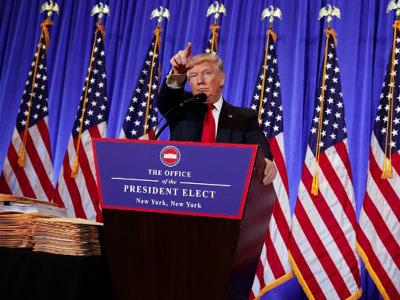
aideAfter initially denying that Flynn and Ambassador Sergey Kislyak spoke Dec. 29, a Trump official said late Friday that the transition team was aware of one call on the day President Barack Obama imposed sanctions.

It's not unusual for incoming administrations to have discussions with foreign governments before taking office. But repeated contacts just as Obama imposed sanctions would raise questions about whether Trump's team discussed — or even helped shape — Russia's response.

Russian President Vladimir Putin unexpectedly did not retaliate against the US for the move, a decision Trump quickly praised.

More broadly, Flynn's contact with the Russian ambassador suggests the incoming administration has already begun to lay the groundwork for its promised closer relationship with Moscow. That effort appears to be moving ahead, even as many in Washington, including Republicans, have expressed outrage over intelligence officials' assessment that Putin launched a hacking operation aimed at meddling in the US election to benefit Trump.

In an interview published Friday evening by The Wall Street Journal, Trump said he might do away with Obama's sanctions if Russia works with the US on battling terrorists and achieving other goals.

"If Russia is really helping us, why would anybody have sanctions?" he asked.

During a news conference Wednesday, Trump highlighted his warmer rapport with the Russian leader.

"If Putin likes Donald Trump, I consider that an asset, not a liability, because we have a horrible relationship with Russia," he said.

The sanctions targeted the GRU and FSB, leading Russian intelligence agencies that the U.S. said were involved in the hacking of the Democratic National Committee and other groups. The U.S. also kicked out 35 Russian diplomats who it said were actually intelligence operatives.

Trump has been willing to insert himself into major foreign policy issues during the transition, at times contradicting the current administration and diplomatic protocol. He accepted a call from Taiwan's president, ignoring the longstanding "One China" policy that does not recognize the island's sovereignty. He also publicly urged the U.S. to veto a United Nations Security Council resolution condemning Israeli settlements, then slammed the Obama administration for abstaining and allowing the measure to pass.

Questions about Trump's friendly posture toward Russia have deepened since the election, as he has dismissed US intelligence agencies' assertions about Russia's role in the hacking of Democratic groups. In briefing Trump on their findings, intelligence officials also presented the president-elect with unsubstantiated claims that Russia had amassed compromising personal and financial allegations about him, according to a separate U.S. official who spoke on the condition of anonymity because the official was not allowed to publicly discuss the matter.

The Senate Intelligence Committee announced late Friday that it would investigate possible contacts between Russia and people associated with U.S. political campaigns as part of a broader investigation into Moscow's meddling in the 2016 presidential election.

Trump acknowledged for the first time this week that he accepts that Russia was behind the hacking. But he questioned whether officials were leaking information about their meetings with him, warning that would be a "tremendous blot" on their record.

Flynn's own ties with Russia have worried some Republicans who are more skeptical of the Kremlin than Trump appears to be. After leaving his position as director of the Defense Intelligence Agency in 2014, Flynn made appearances on RT, a state-run Russian television network. In 2015, he was paid to attend an RT gala in Moscow, where he sat next to Putin.

As national security adviser, Flynn will work in the West Wing close to the Oval Office and will have frequent access to Trump. Unlike Trump's nominees to lead the Pentagon, State Department and other national security agencies, Flynn's post does not require Senate confirmation.

Flynn's contacts with the Russian ambassador were first reported by Washington Post columnist David Ignatius. The U.S. official who spoke to The Associated Press was not authorized to confirm the contacts publicly and insisted on anonymity.

The Trump team's account of Flynn's contacts with the Russian envoy changed throughout the day Friday.

Trump spokesman Sean Spicer initially said there was one phone call between Flynn and Kislyak on Dec. 28, as well as a Christmas greeting via text messages over the holidays. He said sanctions were not part of the discussions.

Later Friday, a transition official said Flynn and Kislyak had spoken by phone on Dec. 29, following a text message from the ambassador the day before. During the call, the Russian ambassador invited U.S. officials to a conference on Syria later this month that is being held in Kazakhstan, according to the transition official, who was not authorized to publicly discuss the matter and insisted on anonymity.

The official also confirmed a phone call between the men earlier in December.

The US official who spoke to the AP Friday described the contacts between Flynn and Kislyak as "very frequent."

It's unclear how US officials became aware of the contacts between Flynn and Kislyak, who has served as Russia's envoy to the US since 2008. U.S. monitoring of Russian officials' communication within the United States is known to be common.

Flynn has spoken with other foreign officials since Trump won the November election, as have incoming White House senior advisers Steve Bannon and Jared Kushner, Trump's son-in-law. State Department spokesman Mark Toner said he saw nothing inappropriate in Trump's transition team contacting Russian or any other foreign officials.

Comments

Add new comment

  • Coastaldigest.com reserves the right to delete or block any comments.
  • Coastaldigset.com is not responsible for its readers’ comments.
  • Comments that are abusive, incendiary or irrelevant are strictly prohibited.
  • Please use a genuine email ID and provide your name to avoid reject.
News Network
May 8,2020

New York, May 8: An Indian-American father and daughter, both doctors in New Jersey, have died due to the COVID-19, with Governor Phil Murphy describing their demise as “particularly tough" and hailed them for dedicating their lives for others.

Satyender Dev Khanna, 78, was a surgeon who served both on staff and as the head of the surgical departments for multiple hospitals across New Jersey for decades.

Priya Khanna, 43, was a double board-certified in both internal medicine and nephrology. She was Chief of Residents at Union Hospital, now part of RWJ Barnabas Health.

"Dr Satyender Dev Khanna and Dr Priya Khanna were father and daughter. They both dedicated their lives to helping others. This is a family dedicated to health and medicine. Our words cannot amply express our condolences," New Jersey Governor Murphy tweeted on Thursday.

“Both dedicated their lives to helping others and we lost both of them to COVID-19,” Murphy said during a press conference on Thursday, saying their demise is a "particularly tough one.”

Satyender passed away at the Clara Maass Medical Center where he had worked for more than 35 years.

Murphy described him as a "pioneering doctor” who was one of the first surgeons to perform laparoscopic surgery in the state. He is being remembered by colleagues as a “gentle and caring physician."

“And for a doctor, I'm not one, but I would bet, I don't think there could be a more fitting way to be remembered, or a nurse or a healthcare worker of any kind,” Murphy said, adding that the doctor had a passion for bicycling, and he often found peace from the hustle of the hospital in biking along the Jersey Shore.

Priya did all of her medical training in New Jersey and then did her fellowship in nephrology in South Jersey with the Cooper Health System. Like her father, she too worked at Clara Maass, where she died.

She was also Medical Director at two dialysis centres in Essex County and “took pride” in teaching the next generation of doctors, Murphy said, adding that the ICU physician who cared for Priya Khanna was trained and taught by her as well.

Follow live developments on the coronavirus pandemic here

“Priya will be remembered as a caring and selfless person who put others first. And even while in the hospital, fighting her own battle, she continued to check up on her mom and dad and her family,” Murphy said.

“This is a family, by the way, dedicated to health and medicine,” he said.

The governor spoke with Satyender's wife Komlish Khanna, who is a paediatrician. The couple has two more daughters - Sugandha Khanna, an emergency medicine physician and Anisha Khanna, a paediatrician.

“Unbelievable. Our words cannot amply express our condolences nor, I am sure, can they express the pain that the Khanna family is feeling. But I hope that the fact that our entire state mourns with them is some small comfort. And we mourn everyone we have lost. We commit in their memory to saving as many lives as we can,” Murphy said.

Comments

Add new comment

  • Coastaldigest.com reserves the right to delete or block any comments.
  • Coastaldigset.com is not responsible for its readers’ comments.
  • Comments that are abusive, incendiary or irrelevant are strictly prohibited.
  • Please use a genuine email ID and provide your name to avoid reject.
News Network
June 13,2020

Jun 13: Requiring the wearing of masks to prevent the spread of the novel coronavirus in areas at the epicenter of the global pandemic may have prevented tens of thousands of infections, a new study suggests.

Mask-wearing is even more important for preventing the virus' spread and the sometimes deadly COVID-19 illness it causes than social distancing and stay-at-home orders, researchers said, in the study published in PNAS: The Proceedings of the National Academy of Sciences of the USA.

Infection trends shifted dramatically when mask-wearing rules were implemented on April 6 in northern Italy and April 17 in New York City - at the time among the hardest hit areas of the world by the health crisis - the study found.

"This protective measure alone significantly reduced the number of infections, that is, by over 78,000 in Italy from April 6 to May 9 and over 66,000 in New York City from April 17 to May 9," researchers calculated.

When mask-wearing went into effect in New York, the daily new infection rate fell by about 3% per day, researchers said. In the rest of the country, daily new infections continued to increase.

Direct contact precautions - social distancing, quarantine and isolation, and hand sanitizing - were all in place before mask-wearing rules went into effect in Italy and New York City. But they only help minimize virus transmission by direct contact, while face covering helps prevent airborne transmission, the researchers say.

"The unique function of face covering to block atomization and inhalation of virus-bearing aerosols accounts for the significantly reduced infections," they said. That would indicate "that airborne transmission of COVID-19 represents the dominant route for infection."

The U.S. Center for Disease Control and Prevention on Friday urged organizers of large gatherings that involve "shouting, chanting or singing to strongly encourage the use of cloth face coverings to lower the risk of spreading the coronavirus."

Comments

Add new comment

  • Coastaldigest.com reserves the right to delete or block any comments.
  • Coastaldigset.com is not responsible for its readers’ comments.
  • Comments that are abusive, incendiary or irrelevant are strictly prohibited.
  • Please use a genuine email ID and provide your name to avoid reject.
News Network
June 10,2020

Jun 10: Indian-origin California Senator Kamala Harris has joined former vice president and 2020 Democratic presidential nominee Joe Biden to raise USD 3.5 million for the upcoming November elections.

Tuesday's fundraiser is the second-largest single event haul so far for the Biden campaign, which raised USD 4 million at one event earlier this month.

Harris' presence during the virtual mega fund raiser assumes significance as the Democratic Party leaders consider her to be one of the front-runners to be the nominee for vice president. The 55-year-old lawyer-politician was once considered to be a strong opponent of Biden in the 2020 Democratic primaries.

Introducing Harris to the 1,400 supporters present at the event, Biden underlined the history-breaking nature of her past electoral wins.

"For much of her career, she was the only person in the room who looked like she did," he said.

At the start of the campaign last year, Harris was very critical of Biden. She later endorsed him, months after she decided to withdraw herself from the race to the White House.

During the fundraiser, Harris was effusive in her praise for Biden.

Referring to Biden's meeting with George Floyd's family, she said, "He (Biden)is someone who whether one on one or speaking to the nation always has a sense of how people are experiencing this world, and what their needs are...This moment in the history of our country really represents an extraordinary exercise in contrast."

"On the other hand, we have a Donald Trump who had the gall to dispatch the US military to clear the streets so that he could prance down and then, like a prop, hold up the bible for a photo op," Harris said.

The death of African-American Floyd during police confinement in Minneapolis on May 25 has resulted in widespread protests not only in the US but across the world.

"There are so many contrasts between Joe Biden and Donald Trump that really point to the choice that we as Americans have today," Harris said.

California Lt Governor Eleni Kounalakis also joined the fund raiser.

In his remarks, Biden, 77, said the US is reeling in anguish and anger over the brutal killing of Floyd or the systemic racism that still infects every part of the society. "Harris knows better than anybody," he said.

"At the same time, we're facing the worst economic disaster since the Great Depression. American history is not a fairy tale with a guaranteed ending, a happy ending. This is a battle for the soul of the country.

"It's been a constant tug of war between the American ideal that we all are created equal -- and the harsh reality that racism has long torn us apart...I'm going to ask every American to look where we are now and to think, is this who we are? Is this who we want to be?" Biden asked.

Participating in the questions and answers session, Harris said America has still not fully embraced, acknowledged or addressed its history of racism and its current history of racism.

"One can think of this moment as an inflection moment, and it will require bold action and it will require immediate action...This stresses the importance and the immediacy and the urgency of electing Joe Biden," she said.

Replying to a question, Biden said, "Did you see today where the President of the United States while George Floyd was being buried, was condemning the older man who was knocked down with his head bleeding and everyone walking by. Did you see that? I mean, my lord. What have we become if we abide by this? So much we can do and must do."

Harris said the election is going to be rough and tumble.

"There are very powerful forces that thrive off of the hate and division that Donald Trump has been sowing. This is not going to be easy. And we have about just a few months to get this thing done," she said.

Comments

Add new comment

  • Coastaldigest.com reserves the right to delete or block any comments.
  • Coastaldigset.com is not responsible for its readers’ comments.
  • Comments that are abusive, incendiary or irrelevant are strictly prohibited.
  • Please use a genuine email ID and provide your name to avoid reject.