


Top Donald Trump aide in frequent contact with Russia's ambassador

January 14, 2017

Washington, Jan 14: President-elect Donald Trump's national security adviser and Russia's ambassador to the US have been in frequent contact in recent weeks, including on the day the Obama administration hit Moscow with sanctions in retaliation for election-related hacking, a senior U.S. official said Friday.
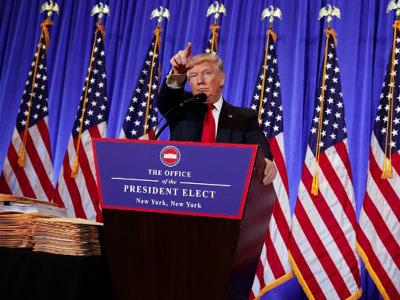
aideAfter initially denying that Flynn and Ambassador Sergey Kislyak spoke Dec. 29, a Trump official said late Friday that the transition team was aware of one call on the day President Barack Obama imposed sanctions.

It's not unusual for incoming administrations to have discussions with foreign governments before taking office. But repeated contacts just as Obama imposed sanctions would raise questions about whether Trump's team discussed — or even helped shape — Russia's response.

Russian President Vladimir Putin unexpectedly did not retaliate against the US for the move, a decision Trump quickly praised.

More broadly, Flynn's contact with the Russian ambassador suggests the incoming administration has already begun to lay the groundwork for its promised closer relationship with Moscow. That effort appears to be moving ahead, even as many in Washington, including Republicans, have expressed outrage over intelligence officials' assessment that Putin launched a hacking operation aimed at meddling in the US election to benefit Trump.

In an interview published Friday evening by The Wall Street Journal, Trump said he might do away with Obama's sanctions if Russia works with the US on battling terrorists and achieving other goals.

"If Russia is really helping us, why would anybody have sanctions?" he asked.

During a news conference Wednesday, Trump highlighted his warmer rapport with the Russian leader.

"If Putin likes Donald Trump, I consider that an asset, not a liability, because we have a horrible relationship with Russia," he said.

The sanctions targeted the GRU and FSB, leading Russian intelligence agencies that the U.S. said were involved in the hacking of the Democratic National Committee and other groups. The U.S. also kicked out 35 Russian diplomats who it said were actually intelligence operatives.

Trump has been willing to insert himself into major foreign policy issues during the transition, at times contradicting the current administration and diplomatic protocol. He accepted a call from Taiwan's president, ignoring the longstanding "One China" policy that does not recognize the island's sovereignty. He also publicly urged the U.S. to veto a United Nations Security Council resolution condemning Israeli settlements, then slammed the Obama administration for abstaining and allowing the measure to pass.

Questions about Trump's friendly posture toward Russia have deepened since the election, as he has dismissed US intelligence agencies' assertions about Russia's role in the hacking of Democratic groups. In briefing Trump on their findings, intelligence officials also presented the president-elect with unsubstantiated claims that Russia had amassed compromising personal and financial allegations about him, according to a separate U.S. official who spoke on the condition of anonymity because the official was not allowed to publicly discuss the matter.

The Senate Intelligence Committee announced late Friday that it would investigate possible contacts between Russia and people associated with U.S. political campaigns as part of a broader investigation into Moscow's meddling in the 2016 presidential election.

Trump acknowledged for the first time this week that he accepts that Russia was behind the hacking. But he questioned whether officials were leaking information about their meetings with him, warning that would be a "tremendous blot" on their record.

Flynn's own ties with Russia have worried some Republicans who are more skeptical of the Kremlin than Trump appears to be. After leaving his position as director of the Defense Intelligence Agency in 2014, Flynn made appearances on RT, a state-run Russian television network. In 2015, he was paid to attend an RT gala in Moscow, where he sat next to Putin.

As national security adviser, Flynn will work in the West Wing close to the Oval Office and will have frequent access to Trump. Unlike Trump's nominees to lead the Pentagon, State Department and other national security agencies, Flynn's post does not require Senate confirmation.

Flynn's contacts with the Russian ambassador were first reported by Washington Post columnist David Ignatius. The U.S. official who spoke to The Associated Press was not authorized to confirm the contacts publicly and insisted on anonymity.

The Trump team's account of Flynn's contacts with the Russian envoy changed throughout the day Friday.

Trump spokesman Sean Spicer initially said there was one phone call between Flynn and Kislyak on Dec. 28, as well as a Christmas greeting via text messages over the holidays. He said sanctions were not part of the discussions.

Later Friday, a transition official said Flynn and Kislyak had spoken by phone on Dec. 29, following a text message from the ambassador the day before. During the call, the Russian ambassador invited U.S. officials to a conference on Syria later this month that is being held in Kazakhstan, according to the transition official, who was not authorized to publicly discuss the matter and insisted on anonymity.

The official also confirmed a phone call between the men earlier in December.

The US official who spoke to the AP Friday described the contacts between Flynn and Kislyak as "very frequent."

It's unclear how US officials became aware of the contacts between Flynn and Kislyak, who has served as Russia's envoy to the US since 2008. U.S. monitoring of Russian officials' communication within the United States is known to be common.

Flynn has spoken with other foreign officials since Trump won the November election, as have incoming White House senior advisers Steve Bannon and Jared Kushner, Trump's son-in-law. State Department spokesman Mark Toner said he saw nothing inappropriate in Trump's transition team contacting Russian or any other foreign officials.

Comments

Add new comment

  • Coastaldigest.com reserves the right to delete or block any comments.
  • Coastaldigset.com is not responsible for its readers’ comments.
  • Comments that are abusive, incendiary or irrelevant are strictly prohibited.
  • Please use a genuine email ID and provide your name to avoid reject.
News Network
May 20,2020

May 20: The novel coronavirus is behaving differently in patients in northeast China who have contracted it recently compared with early cases, indicating it is changing as it spreads, a prominent doctor said.

China, which has largely brought the virus under control, has found new clusters of infections in the northeastern border provinces of Jilin and Heilongjiang in recent weeks, raising concern about a second wave.

Qiu Haibo, an expert in critical care medicine who is part of a National Health Commission expert group, said the incubation period of the virus in patients in the northeast was longer than that of patients in Wuhan, the central city, where the virus emerged late last year.

COVID-19 Pandemic Tracker: 15 countries with the highest number of coronavirus cases, deaths

"This causes a problem, as they don't have any symptoms. So when they gather with their families they don't care about this issue and we see family cluster infections," Qiu told state broadcaster CCTV in a programme broadcast late on Tuesday.

Patients in the northeastern clusters were also carrying the virus for longer than earlier cases in Wuhan, and they were taking longer to recover, as defined by a negative nucleic acid test, he said.

Patients in the northeast also rarely exhibited fever and tended to suffer damage to the lungs rather than across multiple organs, he said.

He said the virus found in the northeastern clusters was probably imported from abroad, which could account for the differences.

He did not say where he though they might have come from but both Jilin and Heilongjiang border Russia.

China reported five new coronavirus cases on Wednesday, down from six a day earlier.

Four of the new cases were local transmissions and one was imported by a traveller coming from abroad, the commission said in a statement, compared with three imported cases reported the previous day.

China's total number of coronavirus infections stands at 82,965, while the death toll 4,634. 

Comments

Add new comment

  • Coastaldigest.com reserves the right to delete or block any comments.
  • Coastaldigset.com is not responsible for its readers’ comments.
  • Comments that are abusive, incendiary or irrelevant are strictly prohibited.
  • Please use a genuine email ID and provide your name to avoid reject.
News Network
May 15,2020

Washington, May 15: A top US senator has unveiled an 18-point plan, including enhancing military ties with India, to hold the Chinese government accountable for its "lies, deception, and cover-ups" that ultimately led to the global COVID-19 pandemic.

The prominent suggestions are moving manufacturing chain from China and deepening military-strategic ties with India, Vietnam and Taiwan.

"The Chinese government maliciously covered up and enabled a global pandemic that has caused misery for so many Americans. This is the same regime that locks up its own citizens in labour camps, steals America's technology and jobs, and threatens the sovereignty of our allies,” said Senator Thom Tillis, presenting his detailed, 18-point plan on Thursday.

"This is a major wake-up call to the United States and the rest of the free world. My plan of action will hold the Chinese government accountable for lying about COVID-19; sanctioning the Chinese government while protecting America's economy, public health, and national security," he said.

The plan seeking to create a Pacific Deterrence Initiative and immediately approve the military's request for USD 20 billion in funding. It also calls for deepening military ties with regional allies and expand equipment sales to India, Taiwan and Vietnam.

Encourage Japan to rebuild its military and offer Japan and South Korea sales of offensive military equipment, it said.

"Move manufacturing back to the US from China and gradually eliminate our supply chain dependency on China. Stop China from stealing our technology and provide incentives to American companies to regain our technological advantage. Strengthen cybersecurity against Chinese hacks and sabotage," the plan stated.

"Prevent American taxpayer money from being used by the Chinese government to pay off their debt. Implement the US ban on (Chinese technology company) Huawei and coordinate with our allies to implement similar bans,” it added.

The plan seeks restitution from the Chinese government and imposition of sanctions for lying about the virus. It further said China should be sanctioned for their atrocious human rights record.

Senator Tillis' plan urges the Trump Administration to formally request the International Olympic Committee to withdraw the 2022 Winter Olympics from Beijing.

"Stop China's propaganda campaign inside the United States. Treat Chinese government-run media outlets as the propaganda proxies that they are," the plan stated.

Urging the government to investigate the Chinese government's cover-up of the spread of COVID-19, the plan also seeks to investigate America's reliance on China's supply chains and threats to public safety and national security.

"Ensure the independence of the WHO through investigations and reform. Expose and counter China's predatory debt-trap diplomacy targeting developing countries. Increase intelligence sharing on potential pandemics and lead the creation of a watchdog organization to monitor foreign governments' handling of deadly viruses," Tillis said in his suggestions.

The coronavirus, which first emerged in China's Wuhan city in December last, has killed over 3,00,000 people with 4.3 million confirmed cases across the world. More than a quarter of all confirmed COVID-19 cases are from the US.

There has been increasing pressure on the President Trump, in the last several weeks, to take action against China as lawmakers and opinion-makers feel that the COVID-19 spread across the world from Wuhan because of Chinese inaction.

Meanwhile, Senator John Barrasso, in a speech on the Senate floor on Thursday, highlighted the need to update the Foreign Intelligence Surveillance Act (FISA) legislation that was put on hold by the coronavirus pandemic.

"The virus could have been contained had it not been for the Chinese Government's unscrupulous cover-up. China knew the risk months before the rest of the world; yet Chinese communist leaders destroyed key evidence, they under-reported the number of coronavirus cases, and they misled the world about its deadly, rapid spread," he said.

Asserting that the virus should have been contained in Wuhan, he said tens and tens of thousands of Americans and hundreds of thousands of people worldwide have died as a result of China's failure.

Barrasso said the US should encourage its companies to create American and western supply chains. "That way our frontline workers have what they need in the time of crisis," he said.

"Not again, not ever will we be exclusively sourced for critical drugs from China. We should diversify supply and bring home as much of our supply chain as possible," he added.

Congressman Troy Balderson introduced bicameral legislation with Congressman Doug Collins and Senator Lindsey Graham that will hold China accountable for deceptive actions taken by its leaders that led to the spread and subsequent global pandemic.

The COVID-19 Accountability Act authorises president Donald Trump to impose sanctions on China if it fails to cooperate with a full investigation led by the US or its allies into the events that lead to the COVID-19 outbreak.

"The number of Ohioan lives needlessly claimed by this pandemic could have been significantly reduced had China taken appropriate measures to control the virus' spread and disclose its severity," said Balderson.

"The United States can't look the other way when China so recklessly compromised worldwide health and the global economy. China and its Communist Party leadership must be held accountable," he said.

Comments

WHO
 - 
Monday, 18 May 2020

Hahah LOL..


go back to past 20 year...from 2000 to 2020..all your sins are boiling now.


millions of innocent life has been taking by so called AMERICA in middle east.


now come to the point

The great GOD Vs USA

GOD: 4 Million+

USA and allied : 0


throw your nuke weapon to sea...no use

you cant fight God s tiny microorganisms...humans are just a thing.


USA will get 0.5 million death and 10 million infection...20 years of  sin must be given with interest

Add new comment

  • Coastaldigest.com reserves the right to delete or block any comments.
  • Coastaldigset.com is not responsible for its readers’ comments.
  • Comments that are abusive, incendiary or irrelevant are strictly prohibited.
  • Please use a genuine email ID and provide your name to avoid reject.
News Network
May 8,2020

Washington, May 8: Four top Republican senators have urged US President Donald Trump to suspend all-new guest worker visas for 60 days and some of its categories, including the H-1B visa, for at least the next year or until unemployment figures return to normal levels in the country.

The unemployment figures in the US have reached an all-time high due to the coronavirus pandemic. The letter has been signed by Senators Ted Cruz, Tom Cotton, Chuck Grassley and Josh Hawley.

"As you know, more than 33 million Americans have filed for unemployment coverage just since mid-March, and approximately one-fifth of the American workforce is currently out of work. This is a stunning difference compared with the historically-low nationwide unemployment rate of just 3.5 per cent in February this year," they said in their letter to the president on Thursday.

The letter, dated May 7, specifically calls for suspension of all non-immigrant guest worker visas for the next 60 days, followed by a continued suspension of certain categories of new non-immigrant guest worker visas for a year or until the national unemployment figures return to normal levels.

"To protect unemployed Americans in the early stages of economic recovery, we urge you to suspend all non-immigrant guest worker visas for the next 60 days," the senators said.

Exceptions to this suspension should be rare, limited to time-sensitive industries such as agriculture and issued only on a case-by-case basis, when the employers can demonstrate that they have been unable to find Americans to take the jobs, the senators wrote.

After 60 days, the senators urged Trump to continue to suspend new non-immigrant guest workers for a year or until the national unemployment figures return to normal levels, whichever comes first.

"That suspension should, at a minimum, include H-2B visas (non-agricultural seasonal workers), H-1B visas (specialty occupation workers) and the Optional Practical Training (OPT) program (extension of foreign student visas after graduation). We also urge you to suspend the EB-5 immigrant visa program, effective immediately," the lawmakers wrote.

The H-1B work visa for foreign technology professionals is highly popular among Indians and a large number of Indians also opt for the EB-5 investors visa.

The senators argued that there is no reason why unemployed Americans and recent college graduates should have to compete in such a limited job market against an influx of additional H-1B workers, most of whom work in business, technology or STEM fields.

"Temporarily suspending the issuance of new H-1B visas would also protect the hundreds of thousands of H-1B workers and their families already working in the United States -- workers who could otherwise be subject to deportation if they are laid off for more than 60 days," they said.

"Of course, appropriate exceptions could also be crafted to the H-1B program suspension to allow for doctors, nurses and other healthcare professionals who wish to come to the United States to assist in combating the coronavirus pandemic," the senators wrote.

Additionally, the United States ought to suspend its Optional Practical Training (OPT) programme, which allows foreign students in the country to extend their stay after graduation for one to three years to get "experience in the field" by taking jobs here, they wrote.

In 2019, more than 223,000 former foreign students had their OPT applications approved or extended. While the merits of such a programme are subject to debate, there is certainly no reason to allow foreign students to stay for three additional years just to take jobs that would otherwise go to unemployed Americans as the country's economy recovers, the lawmakers said.

The senators also urged Trump to remove the EB-5 visa from the exemptions in his Presidential Proclamation issued on April 22, at least until real reforms are adopted.

The EB-5 programme has long been plagued by scandal and fraud, and criticised as effectively functioning as a pay-for-citizenship scheme in many cases. There is no reason that the programme should receive preferential treatment as opposed to other green card programmes for employment-based immigrants, the lawmakers said.

Comments

Add new comment

  • Coastaldigest.com reserves the right to delete or block any comments.
  • Coastaldigset.com is not responsible for its readers’ comments.
  • Comments that are abusive, incendiary or irrelevant are strictly prohibited.
  • Please use a genuine email ID and provide your name to avoid reject.