



Top Donald Trump aide in frequent contact with Russia's ambassador

January 14, 2017

Washington, Jan 14: President-elect Donald Trump's national security adviser and Russia's ambassador to the US have been in frequent contact in recent weeks, including on the day the Obama administration hit Moscow with sanctions in retaliation for election-related hacking, a senior U.S. official said Friday.
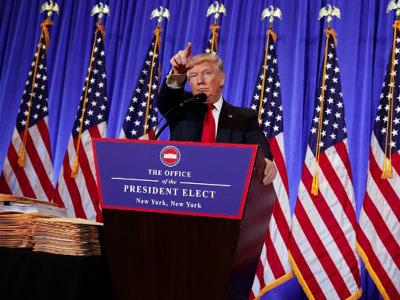
aideAfter initially denying that Flynn and Ambassador Sergey Kislyak spoke Dec. 29, a Trump official said late Friday that the transition team was aware of one call on the day President Barack Obama imposed sanctions.

It's not unusual for incoming administrations to have discussions with foreign governments before taking office. But repeated contacts just as Obama imposed sanctions would raise questions about whether Trump's team discussed — or even helped shape — Russia's response.

Russian President Vladimir Putin unexpectedly did not retaliate against the US for the move, a decision Trump quickly praised.

More broadly, Flynn's contact with the Russian ambassador suggests the incoming administration has already begun to lay the groundwork for its promised closer relationship with Moscow. That effort appears to be moving ahead, even as many in Washington, including Republicans, have expressed outrage over intelligence officials' assessment that Putin launched a hacking operation aimed at meddling in the US election to benefit Trump.

In an interview published Friday evening by The Wall Street Journal, Trump said he might do away with Obama's sanctions if Russia works with the US on battling terrorists and achieving other goals.

"If Russia is really helping us, why would anybody have sanctions?" he asked.

During a news conference Wednesday, Trump highlighted his warmer rapport with the Russian leader.

"If Putin likes Donald Trump, I consider that an asset, not a liability, because we have a horrible relationship with Russia," he said.

The sanctions targeted the GRU and FSB, leading Russian intelligence agencies that the U.S. said were involved in the hacking of the Democratic National Committee and other groups. The U.S. also kicked out 35 Russian diplomats who it said were actually intelligence operatives.

Trump has been willing to insert himself into major foreign policy issues during the transition, at times contradicting the current administration and diplomatic protocol. He accepted a call from Taiwan's president, ignoring the longstanding "One China" policy that does not recognize the island's sovereignty. He also publicly urged the U.S. to veto a United Nations Security Council resolution condemning Israeli settlements, then slammed the Obama administration for abstaining and allowing the measure to pass.

Questions about Trump's friendly posture toward Russia have deepened since the election, as he has dismissed US intelligence agencies' assertions about Russia's role in the hacking of Democratic groups. In briefing Trump on their findings, intelligence officials also presented the president-elect with unsubstantiated claims that Russia had amassed compromising personal and financial allegations about him, according to a separate U.S. official who spoke on the condition of anonymity because the official was not allowed to publicly discuss the matter.

The Senate Intelligence Committee announced late Friday that it would investigate possible contacts between Russia and people associated with U.S. political campaigns as part of a broader investigation into Moscow's meddling in the 2016 presidential election.

Trump acknowledged for the first time this week that he accepts that Russia was behind the hacking. But he questioned whether officials were leaking information about their meetings with him, warning that would be a "tremendous blot" on their record.

Flynn's own ties with Russia have worried some Republicans who are more skeptical of the Kremlin than Trump appears to be. After leaving his position as director of the Defense Intelligence Agency in 2014, Flynn made appearances on RT, a state-run Russian television network. In 2015, he was paid to attend an RT gala in Moscow, where he sat next to Putin.

As national security adviser, Flynn will work in the West Wing close to the Oval Office and will have frequent access to Trump. Unlike Trump's nominees to lead the Pentagon, State Department and other national security agencies, Flynn's post does not require Senate confirmation.

Flynn's contacts with the Russian ambassador were first reported by Washington Post columnist David Ignatius. The U.S. official who spoke to The Associated Press was not authorized to confirm the contacts publicly and insisted on anonymity.

The Trump team's account of Flynn's contacts with the Russian envoy changed throughout the day Friday.

Trump spokesman Sean Spicer initially said there was one phone call between Flynn and Kislyak on Dec. 28, as well as a Christmas greeting via text messages over the holidays. He said sanctions were not part of the discussions.

Later Friday, a transition official said Flynn and Kislyak had spoken by phone on Dec. 29, following a text message from the ambassador the day before. During the call, the Russian ambassador invited U.S. officials to a conference on Syria later this month that is being held in Kazakhstan, according to the transition official, who was not authorized to publicly discuss the matter and insisted on anonymity.

The official also confirmed a phone call between the men earlier in December.

The US official who spoke to the AP Friday described the contacts between Flynn and Kislyak as "very frequent."

It's unclear how US officials became aware of the contacts between Flynn and Kislyak, who has served as Russia's envoy to the US since 2008. U.S. monitoring of Russian officials' communication within the United States is known to be common.

Flynn has spoken with other foreign officials since Trump won the November election, as have incoming White House senior advisers Steve Bannon and Jared Kushner, Trump's son-in-law. State Department spokesman Mark Toner said he saw nothing inappropriate in Trump's transition team contacting Russian or any other foreign officials.

Comments

Add new comment

  • Coastaldigest.com reserves the right to delete or block any comments.
  • Coastaldigset.com is not responsible for its readers’ comments.
  • Comments that are abusive, incendiary or irrelevant are strictly prohibited.
  • Please use a genuine email ID and provide your name to avoid reject.
News Network
April 13,2020

Vienna, Apr 13: Top oil-producing countries agreed on "historic" output cuts to prop up prices hammered by the coronavirus crisis and a Russia-Saudi price war, sending crude prices soaring on Monday.

The US benchmark WTI climbed 7.7 percent to $24.52 a barrel in early Asian trade while Brent was up 5.0 percent at $33.08.

OPEC producers dominated by Saudi Arabia and allies led by Russia thrashed out a compromise deal via videoconference Sunday after Mexico had balked at an earlier agreement struck on Friday.

In the compromise reached Sunday they agreed to a cut of 9.7 million barrels per day from May, according to Mexican Energy Minister Rocio Nahle, down slightly from 10 million barrels a day envisioned earlier.

OPEC Secretary General Mohammad Barkindo called the cuts "historic".

"They are largest in volume and the longest in duration, as they are planned to last for two years," he said.

The agreement between the Vienna-based Organization of the Petroleum Exporting Countries and partners foresees deep output cuts in May and June followed by a gradual reduction in cuts until April 2022.

Barkindo added that the deal "paved the way for a global alliance with the participation of the G20".

Saudi Energy Minister Prince Abdulaziz bin Salman, who chaired the meeting together with his Russian and Algerian counterparts, also confirmed that the discussions "ended with consensus".

Comments

Add new comment

  • Coastaldigest.com reserves the right to delete or block any comments.
  • Coastaldigset.com is not responsible for its readers’ comments.
  • Comments that are abusive, incendiary or irrelevant are strictly prohibited.
  • Please use a genuine email ID and provide your name to avoid reject.
News Network
June 3,2020

Washington, Jun 3: US President Donald Trump's administration on Tuesday announced investigations into foreign digital services taxes it says are aimed squarely at American tech firms.

Following a similar trade investigation against France last year, the US Trade Representative office now is looking into taxes in Britain and the European Union, as well as Indonesia, Turkey and India.

"President Trump is concerned that many of our trading partners are adopting tax schemes designed to unfairly target our companies," USTR Robert Lighthizer said in a statement.

"We are prepared to take all appropriate action to defend our businesses and workers against any such discrimination."

Washington opposes the efforts to tax revenues from online sales and advertising, saying they single out US tech giants like Google, Apple, Facebook, Amazon and Netflix.

The US and France have agreed to negotiate till the end of the year over a digital services tax Paris approved in 2019, after USTR found them to be discriminating and threatened retaliatory duties of up to 100 percent on French imports such as champagne and camembert cheese.

Trump has embroiled the US in numerous trade disputes since taking office in 2017, including a months-long trade war with China that cooled with the signing of a partial deal in January.

Comments

Add new comment

  • Coastaldigest.com reserves the right to delete or block any comments.
  • Coastaldigset.com is not responsible for its readers’ comments.
  • Comments that are abusive, incendiary or irrelevant are strictly prohibited.
  • Please use a genuine email ID and provide your name to avoid reject.
News Network
April 15,2020

Seoul, Apr 15: Wearing masks and gloves, South Korean voters cast their ballots on Wednesday to elect 300 parliamentary lawmakers amid the coronavirus outbreak.

Voting kicked off at 6 am (local time) and was to run until 6 pm (local time) at 14,330 polling stations across the country, according to the National Election Commission (NEC). The number of eligible voters is 44 million, according to Yonhap news agency.

The once-in-four-years legislative election is widely seen as a referendum on President Moon Jae-in, whose five-year term will end in mid-2022, as well as a test of the country's fight against COVID-19 under the leadership of Moon, The Strait Times reported.

South Korea has received international praise for its massive testing capability and other innovative measures, such as drive-through testing and high-tech contact tracing.

Experts, therefore, expect the ruling Democratic Party (DP) to extend its lead in Parliament, given that the government's handling of the virus outbreak is viewed positively both at home and abroad, as per The Strait Times.

At least 10,564 people in the country have been infected by coronavirus, which has claimed 222 lives. About 2,800 patients are undergoing treatment.

The number of new cases has fallen from a high of 813 on February 29 to below 50 for six days in a row as an intensive social distancing campaign that started on March 21 remained in place.

Several surveys cited by the newspaper also showed that voters consider the pandemic as the biggest factor in their decision. A recent poll showed that 72.6 per cent of respondents rated the government's response to the outbreak as positive.

The NEC has said that public safety at polling stations will be a priority to prevent any possible spread of the virus.

All 14,330 polling stations and 251 counting stations will be disinfected on polling day, the NEC was quoted.

Voters will undergo temperature screening and those registering temperatures of 37.5 degrees Celsius or higher or display respiratory symptoms will have to exercise their franchise at a separate booth.

Tuesday was the last of 13 days of campaigning, which saw most candidates reducing their ground activities and face-to-face encounters with voters. Instead, the candidates boosted their online presence with videos and social media engagements in a bid to win votes, according to The Strait Times.

In addition, the government has also decided to temporarily lift quarantine rules to permit self-isolators to vote in the elections. Some 50,000 people in self-isolation who have no symptoms and expressed a willingness to vote will be allowed to cast ballots after the regular voting ends in the evening.

Comments

Add new comment

  • Coastaldigest.com reserves the right to delete or block any comments.
  • Coastaldigset.com is not responsible for its readers’ comments.
  • Comments that are abusive, incendiary or irrelevant are strictly prohibited.
  • Please use a genuine email ID and provide your name to avoid reject.