


Trump nominee for Attorney General promises curbs on H1B visas

January 12, 2017

Washington, Jan 12: US President-elect Donald Trump's nominee for the post of Attorney General has assured lawmakers of taking steps towards pushing legislative measures to curb misuse of H-1B and L1 work visas significantly used by Indian IT professionals and allegedly replace American workers.
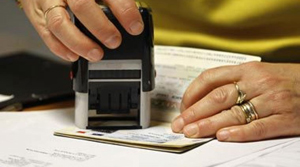
visa"It's simply wrong to think that we're in a totally open world and that any American with a job can be replaced if somebody in the world is willing to take a job for less pay," Senator Jeff Sessions told members of Senate Judiciary Committee during his confirmation hearing for the position of US Attorney General.

"We have borders. We have a commitment to our citizens and you have been a champion of that. I've been honoured to work with you on it," Sessions said in response to a question from Senator Charles Grassley, Chairman of the Senate Judiciary Committee.

In the past both Sessions and Grassley have worked together to bring legislations on H-1B visas that badly hit Indian IT companies.

The Office of Special Counsel for immigration related unfair employment practices is an office within the Justice Department which would be headed by Sessions if he is confirmed by the US Senate.

The Office enforces the anti-discrimination provisions of the Immigration and Nationality Act.

"While the office is designed to protect foreign nationals with employment visas from discrimination, it is also charged with ensuring that American workers are not discriminated against in the workplace.

Many US workers advocate that the layoff of American workers and the replacement by cheaper, foreign, H-1B workers constitutes de facto nationality based discrimination against American workers," Grassley said.

"The Obama administration has failed to protect American workers here. Will you, this is my question, will you be more aggressive in investigating the abuses of these visa programmes?" he asked.

"I believe this has been an abuse. And I have been pleased to support your legislation and some others too, that others have produced that I believe could be helpful. It needs to be addressed," Sessions said.

Describing Sessions as a vocal champion for American workers, Grassley said many American workers are being laid off and replaced by cheaper foreign labour imported through some of the US visa programmes.

Sessions, Grassley and Senator Dick Durbin in the past had co-sponsored a bill that would reform H-1B visa programmes by ensuring that qualified American workers are considered for high skilled job opportunities before those jobs can be offered to foreign nationals.

"It also prohibit a company from hiring H-1B employees if they employ more than 50 people and more than 50 per cent of their employees are H-1B or L-1 visa holders," he said.

This provision would crack down on outsourcing companies that import large number of H-1B and L1 workers for short training periods and then send these workers back to their home countries to do the work of US workers, he added.

"In 2013, you and I seem to be the lone senators on this committee who fought for US workers. We argued that the Gang of Eight bill that would have increased the number of foreign workers who came in on H-1B visas and actually hurt Americans who were qualified, willing to do those jobs, we said that the bill failed to adequately protect US workers and neglected to hold employers accountable for misusing the H-1B and L1 visa programs," Grassley said.

"We tried to provide more protection for US workers. We tried to ensure that no business imported foreign workers before making a good faith effort to hire people at home. We tried to expand the ability for government to audit employers, we offered amendments that were supported by the AFL-CIO," he said.

"In April 2015, you helped lead eight other senators in a letter to then Attorney General Holder, Secretary of Homeland Security Johnson, and Secretary of Labor Perez on this issue. Some of those who signed that letter sit on this panel today. For instance, Senator Durbin and Blumenthal," he said.

That letter requested that the Obama administration investigate abuse of H-1B visa programmes by companies including Southern California Edison, Disney and IBM that have been laying off American workers and replacing them with H-1B workers in some cases reportedly making the American workers train their own replacements, Grassley said.

Comments

Add new comment

  • Coastaldigest.com reserves the right to delete or block any comments.
  • Coastaldigset.com is not responsible for its readers’ comments.
  • Comments that are abusive, incendiary or irrelevant are strictly prohibited.
  • Please use a genuine email ID and provide your name to avoid reject.
News Network
July 25,2020

Madrid, Jul 25: Spain is witnessing a new surge in virus" coronavirus infections with nearly a thousand cases daily, a month after lifting the pandemic lockdown.

The country is reinstating both voluntary guidelines and mandatory restrictions that it had lifted on June 21, The Washington Post reported.

Spain on Wednesday reported over 224 outbreaks and 2,622 virus" coronavirus cases. According to a report in Washington Post, the new surge is attributed primarily to seasonal farmworkers, people attending family get-togethers and nightclub partyers.

On Thursday, the health ministry reported an additional 971 cases.

"The majority are related to fruit collection and also to the spaces where measures to avoid contact are relaxed," Spain Health Minister Salvador Illa told parliament. "We have to call on citizens to not lose respect for the virus not to be afraid of it, but not to lose respect for it either."

The government of Spain lifted all restrictions put in place to combat virus" coronavirus on June 21 and declared 'a new normal'. 

The virus" coronavirus pandemic till then had killed 24,000 people and infected more than 2,70,166.

Countries around the world are witnessing the second surge of virus" coronavirus. The resurgence could threaten the economic bounce Spain was hoping to get from vacationers eager for summer fun.

The surge in cases has been greatest in the northeastern region of Catalonia with more than 7,953 new confirmed cases since July 10.

Spain's National Epidemiological Survey has predicted that the rate of increase more than doubled in the past three weeks.

Meanwhile, the Catalan government reverted to pre-June 21 confinement rules in Barcelona and a dozen other municipalities in the metropolitan area, as well as in Figueras, Vilafant, La Noguera and Lleida.

Authorities have ordered bars and restaurants to limit indoor occupancy to 50 per cent, reduced sports to fewer than 10 people, closed night clubs and gyms and blocked some cultural activities.

The epidemiologist in charge of the region's biggest hospital warned in an interview last week with the Spanish daily El Pais that the situation in the agricultural hub of Lleida, located about 100 miles west of Barcelona, "had clearly gotten out of hand."

"Nobody foresaw that there would be a number of people coming from abroad to pick fruit in unfavourable conditions and that they might be infected," said epidemiologist Magda Campins of Vall d'Hebron in Barcelona. "And when the infections began to be detected, it was hard to keep tabs on the cases and their contacts because some of them, although they should have been in isolation, got away because they needed to earn money."

Catalonia's Department of Labour, Social Affairs and Family is using a hotel in Lleida to quarantine fruit workers who test positive for COVID-19 but are unable to isolate at home.

In the capital of Madrid, which was the epicentre during the pandemic's first wave in the spring, authorities reported 710 new cases in the past week. The use of face masks is widespread, but the region has shied away from making them mandatory in public.

Madrid's regional health secretary, Enrique Ruiz Escudero, defended that position while citing an uptick in infections in the under-40 age group. He told young people not to let down their guard.

"We can't take even one step backwards. Young people have to be aware of the responsibility they have," Ruiz Escudero said in a news conference Thursday. "I ask them to use the face mask and to maintain a safe distance."

Comments

Add new comment

  • Coastaldigest.com reserves the right to delete or block any comments.
  • Coastaldigset.com is not responsible for its readers’ comments.
  • Comments that are abusive, incendiary or irrelevant are strictly prohibited.
  • Please use a genuine email ID and provide your name to avoid reject.
News Network
March 13,2020

Mar 13: Canadian Prime Minister Justin Trudeau and his wife announced they were self-isolating Thursday as she undergoes tests for the new coronavirus after returning from a speaking engagement with "mild flu-like symptoms."

Sophie Gregoire-Trudeau's symptoms have subsided since she recently got back from Britain, but as a precaution the prime minister "will spend the day in briefings, phone calls and virtual meetings from home," according to a statement.

Trudeau also cancelled a meeting Thursday and Friday with Canada's provincial and territorial leaders in Ottawa, but still planned to speak with them and world leaders by phone about measures being taken to curb the spread of the virus in Canada.

Gregoire-Trudeau's symptoms had included "a low fever late last night." She immediately sought medical advice and testing.

Trudeau has exhibited no symptoms, and was advised by doctors "to continue daily activities while self-monitoring."

"However, out of an abundance of caution, the prime minister is opting to self-isolate and work from home until receiving Sophie's results," said his office.

Since the novel coronavirus first emerged in late December 2019, 127,070 cases have been recorded in 115 countries and territories, killing 4,687 people, according to an AFP tally compiled at 1200 GMT on Thursday based on official sources.

Canada has so far reported more than 100 cases in six provinces, and one death.

Also Thursday, the Canada's Juno music awards cancelled its upcoming gala show, planned for Sunday evening in Saskatoon, Saskatchewan.

"We are devastated to cancel this national celebration of music, but at this time of global uncertainty, the health, safety and well-being of all Canadians must stand at the forefront of any decisions that impact our communities," organisers said in a statement.

And in Quebec province, Premier Francois Legault unveiled a series of measures to prevent the spread of the coronavirus, including placing all travellers returning from overseas under quarantine for two weeks.

Quebec also banned indoor gatherings of more than 250 people.

Comments

Add new comment

  • Coastaldigest.com reserves the right to delete or block any comments.
  • Coastaldigset.com is not responsible for its readers’ comments.
  • Comments that are abusive, incendiary or irrelevant are strictly prohibited.
  • Please use a genuine email ID and provide your name to avoid reject.
News Network
March 3,2020

Mar 3: Just hours after the ending of a week-long “reduction” in violence that was crucial for Donald Trump’s peace deal in Afghanistan, the Taliban struck again: On Monday, they killed three people and injured about a dozen at a football match in Khost province. This resumption of violence will not surprise anyone actually invested in peace for that troubled country. The point of the U.S.-Taliban deal was never peace. It was to try and cover up an ignominious exit for the U.S., driven by an election-bound president who feels no responsibility toward that country or to the broader region.

Seen from South Asia, every point we know about in the agreement is a concession by Trump to the Taliban. Most importantly, it completes a long-term effort by the U.S. to delegitimize the elected government in Kabul — and, by extension, Afghanistan’s constitution. Afghanistan’s president is already balking at releasing 5,000 Taliban prisoners before intra-Afghan talks can begin — a provision that his government did not approve.

One particularly cringe-worthy aspect: The agreement refers to the Taliban throughout  as “the Islamic Emirate of Afghanistan that is not recognized by the United States as a state and is known as the Taliban.” This unwieldy nomenclature validates the Taliban’s claim to be a government equivalent to the one in Kabul, just not the one recognised at the moment by the U.S. When read together with the second part of the agreement, which binds the U.S. to not “intervene in [Afghanistan’s] domestic affairs,” the point is obvious: The Taliban is not interested in peace, but in ensuring that support for its rivals is forbidden, and its path to Kabul is cleared.

All that the U.S. has effectively gotten in return is the Taliban’s assurance that it will not allow the soil of Afghanistan to be used against the “U.S. and its allies.” True, the U.S. under Trump has shown a disturbing willingness to trust solemn assurances from autocrats; but its apparent belief in promises made by a murderous theocratic movement is even more ridiculous. Especially as the Taliban made much the same promise to an Assistant Secretary of State about Osama bin Laden while he was in the country plotting 9/11.

Nobody in the region is pleased with this agreement except for the Taliban and their backers in the Pakistani military. India has consistently held that the legitimate government in Kabul must be the basic anchor of any peace plan. Ordinary Afghans, unsurprisingly, long for peace — but they are, by all accounts, deeply skeptical about how this deal will get them there. The brave activists of the Afghan Women’s Network are worried that intra-Afghan talks will take place without adequate representation of the country’s women — who have, after all, the most to lose from a return to Taliban rule.

But the Pakistani military establishment is not hiding its glee. One retired general tweeted: “Big victory for Afghan Taliban as historic accord signed… Forced Americans to negotiate an accord from the position of parity. Setback for India.” Pakistan’s army, the Taliban’s biggest backer, longs to re-install a friendly Islamist regime in Kabul — and it has correctly estimated that, after being abandoned by Trump, the Afghan government will have sharply reduced bargaining power in any intra-Afghan peace talks. A deal with the Taliban that fails also to include its backers in the Pakistani military is meaningless.

India, meanwhile, will not see this deal as a positive for regional peace or its relationship with the U.S. It comes barely a week after Trump’s India visit, which made it painfully clear that shared strategic concerns are the only thing keeping the countries together. New Delhi remembers that India is not, on paper, a U.S. “ally.” In that respect, an intensification of terrorism targeting India, as happened the last time the U.S. withdrew from the region, would not even be a violation of Trump’s agreement. One possible outcome: Over time the government in New Delhi, which has resolutely sought to keep its ties with Kabul primarily political, may have to step up security cooperation. Nobody knows where that would lead.

The irresponsible concessions made by the U.S. in this agreement will likely disrupt South Asia for years to come, and endanger its own relationship with India going forward. But worst of all, this deal abandons those in Afghanistan who, under the shadow of war, tried to develop, for the first time, institutions that work for all Afghans. No amount of sanctimony about “ending America’s longest war” should obscure the danger and immorality of this sort of exit.

Comments

Add new comment

  • Coastaldigest.com reserves the right to delete or block any comments.
  • Coastaldigset.com is not responsible for its readers’ comments.
  • Comments that are abusive, incendiary or irrelevant are strictly prohibited.
  • Please use a genuine email ID and provide your name to avoid reject.