



Trump Signals US Is Likely To Exit Paris Climate Deal

June 1, 2017

Washington, Jun 1: President Donald Trump is still undecided but leaning toward withdrawing the United States from the landmark Paris climate agreement, White House officials said Wednesday, a move that would honor a campaign vow but risk rupturing global alliances and disappointing both environmentalists and corporate titans.donald
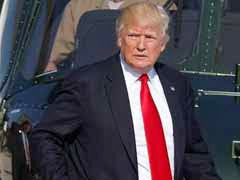
Although officials warned that Trump's thinking could shift before he announces his decision Thursday, a U.S. exit from the climate pact could have severe ramifications internationally. It could raise doubts about the commitment of the world's largest economy to curbing global warming and make it more difficult to hold other nations to their environmental commitments.

All but two countries - Nicaragua and Syria - signed onto the 2015 accord, which was a signature diplomatic achievement for President Barack Obama.

The Paris agreement has long divided the Trump administration, with the president taking much of the spring to make up his mind amid an intense campaign by both sides to influence his decision.

Secretary of State Rex Tillerson and Ivanka Trump, the president's daughter and adviser, are among those who have urged him to stay in the deal. White House chief strategist Stephen Bannon and Environmental Protection Agency Administrator Scott Pruitt have pushed for a withdrawal, which wouldn't actually be finalized until near the end of Trump's term.

Although the White House signaled that Trump was likely to announce an exit from the Paris accord, it made no public announcement Wednesday. Trump tweeted that he would announce his decision Thursday at 3 p.m. in the White House Rose Garden. The president has a history of changing his mind at the last minute, as he did in deciding not to pull out of the North American Free Trade Agreement after aides had suggested he would.

All day, senior administration officials cautioned that Trump had not yet made a final decision on the climate pact - and the president himself seemed eager to maintain the suspense.

"You're going to find out very soon," Trump told reporters Wednesday, in response to questions during a brief Oval Office appearance with Vietnamese Prime Minister Nguyen Xuan Phuc.

Asked whether he had been hearing from CEOs trying to persuade him, Trump said, "I'm hearing from a lot of people, both ways." More than 190 nations agreed to the accord in December 2015 in Paris, and 147 have since formally ratified or otherwise joined it, including the United States - representing more than 80 percent of the world's greenhouse gas emissions.

The United States is the world's second-largest emitter of greenhouse gases. Under the Paris agreement, the United States promised to reduce its emissions 26 percent to 28 percent below their 2005 levels by 2025. As of 2015, emissions were 12 percent lower, according to the U.S. Energy Information Administration.

Hard-line conservatives have sought to convince Trump that meeting this target would be harmful to the bottom lines of U.S. businesses and would jeopardize manufacturing jobs, especially in the Midwest and other regions where Trump found deep support in last year's election.

They also have argued that staying in the Paris agreement could be used as a legal tool by environmental groups seeking to fight Trump's environmental policies.

In addition, a group of 22 Republican senators - including Senate Majority Leader Mitch McConnell, R-Ky., - wrote to Trump urging "a clean break" from the Paris agreement.

But Tillerson and other internationalists have argued that it would be beneficial to the United States to remain part of negotiations and meetings surrounding the agreement as a matter of leverage and influence.

A broad range of outsiders have lobbied Trump to remain part of the global pact, from former vice president Al Gore to Pope Francis. The administration's debate has triggered an outpouring of lobbying from corporate America as well, as Apple, ExxonMobil and other major companies have strongly supported the accord.

During Trump's maiden foreign trip last week, a number of European leaders sought to persuade Trump of the magnitude of the climate change crisis and the importance of American leadership to address it.

Gary Cohn, the National Economic Council director, told reporters last week that Trump "wants to do the right thing for the environment. He cares about the environment. But he also cares very much about creating jobs for American workers." He added, "If those things collide, growing our economy is going to win. The president ran on growing our economy."

As a candidate, Trump railed against the Paris accord and pledged to scrap it, as part of his "America First" agenda to promote economic nationalism and disentangle the United States from international agreements that he considers harmful.

Trump also said he thought climate change was a "hoax." Asked by a reporter Wednesday whether he still believes so, the president said only, "Thank you, everybody."

News reports Wednesday that Trump was expected to withdraw from the Paris accord sparked swift and strong reactions.

Elon Musk, the chief executive of Tesla and a member of a White House manufacturing jobs advisory board, tweeted that if Trump does exit, he would have "no choice" but to end his affiliations with the administration.

Mitt Romney, the 2012 Republican presidential nominee and one of Trump's finalists for secretary of state, tweeted, "Affirmation of the #ParisAgreement is not only about the climate: It is also about America remaining the global leader."

Sen. Michael Bennet, D-Colo., said leaving the Paris agreement would amount to an "abdication" of American values.

"This would be yet another example of President Trump's 'Putting America Last' agenda - last in innovation, last in science, and last in international leadership," Bennet said in a statement.

Others cheered the notion that Trump might soon kill the climate agreement that had been an Obama legacy item.

"President Trump's decision sends a strong message to the environmentalist movement: no longer will the United States be strong armed by their scare tactics intended to harm our economy and inhibit economic growth," David McIntosh, president of the Club for Growth, a conservative political action group, said in a statement.

A party that has fully joined the accord, as the United States has, cannot formally withdraw for three years after the agreement was entered into force in 2016 - and that is capped by an extra year-long waiting period. Under those rules, Trump could not complete a U.S. exit from the agreement until Nov. 4, 2020 - the day after the next presidential election.

European Commission President Jean-Claude Juncker said he tried to explain to Trump during their climate discussions last week that withdrawing from the pact was no simple task.

"Not everything in international agreements is 'fake news,' " Juncker said Wednesday. He added, "This notion, 'I am Trump, I am American, 'America First' and I'm going to get out of it' - that won't happen. We tried to explain that to Mr. Trump in Taormina in clear German sentences. It seems our attempt failed." Taormina is the Sicilian resort town where the Group of Seven leaders met last week.

Trump also could opt to withdraw from the more foundational U.N. Framework Convention on Climate Change, which laid the groundwork for the Paris deal and was signed by President George H.W. Bush and ratified by the Senate in the early 1990s.

But that is a more radical move, which would further withdraw the United States from all international climate change negotiations.

The Trump administration already has rolled back key Obama administration initiatives through executive action, including the EPA's Clean Power Plan, which was a key part of the U.S. promise through the Paris agreement. These policies have made it highly unlikely that the United States could honor its Paris pledge to sharply cut carbon dioxide emissions.

That leaves Trump with two clear choices: withdraw from the Paris agreement or revise the U.S. emissions targets downward to a more achievable level while remaining in the pact.

A downward revision would certainly prompt criticism from the international community, but not nearly so much as an abandonment. The Paris agreement is, after all, the first global accord on climate change action that has managed to unify both developed and developing nations behind a single framework to cut emissions.

Moreover, the accord is flexible in the sense that it does not mandate that any nation achieve any particular level of emissions cuts. Rather, every nation under the agreement pledges to do the best it can, and to participate in a process in which nations will regularly increase their ambitions over time.

The ultimate goal of the Paris agreement is to hold the warming of the planet to "well below" two degrees Celsius (3.6 degrees Fahrenheit) of warming above the temperatures found in the preindustrial times of the late 1800s. The Earth is already about one degree Celsius (1.8 degrees Fahrenheit) warmer than it was at that time, scientists have determined, and current and near future emissions seem quite likely to take the planet past 1.5 degrees Celsius (2.7 degrees Fahrenheit) in the coming decades.

Recent research has highlighted that above 2 degrees, major threats could ensue for Earth systems ranging from coral reefs to the planet's vast ice sheets.

Comments

Add new comment

  • Coastaldigest.com reserves the right to delete or block any comments.
  • Coastaldigset.com is not responsible for its readers’ comments.
  • Comments that are abusive, incendiary or irrelevant are strictly prohibited.
  • Please use a genuine email ID and provide your name to avoid reject.
News Network
May 19,2020

May 19: A Chinese laboratory has been developing a drug it believes has the power to bring the coronavirus pandemic to a halt.

The outbreak first emerged in China late last year before spreading across the world, prompting an international race to find treatments and vaccines.

A drug being tested by scientists at China's prestigious Peking University could not only shorten the recovery time for those infected, but even offer short-term immunity from the virus, researchers say.

Sunney Xie, director of the university's Beijing Advanced Innovation Center for Genomics, told AFP that the drug has been successful at the animal testing stage.

"When we injected neutralising antibodies into infected mice, after five days the viral load was reduced by a factor of 2,500," said Xie.

"That means this potential drug has (a) therapeutic effect."

The drug uses neutralising antibodies -- produced by the human immune system to prevent the virus infecting cells -- which Xie's team isolated from the blood of 60 recovered patients.

A study on the team's research, published Sunday in the scientific journal Cell, suggests that using the antibodies provides a potential "cure" for the disease and shortens recovery time.

Xie said his team had been working "day and night" searching for the antibody.

"Our expertise is single-cell genomics rather than immunology or virology. When we realised that the single-cell genomic approach can effectively find the neutralising antibody we were thrilled."

He added that the drug should be ready for use later this year and in time for any potential winter outbreak of the virus, which has infected 4.8 million people around the world and killed more than 315,000.

"Planning for the clinical trial is underway," said Xie, adding it will be carried out in Australia and other countries since cases have dwindled in China, offering fewer human guinea pigs for testing.

"The hope is these neutralised antibodies can become a specialised drug that would stop the pandemic," he said.

China already has five potential coronavirus vaccines at the human trial stage, a health official said last week.

But the World Health Organization has warned that developing a vaccine could take 12 to 18 months.

Scientists have also pointed to the potential benefits of plasma -- a blood fluid -- from recovered individuals who have developed antibodies to the virus enabling the body's defences to attack it.

More than 700 patients have received plasma therapy in China, a process which authorities said showed "very good therapeutic effects".

"However, it (plasma) is limited in supply," Xie said, noting that the 14 neutralising antibodies used in their drug could be put into mass production quickly.

Using antibodies in drug treatments is not a new approach, and it has been successful in treating several other viruses such as HIV, Ebola and Middle East Respiratory Syndrome (MERS).

Xie said his researchers had "an early start" since the outbreak started in China before spreading to other countries.

Ebola drug Remdesivir was considered a hopeful early treatment for COVID-19 -- clinical trials in the US showed it shortened the recovery time in some patients by a third -- but the difference in mortality rate was not significant.

The new drug could even offer short-term protection against the virus.

The study showed that if the neutralising antibody was injected before the mice were infected with the virus, the mice stayed free of infection and no virus was detected.

This may offer temporary protection for medical workers for a few weeks, which Xie said they are hoping to "extend to a few months".

More than 100 vaccines for COVID-19 are in the works globally, but as the process of vaccine development is more demanding, Xie is hoping that the new drug could be a faster and more efficient way to stop the global march of the coronavirus.

"We would be able to stop the pandemic with an effective drug, even without a vaccine," he said.

Comments

Add new comment

  • Coastaldigest.com reserves the right to delete or block any comments.
  • Coastaldigset.com is not responsible for its readers’ comments.
  • Comments that are abusive, incendiary or irrelevant are strictly prohibited.
  • Please use a genuine email ID and provide your name to avoid reject.
News Network
July 6,2020

Beijing, Jul 6: A city in northern China on Sunday sounded an alert after a suspected case of bubonic plague was reported, according to official media here.

Bayannur, Inner Mongolia Autonomous Region, announced a level III warning of plague prevention and control, state-run People’s Daily Online reported.

The suspected bubonic plague case was reported on Saturday by a hospital in Bayannur. The local health authority announced that the warning period will continue until the end of 2020.

"At present, there is a risk of a human plague epidemic spreading in this city. The public should improve its self-protection awareness and ability, and report abnormal health conditions promptly,” the local health authority said.

On July 1, state-run Xinhua news agency said that two suspected cases of bubonic plague reported in Khovd province in western Mongolia have been confirmed by lab test results.

The confirmed cases are a 27-year-old resident and his 17-year-old brother, who are being treated at two separate hospitals in their province, it quoted a health official as saying.

The brothers ate marmot meat, the health official said, warning people not to eat marmot meat.

A total of 146 people who had contact with them have been isolated and treated at local hospitals, according to Narangerel.

Bubonic plague is a bacterial disease that is spread by fleas living on wild rodents such as marmots. It can kill an adult in less than 24 hours if not treated in time, according to the World Health Organization (WHO).

A couple died of bubonic plague in the western Mongolian province of Bayan-Ulgii last year after eating raw marmot meat.

The news of bubonic plague came after Chinese researchers issued an early warning over another potential pandemic caused by an influenza virus in pigs.

Scientists from China Agricultural University, the Chinese Centre for Disease Control and Prevention and other institutes detected a pig influenza virus bearing genotype 4 (G4), which is contagious among pigs and has the possibility of jumping to humans, as the G4 virus is able to bind with human cells, state-run Global Times reported last week.

The researchers are concerned that it could mutate further so that it can spread easily from person to person, and trigger a global outbreak, BBC reported.

"Controlling the prevailing G4 EA H1N1 viruses in pigs and close monitoring in human populations, especially workers in the swine industry, should be urgently implemented," Chinese researchers warned in the paper.

The new diseases were reported even as China grappled with the second attack of Covid-19 in Beijing after controlling it in Wuhan where it was first reported in December last year.

On Saturday, Beijing reported a single-digit Covid-19, local authorities said Sunday.

The number of newly confirmed Covid-19 cases reached a peak in Beijing on June 13 and 14 and then started declining in general, Xinhua quoted local officials as saying.

From June 11 to July 4, the city reported 334 confirmed locally transmitted cases, 47 per cent of whom are workers of the Xinfadi wholesale food market, the official said.

Comments

Add new comment

  • Coastaldigest.com reserves the right to delete or block any comments.
  • Coastaldigset.com is not responsible for its readers’ comments.
  • Comments that are abusive, incendiary or irrelevant are strictly prohibited.
  • Please use a genuine email ID and provide your name to avoid reject.
Agencies
July 7,2020

Washington, Jul 7: The US House of Representatives Judiciary Committee will grill the CEOs of US tech giants Apple, Google, Facebook and Amazon during an antitrust hearing on July 27.

Apple's Tim Cook, Facebook's Mark Zuckerberg, Alphabet's Sundar Pichai and Amazon's Jeff Bezos will testify before the antitrust panel that is working on proposals to reform and regulate the digital market.

The hearing would mark the first time all four top executives testify together in front of Congress, virtually or in-person depending on the panel's call in the COVID-19 pandemic times.

"Since last June, the Subcommittee has been investigating the dominance of a small number of digital platforms and the adequacy of existing antitrust laws and enforcement," House Judiciary Committee Chairman Jerrold Nadler (D-NY) and Antitrust Subcommittee Chairman David Cicilline (D-RI) said in a statement on Monday.

"Given the central role these corporations play in the lives of the American people, it is critical that their CEOs are forthcoming. As we have said from the start, their testimony is essential for us to complete this investigation.”

The House Judiciary Committee announced its antitrust probe into the four tech giants in June last year.

Last month, the committee sent letters to technology giants Apple, Facebook, Amazon and Alphabet (Google's parent company), asking them to confirm if their chief executives will testify as part of the committee's tech competition investigation.

Committee chair David Cicilline said the documents that the investigators sought were "essential" to the probe and that requests like this were part of the "appropriate process" to obtain them.

"The only CEO who has expressed reservation about appearing, through a representative, has been Amazon," Cicilline said. "No one in this country is above the law ... nobody is above answering a congressional subpoena".

The lawmakers want the tech giants to furnish documents that have been produced in relation to other competition probes and internal communications.

The letters that the committee sent also posed questions related to possible harms to competition in the market.

In addition to the antitrust probe, Apple's App Store policies are also facing scrutiny from the US Department of Justice.

Comments

Add new comment

  • Coastaldigest.com reserves the right to delete or block any comments.
  • Coastaldigset.com is not responsible for its readers’ comments.
  • Comments that are abusive, incendiary or irrelevant are strictly prohibited.
  • Please use a genuine email ID and provide your name to avoid reject.