


Trump vows to defeat ISIS, rebuild military

February 19, 2017

Washington, Feb 19: US President Donald Trump has vowed to "totally destroy" ISIS and rebuild the US military as part of measures to keep the country safe. "Here's the bottom line. We've got to keep our country safe. You look at what's happening," Trump said at a campaign-style rally in Florida, nearly a month after taking oath. "We've allowed thousands and thousands of people into our country. And there was no way to vet those people. There was no documentation. There was no nothing," he claimed.
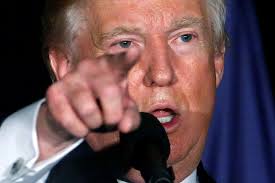
donaldTrump also touched on familiar rhetoric, saying the US does not "win anymore". "Instead of peace, we've seen wars that never end and conflicts that never seem to go away. We don't fight to win. We fight politically correct wars. We don't win anymore. We don't win at trade. We don't win in any capacity. We don't win anymore. We're going to start winning again. Believe me," he said. Trump said he has directed the defence community, headed by Defence Secretary Jim Mattis "to develop a plan to totally destroy ISIS," and begin plans for "the great rebuilding" of the United States military.

"We will pursue peace through strength. Our military is badly depleted. We make the best equipment anywhere in the world. We're going to start using our best and most modern equipment," he said. Trump said he wants to build safe zones in Syria and other places so immigrants can stay there and live safely. "We were left a mess like you wouldn't believe. But we're going to build safe zones. We're going to have those safe zones," he said.

"We want people to come into our country. But we want people that love us. We want people that can cherish us and the traditions of our country. We want people that are going to be great for our country. We don't want people with bad, bad ideas. We don't want that," he said. He said he has also started taking steps to bring back jobs to the country and revive the fledging economy. Trump, a billionaire himself, lashed out at the "so-called global elite", saying they have done very well for themselves, leaving working families with shrinking wages.

"We have the chance...to pursue real peace, real stability and real prosperity. We want to secure our borders and protect our workers. To rebuild our military and our infrastructure. To fix our schools and restore safety to our neighborhoods. To bring hope and opportunity to our inner cities," he said. The Republican, who in the run-up to the presidential elections was accused of sexually harassing women, also said he wants to ensure a "level playing field for all women in the workforce."

Comments

Add new comment

  • Coastaldigest.com reserves the right to delete or block any comments.
  • Coastaldigset.com is not responsible for its readers’ comments.
  • Comments that are abusive, incendiary or irrelevant are strictly prohibited.
  • Please use a genuine email ID and provide your name to avoid reject.
Agencies
June 16,2020

India continues to remain ranked 43rd on an annual World Competitiveness Index compiled by Institute for Management Development (IMD) with some traditional weaknesses like poor infrastructure and insufficient education investment keeping its ranking low, the international business school said on Tuesday.

Singapore has retained its top position on the 63-nation list.

Denmark has moved up to the second position (from 8th last year), Switzerland has gained one place to rank 3rd, the Netherlands has retained its 4th place and Hong Kong has slipped to the fifth place (from 2nd in 2019).

The US has moved down to 10th place (from 3rd last year), while China has also slipped from 14th to 20th place. Among the BRICS nations, India is ranked second after China, followed by Russia (50th), Brazil (56th) and South Africa (59th).

India was ranked 41st on the IMD World Competitiveness Ranking, being produced by the business school based in Switzerland and Singapore every year since 1989, but had slipped to 45th in 2017 before improving to 44th in 2018 and then to 43rd in 2019.

While its overall position has remained unchanged in the 2020 list, it has recorded improvements in areas like long-term employment growth, current account balance, high-tech exports, foreign currency reserves, public expenditure on education, political stability and overall productivity, the IMD said.

However, it has moved down in areas like exchange rate stability, real GDP growth, competition legislation and taxes.

Arturo Bris, Head of Competitiveness Center at IMD Business School, said India continues to struggle on the list and the recent country rating downgrade by Moody’s reflects the uncertainties regarding the economy’s future.

"In our ranking this year, we again emphasize the traditional weaknesses of India -- poor infrastructure, an important deficit in education investment, and a health system that does not reach everybody. For India to follow the path of China, it must stress its intangible infrastructure," Bris said.

"In a less global world, with China, USA, and Europe looking inwards, currencies like the rupee (and the Brazilian real for instance) are going to suffer and display high volatilities.

"Moody’s has threatened the country with a downgrade to junk and that would put India in a terrible position to attract foreign capital. So the urgency for the government should be to fix the short-term problems—and this requires to improve the credibility of the government itself," Bris added.

With the exception of Singapore, the Philippines, Taiwan and the Korean Republic, most Asian economies dropped in rankings this year, the IMD said.

The reason for the Asian economies’ less stellar performance as a region, this year is partly the result of the trade frictions between China and the US, particularly because these economies are highly dependent on trade with China.

About Singapore, which moved to the top rank last year, the IMD said its position is largely driven by the relative ease of setting up business, availability of skilled labour and its cutting-edge technological infrastructure.

The IMD said the impact of COVID-19 on the competitiveness ranking has partially been captured by executives’ opinions about the effectiveness of the different health systems.

In the ASEAN countries included in the survey, only Singapore and Thailand have a positive performance in the effectiveness of the health infrastructure.

Comments

Add new comment

  • Coastaldigest.com reserves the right to delete or block any comments.
  • Coastaldigset.com is not responsible for its readers’ comments.
  • Comments that are abusive, incendiary or irrelevant are strictly prohibited.
  • Please use a genuine email ID and provide your name to avoid reject.
News Network
April 11,2020

Apr 11: The number of global coronavirus deaths has increased to 102,753, while the total number of cases worldwide has surpassed 1.6 million, according to the latest update by the Washington-based Johns Hopkins University.

As of Saturday morning, the overall number of infections increased to 1,698,416, while the tally of those who recovered from the deadly disease stood at 376,677, according to the varsity's Center for Systems Science and Engineering (CSSE).

In terms of cases, the US had the highest in the world at 501,301, followed by Spain 158,273, Italy 147,577 and France 125,931.

Italy accounted for the highest death toll at 18,849, with the US in the second place with 18,769 fatalities.

Other countries with more than 10,000 deaths include Spain (16,081) and France (13,197).

Although the pandemic originated in China last December, it now only accounts for 3,343 deaths with 83,003 confirmed cases.

Comments

Add new comment

  • Coastaldigest.com reserves the right to delete or block any comments.
  • Coastaldigset.com is not responsible for its readers’ comments.
  • Comments that are abusive, incendiary or irrelevant are strictly prohibited.
  • Please use a genuine email ID and provide your name to avoid reject.
News Network
June 9,2020

Washington, Jun 9: When epidemiologists talked about "flattening the curve," they probably didn't mean it this way: the US hit its peak coronavirus caseload in April, but since that time the graph has been on a seemingly unending plateau.

That's unlike several other hard-hit countries which have successfully pushed down their numbers of new cases, including Spain and Italy, which now have bell-shaped curves.

Experts say the prolonged nature of the US epidemic is the result of the cumulative impact of regional outbreaks, as the virus that started out primarily on the coasts and in major cities moves inward.

Layered on top of that are the effects of lifting lockdowns in parts of the country that are experiencing rising cases, as well as a lapse in compliance with social distancing guidelines because of economic hardship, and in some cases a belief that the threat is overstated.

"The US is a large country both in geography and population, and the virus is at very different stages in different parts of the country," Tom Frieden, a former director of the Centers for Disease Control and Prevention told AFP.

The US saw more than 35,000 new cases for several days in April. While that figure has declined, it has still been exceeding 20,000 regularly in recent days.

By contrast, Italy was regularly hitting more than 5,000 cases per day in March but is currently experiencing figures in the low hundreds.

"We did not act quickly and robustly enough to stop the virus spreading initially, and data indicate that it travelled from initial hotspots along major transport routes into other urban and rural areas," added Frieden, now CEO of the non-profit Resolve to Save Lives.

To wit: the East Coast states of New York, New Jersey and Massachusetts accounted for about 50 percent of all cases until about a month or so ago -- but now the geographic footprint of the US epidemic has shifted to the Midwest and southeast, including Florida.

Another key problem, said Jennifer Nuzzo, an epidemiologist at Johns Hopkins, is that the United States is still not doing enough testing, contact tracing and isolation.

After coming late to the testing party -- for reasons ranging from technical issues to regulatory hurdles -- the US has now conducted more COVID-19 tests than any other country.

It even has one of the highest per capita rates per country of 62 per 1,000 people, according to the website ourworldindata.org -- better than Germany (52 per 1,000) and South Korea (20 per 1,000).

But according to Nuzzo, these numbers are misleading, because "the amount of testing that a country should do should be scaled to the size of its epidemic.

"The United States has the largest epidemic in the world so obviously we need to do a lot more testing than any other country."

For Johns Hopkins, the more important metric is the positivity rate -- that is, out of all tests conducted, how many came back positive for COVID-19.

As of June 7, the United States had an average daily positivity rate of 14 percent, well above the World Health Organization guideline of 5 percent over two weeks before social distancing guidelines should be relaxed.

By contrast, Germany, which has tested far fewer people in relation to its population, has a positivity rate of 5 percent.

Even if testing were scaled up, carrying out tests in of itself does very little good without the next steps -- finding out who was exposed and then asking them to isolate.

Here also, too many US states are lagging woefully behind.

Texas, which is experiencing a surge in cases after relaxing its lockdown, is a case in point. The state targeted hiring a modest 4,000 tracers by June, but according to local reports is still more than a thousand shy of even that goal.

Opt-in app based efforts have also been slow to get off the ground.

Then there is the fact that some people are growing tired of lockdowns, while others don't have the economic luxury of being able to stay home for prolonged periods.

The government sent some 160 million Americans a single stimulus check of up to $1,200 back in April but it's not clear whether more will be forthcoming.

Still others, particularly in so-called red states under Republican leadership, have chafed under restrictions and mask-wearing guidelines that they see as an affront to their personal freedom.

"The US is kind of on the extreme of the individual liberty side," Sten Vermund, dean of the Yale School of Public Health, told AFP.

Part of this has to do with mixed messaging from Republican leaders, including President Donald Trump, said Nuzzo.

"We have had at the highest political level an assertion that this is a situation that's been overblown, and that maybe certain protective behaviors are not necessary," she said.

More recently, tens of thousands of people across the country have taken to the streets to protest the killing on an unarmed black man by police, risking coronavirus infection to demonstrate against the public health threat of racialized state violence.

Comments

Add new comment

  • Coastaldigest.com reserves the right to delete or block any comments.
  • Coastaldigset.com is not responsible for its readers’ comments.
  • Comments that are abusive, incendiary or irrelevant are strictly prohibited.
  • Please use a genuine email ID and provide your name to avoid reject.