



Two oil tankers on fire in Gulf of Oman, extreme caution urged

Agencies
June 13, 2019

Two oil tankers in the Gulf of Oman, near the strategic Strait of Hormuz, were reportedly attacked on Thursday, the US Navy said, with one adrift and on fire amid heightened tensions between Washington and Tehran and a high-stakes visit by the Japanese prime minister to Iran.

Latest updates:

1:50pm

Norwegian tanker attacked with three blasts: The Norwegian tanker Front Altair was "attacked", with three explosions but no injuries reported on board, the Norwegian Maritime Authority said.

"Today, June 13 at 6:03 am, the Front Altair, a Marshall Islands-flagged vessel, was attacked," the statement said. "Three explosions on board the vessel were reported. The crew boarded a passing vessel and no injuries have been reported."

12:44pm

Japan's Trade Ministry says two oil tankers reportedly attacked near Strait of Hormuz carried 'Japan-related cargo'

12:30pm

Oil prices jump after attack: Oil prices spiked by about three per cent after a reports of an "attack" on two oil tankers in the Gulf of Oman.

12:15pm

Frontline says its Front Altair tanker on fire: The Norwegian shipping firm Frontline confirmed that its oil tanker Front Altair was on fire after an incident in the Gulf of Oman, Norwegian newspaper VG reported, quoting a company spokesman.

All 23 crew members were brought to safety at a nearby vessel, the spokesman added.

12:06pm

Tanker Kokuka Courageous damage: The Kokuka Courageous tanker was damaged in a security incident in the Gulf of Oman, a spokesman for the vessel's manager BSM Ship Management (Singapore) said.

One crew man from the Kokuka Courageous was slightly injured in the incident and received first aid on board the Coastal Ace.

12:00pm

21 sailors evacuated off targeted Kokuka Courageous, one slightly injured; ship sustained hull damage, said shipping firm.

11:55am

Shipping firm identifies second ship targeted in reported Gulf of Oman attack as the Kokuka Courageous.

11:45am

US Navy assisting 2 targeted tankers: The US Navy's 5th Fleet says it is assisting two oil tankers targeted in the "reported attack on tankers in the Gulf of Oman."

The Bahrain-based force did not elaborate on who attacked what it described as two oil tankers. It also did not blame anyone for the attack.

The 5th Fleet said it had sent naval forces to the area to assist the two vessels. One has been identified as the MT Front Altair, a Marshall Islands-flagged crude oil tanker.

A private maritime intelligence firm says the Front Altair is adrift and on fire.

11:30am

UK maritime urges extreme caution: A UK maritime safety group warned of an unspecified incident in the Gulf of Oman and urged "extreme caution" amid heightened tensions between Washington and Tehran and a high-stakes visit by the Japanese prime minister to Iran.

Iranian media claimed - without offering any evidence - that there had been an explosion in the area targeting oil tankers.

The United Kingdom Maritime Trade Operations, which is run by the British navy, put out the alert but did not elaborate on the incident. It said it was investigating.

Cmdr. Joshua Frey, a spokesman for the US Navy's Bahrain-based 5th Fleet, said his command was "aware" of a reported incident in the area. He declined to elaborate.

"We are working on getting details," Frey said.

Benchmark Brent crude rose over 4 per cent in trading, to over $62 a barrel after reports of the incident, according to early market figures on Thursday.

Dryad Global, a maritime intelligence firm, preliminarily identified the vessel involved as the MT Front Altair, a Marshall Islands-flagged crude oil tanker. The vessel was "on fire and adrift," Dryad added. It did not offer a cause for the incident.

The maritime alert comes after what the United States has described as Iranian attacks on four oil tankers nearby, off the coast of the United Arab Emirates. Iran has denied being involved.

Abe to meet with Iran's Supreme Leader

The timing was especially sensitive as Japanese Prime Minister Shinzo Abe was visiting Iran on a high-stakes diplomacy mission. On Wednesday, after talks with Iranian President Hassan Rouhani, Abe warned that any "accidental conflict" that could be sparked amid the heightened US-Iran tensions must be avoided.

Abe was to meet with Iran's Supreme Leader Ayatollah Ali Khamenei on Thursday, the second and final day of his visit.

Abe's Iran trip not meant to mediate row with US: Official 

Meanwhile, in Tokyo, Japan's Chief Cabinet Secretary Yoshihide Suga, a top government spokesman, told reporters that Abe's trip was intended to help de-escalate tensions in the Mideast - but not specifically mediate between Tehran and Washington.

His remarks were apparently meant to downplay and lower expectations amid uncertain prospects for Abe's mission.

Comments

Add new comment

  • Coastaldigest.com reserves the right to delete or block any comments.
  • Coastaldigset.com is not responsible for its readers’ comments.
  • Comments that are abusive, incendiary or irrelevant are strictly prohibited.
  • Please use a genuine email ID and provide your name to avoid reject.
Agencies
April 27,2020

Riyadh, Apr 27: A Saudi Arabia-led coalition said on Monday that all parties need to return to the status that existed before the Southern Transitional Council (STC) in Yemen declared an emergency in Aden, according to a statement published by Spa.

The Coalition to Restore Legitimacy in Yemen, led by Saudi Arabia and the UAE, stresses the need to restore conditions to their previous state following the announcement of a state of emergency by the Southern Transitional Council and the consequential development of affairs in the interim capital (Aden) and some Southern governorates in the Republic of Yemen.

The Coalition urges for an immediate end to any steps contrary to the Riyadh Agreement, and work rapidly toward its implementation, citing the wide support for the agreement by the international community and the United Nations.

The Coalition has and will continue to undertake practical and systematic steps to implement the Riyadh Agreement between the parties to unite Yemeni ranks, restore state institutions and combat the scourge of terrorism. The responsibility rests with the signatories to the Agreement to undertake national steps toward implementing its provisions, which were signed and agreed upon with a time matrix for implementation. The Coalition demands an end to any escalation and calls for return to the Agreement by the participating parties, stressing the immediate need for implementation without delay, and the need to prioritise the Yemeni peoples' interests above all else, as well as working to achieve the stated goals of restoring the state, ending the coup and combatting terrorist organizations.

The Coalition reaffirms its ongoing support to the legitimate Yemeni government, and its support for implementing the Riyadh Agreement, which entails forming a competent government that operate from the interim capital Aden to tackle economic and developmental challenges, in light of natural disasters such as floods, fears of the coronavirus (Covid-19) pandemic outbreak, and work to provide services to the brotherly people of Yemen.

Comments

Add new comment

  • Coastaldigest.com reserves the right to delete or block any comments.
  • Coastaldigset.com is not responsible for its readers’ comments.
  • Comments that are abusive, incendiary or irrelevant are strictly prohibited.
  • Please use a genuine email ID and provide your name to avoid reject.
Agencies
August 2,2020

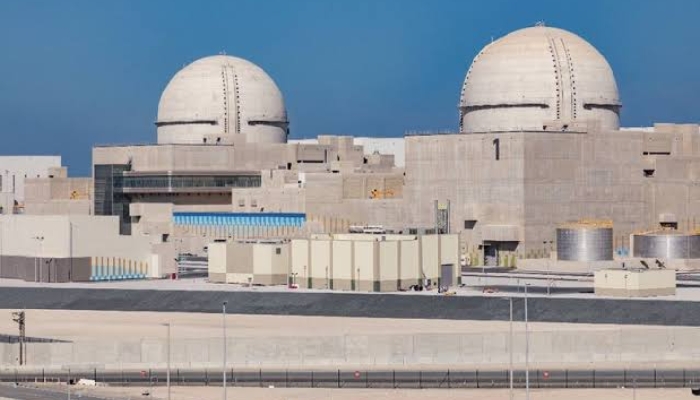
Dubai, Aug 2: The United Arab Emirates (UAE) announced on Saturday that it has started operations in the first of four reactors at the Barakah nuclear power station - the first nuclear power plant in the Arab world.

Emirates Nuclear Energy Corporation (ENEC), which is building and operating the plant with Korea Electric Power Corporation (KEPCO) said in a press release that its subsidiary Nawah Energy Company "has successfully started up Unit 1 of the Barakah Nuclear Energy Plant, located in the Al Dhafrah Region of Abu Dhabi".

That signals that Unit 1, which had fuel rods loaded in March, has achieved "criticality" - a sustained fission chain reaction.

"The start-up of Unit 1 marks the first time that the reactor safely produces heat, which is used to create steam, turning a turbine to generate electricity," said ENEC.

Barakah, which was originally scheduled to open in 2017, has been dogged by delays and is billions of dollars over budget. It has also raised myriad concerns among nuclear energy veterans who are concerned about the potential risks Barakah could visit upon the Arabian Peninsula, from an environmental catastrophe to a nuclear arms race.

Paul Dorfman, an honorary senior research fellow at the Energy Institute, University College London and founder and chair of the Nuclear Consulting Group, has criticised the Barakah reactors' "cheap and cheerful" design that he says cuts corners on safety.

Dorfman authored a report (PDF) last year detailing key safety features Barakah's reactors lack, such as a "core catcher" to literally stop the core of a reactor from breaching the containment building in the event of a meltdown. The reactors are also missing so-called Generation III Defence-In-Depth reinforcements to the containment building to shield against a radiological release resulting from a missile or fighter jet attack.

Both of these engineering features are standard on new reactors built in Europe, says Dorfman.

There have been at least 13 aerial attacks on nuclear facilities in the Middle East - more than any other region on earth.

The vulnerability of critical infrastructure in the Arabian Peninsula was further laid bare last year after Saudi Arabia's oil facilities at Abqaiq and Khurais were attacked by 18 drones and seven cruise missiles - an assault that temporarily knocked out more than half of the kingdom's oil production.

On Saturday, Dorfman reiterated his concern that there is no regional protocol in place to determine liability should an accident or incident at Barakah result in radioactive contamination spreading from the UAE to its neighbours. 

"Given Barakah has started up, because of all the well-rehearsed nuclear safety and security problems, it may be critically important that the Gulf states collectively evolve a Nuclear Accident Liability Convention, so that if anything does go wrong, victim states may have some sort of redress," Dorfman told Al Jazeera. 

The UAE has substantial oil and gas reserves, but it has made huge investments in developing alternative energy sources, including nuclear and solar.

Experts though have questioned why the UAE - which is bathed in sunlight and wind - has pushed ahead with nuclear energy - a far more expensive and riskier option than renewable energy sources.

When the UAE first announced Barakah in 2009, nuclear power was cheaper than solar and wind. But by 2012 - when the Emirates started breaking ground to build the reactors - solar and wind costs had plummeted dramatically.

Between 2009 and 2019, utility-scale average solar photovoltaic costs fell 89 percent and wind fell 43 percent, while nuclear jumped 26 percent, according to an analysis by the financial advisory and asset manager Lazard.

There are also concerns about the potential for Barakah to foment nuclear proliferation in the Middle East - a region rife with geopolitical fault lines and well-documented history of nuclear secrecy.

The UAE has sought to distance itself from the region's bad behaviour by agreeing not to enrich its own uranium or reprocess spent fuel. It has also signed up to the United Nation's nuclear watchdog's Additional Protocol, significantly enhancing inspection capabilities, and secured a 123 Agreement with the United States that allows bilateral civilian nuclear cooperation.

Comments

Add new comment

  • Coastaldigest.com reserves the right to delete or block any comments.
  • Coastaldigset.com is not responsible for its readers’ comments.
  • Comments that are abusive, incendiary or irrelevant are strictly prohibited.
  • Please use a genuine email ID and provide your name to avoid reject.
News Network
February 28,2020

Riyadh, Feb 28: Saudi Arabia on Thursday (Feb 27) suspended visas for visits to Islam's holiest sites for the "umrah" pilgrimage, an unprecedented move triggered by coronavirus fears that raises questions over the annual hajj.

The kingdom, which hosts millions of pilgrims every year in the cities of Mecca and Medina, also suspended visas for tourists from countries with reported infections as fears of a pandemic deepen.

Saudi Arabia, which so far has reported no cases of the virus but has expressed alarm over its spread in neighbouring countries, said the suspensions were temporary. It provided no timeframe for when they will be lifted.

"The kingdom's government has decided to take the following precautions: suspending entry to the kingdom for the purpose of umrah and visit to the Prophet's mosque temporarily," the foreign ministry said in a statement.

"Suspending entry into the kingdom with tourist visas for those coming from countries, in which the spread of the new coronavirus (COVID-19) is a danger."

The move comes as Gulf countries implement a raft of measures, including flight suspensions and school closures, to curb the spread of the disease from people returning from pilgrimages to Iran.

Even as the number of fresh coronavirus cases declines at the epicentre of the disease in China, there has been a sudden increase across the Middle East.

Since its outbreak, the United Arab Emirates has reported 13 coronavirus cases, Kuwait has recorded 43, Bahrain has 33 and Oman is at four cases.

Iran has emerged as a major hotspot in the region, with 19 fatalities from 139 infections - the highest death toll outside China, where COVID-19 originated.

While no cases have been reported in Saudi Arabia, one citizen is reported to be infected in Kuwait along with four Saudi women in Bahrain - all of whom had returned from Iran.

'UNPRECEDENTED' MOVE

The umrah, which refers to the Islamic pilgrimage to Mecca that can be undertaken at any time of year, attracts millions of devout Muslims from all over the globe each year.

There was no clarity over how the move would affect the annual hajj pilgrimage due to start in late July.

Some 2.5 million faithful travelled to Saudi Arabia from across the world to take part in last year's hajj - one of the five pillars of Islam.

The event is a key rite of passage for Muslims and a massive logistical challenge for Saudi authorities, with colossal crowds cramming into relatively small holy sites.

"This move by Saudi Arabia is unprecedented," Ghanem Nuseibeh, founder of London-based risk consultancy Cornerstone Global Associates, told news agency.

"The concern for Saudi authorities would be Ramadan, which starts at the end of April, and hajj afterwards, should the coronavirus become a pandemic."

The holy fasting month of Ramadan is considered a favourable period by Muslim pilgrims to perform the umrah.

Saudi Arabia's custodianship of Mecca and Medina - Islam's two holiest sites - is seen as the kingdom's most powerful source of political legitimacy.

But a series of deadly disasters over the years has prompted criticism of the Sunni kingdom's management of the pilgrimage.

In September 2015, a stampede killed up to 2,300 worshippers - including hundreds of Iranians - in the worst disaster ever to strike the pilgrimage.

The pilgrimage forms a crucial source of revenue for the government, which hopes to welcome 30 million pilgrims annually to the kingdom by 2030.

De facto ruler Crown Prince Mohammed bin Salman's Vision 2030 reform plan seeks to shift the economy of Saudi Arabia - the world's top crude exporter - away from oil dependency towards other sources of revenue, including religious tourism.

Comments

Whether this virus is also created by Allah the powerful? If yes then Muslims need not fear, they should continue to go the Mecca, on the Non-muslims should fear because allah hates them. &


And if the Virus not created by Allah, then Who created it?  Is there anyone else other than Allah?


You Fool Go-vind...there is no logic in your statement.

will you touch burning fire for 2 min if you are fearless...foolish right


GOD is not magic...its logical


God never helped any Human beigh with magic to conver to his religion,

he would have done then all will be worshipping him alone..


this is test for all human being


he created all human beign and he loves every human being but he loves only those who good to another human.


screem how ever you want..but muslim population will increase 100%.

please check your health before cursing other.


So-called powerfull GOD saved all human beign when they sincierly prayed also you.


the more you hate ISLAM the more it become powerful.


HINUD is not religion but it is geographical name

RAM is not god but he is king of ayodya same human beign

Phophet Mohammed Pbuh is not GOD but he is messanger of GOD

Veda says na thasya parathima asti- there is no image of GOD but you make some photo and worship.

the biggest sin in front of GOD which will never be forgiven is  worshipping Idol.

God is one not multi...if god is mutli then there is no meaning in justics


Love human being automatically God loves you


Govind
 - 
Friday, 6 Mar 2020

Fools.. Why they fear virus. If somebody ask them, they say we have fear only on Allah. They should go there.. they should be infected and population should decease. Let their so-called powerful god save them

Logical Indian
 - 
Friday, 6 Mar 2020

Muslims fear only Allah and no body else. then why this fear for the virus. They should trust allah fully and allow pilgirms. "Allah o akbar"

Abdul Rahman
 - 
Friday, 28 Feb 2020

Mecca to b spelled Makkah.

Makkah is the correct spelling

Add new comment

  • Coastaldigest.com reserves the right to delete or block any comments.
  • Coastaldigset.com is not responsible for its readers’ comments.
  • Comments that are abusive, incendiary or irrelevant are strictly prohibited.
  • Please use a genuine email ID and provide your name to avoid reject.