UAE bids farewell to Dubai Police chief Al Mazeina

November 26, 2016

Dubai, Nov 26: Hundreds of officials and citizens paid tributes to Lt-General Khamis Mattar Al Mazeina, Commander-in-Chief of Dubai Police, who was laid to rest in Dubai’s Al Ghusais graveyard on Friday afternoon.

Lt-General Al Mazeina died on Thursday night at Rashid Hospital following a heart attack.
UAE1

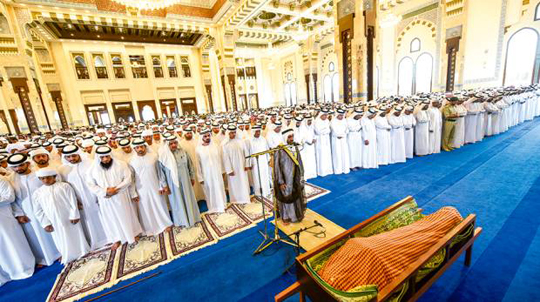
Attending his funeral prayer at Zabeel Grand Mosque was His Highness Shaikh Mohammad Bin Rashid Al Maktoum, Vice-President and Prime Minister of the UAE and Ruler of Dubai, along with Lt-General Shaikh Saif Bin Zayed Al Nahyan, Deputy Prime Minister and Minister of Interior; Shaikh Hamdan Bin Mohammad Bin Rashid Al Maktoum, Crown Prince of Dubai and Chairman of the Dubai Executive Council; and Shaikh Maktoum Bin Mohammad Bin Rashid Al Maktoum, Deputy Ruler of Dubai.

Shaikh Mohammad condoled Lt-General Al Mazeina’s family in a series of tweets on Friday morning. “The UAE has lost one of its loyal sons. Khamis Mattar Al Mazeina was a team leader and soldier who dedicated his life to serve the country. He was a father of good family, May Allah rest his soul in eternal peace.”

“My personal condolences go out to Al Mazeina’s family, friends, Dubai residents and the people of the UAE and to everyone who left a legacy to the country like Al Mazeina. He made his name in the UAE’s record of glories,” he wrote in another tweet.

Shaikh Hamdan tweeted: “May Allah rest Al Mazeina’s soul in eternal peace! I knew him very well, he was very loyal in serving his country and people. He was the man of success of his strong foundation. He did not work only for the country’s present but rather for the country’s glory and future.

We surely belong to Allah and to Him we shall return.”

In a condolence message, Mattar Al Tayer, director-general and chairman of the Board of Executive Directors of Roads and Transport Authority (RTA), said: “The UAE has lost one of its loyal sons who dedicated his entire life to serve and maintain the security of the country. I have known Al Mazeina for 25 years and our relationship was reinforced after the establishment of RTA through holding continuous meetings to discuss topics related to the work of Dubai Police. Al Mazeina was very active, dedicated and loyal. He served his country in complete sincerity to achieve peace and security for all people living in Dubai.”

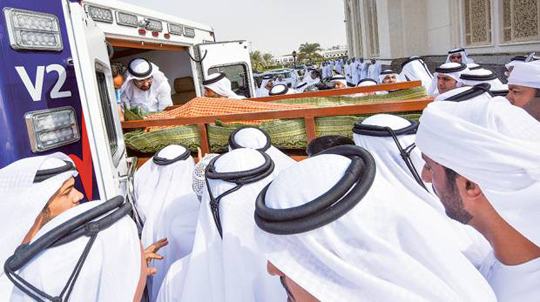
Even before the body of Al Mazeina was brought to Zabeel Grand Mosque for the funeral prayer, well-wishers had already gathered there in hundreds. Emiratis in their traditional white clothes, almost glowing under the sun, sat in the mosque in silence. A few murmurs could be heard — people reciting the Quran and offering prayers.

As the mosque filled to capacity, it was time for the routine Friday prayer. The funeral prayer followed almost immediately. Most people left as usual out of the main doors but many stayed until the body was carried out through a door near the front. People continued to offer prayers and some took videos and pictures — the last they would see of him.

Outside the mosque, cars left quickly to follow the ambulance carrying his body to Al Ghusais graveyard. Soon, there was a long line of vehicles entering the service lane leading to the cemetery, off Shaikh Mohammad Bin Zayed Road, and Dubai Police were out in full force to direct traffic.

The four-wheelers kicked up sand in the massive graveyard as they went off-road to compete for spots closer to the grave of Al Mazeina, a nondescript burial site.

Again, the crowds swelled to get a closer look, and again people offered funeral prayers. Most well-wishers were Emiratis but there were some expats too. “Lt-General Al Mazeina was a very approachable, open and humorous person. He greatly benefited Dubai Police by establishing various new departments and empowering their heads to be a force for good,” said a Pakistani employee in Dubai Police’s Human Resources Department who was at the funeral.

“He was a true gentleman. I heard about his death through colleagues on Thursday night and I came here today to pay my respects.”

Near the unmarked grave, family received condolences. There was an occasional sob here, a teary eye there. Again, the spirit of decorum hung heavy in the air.
UAE2

Emergency meeting

Lt. General Dhahi Khalfan Tamim, Deputy Chairman of Police and General Security, held an emergency meeting Friday evening to discuss administrative and procedural steps following the death of Lt. General Khamis Mattar Al Mazeina, the late Dubai Police chief.

The meeting was held on Friday at 8pm and included the late chief's assistants at Dubai Police.

Major General Khalil Ebrahim Al Mansouri, Assistant to the Dubai Police Chief for Criminal Investigation Affairs, Maj Gen Abdul Rahman Mohammad Rafei, Assistant to the Police Chief for Community Services and Preparations, Major General Mohammad Said Al Zafein, Assistant to the Police Chief for Operations Affairs and Major General Ahmad Mohammad Bin Thani, Assistant to the Dubai Police Chief for Ports Affairs, among others.

Comments

Add new comment

  • Coastaldigest.com reserves the right to delete or block any comments.
  • Coastaldigset.com is not responsible for its readers’ comments.
  • Comments that are abusive, incendiary or irrelevant are strictly prohibited.
  • Please use a genuine email ID and provide your name to avoid reject.
Agencies
July 14,2020

Dubai, Jul 14: The UAE-based parents of children under 12 stranded in India are in a tight spot with multiple airlines refusing to accept unaccompanied minors.

Starting July 12, Indians wanting to return to the UAE have been given a 15-day window to travel back on the condition that they have valid residency permits. They also have to produce a negative Covid-19 test result.

But parents of minors said they are feeling helpless as children are unable to avail of the travel opportunity despite having return permits.

"It has been more than three months since my daughter has been stuck in India. We have GDRFA approval for her but the airlines are not accepting her booking, saying she is under 12," Poonam Sapre, a Dubai-based mother, told Khaleej Times.

Her daughter Eva Sapre, 10, is in Hyderabad and is awaiting a reunion with her parents.

"She is just 10 and it has already taken an emotional toll on her. She is eager to come back and is asking me every day about her return. This is so frustrating."

Barring Emirates and Etihad, other airlines including flydubai, Air Arabia and Air India Express are not accepting unaccompanied minors. With India extending the travel freeze till July 31, normal flights are yet to resume and only special flights are allowed between India and UAE under a bilateral agreement.

Sapre said only flydubai is flying the Hyderabad-Dubai route, and the carrier has restrictions on minors travelling alone. "My daughter is too young to fly through indirect routes," claims the mother.

When Khaleej Times reached out to the airlines for comment, they confirmed that such rules on unaccompanied minors were already in place even before Covid-19 travel restrictions came into effect.

Another Dubai-based distressed parent, who did not want to be named, said her eight-year-old son is in Kerala and is unable to fly due to airline policies on unaccompanied minors.

"I called up Air India Express and they said this has been their rule even before the Covid-19 outbreak. I am appealing to them to re-consider and make an exception during these trying times so that our children can come home safely," she said.

Faced with this eventuality, some parents are forced to fly out of the UAE so they can accompany their children on the flight back home.

An Indian mother, who is currently in Mumbai, said she flew out of Dubai on Monday morning solely for the purpose of bringing back her twin daughters, aged 10.

"I had no choice. Ideally, they could have travelled together, but under these circumstances I thought it best to get them with me personally," said the mother.

Comments

Add new comment

  • Coastaldigest.com reserves the right to delete or block any comments.
  • Coastaldigset.com is not responsible for its readers’ comments.
  • Comments that are abusive, incendiary or irrelevant are strictly prohibited.
  • Please use a genuine email ID and provide your name to avoid reject.
Agencies
August 2,2020

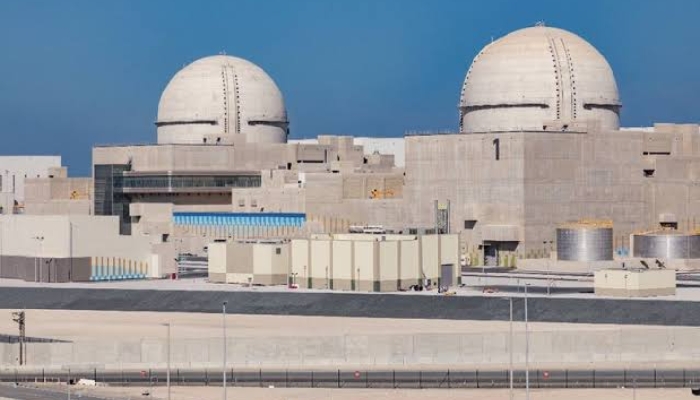
Dubai, Aug 2: The United Arab Emirates (UAE) announced on Saturday that it has started operations in the first of four reactors at the Barakah nuclear power station - the first nuclear power plant in the Arab world.

Emirates Nuclear Energy Corporation (ENEC), which is building and operating the plant with Korea Electric Power Corporation (KEPCO) said in a press release that its subsidiary Nawah Energy Company "has successfully started up Unit 1 of the Barakah Nuclear Energy Plant, located in the Al Dhafrah Region of Abu Dhabi".

That signals that Unit 1, which had fuel rods loaded in March, has achieved "criticality" - a sustained fission chain reaction.

"The start-up of Unit 1 marks the first time that the reactor safely produces heat, which is used to create steam, turning a turbine to generate electricity," said ENEC.

Barakah, which was originally scheduled to open in 2017, has been dogged by delays and is billions of dollars over budget. It has also raised myriad concerns among nuclear energy veterans who are concerned about the potential risks Barakah could visit upon the Arabian Peninsula, from an environmental catastrophe to a nuclear arms race.

Paul Dorfman, an honorary senior research fellow at the Energy Institute, University College London and founder and chair of the Nuclear Consulting Group, has criticised the Barakah reactors' "cheap and cheerful" design that he says cuts corners on safety.

Dorfman authored a report (PDF) last year detailing key safety features Barakah's reactors lack, such as a "core catcher" to literally stop the core of a reactor from breaching the containment building in the event of a meltdown. The reactors are also missing so-called Generation III Defence-In-Depth reinforcements to the containment building to shield against a radiological release resulting from a missile or fighter jet attack.

Both of these engineering features are standard on new reactors built in Europe, says Dorfman.

There have been at least 13 aerial attacks on nuclear facilities in the Middle East - more than any other region on earth.

The vulnerability of critical infrastructure in the Arabian Peninsula was further laid bare last year after Saudi Arabia's oil facilities at Abqaiq and Khurais were attacked by 18 drones and seven cruise missiles - an assault that temporarily knocked out more than half of the kingdom's oil production.

On Saturday, Dorfman reiterated his concern that there is no regional protocol in place to determine liability should an accident or incident at Barakah result in radioactive contamination spreading from the UAE to its neighbours. 

"Given Barakah has started up, because of all the well-rehearsed nuclear safety and security problems, it may be critically important that the Gulf states collectively evolve a Nuclear Accident Liability Convention, so that if anything does go wrong, victim states may have some sort of redress," Dorfman told Al Jazeera. 

The UAE has substantial oil and gas reserves, but it has made huge investments in developing alternative energy sources, including nuclear and solar.

Experts though have questioned why the UAE - which is bathed in sunlight and wind - has pushed ahead with nuclear energy - a far more expensive and riskier option than renewable energy sources.

When the UAE first announced Barakah in 2009, nuclear power was cheaper than solar and wind. But by 2012 - when the Emirates started breaking ground to build the reactors - solar and wind costs had plummeted dramatically.

Between 2009 and 2019, utility-scale average solar photovoltaic costs fell 89 percent and wind fell 43 percent, while nuclear jumped 26 percent, according to an analysis by the financial advisory and asset manager Lazard.

There are also concerns about the potential for Barakah to foment nuclear proliferation in the Middle East - a region rife with geopolitical fault lines and well-documented history of nuclear secrecy.

The UAE has sought to distance itself from the region's bad behaviour by agreeing not to enrich its own uranium or reprocess spent fuel. It has also signed up to the United Nation's nuclear watchdog's Additional Protocol, significantly enhancing inspection capabilities, and secured a 123 Agreement with the United States that allows bilateral civilian nuclear cooperation.

Comments

Add new comment

  • Coastaldigest.com reserves the right to delete or block any comments.
  • Coastaldigset.com is not responsible for its readers’ comments.
  • Comments that are abusive, incendiary or irrelevant are strictly prohibited.
  • Please use a genuine email ID and provide your name to avoid reject.
Agencies
July 31,2020

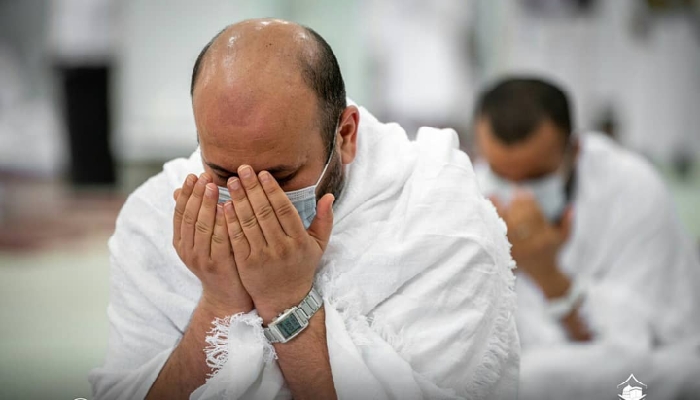
Mount Arafat, July 30: Muslim pilgrims converged Thursday on Saudi Arabia's Mount Arafat for the climax of this year's hajj, the smallest in modern times and a sharp contrast to the massive crowds of previous years.

A tight security cordon has been erected all around the foot of the rocky hill outside Mecca, also known as Jabal al-Rahma or Mount of Mercy.

Pilgrims, donning masks and observing social distancing, were brought in buses from neighbouring Mina, state television showed, as Saudi authorities impose measures to prevent a coronavirus outbreak.

They were subject to temperature checks and attended a sermon -- which state media said was translated into 10 languages -- before they set off on the climb to the summit for hours of Koran recitals and prayers to atone for their sins.

The scene was strikingly different to last year's ritual when a sea of pilgrims ascended Mount Arafat, marshalled by tens of thousands of stewards in a bid to prevent any crushes.

After sunset prayers, pilgrims will make their way down Mount Arafat to Muzdalifah, another holy site where they will sleep under the stars to prepare for the final stage of hajj, the symbolic "stoning of the devil".

It takes place on Friday and also marks the beginning of Eid al-Adha, the festival of sacrifice.

The hajj, one of the five pillars of Islam and a must for able-bodied Muslims at least once in their lifetime, is usually one of the world's largest religious gatherings.

But only up to 10,000 people already residing in the kingdom will participate in this year's ritual, compared with 2019's gathering of some 2.5 million from around the world.

"You are not our guests but those of God, the custodian of the two holy mosques (Saudi Arabia's King Salman) and the nation," Hajj Minister Mohammad Benten said in a video released by the media ministry on Wednesday.

Security cordon

A security cordon has been thrown around the holy sites to prevent any security breaches, an interior ministry spokesman said.

Riyadh faced strong criticism in 2015 when some 2,300 worshippers were killed in the deadliest stampede in the gathering's history.

But this year, those risks are greatly reduced by the much smaller crowd.

The pilgrims have all been tested for the virus, and foreign journalists were barred from this year's hajj, usually a huge global media event.

As part of the rites completed over five days in the holy city of Mecca and its surroundings, the pilgrims converged on Mount Arafat after spending the night in Mina.

A district of Mecca, Mina sits in a narrow valley surrounded by rocky mountains, and is transformed each year into a vast encampment for pilgrims.

They began the hajj on Wednesday with their first "tawaf", the circumambulation of the Kaaba, a large structure in Mecca’s Grand Mosque towards which Muslims around the world pray.

The Kaaba is draped in a black cloth embroidered in gold with Koranic verses and known as the kiswa, which is changed each year during the pilgrimage.

Pilgrims were brought inside the mosque in small batches, walking along paths marked on the floor, in sharp contrast to the normal sea of humanity that swirls around the Kaaba during hajj.

Comments

Add new comment

  • Coastaldigest.com reserves the right to delete or block any comments.
  • Coastaldigset.com is not responsible for its readers’ comments.
  • Comments that are abusive, incendiary or irrelevant are strictly prohibited.
  • Please use a genuine email ID and provide your name to avoid reject.