



UK announces new visa crackdown on non-EU nationals

November 4, 2016

London, Nov 4: In a crackdown to curb its soaring immigration figures, the UK government has announced changes to its visa policy for non-EU nationals, which will affect a large number of Indians especially IT professionals.visa
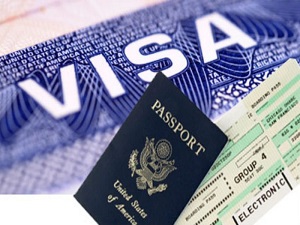
Under the new visa rules announced last evening by the UK Home Office, anyone applying after November 24 under the Tier 2 intra-company transfer (ICT) category would be required to meet a higher salary threshold requirement of 30,000 pounds from the earlier 20,800 pounds.

The ICT route is largely used by Indian IT companies in Britain and the UK's Migration Advisory Committee (MAC) had found earlier this year that Indian IT workers accounted for nearly 90 per cent of visas issued under this route.

The changes come just days before British Prime Minister Theresa May lands in India on Sunday for her three-day visit.

"The first of two phases of changes to Tier 2, announced by the government in March following a review by the Independent Migration Advisory Committee, will affect applications made on or after November 24 unless stated otherwise," a UK Home Office statement said.

Besides the Tier 2 ICT salary threshold hike, the other changes announced include increasing the Tier 2 (General) salary threshold for experienced workers to 25,000 pounds, with some exemptions; reducing the Tier 2 (ICT) graduate trainee salary threshold to 23,000 pounds and increasing the number of places to 20 per company per year; and closing the Tier 2 (ICT) skills transfer sub-category.

A number of changes have also been announced for the Tier 4 category, which covers maintenance requirements for the Doctorate Extension Scheme.

Nationals outside the European Union, including Indians, will also be affected by new English language requirements when applying for settlement as a family member after two and a half years in the UK on a five-year route to residency settlement in the UK.

The new requirement will apply to partners and parents whose current leave to remain in the UK under the family immigration rules is due to expire on or after May 1, 2017.

The changes follow advice by the MAC earlier this year to curb the Tier 2 ICT route and reduce reliance on foreign workers.

"(Immigration) is not serving to increase the incentive to employers to train and upskill the UK workforce. Ready access to a pool of skilled IT professionals in India is an example of this," the MAC report had said in its findings.

"We did not see any substantive evidence of long-standing reciprocal arrangements whereby UK staff are given the opportunity to gain skills, training and experience from working in India," it noted.

The MAC had added that the evidence indicates that multinational companies with a presence in India had developed a competitive advantage in delivering IT projects in the UK.

"They have developed a delivery model, whereby significant elements of projects are delivered offshore in India, taking advantage of the fact that Indian salaries are lower than in the UK for equivalent workers.

"Indeed, partners told us that India currently has a competitive advantage in training IT workers and in the time it would take to fully upskill the native population, technology would have moved on," the report concluded.

The new rules follow further tightening of the Tier 2 category, which came into force in April this year.

"The UK government's reforms to Tier 2 work visas are intended to ensure that businesses are able to attract the skilled people they need, but also see that they get far better at recruiting and training UK workers first," then UK Immigration minister James Brokenshire had said.

Comments

Add new comment

  • Coastaldigest.com reserves the right to delete or block any comments.
  • Coastaldigset.com is not responsible for its readers’ comments.
  • Comments that are abusive, incendiary or irrelevant are strictly prohibited.
  • Please use a genuine email ID and provide your name to avoid reject.
News Network
March 18,2020

Melbourne, Mar 18: Australian Prime Minister Scott Morrison on Wednesday warned its citizens not to travel abroad and banned "non-essential" gatherings of 100 people or more as the government declared the deadly coronavirus, that has infected over 450 people in the country, a "human biosecurity emergency".

Prime Minister Morrison on Wednesday said Australians should abandon all overseas travel because of the coronavirus epidemic. There have been 40 new cases since Tuesday.

Of the 454 confirmed cases in Australia, 43 have recovered and 5 have died from the COVID-19, according to the official figures.

Morrison declared a national "human biosecurity emergency" and ordered a halt to "non-essential" indoor gatherings of more than 100 people, on top of an existing ban on outdoor events of more than 500.

He said, "We haven't seen this sort of thing in Australia since the end of the First World War. This is a once-in-a-100-year-type event," Morrison said.

"Life is changing in Australia, as it is changing all around the world. Life is going to continue to change. The travel advice to every Australian is do not travel abroad. Do not go overseas."

However, schools across the country were still to remain open.

Morrison said Australia should prepare for "at least six months" of disruption as health authorities attempt to get on top of the coronavirus.

"For those of you thinking about going overseas for the school holidays, don’t. Don't go overseas," he said.

Morrison said there would be no short-term, quick fix to deal with the COVID-19 crisis in Australia, and warned that "tens of thousands of jobs" could be lost.

Responding to the panic buying, the prime minister urged the public to "Stop hoarding."

"I can't be more blunt about it. Stop it. It is not sensible, it is not helpful and it has been one of the most disappointing things I have seen in Australian behaviour in response to this crisis," he said.

On Wednesday, the New South Wales recorded a massive jump in new 59 cases as travellers returned from overseas. The cases jumped from 210 to 269 in the past 24 hours, according to the media reports here.

Queensland's total number of confirmed cases stood at 94.

State Premier Annastacia Palaszczuk said it is now "a different world" from just last week.

For Victoria, the Premier Daniel Andrew said the government could also ban gatherings of fewer than 100 people, noting he could not rule out further changes.

Chief Health Officer Brett Sutton said the spike in cases has been due to people who have travelled overseas.

Sutton said that the transmission in Victoria was not because of community transition like Italy.

Sutton has continued to urge people to wash their hands, socially distance and stay home if they are unwell.

"These are critical measures to be applied regardless of the 100 and 500 threshold,” he said.

In Western Australia, Health Minister Roger Cook said four new coronavirus cases have been confirmed overnight, taking the State's total to 35.

McGowan also condemned panic buyers in supermarkets as "jerks, drongos and bloody idiots."

He said there was "plenty of food to go round" and no need for people to buy in excessive quantities.

The outbreak, which first emerged in China's Wuhan city last year, has marched across the globe, infecting 198,006 people and killing 7,948, according to a tracker maintained by the Johns Hopkins University.

Comments

Add new comment

  • Coastaldigest.com reserves the right to delete or block any comments.
  • Coastaldigset.com is not responsible for its readers’ comments.
  • Comments that are abusive, incendiary or irrelevant are strictly prohibited.
  • Please use a genuine email ID and provide your name to avoid reject.
News Network
January 6,2020

Aboard Air Force One, Jan 6: US President Donald Trump threatened sanctions against Baghdad on Sunday after Iraq's parliament called on US troops to leave the country, and the president said if troops did leave, Baghdad would have to pay Washington for the cost of the air base there.

"We have a very extraordinarily expensive air base that's there. It cost billions of dollars to build, long before my time. We're not leaving unless they pay us back for it," Trump told reporters on Air Force One.

Trump said that if Iraq asked US forces to leave and it was not done on a friendly basis, "we will charge them sanctions like they've never seen before ever. It'll make Iranian sanctions look somewhat tame."

Comments

Add new comment

  • Coastaldigest.com reserves the right to delete or block any comments.
  • Coastaldigset.com is not responsible for its readers’ comments.
  • Comments that are abusive, incendiary or irrelevant are strictly prohibited.
  • Please use a genuine email ID and provide your name to avoid reject.
Agencies
July 3,2020

The dollar's dominance will slowly melt away over the coming year on weakening global demand and a sombre U.S. economic outlook, according to a Reuters poll of currency forecasters whose views depend on there being no second coronavirus shock.

Despite fears a surge in new Covid-19 cases would delay economies reopening and stymie a tentative recovery, world stocks have rallied - with the S&P 500 finishing higher in June, marking its biggest quarterly percentage gain since the height of the technology boom in 1998.

Caught between bets in favour of riskier investments, weak U.S. economic prospects as well as an easing in the thirst for dollars after the Federal Reserve flooded markets with liquidity, the greenback fell nearly 1.0 per cent last month. It was its worst monthly performance since December.

While there was a dire prognosis from the top U.S. medical expert on the coronavirus' spread, the June 25-July 1 poll of over 70 analysts showed weak dollar projections as Fed Chair Jerome Powell on Monday reiterated the economic outlook for the world's largest economy was uncertain.

"The dollar rises in two instances: when you see risk off or when there is a situation where the U.S. is leading the global recovery, and we don't think that's going to be the case anytime soon," said Gavin Friend, senior FX strategist at NAB Group in London.

"The U.S. is playing fast and loose with the virus, and chronologically they're behind the rest of the world."

Currency speculators, who had built up trades against the dollar to the highest in two years during May, increased their out-of-favour dollar bets further last week, the latest positioning data showed.

About 80 per cent of analysts, 53 of 66, said the likely path for the dollar over the next six months was to trade around current levels, alternating between slight gains and losses in a range. That suggests the greenback may be at a crucial crossroad as more currency strategists have turned bearish.

But more than 90 per cent, or 63 of 68, said a second shock from the pandemic would push the dollar higher. Five said it would push the U.S. currency lower.

Much will also depend on debt servicing and repayments by Asian, European and other international borrowers in U.S. dollars.

While an early shortage of dollars in March from the pandemic's first shock pushed the Fed to open currency swap lines with major central banks, international funding strains have eased significantly since. In recent weeks, usage of the facility has reduced dramatically.

That trend is expected to continue over the next six months with major central banks' usage of swap lines to "stay around current levels", according to 32 of 46 analysts. While 13 predicted a sharp drop, only one respondent said use of them would "rise sharply".

The dollar index, which measures the greenback's strength against six other major currencies, has slipped over 5 per cent since touching a more than three-year high in March.

When asked which currencies would perform better against the dollar by end-December, a touch over half of 49 respondents said major developed market ones, with the remaining almost split between commodity-linked and emerging market currencies.

"The dollar is so overvalued, and has been overvalued for a long time, it's time now for it to come back down again, as we head towards the (U.S.) election," added NAB's Friend.

Over the last quarter, the euro has staged a 1.8 per cent comeback after falling by a similar margin during the first three months of the year. For the month of June, the euro was up 1.2 per cent against the dollar.

The single currency was now expected to gain about 2.5 per cent to trade at $1.15 in a year from around $1.12 on Wednesday, slightly stronger than $1.14 predicted last month. While those findings are similar to what analysts have been predicting for nearly two years, there was a clear shift in their outlook for the euro, with the range of forecasts showing higher highs and higher lows from last month.

"In comparison to even a month or two ago, the outlook in Europe has improved significantly," said Lee Hardman, currency strategist at MUFG.

"I think that makes the euro look relatively more attractive and cheap against the likes of the dollar. We're not arguing strongly for the euro to surge higher, we're just saying, after the weakness we have seen in recent years, there is the potential for that weakness to start to reverse."

Comments

Add new comment

  • Coastaldigest.com reserves the right to delete or block any comments.
  • Coastaldigset.com is not responsible for its readers’ comments.
  • Comments that are abusive, incendiary or irrelevant are strictly prohibited.
  • Please use a genuine email ID and provide your name to avoid reject.