UK MP calls on India to end demonetisation stress for NRIs

December 7, 2016

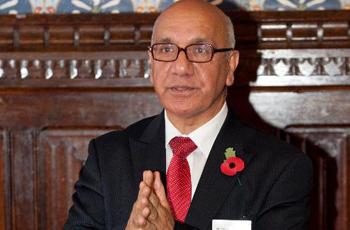
London, Dec 7: Britain's longest serving Indian- origin MP Virendra Sharma has called the Indian government to end the uncertainty surrounding demonetisation of Rs 500 and Rs 1,000 notes for NRIs and PIOs.

SharmaThe 69-year-old Labour party MP has received several calls and letters on the issue from his constituents in the heavily Indian-origin area of Ealing, Southall, in south-west London.

"Still a month after the announcementof the demonetisation of Rs 500 and Rs 1,000 notes millions of NRIs are living with uncertainty. The stress and strain of not knowing whether families will lose money," Sharma said.

"Thousandsof families have a small amount of currency at home, to save exchangingmoney at the airport. These are the people that are accidentally being punished. Having a few thousands rupees does not make you a money launderer, and still they are suffering," he added.

The India-born MP wants the Indian Government to authorise Indian banks with operations in the UK to open accounts for deposits of Indian Rupees.

"This money should then be held and made available for withdrawalonly in India. This would protect the economy, but still offer freedom tomany thousands of Indian citizens and NRIs not based in India," he said.

The demonetisation move has rattled many British-Indians, who make up 2.5 per cent of the population of England and Wales according to a 2011 UK government census.

Britain's longest-serving Indian-origin lawmaker Keith Vaz has already appealed to the Narendra Modi government to extend the deadline for foreign nationals by at least six months.

He has also written to Bank of England Governor Mark Carney requesting him to allow British Indians to exchange their banknotes in the UK.

Comments

Add new comment

  • Coastaldigest.com reserves the right to delete or block any comments.
  • Coastaldigset.com is not responsible for its readers’ comments.
  • Comments that are abusive, incendiary or irrelevant are strictly prohibited.
  • Please use a genuine email ID and provide your name to avoid reject.
Agencies
June 7,2020

Moscow, Jun 7: OPEC, Russia and allies agreed on Saturday to extend record oil production cuts until the end of July, prolonging a deal that has helped crude prices double in the past two months by withdrawing almost 10% of global supplies from the market.

The group, known as OPEC+, also demanded countries such as Nigeria and Iraq, which exceeded production quotas in May and June, compensate with extra cuts in July to September.

OPEC+ had initially agreed in April that it would cut supply by 9.7 million barrels per day (bpd) during May-June to prop up prices that collapsed due to the coronavirus crisis. Those cuts were due to taper to 7.7 million bpd from July to December.

“Demand is returning as big oil-consuming economies emerge from pandemic lockdown. But we are not out of the woods yet and challenges ahead remain,” Saudi Energy Minister Prince Abdulaziz bin Salman told the video conference of OPEC+ ministers.

Benchmark Brent crude climbed to a three-month high on Friday above $42 a barrel, after diving below $20 in April. Prices still remain a third lower than at the end of 2019.

“Prices can be expected to be strong from Monday, keeping their $40 plus levels,” said Bjornar Tonhaugen from Rystad Energy.

Saudi Arabia, OPEC’s de facto leader, and Russia have to perform a balancing act of pushing up oil prices to meet their budget needs while not driving them much above $50 a barrel to avoid encouraging a resurgence of rival U.S. shale production.

It was not immediately clear whether Saudi Arabia, the United Arab Emirates and Kuwait would extend beyond June their additional, voluntary cuts of 1.18 million bpd, which are not part of the deal.

BULGING INVENTORIES

The April deal was agreed under pressure from U.S. President Donald Trump, who wants to avoid U.S. oil industry bankruptcies.

Trump, who previously threatened to pull U.S. troops out of Saudi Arabia if Riyadh did not act, spoke to the Russian and Saudi leaders before Saturday’s talks, saying he was happy with the price recovery.

While oil prices have partially recovered, they are still well below the costs of most U.S. shale producers. Shutdowns, layoffs and cost cutting continue across the United States.

“I applaud OPEC-plus for reaching an important agreement today which comes at a pivotal time as oil demand continues to recover and economies reopen around the world,” U.S. Energy Secretary Dan Brouillette wrote on Twitter after the extension.

As global lockdowns ease, oil demand is expected to exceed supply sometime in July but OPEC has yet to clear 1 billion barrels of excess oil inventories accumulated since March.

Rystad’s Tonhaugen said Saturday’s decisions would help OPEC reduce inventories at a rate of 3 million to 4 million bpd in July-August. “The quicker stocks fall, the higher prices will get,” he said.

Nigeria’s petroleum ministry said Abuja backed the idea of compensating for its excessive output in May and June.

Iraq, with one of the worst compliance rates in May, agreed to extra cuts although it was not clear how Baghdad would reach agreement with oil majors on curbing Iraqi output.

Iraq produced 520,000 bpd above its quota in May, while overproduction by Nigeria was 120,000 bpd, Angola’s was 130,000 bpd, Kazakhstan’s was 180,000 bpd and Russia’s was 100,000 bpd, OPEC+ data showed.

OPEC+’s joint ministerial monitoring committee, known as the JMMC, will meet monthly until December to review the market, compliance and recommend levels of cuts. JMMC’s next meeting is scheduled for June 18.

OPEC and OPEC+ will hold their next scheduled meetings on Nov. 30-Dec. 1.

Comments

Add new comment

  • Coastaldigest.com reserves the right to delete or block any comments.
  • Coastaldigset.com is not responsible for its readers’ comments.
  • Comments that are abusive, incendiary or irrelevant are strictly prohibited.
  • Please use a genuine email ID and provide your name to avoid reject.
Agencies
June 2,2020

Washington, Jun 2: There is no place for hate and racism in the society, Microsoft CEO Satya Nadella has said, asserting that empathy and shared understanding are a start, but more needs to be done. Nadella’s remarks come in the wake of the custodial death of George Floyd, a 46-year-old African-American man who was pinned to the ground in Minneapolis on May 25 by a white police officer who kneeled on his neck as he gasped for breath.

“There is no place for hate and racism in our society. Empathy and shared understanding are a start, but we must do more,” Nadella said in a tweet on Monday.

“I stand with the Black and African American community and we are committed to building on this work in our company and in our communities,” Nadella said.

A day earlier, Google CEO Sunder Pichai expressed solidarity with the African-American community.

“Today on US Google & YouTube homepages we share our support for racial equality in solidarity with the Black community and in memory of George Floyd, Breonna Taylor, Ahmaud Arbery & others who don’t have a voice,” Pichai wrote on Twitter on Sunday.

“For those feeling grief, anger, sadness & fear, you are not alone,” Pichai said, sharing a screenshot of the Google search home page which said, “We stand in support of racial equality, and all those who search for it.”

Nadella’s Microsoft also said they will be using the platform to amplify voices from the Black and African American community at the company.

Nadella had also spoken out a few months ago about the discriminatory Citizenship Amendment Act passed in his native country. Talking to BuzzFeed’s editor-in-chief, Ben Smith, in Manhattan, Nadella said what’s happening in the country is “sad.”

“I think what is happening is sad. I feel, and in fact quite frankly, now being informed (and) shaped by the two amazing American things that I’ve observed which is both, it’s technology reaching me where I was growing up and its immigration policy and even a story like mine being possible in a country like this.

“I think, it’s just bad, if anything, I would love to see a Bangladeshi immigrant who comes to India and creates the next unicorn in India or becomes the CEO of Infosys. That should be the aspiration. If I had to sort of mirror what happened to me in the US, I hope that’s what happens in India,” Microsoft’s India-born CEO was quoted as saying by BuzzFeed.

Comments

Add new comment

  • Coastaldigest.com reserves the right to delete or block any comments.
  • Coastaldigset.com is not responsible for its readers’ comments.
  • Comments that are abusive, incendiary or irrelevant are strictly prohibited.
  • Please use a genuine email ID and provide your name to avoid reject.
News Network
June 2,2020

Jun 2: A new female billionaire has emerged from one of Asia's most-expensive breakups.

Du Weimin, the chairman of Shenzhen Kangtai Biological Products Co., transferred 161.3 million shares of the vaccine maker to his ex-wife, Yuan Liping, according to a May 29 filing, immediately catapulting her into the ranks of the world's richest.

The stock was worth $3.2 billion as of Monday's close.

Yuan, 49 this year, owns the shares directly, but signed an agreement delegating the voting rights to her ex-husband, the filing shows. The Canadian citizen, who resides in Shenzhen, served as a director of Kangtai between May 2011 and August 2018. She's now the vice general manager of subsidiary Beijing Minhai Biotechnology Co. Yuan holds a bachelor's degree in economics from Beijing's University of International Business and Economics.

Kangtai shares have more than doubled in the past year and have continued their ascent since February, when the company announced a plan to develop a vaccine to fight the coronavirus. They slipped for a second day Tuesday following news of the divorce terms, losing 3.1% as of 9:43 a.m. in Hong Kong and bringing the company's market value to $12.9 billion.

Du's net worth has now dropped to about $3.1 billion from $6.5 billion before the split, excluding his pledged shares.

The 56-year-old was born into a farming family in China's Jiangxi province. After studying chemistry in college, he began working in a clinic in 1987 and became a sales manager for a biotech company in 1995, according to the prospectus of Kangtai's 2017 initial public offering. In 2009, Kangtai acquired Minhai, the company Du founded in 2004, and he became the chairman of the combined entity.

China's rapidly growing economy has been an engine for the country's richest, and Du is not the only tycoon who's had to pay a steep price for a divorce. In 2012, Wu Yajun, at one point the nation's richest woman, transferred a stake worth about $2.3 billion to her ex-husband, Cai Kui, who co-founded developer Longfor Group Holdings Ltd. In 2016, tech billionaire Zhou Yahui gave $1.1 billion of shares in his online gaming company, Beijing Kunlun Tech Co., to ex-wife Li Qiong after a civil court settlement.

Sometimes, a goodbye can be time-consuming too. South Korean tycoon Chey Tae-won's wife filed a lawsuit in December asking for a 42.3% stake in SK Holdings Co. valued at $1.2 billion. That would make her the second-largest shareholder of the company should she win the case, which is still ongoing.

The most expensive divorce in history is that of Jeff and MacKenzie Bezos. The Amazon.com Inc. founder gave 4% of the online retailer to Mackenzie, who now has a $48 billion fortune and is the world's fourth-richest woman.

Comments

Add new comment

  • Coastaldigest.com reserves the right to delete or block any comments.
  • Coastaldigset.com is not responsible for its readers’ comments.
  • Comments that are abusive, incendiary or irrelevant are strictly prohibited.
  • Please use a genuine email ID and provide your name to avoid reject.