



UN demands action after Sri Lanka anti-Muslim riot

June 17, 2014

Alutgama, Jun 17: Sri Lanka slapped an indefinite curfew in a popular tourist region on Monday after rioting Buddhist mobs killed three Muslims in a surge of religious violence that triggered international concern.
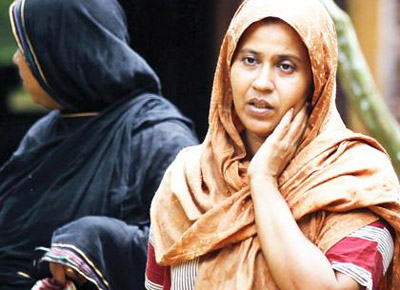
Riot-victim grievesLocal community leaders accused authorities of doing little to prevent Sunday night's carnage that made hundreds of Muslims homeless after attacks on their homes, shops, factories, mosques and even a nursery.

The most senior Muslim member of President Mahinda Rajapakse's government threatened to resign at the decision to allow militant Buddhists to rally in the flashpoint region.

"Three deaths have occurred and 78 people have been seriously wounded in the mob attacks... Places of Muslim religious worship have also been attacked with total impunity," Justice Minister Rauf Hakeem said as he toured the damage in the neighbouring towns of Alutgama and Beruwala.

"The government allowed the Bodu Bala Sena (BBS) to hold their gathering and therefore they must take responsibility for what has happened," he said, referring to a hardline outfit better known as the Buddhist Force.

Hakeem told reporters that he was now under pressure from his own supporters to quit the government to protest the failure to prevent the attacks, the latest in a series of violent incidents involving the BBS.

The UN human rights chief Navi Pillay expressed concern that the religious riots could spread to other areas of Sri Lanka and demanded that Colombo immediately bring the perpetrators of Sunday's attacks to justice.

"The government must urgently do everything it can to arrest this violence, curb the incitement and hate speech which is driving it, and protect all religious minorities," Pillay said in a statement issued in Geneva.

"I am very concerned this violence could spread to Muslim communities in other parts of the country," she added.

The United States, which has led international condemnation of Sri Lanka's human rights record, had also urged Colombo to end the violence.

The unrest erupted on Sunday night when followers of the BBS staged a protest over a recent road rage incident in the area.

After stones were allegedly thrown at them, the BBS supporters then tore through the two towns, attacking people on the street and setting fire to property and vehicles.

Local residents said police did little to protect them when the Buddhist mobs started their onslaught around sundown in the mainly Muslim towns which are around 60 kilometres (37 miles) south of the capital Colombo.

Police fired teargas and imposed a night-time curfew but the violence went on for several hours, according to residents.

"We pleaded with the police to come and stop the mob attacking our houses but the police did nothing," said Mujahedeen, a resident of Alutgama's Milton Road where around a dozen buildings were set on fire.

Police chief NK Illangakoon said the situation was "improving" although the curfew would remain overnight Monday.

He said eight people had been arrested in connection with the riots, but added that an unspecified number of them had already been freed on bail.

President urges 'restraint'

Both towns are popular beach resorts frequented by international tourists, but there were no reports of any foreigners or hotels being caught up in the violence.

However, hotels told their guests to remain indoors while Western embassies advised their nationals to avoid travelling to the region.

Rajapakse, currently in Bolivia, said in a statement that he would not allow "anyone to take the law into their own hands" and urged "restraint".

The attacks are the latest in a series of religious clashes to hit the island following unrest in January and also last year when Buddhist mobs attacked a mosque in the capital Colombo.

BBS leader, Buddhist monk Galagodaatte Gnanasara, is currently on bail after being arrested in May on a charge of insulting the Quran.

Sri Lanka, facing an international probe of its war record in crushing separatists Tamil rebels in may 2009, is also criticised for its alleged failure to protect minority religious groups.

Muslims make up about 10 percent of Sri Lanka's 20 million population.

Normal
0

false
false
false

EN-US
X-NONE
X-NONE

MicrosoftInternetExplorer4

UN demands action after Sri Lanka anti-Muslim riot

Alutgama, Jun 17: Sri Lanka slapped an indefinite curfew in a popular tourist region on Monday after rioting Buddhist mobs killed three Muslims in a surge of religious violence that triggered international concern.

Local community leaders accused authorities of doing little to prevent Sunday night's carnage that made hundreds of Muslims homeless after attacks on their homes, shops, factories, mosques and even a nursery.

The most senior Muslim member of President Mahinda Rajapakse's government threatened to resign at the decision to allow militant Buddhists to rally in the flashpoint region.

"Three deaths have occurred and 78 people have been seriously wounded in the mob attacks... Places of Muslim religious worship have also been attacked with total impunity," Justice Minister Rauf Hakeem said as he toured the damage in the neighbouring towns of Alutgama and Beruwala.

"The government allowed the Bodu Bala Sena (BBS) to hold their gathering and therefore they must take responsibility for what has happened," he said, referring to a hardline outfit better known as the Buddhist Force.

Hakeem told reporters that he was now under pressure from his own supporters to quit the government to protest the failure to prevent the attacks, the latest in a series of violent incidents involving the BBS.

The UN human rights chief Navi Pillay expressed concern that the religious riots could spread to other areas of Sri Lanka and demanded that Colombo immediately bring the perpetrators of Sunday's attacks to justice.

"The government must urgently do everything it can to arrest this violence, curb the incitement and hate speech which is driving it, and protect all religious minorities," Pillay said in a statement issued in Geneva.

"I am very concerned this violence could spread to Muslim communities in other parts of the country," she added.

The United States, which has led international condemnation of Sri Lanka's human rights record, had also urged Colombo to end the violence.

The unrest erupted on Sunday night when followers of the BBS staged a protest over a recent road rage incident in the area.

After stones were allegedly thrown at them, the BBS supporters then tore through the two towns, attacking people on the street and setting fire to property and vehicles.

Local residents said police did little to protect them when the Buddhist mobs started their onslaught around sundown in the mainly Muslim towns which are around 60 kilometres (37 miles) south of the capital Colombo.

Police fired teargas and imposed a night-time curfew but the violence went on for several hours, according to residents.

"We pleaded with the police to come and stop the mob attacking our houses but the police did nothing," said Mujahedeen, a resident of Alutgama's Milton Road where around a dozen buildings were set on fire.

Police chief NK Illangakoon said the situation was "improving" although the curfew would remain overnight Monday.

He said eight people had been arrested in connection with the riots, but added that an unspecified number of them had already been freed on bail.

President urges 'restraint'

Both towns are popular beach resorts frequented by international tourists, but there were no reports of any foreigners or hotels being caught up in the violence.

However, hotels told their guests to remain indoors while Western embassies advised their nationals to avoid travelling to the region.

Rajapakse, currently in Bolivia, said in a statement that he would not allow "anyone to take the law into their own hands" and urged "restraint".

The attacks are the latest in a series of religious clashes to hit the island following unrest in January and also last year when Buddhist mobs attacked a mosque in the capital Colombo.

BBS leader, Buddhist monk Galagodaatte Gnanasara, is currently on bail after being arrested in May on a charge of insulting the Quran.

Sri Lanka, facing an international probe of its war record in crushing separatists Tamil rebels in may 2009, is also criticised for its alleged failure to protect minority religious groups.

Muslims make up about 10 percent of Sri Lanka's 20 million population.

Comments

Add new comment

  • Coastaldigest.com reserves the right to delete or block any comments.
  • Coastaldigset.com is not responsible for its readers’ comments.
  • Comments that are abusive, incendiary or irrelevant are strictly prohibited.
  • Please use a genuine email ID and provide your name to avoid reject.
News Network
June 19,2020

London, Jun 19: Malala Yousafzai, the youngest Nobel Peace Prize winner who once took a bullet for campaigning for girls' education in Pakistan, was over the moon on Friday after completing her degree in Philosophy, Politics and Economics at Britain's prestigious Oxford University.

Malala, 22, who attended Oxford's Lady Margaret Hall college, took to Twitter to share two pictures that show her celebrating the milestone with her family.

"Hard to express my joy and gratitude right now as I completed my Philosophy, Politics and Economics degree at Oxford," she said in the tweet, accompanied by two pictures - one showing her sitting with her family in front of a cake that says: 'Happy Graduation Malala', and the other in which she is covered with cake smiling for the camera.

In the tweet, the famed human rights activist also revealed her plans for the immediate future - Netflix, reading and sleeping.

"I don't know what's ahead. For now, it will be Netflix, reading and sleep," she wrote.

Malala was shot in the head by the Taliban militants in December 2012 for campaigning for female education in the Swat Valley in northeastern Pakistan.

Severely wounded, she was airlifted from one military hospital in Pakistan to another and later flown to the UK for treatment.

After the attack, the Taliban released a statement saying that they would target Malala again if she survived.

At the age of 17, Malala became the youngest recipient of the Nobel Peace Prize for her education advocacy in 2014 when she shared the coveted honour with India's social activist Kailash Satyarthi.

Unable to return to Pakistan after her recovery, she moved to Britain, setting up the Malala Fund and supporting local education advocacy groups with a focus on Pakistan, Nigeria, Jordan, Syria and Kenya.

The Taliban, who are against girls' education, have destroyed many schools in Pakistan.

Comments

Add new comment

  • Coastaldigest.com reserves the right to delete or block any comments.
  • Coastaldigset.com is not responsible for its readers’ comments.
  • Comments that are abusive, incendiary or irrelevant are strictly prohibited.
  • Please use a genuine email ID and provide your name to avoid reject.
News Network
June 2,2020

London/Milan, Jun 2: World Health Organization experts and a range of other scientists said on Monday there was no evidence to support an assertion by a high profile Italian doctor that the coronavirus causing the COVID-19 pandemic has been losing potency.

Professor Alberto Zangrillo, head of intensive care at Italy's San Raffaele Hospital in Lombardy, which bore the brunt of Italy's COVID-19 epidemic, on Sunday told state television that the new coronavirus "clinically no longer exists".

But WHO epidemiologist Maria Van Kerkhove, as well as several other experts on viruses and infectious diseases, said Zangrillo's comments were not supported by scientific evidence.

There is no data to show the new coronavirus is changing significantly, either in its form of transmission or in the severity of the disease it causes, they said.

"In terms of transmissibility, that has not changed, in terms of severity, that has not changed," Van Kerkhove told reporters.

It is not unusual for viruses to mutate and adapt as they spread, and the debate on Monday highlights how scientists are monitoring and tracking the new virus. The COVID-19 pandemic has so far killed more than 370,000 people and infected more than 6 million.

Martin Hibberd, a professor of emerging infectious disease at the London School of Hygiene & Tropical Medicine, said major studies looking at genetic changes in the SARS-CoV-2 virus that causes COVID-19 did not support the idea that it was becoming less potent, or weakening in any way.

"With data from more than 35,000 whole virus genomes, there is currently no evidence that there is any significant difference relating to severity," he said in an emailed comment.

Zangrillo, well known in Italy as the personal doctor of former Prime Minister Silvio Berlusconi, said his comments were backed up by a study conducted by a fellow scientist, Massimo Clementi, which Zangrillo said would be published next week.

Zangrillo told Reuters: "We have never said that the virus has changed, we said that the interaction between the virus and the host has definitely changed."

He said this could be due either to different characteristics of the virus, which he said they had not yet identified, or different characteristics in those infected.

The study by Clementi, who is director of the microbiology and virology laboratory of San Raffaele, compared virus samples from COVID-19 patients at the Milan-based hospital in March with samples from patients with the disease in May.

"The result was unambiguous: an extremely significant difference between the viral load of patients admitted in March compared to" those admitted last month, Zangrillo said.

Oscar MacLean, an expert at the University of Glasgow's Centre for Virus Research, said suggestions that the virus was weakening were "not supported by anything in the scientific literature and also seem fairly implausible on genetic grounds."

Comments

Add new comment

  • Coastaldigest.com reserves the right to delete or block any comments.
  • Coastaldigset.com is not responsible for its readers’ comments.
  • Comments that are abusive, incendiary or irrelevant are strictly prohibited.
  • Please use a genuine email ID and provide your name to avoid reject.
Agencies
July 15,2020

Huawei will be completely removed from the UK's 5G networks by the end of 2027, the UK government announced on Tuesday after a review by the country's National Cyber Security Centre (NCSC) on the impact of US sanctions against the Chinese telecommunications giant.

In the lead up to this complete removal of all Huawei kit from UK networks, there will be a total ban on the purchase of any new 5G kit after December 31, 2020.

The decision was taken at a meeting of the UK's National Security Council (NSC) chaired by Prime Minister Boris Johnson, in response to new US sanctions against the telecom major imposed in May which removed the firm's access to products which have been built based on US semiconductor technology.

5G will be transformative for our country, but only if we have confidence in the security and resilience of the infrastructure it is built upon, said Oliver Dowden, UK Secretary of State for Digital, Culture, Media and Sport (DCMS).

Following US sanctions against Huawei and updated technical advice from our cyber experts, the government has decided it necessary to ban Huawei from our 5G networks. No new kit is to be added from January 2021, and UK 5G networks will be Huawei free by the end of 2027. This decisive move provides the industry with the clarity and certainty it needs to get on with delivering 5G across the UK, he said.

The minister, who laid out the details of the UK's ban on Huawei in the House of Commons, said the government will now seek to legislate with a new Telecoms Security Bill to put in place the powers necessary to implement the tough new telecoms security framework.

By the time of the next election (2024) we will have implemented in law an irreversible path for the complete removal of Huawei equipment from our 5G networks, said Dowden.

The new law will give the government the national security powers to impose these new controls on high risk vendors and create extensive security duties on network operators to drive up standards, DCMS said.

Technical experts at the NCSC reviewed the consequences of the US sanctions and concluded that Huawei will need to do a major reconfiguration of its supply chain as it will no longer have access to the technology on which it currently relies and there are no alternatives which we have sufficient confidence in.

They found the new restrictions make it impossible to continue to guarantee the security of Huawei equipment in the future.

After a ban on the purchase of new Huawei kit for 5G from next year, the aim is to completely remove the Chinese vendor's influence on 5G networks across the UK by the end of 2027.

The DCMS said Tuesday's decision takes into account the UK's specific national circumstances and how the risks from these sanctions are manifested in the country.

The existing restrictions on Huawei in sensitive and critical parts of the network remain in place, it highlighted.

The DCMS said the US action also affects Huawei products used in the UK's full fibre broadband networks. However, the UK has managed Huawei's presence in the UK's fixed access networks since 2005 and we also need to avoid a situation where broadband operators are reliant on a single supplier for their equipment.

As a result, following security advice from experts, DCMS is advising full fibre operators to transition away from purchasing new Huawei equipment. A technical consultation will determine the transition timetable, but it is expect this period to last no longer than two years.

The government said its new approach strikes the right balance by recognising full fibre's established presence and supporting the connections that the public relies on, while fully addressing the security concerns.

It stressed that its new policy in relation to high risk vendors has not been designed around one company, one country or one threat but as an enduring and flexible policy that will enable the UK to manage the risks to the network, now and in the future.

Comments

Add new comment

  • Coastaldigest.com reserves the right to delete or block any comments.
  • Coastaldigset.com is not responsible for its readers’ comments.
  • Comments that are abusive, incendiary or irrelevant are strictly prohibited.
  • Please use a genuine email ID and provide your name to avoid reject.