



UN demands action after Sri Lanka anti-Muslim riot

June 17, 2014

Alutgama, Jun 17: Sri Lanka slapped an indefinite curfew in a popular tourist region on Monday after rioting Buddhist mobs killed three Muslims in a surge of religious violence that triggered international concern.
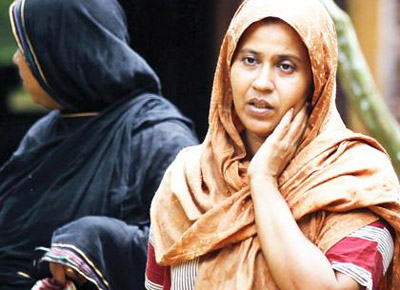
Riot-victim grievesLocal community leaders accused authorities of doing little to prevent Sunday night's carnage that made hundreds of Muslims homeless after attacks on their homes, shops, factories, mosques and even a nursery.

The most senior Muslim member of President Mahinda Rajapakse's government threatened to resign at the decision to allow militant Buddhists to rally in the flashpoint region.

"Three deaths have occurred and 78 people have been seriously wounded in the mob attacks... Places of Muslim religious worship have also been attacked with total impunity," Justice Minister Rauf Hakeem said as he toured the damage in the neighbouring towns of Alutgama and Beruwala.

"The government allowed the Bodu Bala Sena (BBS) to hold their gathering and therefore they must take responsibility for what has happened," he said, referring to a hardline outfit better known as the Buddhist Force.

Hakeem told reporters that he was now under pressure from his own supporters to quit the government to protest the failure to prevent the attacks, the latest in a series of violent incidents involving the BBS.

The UN human rights chief Navi Pillay expressed concern that the religious riots could spread to other areas of Sri Lanka and demanded that Colombo immediately bring the perpetrators of Sunday's attacks to justice.

"The government must urgently do everything it can to arrest this violence, curb the incitement and hate speech which is driving it, and protect all religious minorities," Pillay said in a statement issued in Geneva.

"I am very concerned this violence could spread to Muslim communities in other parts of the country," she added.

The United States, which has led international condemnation of Sri Lanka's human rights record, had also urged Colombo to end the violence.

The unrest erupted on Sunday night when followers of the BBS staged a protest over a recent road rage incident in the area.

After stones were allegedly thrown at them, the BBS supporters then tore through the two towns, attacking people on the street and setting fire to property and vehicles.

Local residents said police did little to protect them when the Buddhist mobs started their onslaught around sundown in the mainly Muslim towns which are around 60 kilometres (37 miles) south of the capital Colombo.

Police fired teargas and imposed a night-time curfew but the violence went on for several hours, according to residents.

"We pleaded with the police to come and stop the mob attacking our houses but the police did nothing," said Mujahedeen, a resident of Alutgama's Milton Road where around a dozen buildings were set on fire.

Police chief NK Illangakoon said the situation was "improving" although the curfew would remain overnight Monday.

He said eight people had been arrested in connection with the riots, but added that an unspecified number of them had already been freed on bail.

President urges 'restraint'

Both towns are popular beach resorts frequented by international tourists, but there were no reports of any foreigners or hotels being caught up in the violence.

However, hotels told their guests to remain indoors while Western embassies advised their nationals to avoid travelling to the region.

Rajapakse, currently in Bolivia, said in a statement that he would not allow "anyone to take the law into their own hands" and urged "restraint".

The attacks are the latest in a series of religious clashes to hit the island following unrest in January and also last year when Buddhist mobs attacked a mosque in the capital Colombo.

BBS leader, Buddhist monk Galagodaatte Gnanasara, is currently on bail after being arrested in May on a charge of insulting the Quran.

Sri Lanka, facing an international probe of its war record in crushing separatists Tamil rebels in may 2009, is also criticised for its alleged failure to protect minority religious groups.

Muslims make up about 10 percent of Sri Lanka's 20 million population.

Normal
0

false
false
false

EN-US
X-NONE
X-NONE

MicrosoftInternetExplorer4

UN demands action after Sri Lanka anti-Muslim riot

Alutgama, Jun 17: Sri Lanka slapped an indefinite curfew in a popular tourist region on Monday after rioting Buddhist mobs killed three Muslims in a surge of religious violence that triggered international concern.

Local community leaders accused authorities of doing little to prevent Sunday night's carnage that made hundreds of Muslims homeless after attacks on their homes, shops, factories, mosques and even a nursery.

The most senior Muslim member of President Mahinda Rajapakse's government threatened to resign at the decision to allow militant Buddhists to rally in the flashpoint region.

"Three deaths have occurred and 78 people have been seriously wounded in the mob attacks... Places of Muslim religious worship have also been attacked with total impunity," Justice Minister Rauf Hakeem said as he toured the damage in the neighbouring towns of Alutgama and Beruwala.

"The government allowed the Bodu Bala Sena (BBS) to hold their gathering and therefore they must take responsibility for what has happened," he said, referring to a hardline outfit better known as the Buddhist Force.

Hakeem told reporters that he was now under pressure from his own supporters to quit the government to protest the failure to prevent the attacks, the latest in a series of violent incidents involving the BBS.

The UN human rights chief Navi Pillay expressed concern that the religious riots could spread to other areas of Sri Lanka and demanded that Colombo immediately bring the perpetrators of Sunday's attacks to justice.

"The government must urgently do everything it can to arrest this violence, curb the incitement and hate speech which is driving it, and protect all religious minorities," Pillay said in a statement issued in Geneva.

"I am very concerned this violence could spread to Muslim communities in other parts of the country," she added.

The United States, which has led international condemnation of Sri Lanka's human rights record, had also urged Colombo to end the violence.

The unrest erupted on Sunday night when followers of the BBS staged a protest over a recent road rage incident in the area.

After stones were allegedly thrown at them, the BBS supporters then tore through the two towns, attacking people on the street and setting fire to property and vehicles.

Local residents said police did little to protect them when the Buddhist mobs started their onslaught around sundown in the mainly Muslim towns which are around 60 kilometres (37 miles) south of the capital Colombo.

Police fired teargas and imposed a night-time curfew but the violence went on for several hours, according to residents.

"We pleaded with the police to come and stop the mob attacking our houses but the police did nothing," said Mujahedeen, a resident of Alutgama's Milton Road where around a dozen buildings were set on fire.

Police chief NK Illangakoon said the situation was "improving" although the curfew would remain overnight Monday.

He said eight people had been arrested in connection with the riots, but added that an unspecified number of them had already been freed on bail.

President urges 'restraint'

Both towns are popular beach resorts frequented by international tourists, but there were no reports of any foreigners or hotels being caught up in the violence.

However, hotels told their guests to remain indoors while Western embassies advised their nationals to avoid travelling to the region.

Rajapakse, currently in Bolivia, said in a statement that he would not allow "anyone to take the law into their own hands" and urged "restraint".

The attacks are the latest in a series of religious clashes to hit the island following unrest in January and also last year when Buddhist mobs attacked a mosque in the capital Colombo.

BBS leader, Buddhist monk Galagodaatte Gnanasara, is currently on bail after being arrested in May on a charge of insulting the Quran.

Sri Lanka, facing an international probe of its war record in crushing separatists Tamil rebels in may 2009, is also criticised for its alleged failure to protect minority religious groups.

Muslims make up about 10 percent of Sri Lanka's 20 million population.

Comments

Add new comment

  • Coastaldigest.com reserves the right to delete or block any comments.
  • Coastaldigset.com is not responsible for its readers’ comments.
  • Comments that are abusive, incendiary or irrelevant are strictly prohibited.
  • Please use a genuine email ID and provide your name to avoid reject.
News Network
May 22,2020

May 22: A Pakistan International Airlines (PIA) flight on its way from Lahore to Karachi, crashed in the area near Jinnah International Airport on Friday, according to Civil Aviation Authority officials.

Geo News reported that the plane crashed at the Jinnah Ground area near the airport as it was approaching for landing. There were more than 90 passengers on board the Airbus aircraft. Black smoke could be seen from afar at the crash site, say eye witnesses.

There were no immediate reports on the number of casualties. The aircraft arriving from the eastern city of Lahore was carrying 99 passengers and 8 crew members, news agency AP said, quoting Abdul Sattar Kokhar, spokesman for the country’s civil aviation authority.

Witnesses said the Airbus A320 appeared to attempt to land two or three times before crashing in a residential area near Jinnah International Airport.

Flight PK-303 from Lahore was about to land in Karachi when it crashed at the Jinnah Garden area near Model Colony in Malir, just a minute before its landing, Geo News reported.

Local television reports showed smoke coming from the direction of the airport. Ambulances were on their way to the airport.

News agency said Sindh’s Ministry of Health and Population Welfare has declared emergency in all major hospitals of Karachi due to the plane crash.

It’s the second plane crash for Pakistani carrier in less than four years. The airline’s chairman resigned in late 2016, less than a week after the crash of an ATR-42 aircraft killed 47 people. The incident comes as Pakistan was slowly resuming domestic flights in the wake of the coronavirus pandemic, Bloomberg reported.

Comments

Add new comment

  • Coastaldigest.com reserves the right to delete or block any comments.
  • Coastaldigset.com is not responsible for its readers’ comments.
  • Comments that are abusive, incendiary or irrelevant are strictly prohibited.
  • Please use a genuine email ID and provide your name to avoid reject.
Agencies
March 29,2020

A shrimp seller at the wet market in the Chinese city of Wuhan believed to be the centre of the coronavirus pandemic, may be the first person to have tested positive for the disease, a media report said on Saturday.

The report by the London-based Metro newspaper said that 57-year-old woman, named by the Wall Street Journal as Wei Guixian, was selling shrimp at the Huanan Seafood Market when she developed what she thought was a cold last December.

Chinese digital news outlet, The Paper has said that she may be epatient zero'.

Wei was told by doctors her illness was "ruthless" and other workers at the market had come to the Wuhan Union Hospital with the same symptoms, the Metro newspaper report quoted the outlet as saying.

"Every winter, I suffer from the flu, so I thought it was the flu," the woman was quoted as saying by The Paper news outlet.

The shrimp seller added that she believed she contracted the coronavirus from the shared toilet in the market.

She said the fatal disease would have killed fewer people if the government had acted sooner.

Wuhan Municipal Health Commission has confirmed that Wei was among the first 27 people to test positive for the coronavirus.

It said she was one of 24 cases with direct links to the market, the Metro newspaper reported.

Though Wei may be "patient zero", it does not mean she is the first person to have contracted the virus, added the Metro report.

Chinese researchers have claimed that the first person diagnosed with the airborne virus had no contact with the seafood market and was identified on December 1, 2019.

Wei was later quarantined when a connection was made between the bug and the market before recovering in January.

As of Saturday, the global number of coronavirus cases stood at 104,837 with 27,862 deaths, according to the latest update by the Washington-based Johns Hopkins University.

The US has the highest number of cases at 104,837, followed by Italy 86,498 and China 81,948.

Italy has recorded the highest number of fatalities with 9,134 deaths, followed by Spain and China, at 5,138 and 3,299, respectively.

Comments

Add new comment

  • Coastaldigest.com reserves the right to delete or block any comments.
  • Coastaldigset.com is not responsible for its readers’ comments.
  • Comments that are abusive, incendiary or irrelevant are strictly prohibited.
  • Please use a genuine email ID and provide your name to avoid reject.
News Network
April 29,2020

Apr 29: US President Donald Trump doubled down on China for failing to tame the coronavirus at its very origin, saying it has led to 184 countries "going through hell", as several American lawmakers demanded steps to reduce dependence on Beijing for manufacturing and minerals.

Trump has been publicly blaming China for the global spread of the "invisible enemy" and launched an investigation against it. He has also indicated that the US may be looking at "a lot more money" in damages from China than the USD 140 billion being sought by Germany from Beijing for the pandemic.

Leaders of the US, the UK and Germany believe that the deaths and the destruction of the global economy could have been avoided, had China shared the information about the virus in its early phases.

"It's in 184 countries, as you hear me say often. It's hard to believe. It's inconceivable," Trump told reporters at White House Tuesday. "It should have been stopped at the source, which was China. It should have been stopped very much at the source, but it wasn't. And now we have 184 countries going through hell.”

The virus, which originated in China's Wuhan city in mid-November, has killed more than two lakh people and infected over three million globally. The largest number of them are in the US: nearly 59,000 deaths and over one million infections.

The massive outbreak in the US has put Trump under increasing pressure from American lawmakers to decrease US dependence on Beijing and they have also sought compensation from China.

Senator Ted Cruz and his colleagues have urged Defence Secretary Mark Esper and Interior Secretary David Bernhardt to support the development of a fully domestic supply chain of rare earths and other minerals that are critical for manufacturing defence technologies and supporting national security.

“It is clear that our dependence on China for vital rare earths threatens our US manufacturing and defence-industrial base. As the October 2018 Defence Industrial Base Report states: ‘China represents a significant and growing risk to the supply of materials deemed strategic and critical to US national security.' [...] Ensuring a US supply of domestically sourced rare earths will reduce our vulnerability to supply disruptions that poses a grave risk to our military readiness," the Senators wrote.

The US is 100 percent import-dependent for rare earths as well as 13 other metals and minerals on the US Government Critical Minerals List and more than 75 percent import reliant for an additional 10 minerals.

Congressman Brian Mast on Tuesday introduced a legislation to hold China accountable for its "coronavirus deception". The resolution would empower the US to withhold payments on debts owed to China equal to the costs incurred by the US in response to COVID-19.

“China's total lack of transparency and mishandling of the coronavirus outbreak has cost tens of thousands of lives, millions of jobs and left untold economic destruction. Congress must hold China accountable for their cover-up and force them to pay back the taxpayer dollars that have been spent as a result,” Mast said.

Cruz, member of the Senate Foreign Relations Committee, announced his intention to introduce a legislation to cut off Hollywood studios from assistance they receive from the Department of Defence if those studios censor their films for screening in China.

This legislation is part of Sen. Cruz's comprehensive push to combat China's growing influence over what Americans see and hear, which includes legislation targeting information warfare from the Chinese Communist Party across higher education, sports, films, radio broadcasts, and more.

Indian-American Congressman Ami Bera and Congressman Ted S. Yoho, both members of the House Foreign Affairs Committee, will lead a bipartisan virtual Special Order to highlight the importance of US global leadership during the COVID-19 pandemic.

“If we abdicate our place as a leader in global health, there is another country eager to take the reins. China has not been subtle in asserting itself on global health issues, and often not for the benefit of other nations. China's recent coronavirus debacle should be evidence enough that their communist regime cannot be trusted to lead with accountability, transparency, or pragmatism, traits that are essential when fighting widespread disease,” Yoho said.

“As for how China would fare as a global health leader, look no further than the disastrous initial response by the WHO to coronavirus, one that was clearly influenced by Beijing. Information was slow-walked, warnings from nations like Taiwan were ignored at crucial turning points, and cooperation with outside health experts was spurned until it was too late. And it has resulted in the largest public health disaster the world has seen in over a century,” he said.

In an interview to Fox News, Senator Marco Rubio alleged that if China had acted when those warnings were being made, instead of silencing the people that were talking about it, they could have limited the spread.

“So there was no doubt that that was a deliberate decision made on their part. The one way to hold them accountable is to do what we should be doing anyway. That is moving the means of production to become less and less dependent upon them. What you're going to see after this pandemic is that more and more countries are going to prioritize their healthcare manufacturing capabilities and other industries,” he said.

Comments

Add new comment

  • Coastaldigest.com reserves the right to delete or block any comments.
  • Coastaldigset.com is not responsible for its readers’ comments.
  • Comments that are abusive, incendiary or irrelevant are strictly prohibited.
  • Please use a genuine email ID and provide your name to avoid reject.