


UN demands action after Sri Lanka anti-Muslim riot

June 17, 2014

Alutgama, Jun 17: Sri Lanka slapped an indefinite curfew in a popular tourist region on Monday after rioting Buddhist mobs killed three Muslims in a surge of religious violence that triggered international concern.
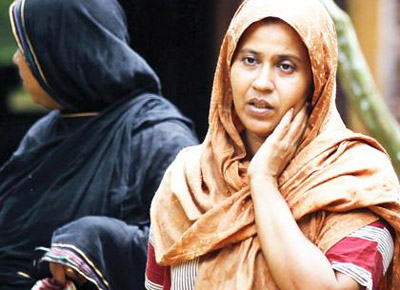
Riot-victim grievesLocal community leaders accused authorities of doing little to prevent Sunday night's carnage that made hundreds of Muslims homeless after attacks on their homes, shops, factories, mosques and even a nursery.

The most senior Muslim member of President Mahinda Rajapakse's government threatened to resign at the decision to allow militant Buddhists to rally in the flashpoint region.

"Three deaths have occurred and 78 people have been seriously wounded in the mob attacks... Places of Muslim religious worship have also been attacked with total impunity," Justice Minister Rauf Hakeem said as he toured the damage in the neighbouring towns of Alutgama and Beruwala.

"The government allowed the Bodu Bala Sena (BBS) to hold their gathering and therefore they must take responsibility for what has happened," he said, referring to a hardline outfit better known as the Buddhist Force.

Hakeem told reporters that he was now under pressure from his own supporters to quit the government to protest the failure to prevent the attacks, the latest in a series of violent incidents involving the BBS.

The UN human rights chief Navi Pillay expressed concern that the religious riots could spread to other areas of Sri Lanka and demanded that Colombo immediately bring the perpetrators of Sunday's attacks to justice.

"The government must urgently do everything it can to arrest this violence, curb the incitement and hate speech which is driving it, and protect all religious minorities," Pillay said in a statement issued in Geneva.

"I am very concerned this violence could spread to Muslim communities in other parts of the country," she added.

The United States, which has led international condemnation of Sri Lanka's human rights record, had also urged Colombo to end the violence.

The unrest erupted on Sunday night when followers of the BBS staged a protest over a recent road rage incident in the area.

After stones were allegedly thrown at them, the BBS supporters then tore through the two towns, attacking people on the street and setting fire to property and vehicles.

Local residents said police did little to protect them when the Buddhist mobs started their onslaught around sundown in the mainly Muslim towns which are around 60 kilometres (37 miles) south of the capital Colombo.

Police fired teargas and imposed a night-time curfew but the violence went on for several hours, according to residents.

"We pleaded with the police to come and stop the mob attacking our houses but the police did nothing," said Mujahedeen, a resident of Alutgama's Milton Road where around a dozen buildings were set on fire.

Police chief NK Illangakoon said the situation was "improving" although the curfew would remain overnight Monday.

He said eight people had been arrested in connection with the riots, but added that an unspecified number of them had already been freed on bail.

President urges 'restraint'

Both towns are popular beach resorts frequented by international tourists, but there were no reports of any foreigners or hotels being caught up in the violence.

However, hotels told their guests to remain indoors while Western embassies advised their nationals to avoid travelling to the region.

Rajapakse, currently in Bolivia, said in a statement that he would not allow "anyone to take the law into their own hands" and urged "restraint".

The attacks are the latest in a series of religious clashes to hit the island following unrest in January and also last year when Buddhist mobs attacked a mosque in the capital Colombo.

BBS leader, Buddhist monk Galagodaatte Gnanasara, is currently on bail after being arrested in May on a charge of insulting the Quran.

Sri Lanka, facing an international probe of its war record in crushing separatists Tamil rebels in may 2009, is also criticised for its alleged failure to protect minority religious groups.

Muslims make up about 10 percent of Sri Lanka's 20 million population.

Normal
0

false
false
false

EN-US
X-NONE
X-NONE

MicrosoftInternetExplorer4

UN demands action after Sri Lanka anti-Muslim riot

Alutgama, Jun 17: Sri Lanka slapped an indefinite curfew in a popular tourist region on Monday after rioting Buddhist mobs killed three Muslims in a surge of religious violence that triggered international concern.

Local community leaders accused authorities of doing little to prevent Sunday night's carnage that made hundreds of Muslims homeless after attacks on their homes, shops, factories, mosques and even a nursery.

The most senior Muslim member of President Mahinda Rajapakse's government threatened to resign at the decision to allow militant Buddhists to rally in the flashpoint region.

"Three deaths have occurred and 78 people have been seriously wounded in the mob attacks... Places of Muslim religious worship have also been attacked with total impunity," Justice Minister Rauf Hakeem said as he toured the damage in the neighbouring towns of Alutgama and Beruwala.

"The government allowed the Bodu Bala Sena (BBS) to hold their gathering and therefore they must take responsibility for what has happened," he said, referring to a hardline outfit better known as the Buddhist Force.

Hakeem told reporters that he was now under pressure from his own supporters to quit the government to protest the failure to prevent the attacks, the latest in a series of violent incidents involving the BBS.

The UN human rights chief Navi Pillay expressed concern that the religious riots could spread to other areas of Sri Lanka and demanded that Colombo immediately bring the perpetrators of Sunday's attacks to justice.

"The government must urgently do everything it can to arrest this violence, curb the incitement and hate speech which is driving it, and protect all religious minorities," Pillay said in a statement issued in Geneva.

"I am very concerned this violence could spread to Muslim communities in other parts of the country," she added.

The United States, which has led international condemnation of Sri Lanka's human rights record, had also urged Colombo to end the violence.

The unrest erupted on Sunday night when followers of the BBS staged a protest over a recent road rage incident in the area.

After stones were allegedly thrown at them, the BBS supporters then tore through the two towns, attacking people on the street and setting fire to property and vehicles.

Local residents said police did little to protect them when the Buddhist mobs started their onslaught around sundown in the mainly Muslim towns which are around 60 kilometres (37 miles) south of the capital Colombo.

Police fired teargas and imposed a night-time curfew but the violence went on for several hours, according to residents.

"We pleaded with the police to come and stop the mob attacking our houses but the police did nothing," said Mujahedeen, a resident of Alutgama's Milton Road where around a dozen buildings were set on fire.

Police chief NK Illangakoon said the situation was "improving" although the curfew would remain overnight Monday.

He said eight people had been arrested in connection with the riots, but added that an unspecified number of them had already been freed on bail.

President urges 'restraint'

Both towns are popular beach resorts frequented by international tourists, but there were no reports of any foreigners or hotels being caught up in the violence.

However, hotels told their guests to remain indoors while Western embassies advised their nationals to avoid travelling to the region.

Rajapakse, currently in Bolivia, said in a statement that he would not allow "anyone to take the law into their own hands" and urged "restraint".

The attacks are the latest in a series of religious clashes to hit the island following unrest in January and also last year when Buddhist mobs attacked a mosque in the capital Colombo.

BBS leader, Buddhist monk Galagodaatte Gnanasara, is currently on bail after being arrested in May on a charge of insulting the Quran.

Sri Lanka, facing an international probe of its war record in crushing separatists Tamil rebels in may 2009, is also criticised for its alleged failure to protect minority religious groups.

Muslims make up about 10 percent of Sri Lanka's 20 million population.

Comments

Add new comment

  • Coastaldigest.com reserves the right to delete or block any comments.
  • Coastaldigset.com is not responsible for its readers’ comments.
  • Comments that are abusive, incendiary or irrelevant are strictly prohibited.
  • Please use a genuine email ID and provide your name to avoid reject.
Agencies
June 10,2020

Houston, Jun 10: George Floyd was fondly remembered Tuesday as “Big Floyd” — a father and brother, athlete and neighborhood mentor, and now a catalyst for change — at a funeral for the black man whose death has sparked a global reckoning over police brutality and racial prejudice.

More than 500 mourners wearing masks against the coronavirus packed a Houston church a little more than two weeks after Floyd was pinned to the pavement by a white Minneapolis police officer who put a knee on his neck for what prosecutors said was 8 minutes and 46 seconds.

Cellphone video of the encounter, including Floyd’s pleas of “I can’t breathe,” ignited protests and scattered violence across the U.S. and around the world, turning the 46-year-old Floyd — a man who in life was little known beyond the public housing project where he was raised in Houston’s Third Ward — into a worldwide symbol of injustice.

“Third Ward, Cuney Homes, that’s where he was born at,” Floyd’s brother, Rodney, told mourners at the Fountain of Praise church. “But everybody is going to remember him around the world. He is going to change the world.”

The funeral capped six days of mourning for Floyd in three cities: Raeford, North Carolina, near where he was born; Houston, where he grew up; and Minneapolis, where he died. The memorials have drawn the families of other black victims whose names have become familiar in the debate over race and justice — among them, Eric Garner, Michael Brown, Ahmaud Arbery and Trayvon Martin.

After the service, Floyd’s golden casket was taken by hearse to the cemetery in the Houston suburb of Pearland to be entombed next to his mother, for whom he cried out as he lay dying. A mile from the graveyard, the casket was transferred to a glass-sided carriage drawn by a pair of white horses. A brass band played as his casket was taken inside the mausoleum.

Hundreds of people, some chanting, “Say his name, George Floyd,” gathered along the procession route and outside the cemetery entrance in the mid-90s heat.

“I don’t want to see any black man, any man, but most definitely not a black man sitting on the ground in the hands of bad police,” said Marcus Brooks, 47, who set up a tent with other graduates of Jack Yates High School, Floyd’s alma mater.

In the past two weeks, amid the furor over Floyd’s death, sweeping and previously unthinkable things have taken place: Confederate statues have been toppled, and many cities are debating overhauling, dismantling or cutting funding for police departments. Authorities in some places have barred police from using chokeholds or are otherwise rethinking policies on the use of force.

Dozens of Floyd’s family members, most dressed in white, took part in the four-hour service. Grammy-winning singer Ne-Yo was among those who sang.

The mourners included actors Jamie Foxx and Channing Tatum, J.J. Watt of the NFL’s Houston Texans, rapper Trae tha Truth, Rep. Sheila Jackson Lee, Houston Police Chief Art Acevedo and Houston Mayor Sylvester Turner, who brought the crowd to its feet when he announced he will sign an executive order banning chokeholds in the city.

“I know you have a lot of questions that no child should have to ask, questions that too many black children have had to ask for generations: Why? Why is Daddy gone?” former Vice President Joe Biden, the Democratic presidential candidate, said, addressing Floyd’s 6-year-old daughter in a video eulogy played at the service. “Now is the time for racial justice. That’s the answer we must give to our children when they ask why.”

Biden made no mention of his opponent in November. But other speakers took swipes at President Donald Trump, who has ignored demands to address racial bias and has called on authorities to crack down hard on lawlessness.

“The president talks about bringing in the military, but he did not say one word about 8 minutes and 46 seconds of police murder of George Floyd,” said the Rev. Al Sharpton, the civil rights activist. “He challenged China on human rights. But what about the human right of George Floyd?”

Most of the pews were full, with relatively little space between people.

“So much for social distancing today,” the Rev. Remus Wright told mourners, gently but firmly instructing those attending to wear face masks.

Texas has no limit on how many people can gather in places of worship during the pandemic, though Republican Gov. Greg Abbott has encouraged churches to follow federal health guidelines.

Although the church service was private, at least 50 people gathered outside to pay their respects.

“There’s a real big change going on, and everybody, especially black, right now should be a part of that,” said Kersey Biagase, who traveled more than three hours from Port Barre, Louisiana, with his girlfriend, Brandy Pickney. They wore T-shirts printed with Floyd’s name and “I Can’t Breathe.”

Floyd served nearly five years in prison for robbery with a deadly weapon before becoming a mentor and a church outreach volunteer in Houston. He moved to Minnesota several years ago through a program that tried to change men’s lives by helping them find work in new settings.

At the time of his death, Floyd was out of work as a bouncer at a Minneapolis club that had closed because of the coronavirus outbreak. He was seized by police after being accused of passing a counterfeit $20 bill at a convenience store.

Four Minneapolis officers were arrested in his death: Derek Chauvin, 44, was charged with second-degree murder. J. Alexander Kueng, Thomas Lane and Tou Thao were charged with aiding and abetting. All four could get up to 40 years in prison.

Some of the mostly peaceful demonstrations that erupted after Floyd’s death were marked by bursts of arson, assaults, vandalism and smash-and-grab raids on businesses, with more than 10,000 people arrested. But protests in recent days have been overwhelmingly peaceful.

Comments

Add new comment

  • Coastaldigest.com reserves the right to delete or block any comments.
  • Coastaldigset.com is not responsible for its readers’ comments.
  • Comments that are abusive, incendiary or irrelevant are strictly prohibited.
  • Please use a genuine email ID and provide your name to avoid reject.
News Network
May 19,2020

Washington, May 19: As the scientists across the world are struggling to develop a vaccine for combating coronavirus, US drugmaker Moderna announced on Monday (local time) that the phase I trial of its Covid-19 vaccine has shown positive early results.

The company is hopeful that it's vaccine could be available to the public as early as January next year. Several firms across the world are in the race to develop a vaccine for the deadly virus which has claimed over 3 lakh lives worldwide.

CNN citing Dr. Tal Zaks, Moderna's chief medical officer reported that "if future studies go well, the company's vaccine could be available to the public as early as January".

"This is absolutely good news and news that we think many have been waiting for for quite some time," Zaks was quoted as saying.

Moderna, based in Cambridge, Massachusetts announced that the vaccine developed neutralising antibodies to the virus at levels reaching or exceeding the levels seen in people who have naturally recovered from Covid-19, reported CNN.

These will be followed by phase 2 trials and phase 3 trials, which Moderna plans to start in July.

President Donald Trump had on Friday said that that the United States will be able to deliver a few hundred million doses of COVID-19 vaccine, under 'Operation Warp Speed', by the end of this year.

"I have very recently seen early data from a clinical trial with a coronavirus vaccine and this data made me feel even more confident that we'll be able to deliver a few hundred million doses of vaccine by the end of 2020 and we will do the best we can," Trump had said at a press conference at the White House on Friday.

Comments

Add new comment

  • Coastaldigest.com reserves the right to delete or block any comments.
  • Coastaldigset.com is not responsible for its readers’ comments.
  • Comments that are abusive, incendiary or irrelevant are strictly prohibited.
  • Please use a genuine email ID and provide your name to avoid reject.
Agencies
May 28,2020

More than one in six youths were jobless since the onset of the COVID-19 pandemic while those who remain employed have seen their working hours cut by 23 per cent, according to a report by the International Labour Organisation (ILO).

According to the 'ILO Monitor: COVID-19 and the world of work: 4th edition' published on Wednesday, youths are being disproportionately affected by the pandemic, and the substantial and rapid increase in youth unemployment seen since February is affecting young women more than young men, reports Xinhua news agency.

The pandemic is inflicting a triple shock on young people.

Not only is it destroying their employment, but it is also disrupting education and training, and placing major obstacles in the way of those seeking to enter the labour market or to move between jobs, said the report.

At 13.6 per cent, the youth unemployment rate in 2019 was already higher than any other group.

There were around 267 million young people not in employment, education or training worldwide.

"If we do not take significant and immediate action to improve their situation, the legacy of the virus could be with us for decades," said ILO Director-General Guy Ryder.

"If their talent and energy is sidelined by a lack of opportunity or skills, it will damage all our futures and make it much more difficult to re-build a better, post-COVID economy."

The report called for urgent, large-scale and targeted policy responses to support youth, including broad-based employment/training guarantee programs in developed countries, and employment-intensive programs and guarantees in low- and middle-income economies.

Comments

Add new comment

  • Coastaldigest.com reserves the right to delete or block any comments.
  • Coastaldigset.com is not responsible for its readers’ comments.
  • Comments that are abusive, incendiary or irrelevant are strictly prohibited.
  • Please use a genuine email ID and provide your name to avoid reject.