



UN demands action after Sri Lanka anti-Muslim riot

June 17, 2014

Alutgama, Jun 17: Sri Lanka slapped an indefinite curfew in a popular tourist region on Monday after rioting Buddhist mobs killed three Muslims in a surge of religious violence that triggered international concern.
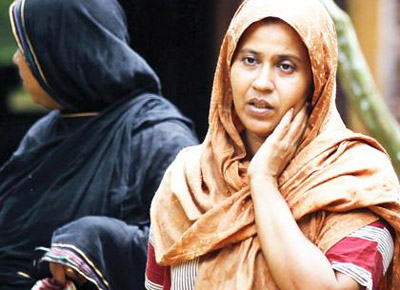
Riot-victim grievesLocal community leaders accused authorities of doing little to prevent Sunday night's carnage that made hundreds of Muslims homeless after attacks on their homes, shops, factories, mosques and even a nursery.

The most senior Muslim member of President Mahinda Rajapakse's government threatened to resign at the decision to allow militant Buddhists to rally in the flashpoint region.

"Three deaths have occurred and 78 people have been seriously wounded in the mob attacks... Places of Muslim religious worship have also been attacked with total impunity," Justice Minister Rauf Hakeem said as he toured the damage in the neighbouring towns of Alutgama and Beruwala.

"The government allowed the Bodu Bala Sena (BBS) to hold their gathering and therefore they must take responsibility for what has happened," he said, referring to a hardline outfit better known as the Buddhist Force.

Hakeem told reporters that he was now under pressure from his own supporters to quit the government to protest the failure to prevent the attacks, the latest in a series of violent incidents involving the BBS.

The UN human rights chief Navi Pillay expressed concern that the religious riots could spread to other areas of Sri Lanka and demanded that Colombo immediately bring the perpetrators of Sunday's attacks to justice.

"The government must urgently do everything it can to arrest this violence, curb the incitement and hate speech which is driving it, and protect all religious minorities," Pillay said in a statement issued in Geneva.

"I am very concerned this violence could spread to Muslim communities in other parts of the country," she added.

The United States, which has led international condemnation of Sri Lanka's human rights record, had also urged Colombo to end the violence.

The unrest erupted on Sunday night when followers of the BBS staged a protest over a recent road rage incident in the area.

After stones were allegedly thrown at them, the BBS supporters then tore through the two towns, attacking people on the street and setting fire to property and vehicles.

Local residents said police did little to protect them when the Buddhist mobs started their onslaught around sundown in the mainly Muslim towns which are around 60 kilometres (37 miles) south of the capital Colombo.

Police fired teargas and imposed a night-time curfew but the violence went on for several hours, according to residents.

"We pleaded with the police to come and stop the mob attacking our houses but the police did nothing," said Mujahedeen, a resident of Alutgama's Milton Road where around a dozen buildings were set on fire.

Police chief NK Illangakoon said the situation was "improving" although the curfew would remain overnight Monday.

He said eight people had been arrested in connection with the riots, but added that an unspecified number of them had already been freed on bail.

President urges 'restraint'

Both towns are popular beach resorts frequented by international tourists, but there were no reports of any foreigners or hotels being caught up in the violence.

However, hotels told their guests to remain indoors while Western embassies advised their nationals to avoid travelling to the region.

Rajapakse, currently in Bolivia, said in a statement that he would not allow "anyone to take the law into their own hands" and urged "restraint".

The attacks are the latest in a series of religious clashes to hit the island following unrest in January and also last year when Buddhist mobs attacked a mosque in the capital Colombo.

BBS leader, Buddhist monk Galagodaatte Gnanasara, is currently on bail after being arrested in May on a charge of insulting the Quran.

Sri Lanka, facing an international probe of its war record in crushing separatists Tamil rebels in may 2009, is also criticised for its alleged failure to protect minority religious groups.

Muslims make up about 10 percent of Sri Lanka's 20 million population.

Normal
0

false
false
false

EN-US
X-NONE
X-NONE

MicrosoftInternetExplorer4

UN demands action after Sri Lanka anti-Muslim riot

Alutgama, Jun 17: Sri Lanka slapped an indefinite curfew in a popular tourist region on Monday after rioting Buddhist mobs killed three Muslims in a surge of religious violence that triggered international concern.

Local community leaders accused authorities of doing little to prevent Sunday night's carnage that made hundreds of Muslims homeless after attacks on their homes, shops, factories, mosques and even a nursery.

The most senior Muslim member of President Mahinda Rajapakse's government threatened to resign at the decision to allow militant Buddhists to rally in the flashpoint region.

"Three deaths have occurred and 78 people have been seriously wounded in the mob attacks... Places of Muslim religious worship have also been attacked with total impunity," Justice Minister Rauf Hakeem said as he toured the damage in the neighbouring towns of Alutgama and Beruwala.

"The government allowed the Bodu Bala Sena (BBS) to hold their gathering and therefore they must take responsibility for what has happened," he said, referring to a hardline outfit better known as the Buddhist Force.

Hakeem told reporters that he was now under pressure from his own supporters to quit the government to protest the failure to prevent the attacks, the latest in a series of violent incidents involving the BBS.

The UN human rights chief Navi Pillay expressed concern that the religious riots could spread to other areas of Sri Lanka and demanded that Colombo immediately bring the perpetrators of Sunday's attacks to justice.

"The government must urgently do everything it can to arrest this violence, curb the incitement and hate speech which is driving it, and protect all religious minorities," Pillay said in a statement issued in Geneva.

"I am very concerned this violence could spread to Muslim communities in other parts of the country," she added.

The United States, which has led international condemnation of Sri Lanka's human rights record, had also urged Colombo to end the violence.

The unrest erupted on Sunday night when followers of the BBS staged a protest over a recent road rage incident in the area.

After stones were allegedly thrown at them, the BBS supporters then tore through the two towns, attacking people on the street and setting fire to property and vehicles.

Local residents said police did little to protect them when the Buddhist mobs started their onslaught around sundown in the mainly Muslim towns which are around 60 kilometres (37 miles) south of the capital Colombo.

Police fired teargas and imposed a night-time curfew but the violence went on for several hours, according to residents.

"We pleaded with the police to come and stop the mob attacking our houses but the police did nothing," said Mujahedeen, a resident of Alutgama's Milton Road where around a dozen buildings were set on fire.

Police chief NK Illangakoon said the situation was "improving" although the curfew would remain overnight Monday.

He said eight people had been arrested in connection with the riots, but added that an unspecified number of them had already been freed on bail.

President urges 'restraint'

Both towns are popular beach resorts frequented by international tourists, but there were no reports of any foreigners or hotels being caught up in the violence.

However, hotels told their guests to remain indoors while Western embassies advised their nationals to avoid travelling to the region.

Rajapakse, currently in Bolivia, said in a statement that he would not allow "anyone to take the law into their own hands" and urged "restraint".

The attacks are the latest in a series of religious clashes to hit the island following unrest in January and also last year when Buddhist mobs attacked a mosque in the capital Colombo.

BBS leader, Buddhist monk Galagodaatte Gnanasara, is currently on bail after being arrested in May on a charge of insulting the Quran.

Sri Lanka, facing an international probe of its war record in crushing separatists Tamil rebels in may 2009, is also criticised for its alleged failure to protect minority religious groups.

Muslims make up about 10 percent of Sri Lanka's 20 million population.

Comments

Add new comment

  • Coastaldigest.com reserves the right to delete or block any comments.
  • Coastaldigset.com is not responsible for its readers’ comments.
  • Comments that are abusive, incendiary or irrelevant are strictly prohibited.
  • Please use a genuine email ID and provide your name to avoid reject.
News Network
February 9,2020

Beijing, Feb 9: After making sure everyone's face mask is on and sanitizer is to hand, the Qiao family heads out to Jingshan Park, a former royal sanctuary beside the Forbidden City in China's capital Beijing.

Snow has fallen for a second day, a rare event in the city of 21.5 million that would normally bring hundreds of thousands of people out to take photos and play. But the streets are empty and the parks are so quiet the only sound is of birds chirping.

It's not just Beijing. Shanghai, China's financial hub, and other cities in the world's most populous nation have turned into ghost towns after the government extended a holiday and asked residents not to go out because of the coronavirus.

"We know the situation of the coronavirus is severe. But the epicentre is far away, so we think it should be fine here ... It's a God-given chance to enjoy this family moment with snow and without work," said Mr Qiao, who has an 11-year-old daughter.

The epidemic has killed 722 people and infected nearly 32,000 in China as of February 8. More than three-quarters of the cases are in the central Hubei province where the virus originated - more than 1,000 km (620 miles) from Beijing.

Only a few people are brave enough to come out. A security guard at Jingshan Park said there were less than a third of the number of tourists than usual, even with the rare snowfall.

Even at one of the best spots for snapping photos of snowy Beijing just outside the Forbidden City, there's barely a crowd, while the usual tour buses and groups of people speaking different dialects are nowhere to be seen.

"Last year when it snowed, I took a few hours off work to come down here to take a picture and the crowd was several layers deep," said a man in his 30s who gave his surname as Yang. "But this year, I am not at all worried about finding a space to take a photo. The virus is keeping people indoors."

Security guards along Wangfujing street, a popular pedestrianised shopping area in downtown Beijing, said it was normally so crowded during the holiday period that it was hard to move around.

"Look at it now, there are more security guards and street cleaners than tourists!" said one of the guards.

Businesses, including shops, bars and restaurants, have been severely hit by the epidemic as the government has banned mass gatherings and even group meals in an effort to curb the spread of the coronavirus.

"You would have to wait outside for a table on a normal day," said a waitress at a restaurant with more than 50 tables. Just five were taken at the peak lunch hour.

Only a handful of the more than 100 restaurants along Beijing's famous food street, Guijie, were open, and the remaining outlets were wondering how long they can hold out.

Comments

Add new comment

  • Coastaldigest.com reserves the right to delete or block any comments.
  • Coastaldigset.com is not responsible for its readers’ comments.
  • Comments that are abusive, incendiary or irrelevant are strictly prohibited.
  • Please use a genuine email ID and provide your name to avoid reject.
News Network
July 4,2020

Geneva, Jul 4: The World Health Organization has updated its account of the early stages of the COVID crisis to say it was alerted by its own office in China, and not by China itself, to the first pneumonia cases in Wuhan.

The UN health body has been accused by US President Donald Trump of failing to provide the information needed to stem the pandemic and of being complacent towards Beijing, charges it denies.

On April 9, WHO published an initial timeline of its communications, partly in response to criticism of its early response to the outbreak that has now claimed more than 521,000 lives worldwide.

In that chronology, WHO had said only that the Wuhan municipal health commission in the province of Hubei had on December 31 reported cases of pneumonia. The UN health agency did not however specify who had notified it.

WHO director Tedros Adhanom Ghebreyesus told a press conference on April 20 the first report had come from China, without specifying whether the report had been sent by Chinese authorities or another source.

But a new chronology, published this week by the Geneva-based institution, offers a more detailed version of events.

It indicates that it was the WHO office in China that on December 31 notified its regional point of contact of a case of "viral pneumonia" after having found a declaration for the media on a Wuhan health commission website on the issue.

The same day, WHO's epidemic information service picked up another news report transmitted by the international epidemiological surveillance network ProMed -- based in the United States -- about the same group of cases of pneumonia from unknown causes in Wuhan.

After which, WHO asked the Chinese authorities on two occasions, on January 1 and January 2, for information about these cases, which they provided on January 3.

WHO emergencies director Michael Ryan told a press conference on Friday that countries have 24-48 hours to officially verify an event and provide the agency with additional information about the nature or cause of an event.

Ryan added that the Chinese authorities immediately contacted WHO's as soon as the agency asked to verify the report.

US President Donald Trump has announced that his country, the main financial contributor to WHO, will cut its bridges with the institution, which he accuses of being too close to China and of having poorly managed the pandemic.

The WHO denies any complacency toward China.

Comments

Add new comment

  • Coastaldigest.com reserves the right to delete or block any comments.
  • Coastaldigset.com is not responsible for its readers’ comments.
  • Comments that are abusive, incendiary or irrelevant are strictly prohibited.
  • Please use a genuine email ID and provide your name to avoid reject.
News Network
May 12,2020

London, May 12: British Prime Minister Boris Johnson has warned that a mass vaccine for the novel coronavirus may be over a year away and, in the worst-case scenario, may in fact never be found.

In his foreword to the government’s new 50-page guidance on a step by step easing of the lockdown measures in place to control the spread of the deadly virus, the UK prime minister lays out plans for businesses to gradually start reopening with “COVID-19 Secure” measures of social distancing and for the public to use “good solid British common sense” as the economy is unlocked.

“A mass vaccine or treatment may be more than a year away,” said Johnson, highlighting the work being done in the UK by scientists at Oxford University and Imperial College London towards this mission.

“Indeed, in a worst-case scenario, we may never find a vaccine. So our plan must countenance a situation where we are in this, together, for the long haul, even while doing all we can to avoid that outcome,” he said.

Admitting that a vaccine or drug-based treatment is the only “feasible long-term solution”, he said the UK has accelerated this with “promising” vaccine development programmes and a collaboration between Oxford University and pharma major AstraZeneca was a vital step that could help rapidly advance the manufacture of a Covid-19 vaccine when it is ready.

As part of global efforts, he flagged the GBP 388 million in aid funding for research into vaccines, tests and treatment, including GBP 250m to the Coalition for Epidemic Preparedness Innovations.

“But while we hope for a breakthrough, hope is not a plan,” he said, as he unveiled his plan for starting to lift lockdown restrictions from this week in phases.

Following a televised address to the nation on Sunday night and a statement in Parliament on Monday, the guidance comes into effect in public life across England from Wednesday when people will be allowed one-to-one contact with people other than those they live with, as long as they remain outside and two metres apart.

They are allowed to play sport with a friend or family member from outside their household or socialise with them in the open air for the first time in more than six weeks since the lockdown was imposed.

People are still advised to work from home where possible but start heading into work where necessary, in sectors such as construction and manufacturing, keeping the social distancing norms in place.

Under the step by step plan, by the start of next month non-essential shops will also reopen, with some hairdressers, pubs and cinemas to follow from July. However, as part of a Covid-19 Alert System, if infection rates are seen to be rising again, restrictions would be tightened “possibly at short notice”.

Fines for breaching the new rules will also be increased to GBP 100 and will double for each repeat offence, up to a maximum of GBP 3,200.

Johnson said: "I must ask the country to be patient with a continued disruption to our normal way of life, but to be relentless in pursuing our mission to build the systems we need. The worst possible outcome would be a return to the virus being out of control – with the cost to human life, and – through the inevitable re-imposition of severe restrictions – the cost to the economy. We must stay alert, control the virus, and in doing so, save lives.

“Then, as vaccines and treatment become available, we will move to another new phase, where we will learn to live with Covid-19 for the longer term without it dominating our lives.”

The devolved administrations of Scotland and Wales are putting their own measures in place and keeping the “stay at home” message in place, rather than switch to the new “stay alert” message.

The UK government’s latest messaging has come under attack from the Opposition and other sections of society over a feared lack of clarity for the general public.

Comments

Add new comment

  • Coastaldigest.com reserves the right to delete or block any comments.
  • Coastaldigset.com is not responsible for its readers’ comments.
  • Comments that are abusive, incendiary or irrelevant are strictly prohibited.
  • Please use a genuine email ID and provide your name to avoid reject.