



UN lifts sanctions against Gulbuddin Hekmatyar

February 5, 2017

Feb 5: The United Nations has lifted sanctions against Gulbuddin Hekmatyar, the leader of the Hezb-i-Islami group in Afghanistan and one of the most infamous figures in the country's civil war in the 1990s.
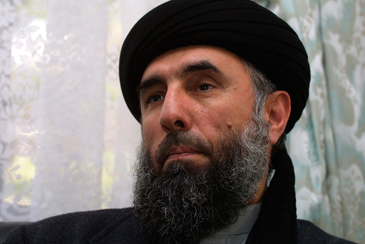
gulbuddinThe decision by the UN Security Council late on Friday follows a peace deal signed by the Afghan government and Hekmatyar's largely dormant group in September.

The accord gave Hekmatyar amnesty for past offences and granted him full political rights. It also allowed for the release of certain Hezb-i-Islami prisoners.

In a statement, the Security Council said it had dropped a freeze that had been put on Hekmatyar's assets, as well as a travel ban and an arms embargo against him.

Hekmatyar was one of the most influential leaders in the fight against Soviet forces in the 1980s. He briefly accepted the position of prime minister in an administration following the collapse of a Soviet-backed government in 1992.

Once branded as "the butcher of Kabul", Hekmatyar was accused of killing thousands of people when his fighters fired on civilian areas of the capital, Kabul, during the country's 1992-1996 civil war.

Hekmatyar's whereabouts are unknown, but Ghairat Baheer, Hezb-i-Islami's chief negotiator, told Al Jazeera that, with the sanctions now removed, he would eventually return to the Afghan capital.

"Hekmatyar is in hiding in Afghanistan, but after the UN move he will soon make an appearance in one of the provinces and will later come to Kabul," Baheer said.

The UN's decision could pave the way for other armed groups, such as the Taliban, to enter peace negotiations, according to Baheer.

He also urged the Afghan government to implement September's peace accord "completely and honestly" and called against the interference of foreign powers in Afghan affairs.

"Peace is [more] difficult to achieve than war, and we have done that, we have taken steps to achieve peace in Afghanistan," he said.

NATO forces officially ended their combat mission in December 2014. Yet, in July last year, US troops were granted greater powers to launch strikes against Taliban fighters as former President Barack Obama vowed a more aggressive campaign.

The US still has about 8,400 troops in the country.

Habiburrahman Hekmatyar, son of Gulbuddin Hekmatyar, hailed the lifting of the sanctions as "a very big decision that will change the entire situation of Afghanistan".

"Every Afghan has suffered through decades of war and conflict, and everyone has sacrificed a lot in this war, including us, so I urge every Afghan to look forward and believe that we are working towards peace," he told Al Jazeera.

But others, including human rights groups and ordinary Afghans, criticised the peace accord and the subsequent lifting of the sanctions against Hekmatyar.

"He just wants to have a political position for his family and for his party members in Afghanistan. He is the killer of the people of Afghanistan, it will be difficult to change this point of view of people about him," Sami Darayi, a Kabul resident who lost his uncle in the civil war, told Al Jazeera on Saturday.

"He did not even apologise to us Afghans, he never said he committed a mistake by killing innocent people."

Others, like Kabul-based Khalid Amini, who lost his father by one of the Hekmatyar's fighters, told Al Jazeera that "as long as it brings peace in the country, I have no problem with him making a return".

"I remember my father's death, but I want to look forward, I want to look after my family and live in a peaceful environment. So, I want peace and he should bring that to the country now," he said.

Many foreign governments, including the US, praised the accord at the time as a step towards wider peace in Afghanistan.

But Human Right Watch, a New York-based watchdog, had branded Hekmatyar "one of Afghanistan's most notorious war crimes suspects" and said his return would "compound a culture of impunity" that has denied justice to the many victims of his forces.

Comments

Add new comment

  • Coastaldigest.com reserves the right to delete or block any comments.
  • Coastaldigset.com is not responsible for its readers’ comments.
  • Comments that are abusive, incendiary or irrelevant are strictly prohibited.
  • Please use a genuine email ID and provide your name to avoid reject.
News Network
June 15,2020

Jun 15: Oil prices fell on Monday, with U.S. oil dropping more than 2%, as a spike in new coronavirus cases in the United States raised concerns over a second wave of the virus which would weigh on the pace of fuel demand recovery.

Brent crude futures fell 66 cents, or 1.7%, at $38.07 a barrel as of 0016 GMT, while U.S. West Texas Intermediate (WTI) crude futures fell 81 cents, or 2.2%, to $35.45 a barrel.

Both benchmarks ended down about 8% last week, their first weekly declines since April, hit by the U.S. coronavirus concerns: More than 25,000 new cases were reported on Saturday alone as more states, including Florida and Texas, reported record new infection highs.

"Concerns about the recent uptick in COVID-19 infections in the U.S. and a potential 'second wave' are weighing on oil at the moment," said Stephen Innes, chief global market strategist at AxiCorp.

Meanwhile, an OPEC-led monitoring panel will meet on Thursday to discuss ongoing record production cuts to see whether countries have delivered their share of the reductions, but will not make any decision, according to five OPEC+ sources.

The Organization of the Petroleum Exporting Countries (OPEC) and its allies, collectively known as OPEC+, have been reducing supplies by 9.7 million barrels per day (bpd), about 10% of pre-pandemic demand, and agreed in early June to extend the cuts for a month until end-July.

Iraq, one of the laggards in complying with the curbs, agreed with its major oil companies to cut crude production further in June, Iraqi officials working at the fields told Reuters on Sunday.

Comments

Add new comment

  • Coastaldigest.com reserves the right to delete or block any comments.
  • Coastaldigset.com is not responsible for its readers’ comments.
  • Comments that are abusive, incendiary or irrelevant are strictly prohibited.
  • Please use a genuine email ID and provide your name to avoid reject.
News Network
January 30,2020

Jan 30: The death toll rose to 170 in the new virus outbreak in China on Thursday as foreign evacuees from the worst-hit region begin returning home under close observation and world health officials expressed “great concern” that the disease is starting to spread between people outside of China.

Thursday’s figures cover the previous 24 hours and represent an increase of 38 deaths and 1,737 cases for a total of 7,711. Of the new deaths, 37 were in the epicenter of the outbreak in Hubei province and one in the southwestern province of Sichuan.

The news comes as the 195 Americans evacuated from Wuhan, the Hubei province city of 11 million where the outbreak originated, are undergoing three days of testing and monitoring at a Southern California military base to make sure they do not show signs of the virus.

A group of 210 Japanese evacuees from Wuhan landed Thursday at Tokyo’s Haneda airport on a second government chartered flight, according to the foreign ministry. Reports said nine of those aboard the flight showed signs of cough and fever. Three of the 206 Japanese who returned on Wednesday tested positive for the new coronavirus, Prime Minister Shinzo Abe said during a parliamentary session. Two of them showed no symptoms of the disease.

France, New Zealand, Australia and other countries are also pulling out their citizens or making plans to do so.

The World Health Organization emergencies chief said the few cases of human-to-human spread of the virus outside China — in Japan, Germany, Canada and Vietnam — were of “great concern” and were part of the reason the U.N. health agency’s director-general was reconvening a committee of experts on Thursday to assess whether the outbreak should be declared a global emergency.

The new virus has now infected more people in China than were sickened there during the 2002-2003 SARS outbreak.

Dr. Michael Ryan spoke at a news conference in Geneva on Wednesday after returning from a trip to Beijing to meet with Chinese President Xi Jinping and other senior government leaders. He said China was taking “extraordinary measures in the face of an extraordinary challenge” posed by the outbreak.

To date, about 99% of the cases are in China. Ryan estimated the death rate of the new virus at 2%, but said the figure was very preliminary. With fluctuating numbers of cases and deaths, scientists are only able to produce a rough estimate of the fatality rate and it’s likely many milder cases of the virus are being missed.

In comparison, the SARS virus killed about 10% of people who caught it. The new virus is from the coronavirus family, which includes those that can cause the common cold as well as more serious illnesses such as SARS and MERS.

Scientists say there are many questions to be answered about the new virus, including just how easily it spreads and how severe it is.

In a report published Wednesday, Chinese researchers suggested that person-to-person spread among close contacts occurred as early as mid-December.

“Considerable efforts” will be needed to control the spread if this ratio holds up elsewhere, researchers wrote in the report, published in the New England Journal of Medicine.

More than half of the cases in which symptoms began before Jan. 1 were tied to a seafood market, but only 8% of cases after that have been, researchers found. They reported the average incubation period was five days.

Comments

Add new comment

  • Coastaldigest.com reserves the right to delete or block any comments.
  • Coastaldigset.com is not responsible for its readers’ comments.
  • Comments that are abusive, incendiary or irrelevant are strictly prohibited.
  • Please use a genuine email ID and provide your name to avoid reject.
News Network
July 18,2020

Global coronavirus infections passed 14 million on Friday, according to a Reuters tally, marking the first time there has been a surge of 1 million cases in under 100 hours.

The first case was reported in China in early January and it took three months to reach 1 million cases. It has taken just four days to climb to 14 million cases from 13 millionrecorded on July 13.

The United States, with more than 3.6 million confirmed cases, is still seeing huge daily jumps in its first wave of Covid-19 infections. The United States reported a daily global record of more than 77,000 new infections on Thursday, while Sweden has reported 77,281 total cases since the pandemic began.

Despite the surging cases, a cultural divide is growing in the country over wearing masks to slow the spread of the virus, a precaution routinely taken in many other nations.

U.S. President Donald Trump and his followers have resisted a full-throated endorsement of masks and have been calling for a return to normal economic activity and reopening schools despite the surging cases.

COVID-19 Pandemic Tracker: 15 countries with the highest number of coronavirus cases, deaths

Other hard-hit countries have “flattened the curve” and are easing lockdowns put in place to slow the spread of the novel virus while others, such as the cities of Barcelona and Melbourne, are implementing a second round of local shutdowns.

The number of cases globally is around triple that of severe influenza illnesses recorded annually, according to the World Health Organization.

The pandemic has now killed more than 590,000 people in almost seven months, edging towards the upper range of yearly influenza deaths reported worldwide. The first death was reported on Jan. 10 in Wuhan, China before infections and fatalities then surged in Europe and later in the United States.

The Reuters tally, which is based on government reports, shows the disease is accelerating the fastest in the Americas, which account for more than half the world’s infections and half its deaths.
In Brazil, more than 2 million people have tested positive including President Jair Bolsonaro, and more than 76,000 people have died.

India, the only other country with more than 1 millioncases, has been grappling with an average of almost 30,000 new infections each day for the last week.

Those countries were the main drivers behind the World Health Organization on Friday reporting a record one-day increase in global coronavirus cases of 237,743.

In countries with limited testing capacity, case numbers reflect only a proportion of total infections. Experts say official data likely under-represents both infections and deaths.

Comments

Add new comment

  • Coastaldigest.com reserves the right to delete or block any comments.
  • Coastaldigset.com is not responsible for its readers’ comments.
  • Comments that are abusive, incendiary or irrelevant are strictly prohibited.
  • Please use a genuine email ID and provide your name to avoid reject.