UN names 3 experts to probe Gaza war crimes

August 12, 2014

Gaza warGeneva, Aug 12: The UN has named three experts to an international commission of inquiry into possible human rights violations and war crimes committed by both sides during Israel's military offensive in the Gaza Strip.

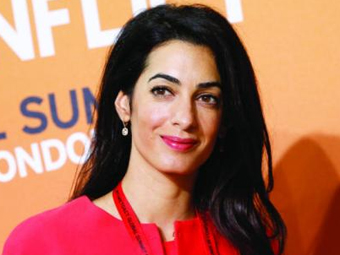
William Schabas, a Canadian professor of international law, will head the panel whose other members are Doudou Diene, a veteran UN human rights expert from Senegal, and Amal Alamuddin, a British-Lebanese lawyer engaged to be married to Hollywood actor George Clooney.

The panel is due to report by March 2015 to the UN Human Rights Council.

A semblance of normal life returned to Gaza as a 72-hour truce took hold and negotiators sat down in Cairo to seek a permanent end to hostilities.

Quiet returned to the enclave from midnight (2100 GMT on Sunday), the fruit of days of Egyptian-brokered mediation to stem violence which has killed 1,940 Palestinians and 67 on the Israeli side since July 8.

Palestinian emergency services said that a one-month-old baby girl died on Monday of injuries sustained during the fighting, raising the overall death toll in Gaza to 1,940.

With no reports of violations on either side, shops and businesses started to reopen and people ventured onto the streets of the war-torn coastal enclave which is home to 1.8 million Palestinians.

In Cairo, the Arab League urged Egypt to continue its efforts “to cement the cease-fire agreement into a lasting truce,” according to a statement posted by the Middle East News Agency.

Talal Okal, a Gaza-based political analyst, predicted Israel would “try to drag out the talks as long as possible, to have quiet without making concessions and forcing Hamas to minimize its demands.”

Comments

Add new comment

  • Coastaldigest.com reserves the right to delete or block any comments.
  • Coastaldigset.com is not responsible for its readers’ comments.
  • Comments that are abusive, incendiary or irrelevant are strictly prohibited.
  • Please use a genuine email ID and provide your name to avoid reject.
Agencies
July 3,2020

The dollar's dominance will slowly melt away over the coming year on weakening global demand and a sombre U.S. economic outlook, according to a Reuters poll of currency forecasters whose views depend on there being no second coronavirus shock.

Despite fears a surge in new Covid-19 cases would delay economies reopening and stymie a tentative recovery, world stocks have rallied - with the S&P 500 finishing higher in June, marking its biggest quarterly percentage gain since the height of the technology boom in 1998.

Caught between bets in favour of riskier investments, weak U.S. economic prospects as well as an easing in the thirst for dollars after the Federal Reserve flooded markets with liquidity, the greenback fell nearly 1.0 per cent last month. It was its worst monthly performance since December.

While there was a dire prognosis from the top U.S. medical expert on the coronavirus' spread, the June 25-July 1 poll of over 70 analysts showed weak dollar projections as Fed Chair Jerome Powell on Monday reiterated the economic outlook for the world's largest economy was uncertain.

"The dollar rises in two instances: when you see risk off or when there is a situation where the U.S. is leading the global recovery, and we don't think that's going to be the case anytime soon," said Gavin Friend, senior FX strategist at NAB Group in London.

"The U.S. is playing fast and loose with the virus, and chronologically they're behind the rest of the world."

Currency speculators, who had built up trades against the dollar to the highest in two years during May, increased their out-of-favour dollar bets further last week, the latest positioning data showed.

About 80 per cent of analysts, 53 of 66, said the likely path for the dollar over the next six months was to trade around current levels, alternating between slight gains and losses in a range. That suggests the greenback may be at a crucial crossroad as more currency strategists have turned bearish.

But more than 90 per cent, or 63 of 68, said a second shock from the pandemic would push the dollar higher. Five said it would push the U.S. currency lower.

Much will also depend on debt servicing and repayments by Asian, European and other international borrowers in U.S. dollars.

While an early shortage of dollars in March from the pandemic's first shock pushed the Fed to open currency swap lines with major central banks, international funding strains have eased significantly since. In recent weeks, usage of the facility has reduced dramatically.

That trend is expected to continue over the next six months with major central banks' usage of swap lines to "stay around current levels", according to 32 of 46 analysts. While 13 predicted a sharp drop, only one respondent said use of them would "rise sharply".

The dollar index, which measures the greenback's strength against six other major currencies, has slipped over 5 per cent since touching a more than three-year high in March.

When asked which currencies would perform better against the dollar by end-December, a touch over half of 49 respondents said major developed market ones, with the remaining almost split between commodity-linked and emerging market currencies.

"The dollar is so overvalued, and has been overvalued for a long time, it's time now for it to come back down again, as we head towards the (U.S.) election," added NAB's Friend.

Over the last quarter, the euro has staged a 1.8 per cent comeback after falling by a similar margin during the first three months of the year. For the month of June, the euro was up 1.2 per cent against the dollar.

The single currency was now expected to gain about 2.5 per cent to trade at $1.15 in a year from around $1.12 on Wednesday, slightly stronger than $1.14 predicted last month. While those findings are similar to what analysts have been predicting for nearly two years, there was a clear shift in their outlook for the euro, with the range of forecasts showing higher highs and higher lows from last month.

"In comparison to even a month or two ago, the outlook in Europe has improved significantly," said Lee Hardman, currency strategist at MUFG.

"I think that makes the euro look relatively more attractive and cheap against the likes of the dollar. We're not arguing strongly for the euro to surge higher, we're just saying, after the weakness we have seen in recent years, there is the potential for that weakness to start to reverse."


Comments

Add new comment

  • Coastaldigest.com reserves the right to delete or block any comments.
  • Coastaldigset.com is not responsible for its readers’ comments.
  • Comments that are abusive, incendiary or irrelevant are strictly prohibited.
  • Please use a genuine email ID and provide your name to avoid reject.
News Network
May 3,2020

London, May 3: The British government had a contingency plan for prime minister Boris Johnson’s death as his condition deteriorated while he battled COVID-19 last month in intensive care, Johnson said in an interview with The Sun newspaper.

Johnson returned to work on Monday, a month after testing positive for COVID-19. Johnson, 55, spent 10 days in isolation in Downing Street from late March, but was then was taken to London’s St Thomas’ Hospital where he received oxygen treatment and spent three nights in intensive care.

“They had a strategy to deal with a ‘death of Stalin’-type scenario,” Johnson, 55, was quoted as saying by The Sun. “It was a tough old moment, I won’t deny it.”

After Johnson was discharged, St Thomas’ said it was glad to have cared for the prime minister, but the hospital has given no details about the gravity of his illness beyond stating that he was treated in intensive care.

Johnson and his fiancée, Carrie Symonds, on Saturday announced the name of their newly born son as Wilfred Lawrie Nicholas, partly as a tribute to two of the intensive care doctors who they said had saved Johnson’s life.

“The doctors had all sorts of arrangements for what to do if things went badly wrong,” Johnson said of his COVID-19 battle. “The bloody indicators kept going in the wrong direction.”

He said doctors discussed invasive ventilation.

“The bad moment came when it was 50-50 whether they were going to have to put a tube down my windpipe,” he said. “That was when it got a bit . . . they were starting to think about how to handle it presentationally.”

Comments

Add new comment

  • Coastaldigest.com reserves the right to delete or block any comments.
  • Coastaldigset.com is not responsible for its readers’ comments.
  • Comments that are abusive, incendiary or irrelevant are strictly prohibited.
  • Please use a genuine email ID and provide your name to avoid reject.
News Network
May 9,2020

London, May 9: Air India's first evacuation flight from London will be taking off for Mumbai today.

The screening of passengers is underway.

"Air India's first evacuation flight from London taking off for Mumbai today at 1200. Flight is 100% booked! Shubh Yatra. Please stay in touch. GoI working to send more evacuation flights!" High Commission of India, London said in a tweet.

On Monday, India announced had that it will begin phased repatriation of its citizens stranded abroad from May 7.

The government said that Air India will operate 64 flights in the first week from May 7 to May 13 to bring back around 15,000 Indian nationals.

On day three of the 'Vande Bharat Mission', flights carrying Indians from the Gulf countries, the United Kingdom, Bangladesh and Malaysia will arrive in India.

Comments

Add new comment

  • Coastaldigest.com reserves the right to delete or block any comments.
  • Coastaldigset.com is not responsible for its readers’ comments.
  • Comments that are abusive, incendiary or irrelevant are strictly prohibited.
  • Please use a genuine email ID and provide your name to avoid reject.