


UN votes to send war-crimes investigators to Gaza

Agencies
May 19, 2018

Gaza/London, May 19: The UN Human Rights Council (UNHRC) on Friday voted to send a team of international war crimes investigators to Gaza to investigate the violent protests that have left more than 100 people dead. 

An international commission of inquiry is the UNHRC’s highest level of investigation.

But if the intention was to give hope to Palestinians after six weeks of violent confrontation along the border between Gaza and Israel, it has not entirely succeeded. In a heated tirade, Manuel Hassassian, Palestine’s envoy to Britain, dismissed the UNHRC resolution as “PR and propaganda with no kind of political weight.”

Speaking to Arab News from the West Bank, a clearly emotional Hassassian said: “All these resolutions from all the international organizations but there is nothing concrete ever on the ground. There is no implementation whatsoever.”

Even if the UN did send war crimes investigators, their movements and access would be controlled by the Israelis because they are in charge of the borders, Hassassian said. 

“The Israelis are not going to let them be mobile enough to get around all the areas where there was naked aggression. I am really depressed. I am in the West Bank and what I am seeing with my own eyes is total apartheid. And in Gaza, there are two million people living in subhuman conditions. 

“Israel and the United States seem to be above international law, but when there is any violation by the Arab world, immediately there are sanctions imposed. If this is the model of democracy that you want, then stop preaching to us about the rule of law.”

Only two of the council’s 47 members, the US and Australia, voted against the resolution, while 29 voted in favor and 14 abstained, including Britain, Switzerland and Germany.

The resolution calls for a probe into all alleged violations and abuses “including those that may amount to war crimes.” 

The violence has claimed more than 100 Gazan lives. Sixty Palestinians were killed and thousands injured on Monday alone. That was the day that the US embassy transferred from Tel Aviv to Jerusalem and also the eve of the 70th anniversary of the Nakba, in which hundreds of thousands of Palestinians were ejected from their homes and lands as the state of Israel came into being.

The UN vote was welcomed by Palestinian officials and campaigners.

Issam Younis, director of the Al-Mezan Center for Human Rights, said: “This decision is very important, especially after the UN Security Council failed to issue a condemnation of the occupation because there must be accountability. These were repeated assaults on civilians. The road to justice is long and not achieved by knockout, but by total points.”

Opening the session on Friday, UN human rights chief Zeid Ra’ad Al-Hussein slammed the “wholly disproportionate” use of force by Israeli troops, insisting that many of those injured and killed on Monday were “completely unarmed’ yet were “shot in the back, in the chest, in the head and limbs with live ammunition.” 

He added: “Some of the demonstrators threw Molotov cocktails, used slingshots to throw stones, flew burning kites into Israel and attempted to use wire-cutters against the two fences between Gaza and Israel. 

But these actions alone do not appear to constitute the imminent threat to life or deadly injury which could justify the use of lethal force.” Yet there was “little evidence” of any attempt by the Israelis to minimize casualties, he said.

It has also emerged that Kuwait circulated a draft resolution to members of the UN Security Council calling for an “international protection mission” to be sent to protect Palestinian civilians.

According to AFP, which obtained a copy of the draft, it does not specify what form such a mission should take. 

Israel immediately condemned the UNHRC’s decision. A statement from the foreign ministry said it “proves once again that it is an anti-Israeli body dominated by hypocrisy and absurdity.”

Gazans began queuing at dawn on Friday after Egyptian president Abdel Fattah El-Sisi declared the Rafah border crossing between Gaza and Egypt would be opened during Ramadan, in a move widely thought to be part of a deal to persuade Gazans to tone down their protests. Hamas leader Ismail Hanuyeh visited Egypt on Sunday but Hamas denies it has come under pressure from Cairo.

Comments

Add new comment

  • Coastaldigest.com reserves the right to delete or block any comments.
  • Coastaldigset.com is not responsible for its readers’ comments.
  • Comments that are abusive, incendiary or irrelevant are strictly prohibited.
  • Please use a genuine email ID and provide your name to avoid reject.
Agencies
June 20,2020

Riyadh, Jun 20: Saudi Arabia will end a nationwide curfew and lift restrictions on businesses from Sunday morning after three months of lockdown to curb the spread of coronavirus, state news agency SPA quoted a source in the interior ministry as saying on Saturday.

The curfew will be lifted as of 6 AM local time on Sunday. Restrictions will remain, however, for religious pilgrimages, international travel and social gatherings of more than 50 people.

The kingdom introduced stringent measures to curb the spread of the novel coronavirus in March, including 24-hour curfews on most towns and cities.

In May, it announced a three-phase plan to ease restrictions on movement and travel, culminating in the curfew completely ending on June 21.

The number of coronavirus infections has risen in recent weeks following a relaxation of movement and travel restrictions on May 28.

The kingdom has recorded 154,223 cases of COVID-19 and a total of 1,230 deaths, the highest in the six-nation Gulf Cooperation Council.

Saudi Arabia plans to limit numbers at the annual haj pilgrimage to prevent a further outbreak of coronavirus cases, sources familiar with the matter told Reuters earlier this month.

Some 2.5 million pilgrims visit the holiest sites of Islam in Mecca and Medina for the week-long haj, a once-in-a-lifetime duty for every able-bodied Muslim who can afford it. Saudi Arabia asked Muslims in March to put haj plans on hold and suspended the umrah pilgrimage until further notice.

Comments

Add new comment

  • Coastaldigest.com reserves the right to delete or block any comments.
  • Coastaldigset.com is not responsible for its readers’ comments.
  • Comments that are abusive, incendiary or irrelevant are strictly prohibited.
  • Please use a genuine email ID and provide your name to avoid reject.
News Network
May 19,2020

Dubai, May 19: The UAE announced 832 new Covid-19 cases on Monday following 37,844 additional tests, taking the total tally of coronavirus infections in the country to 24,190.

The Ministry of Health and Prevention also reported four additional deaths, taking the death toll to 224. Meanwhile 1,065 patients also recovered after receiving the necessary treatment, taking the total number of recoveries to 9,577, the ministry said.

“We see a daily increase in cases due to the irresponsible behaviour of some people who are not aware of the consequences of not adhering to health guidelines,” said Dr Amna Al Dahak Al Shamsi, official spokesperson of the UAE government.

“The widening circle of infections requires no more than a few violations by just one or two people to completely infect families with the coronavirus,” she said.

“The decision to partially ease restrictions is aimed at achieving a balance between meeting the needs of a segment of society, whose source of income is linked to the commodity trade sector, and between continuing to adhere to the recommended health guidelines, and hence many restrictions and conditions have to be followed.”

However, she also appreciated the citizens and residents adhering to the precautionary measures.

“It is heartening for us to see many families committed to avoiding family gatherings,” she said. “As we prepare for Eid Al-Fitr, we are confident that citizens and residents will continue to adhere to health and preventive guidelines, and serve as role models to the world,” she added.

Change in disinfection programme timings

Officials also announced that the UAE’s National Disinfection Programme will now be in place from 8pm to 6am, starting Wednesday, May 20, until further notice. The scheme currently runs from 10pm until 6am.

Dr Saif Al Dhaheri, spokesman of the National Authority for Emergency, Crisis and Disaster Management said the amendment comes in light of the “increased number of Covid-19 cases, and the leniency of some members of society and their indifference to preventive measures”.

Food outlets, cooperative societies, groceries, supermarkets, and pharmacies will continue to operate 24 hours a day, seven days a week during the sterilisation programme period.

Meanwhile meat and vegetable shops and outlets selling fruits, toasters, mills, slaughterhouses, fish, coffee and tea, in addition to shops selling nuts, sweets and chocolate, can operate from 6am until 8pm.

Shopping centres and malls can stay open from 9am to 7pm starting Wednesday, May 20, officials added.

“We stress the importance of all stores and those authorised to operate to adhere to the applicable health and safety procedures, which include ensuring that the percentage of shoppers does not exceed 30 per cent of the total capacity,” said Al Dhaheri.

He also confirmed that children under 12 and those over 60 will not be permitted to enter malls and shopping centres.

“We warn visitors to the centres that the shopping period should not exceed two hours in order to reduce the crowding of shoppers, and to maintain the 30 per cent capacity.”

Eid restrictions

Al Dhaheri urged the public to avoid family visits and gatherings during Eid Al Fitr this year and to instead communicate using online means or by phone. He also stressed that people should refrain from distributing ‘Eid’ money to children.

“With regard to Eid prayers, we stress the importance of adhering to what was mentioned by the Emirates Legal Fatwa Council, which is to pray at home and to take health protection reasons as a legal obligation, a necessity of life, and a national commitment,” he added.

Heftier fines

Officials also announced heftier fines to ensure that the regulations are being adhered to.

“It was clear to us, in light of the follow-up, that there was reckless behaviour from some individuals, along with the insistence of some to commit a certain type of violation as well as indifference,” said Salem Al-Zaabi, acting head of the Public Prosecution for Emergencies, Crisis and Disasters.

The Public Prosecution has decided to update the list of previously announced violations and fines and administrative penalties to “suit the current situation”, he said.

Some of the new fines include:

– Dhs50,000 on educational institutions, cinemas, gym, stores, parks, beaches, pools or supermarkets that do not adhere to coronavirus measures

– Dhs50,000 fine on those who don’t adhere to quarantine restrictions

– Dhs10,000 for organising gatherings with participants also fined Dhs5,000 each

– Dhs5000 for refusing to do a Covid-19 test

– Dhs3,000 for not wearing a mask in public

– Dhs3,000 if more than three people are travelling in one car

– Dhs3,000 for companies failing to adhere to the 30 per cent limit on workforce at office

– Dhs3,000 for not adhering to social distancing

– Dhs3,000 fine for violating restrictions during the disinfection period

Repeat offenders will be referred to the Public Prosecution and can face a criminal trial with the possibility of imprisonment for a period not exceeding six months and/or a fine of at least Dhs100,000.

“The pictures and names of violators will be published in newspapers and media upon the decision of the Public Prosecutor if he deems it necessary,” added Al Zaabi.

Comments

Add new comment

  • Coastaldigest.com reserves the right to delete or block any comments.
  • Coastaldigset.com is not responsible for its readers’ comments.
  • Comments that are abusive, incendiary or irrelevant are strictly prohibited.
  • Please use a genuine email ID and provide your name to avoid reject.
Agencies
August 2,2020

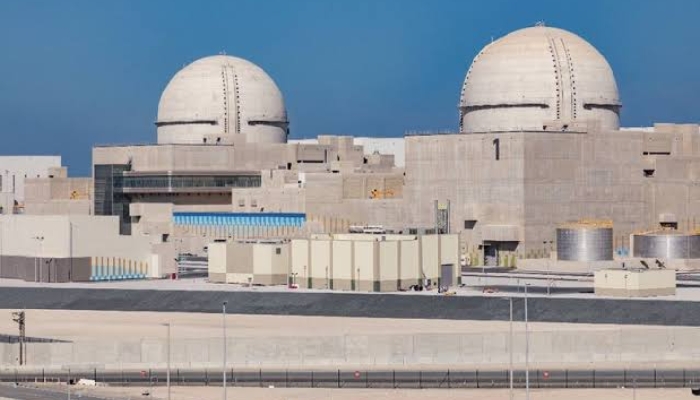
Dubai, Aug 2: The United Arab Emirates (UAE) announced on Saturday that it has started operations in the first of four reactors at the Barakah nuclear power station - the first nuclear power plant in the Arab world.

Emirates Nuclear Energy Corporation (ENEC), which is building and operating the plant with Korea Electric Power Corporation (KEPCO) said in a press release that its subsidiary Nawah Energy Company "has successfully started up Unit 1 of the Barakah Nuclear Energy Plant, located in the Al Dhafrah Region of Abu Dhabi".

That signals that Unit 1, which had fuel rods loaded in March, has achieved "criticality" - a sustained fission chain reaction.

"The start-up of Unit 1 marks the first time that the reactor safely produces heat, which is used to create steam, turning a turbine to generate electricity," said ENEC.

Barakah, which was originally scheduled to open in 2017, has been dogged by delays and is billions of dollars over budget. It has also raised myriad concerns among nuclear energy veterans who are concerned about the potential risks Barakah could visit upon the Arabian Peninsula, from an environmental catastrophe to a nuclear arms race.

Paul Dorfman, an honorary senior research fellow at the Energy Institute, University College London and founder and chair of the Nuclear Consulting Group, has criticised the Barakah reactors' "cheap and cheerful" design that he says cuts corners on safety.

Dorfman authored a report (PDF) last year detailing key safety features Barakah's reactors lack, such as a "core catcher" to literally stop the core of a reactor from breaching the containment building in the event of a meltdown. The reactors are also missing so-called Generation III Defence-In-Depth reinforcements to the containment building to shield against a radiological release resulting from a missile or fighter jet attack.

Both of these engineering features are standard on new reactors built in Europe, says Dorfman.

There have been at least 13 aerial attacks on nuclear facilities in the Middle East - more than any other region on earth.

The vulnerability of critical infrastructure in the Arabian Peninsula was further laid bare last year after Saudi Arabia's oil facilities at Abqaiq and Khurais were attacked by 18 drones and seven cruise missiles - an assault that temporarily knocked out more than half of the kingdom's oil production.

On Saturday, Dorfman reiterated his concern that there is no regional protocol in place to determine liability should an accident or incident at Barakah result in radioactive contamination spreading from the UAE to its neighbours. 

"Given Barakah has started up, because of all the well-rehearsed nuclear safety and security problems, it may be critically important that the Gulf states collectively evolve a Nuclear Accident Liability Convention, so that if anything does go wrong, victim states may have some sort of redress," Dorfman told Al Jazeera. 

The UAE has substantial oil and gas reserves, but it has made huge investments in developing alternative energy sources, including nuclear and solar.

Experts though have questioned why the UAE - which is bathed in sunlight and wind - has pushed ahead with nuclear energy - a far more expensive and riskier option than renewable energy sources.

When the UAE first announced Barakah in 2009, nuclear power was cheaper than solar and wind. But by 2012 - when the Emirates started breaking ground to build the reactors - solar and wind costs had plummeted dramatically.

Between 2009 and 2019, utility-scale average solar photovoltaic costs fell 89 percent and wind fell 43 percent, while nuclear jumped 26 percent, according to an analysis by the financial advisory and asset manager Lazard.

There are also concerns about the potential for Barakah to foment nuclear proliferation in the Middle East - a region rife with geopolitical fault lines and well-documented history of nuclear secrecy.

The UAE has sought to distance itself from the region's bad behaviour by agreeing not to enrich its own uranium or reprocess spent fuel. It has also signed up to the United Nation's nuclear watchdog's Additional Protocol, significantly enhancing inspection capabilities, and secured a 123 Agreement with the United States that allows bilateral civilian nuclear cooperation.

Comments

Add new comment

  • Coastaldigest.com reserves the right to delete or block any comments.
  • Coastaldigset.com is not responsible for its readers’ comments.
  • Comments that are abusive, incendiary or irrelevant are strictly prohibited.
  • Please use a genuine email ID and provide your name to avoid reject.