



Understanding Kashmir Imbroglio 2016

[email protected] (Ram Puniyani)
October 4, 2016

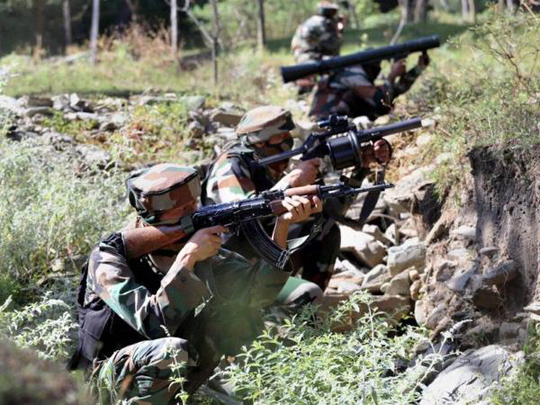
In the din of hysteria created around the military action on LOC, which was in response to the killing of 18 Indian army jawans in Uri, the issue of anguish of people of Kashmir has been undermined. As such India-Pakistan skirmishes (September 2016) are mostly centered on the issue of Kashmir. On one side India’s claim is that Kashmir is the inseparable part of India and no power on the Earth can separate it from India. Pakistan on the other hand raises doubts about the Kashmir’s accession to India, and says that as it is a Muslim majority area and it should be part of Pakistan. The attack on Uri by terrorists killing 18Indian soldiers has rekindled the issue once again. The whole episode actually begins with the killing of Burhan Wani, a Hijbul Mujahideen commandant who was killed in an encounter by Indian military. After his killing there were two types of reactions yet again.
Imbroglio

Indian media presented it as a big achievement in cracking down the militancy. A section of Kashmiri people was shocked and they started coming on streets to protest. The manner of their protests has been that of stone throwing on the police-military forces. In the the painful incidents which followed nearly 80 people have been killed, over 9000 people got injured and many of those injured suffered the pellet injuries leading to the loss of their eyes and penetration of pellets into different parts of their body. Some army-police personnel have also received injuries. The resulting situation led to the imposition of curfew in the state and this curfew had been the longest curfew which was imposed in the state.

In an attempt to restore peace various efforts have been made by the state. Home minister Rajnath Sigh visited the Valley to hold discussions with the state leaders. His and the stand of Government of India has been that they will not hold talks with the separatist leaders. When all party delegation visited the Valley some of the members of the delegation like Sitaram Yechury and D. Raja tried to meet separatist leader S A R Gilani, who refused to meet them.

Curfew was lifted after nearly two months, but the situation remains tense. With the attack by the terrorists in Uri; the whole focus has shifted to the issue of terrorism. As such as for as the disturbance in Kashmir is concerned the Government is alleging that the protestors are mere 5% of the population and they are being instigated by Pakistan. Surely Pakistan has some role in keeping the Kashmir issue alive to bake its own political bread. But the discontent of the section of Kashmir people has been simmering and has reached a peak in last few years. The youth in particular are disgruntled due to the feeling of alienation. The people of Kashmir are double victims. The acts of terror are a regular nuisance to the peace in the valley. No less is the violation of the civic rights of the people from armed forces. The Armed Forces Special Powers act, which is operational in the area, gives impunity to the armed personnel leading the regular harassment of the innocent civilians in the area.

Amnesty reports emanating from Kashmir tell us the extent of such violations. Amnesty International’s report released in Bangalore begins with defining the scale of human rights violations in Kashmir that have been perpetrated by security forces personnel with glaring impunity. The report states that from 1990 to 2011, the Jammu and Kashmir state government reportedly recorded a total of over 43,000 people killed. Of those killed, 21,323 were said to be ‘militants’ 13,226 ‘civilians’ (those not directly involved in the hostilities) killed by armed groups, 5,369 security force personnel killed by armed groups, and 3,642 “civilians” killed by security forces.

The AFSPA, which gives army sweeping powers, leads to extrajudicial executions and other human rights violations. Section seven of the AFSPA makes it mandatory to seek the prior sanction of Central and State authorities in order to prosecute any security force personnel in civilian courts. Under the pretext of protecting national security, the excesses of the security forces go unchallenged. 96% of all complaints brought against the army in Jammu & Kashmir have been dismissed as “false and baseless” or “with other ulterior motives of maligning the image of Armed Forces”.

It is in under these circumstances that every incident in Kashmir acts as a flaring point and the youth in particular come to streets to protest in large number. Their deeper dissatisfaction with the state of prevailing affairs is very painful. In the civilian areas there is a practical army rule, nearly six lakh of army personnel have been deployed there for years. The people of Kashmir do not have the feel of democracy from years and this leads to a deeper dissatisfaction, it is not just a Pakistan inspired problem, while the role of Pakistan in instigating the protests is very much there.

What is the way out? The UPA II had set up the three member interlocutors committee, which in their report wanted the clauses of autonomy of Kashmir Assembly restored, they emphasized on dialogue with the dissident militants and with Pakistan. There has been a constant demand to repeal AFSPA from the region and to reduce the number of armed personnel in the area. The present coalition of PDP and BJP which is ruling the state is very ruthless as far as dealing with dissidence is concerned; their stand of not talking with dissidents has prolonged the restlessness in the area. With Pakistan’s role; the attack on Uri and before that in Pathankot has vitiated the atmosphere further. One remembers that during election campaign the BJP used to assert that with Modi in the seat of power, terrorists dare not attack! That hollow boast stands exposed. The need for peace in the area, the need to give the Kashmiri people as era of calm is needed in the urgent manner. Pakistan needs to be engaged on the matters related to Kashmir. The treaty of accession of 1948 giving autonomy to Kashmir needs to be respected. The report of interlocutors was a major and balanced approach on the issue. It needs to be brought forth and considered seriously for bringing in peace in the region.

Comments

Add new comment

  • Coastaldigest.com reserves the right to delete or block any comments.
  • Coastaldigset.com is not responsible for its readers’ comments.
  • Comments that are abusive, incendiary or irrelevant are strictly prohibited.
  • Please use a genuine email ID and provide your name to avoid reject.
Ram Puniyani
May 2,2020

India has tragically witnessed the phenomenon of lynching becoming dominant during last few years. It was particularly around the issue of Holy Cow-Beef, that lynchings became more prevalent and two communities had to face the brunt of it, Muslims and dalits. The IndiaSpend data showed the rise of the incidents from 2014 and that close to 90% of victims were Muslims or dalits. Some notorious cases of lynchings were the one of Akhlaq, Junaid, Alimuddin Ansari, the beatings of dalits in Una. At another level it is during this period that the noted social worker Swami Agnivesh was also subjected to humiliating beating in the public. The communal color in India by now is so strong that many events, even before the details are known, are looked at from the communal color and false social noises start even before real facts are known.

Nothing can exemplify this more than the tragic lynching of two sadhus and their driver in Gadchinal village, near Palghar, a city nearly 110 Kilomenters from Mumbai. As the news of this tragedy spread the BJP leaders immediately started blaming Muslim minority for the crime. Nalin Kohli in an Interview to a German Channel said so. Not to be left behind Sambit Patra, the BJP spokesperson launched a tirade  against the liberals-seculars for their silence on the issue. As the matter stands the truth comes out that those sadhus were travelling to Surat from Kandivli area of Mumbai. It is a period of lockdown and they did not have the permission so they were avoiding the highway travel and going through interior routes. On this route was a village Gadchinale, an Adivasi dominated village where this tragedy took place.

During the lockdown period due to Corona virus the economic and social deprivation of poor people is extreme. Many rumors are floating there. In this village the rumor doing rounds was that a gang of chid lifters is roaming in different guises. Thats what these Sadhus were taken to be. Since the victims were Hindus and culprits are deliberately presumed to be from the other community. One recalls that to trigger the Mumbai violence in 1992-93 the incidence of murder of two Mathadi workers (HIndus) and burning of Bane family (Hindu) in Jogeshwari area of Mumbai, both these were false, these incidents were used as the pretext for the attack on the minorities.

In this case not only BJP leaders, the RSS itself also  jumped into fray along with Sadhu Samaj. A vicious atmosphere started building up. 

As the incident took place, Palghar case dominated the usual media channels and large sections of social media. The Government of Maharashtra (Shiv Sena+NCP+Congress) stood on the solid ground of truthfulness and arrested nearly 100 culprits, none of them being a Muslim. Interestingly the local body of the village is controlled by BJP and the chief of this body Chitra Chowdhari is a BJP leader. While the Maharashtra Government is standing on the solid ground of the facts of the case, it has also given the warning that those spreading falsehoods will not be spared.

The cruelty of those taking law into their hands is shocking. During the last few years taking law into the hands of the mobs is becoming close to normal. The real reasons are many. One of this being the lack of proper punishment to those who indulge in such dastardly acts. Not only that many of them are in the good books of the ruling establishment and many of them are honored despite their despicable role in such incidents. One recalls that in case of Mohammad Ikhlaq lynching, one of the accused died in the police custoy due to incidentlal disease. Then Union Central Minister Mahesh Sharma landed up to drape his body in tricolor. In another such case of Alimuddin Ansari, when eight of the accused got bail, the Union Minister Jayant Sinha garlanded them. What message it sends down the line?

The other factors contributing to the rise in intensity of violence is the overall social frustration due to life generally becoming more difficult. The rule of BJP has also encouraged intolerance, where people with differing opinions are looked down upon and called anti- Hindu, Anti National etc. Swami Agnivesh who criticised the blind faith, the statements like ‘plastic surgery in ancient India, or divine nature of Barfani Baba in Amarnath was humiliated in public.

The core issue is the dominance of sectarian mindset promoted by the ruling party and its parent organization the RSS. They are waiting to jump at any event which can be given communal color or where the minorities can be demonized. Few news channels, who are playing the role of loud speakers of divisive politics are adding salt to the wounds. The degree of Hate spread in the society has further taken the aid of innumerable social media networks to spread the false hoods down to all the sections of society.

The need for law against lynching needs to be brought in. All those participating in such dastardly violence need to be punished. Before that the whole atmosphere of Hate mongering and feeling that those talking law into their hands can get away with it, needs to be countered strongly. While a prompt police action against such incidents is the need of the hour, those who have made spreading hate as their business need to realize that no country can progress without the feeling of fraternity. Demonizing weaker sections may give them higher TRP, but it is also undermining our path of peace and progress.

Respect for Indian Constitution and rule of law needs to be restored. The fact check mechanisms like AltNews need to be activated much more. And lastly one must applaud the steps taken by the Government of Maharashtra to ensure that justice is done and Hate spreading is  checked right in its tracks.

Comments

Amar Akbar Antony
 - 
Wednesday, 24 Jun 2020

Beautiful article. We need people like you- the need of the hour.

Add new comment

  • Coastaldigest.com reserves the right to delete or block any comments.
  • Coastaldigset.com is not responsible for its readers’ comments.
  • Comments that are abusive, incendiary or irrelevant are strictly prohibited.
  • Please use a genuine email ID and provide your name to avoid reject.
Ram Puniyani
February 10,2020

Noam Chomsky is one of the leading peace workers in the world. In the wake of America’s attack on Vietnam, he brought out his classic formulation, ‘manufacturing consent’. The phrase explains the state manipulating public opinion to have the public approve of it policies—in this case, the attack of the American state on Vietnam, which was then struggling to free itself from French colonial rule.

In India, we are witness to manufactured hate against religious minorities. This hatred serves to enhance polarisation in society, which undermines India’s democracy and Constitution and promotes support for a Hindu nation. Hate is being manufactured through multiple mechanisms. For example, it manifests in violence against religious minorities. Some recent ghastly expressions of this manufactured hate was the massive communal violence witnessed in Mumbai (1992-93), Gujarat (2002), Kandhamal (2008) and Muzaffarnagar (2013). Its other manifestation was in the form of lynching of those accused of having killed a cow or consumed beef. A parallel phenomenon is the brutal flogging, often to death, of Dalits who deal with animal carcasses or leather.

Yet another form of this was seen when Shambhulal Regar, indoctrinated by the propaganda of Hindu nationalists, burned alive Afrazul Khan and shot the video of the heinous act. For his brutality, he was praised by many. Regar was incited into the act by the propaganda around love jihad. Lately, we have the same phenomenon of manufactured hate taking on even more dastardly proportions as youth related to Hindu nationalist organisations have been caught using pistols, while police authorities look on.

Anurag Thakur, a BJP minster in the central government recently incited a crowd in Delhi to complete his chant of what should happen to ‘traitors of the country...” with a “they should be shot”. Just two days later, a youth brought a pistol to the site of a protest at Jamia Millia Islamia university and shouted “take Azaadi!” and fired it. One bullet hit a student of Jamia. This happened on 30 January, the day Nathuram Godse had shot Mahatma Gandhi in 1948. A few days later, another youth fired near the site of protests against the CAA and NRC at Shaheen Bagh. Soon after, he said that in India, “only Hindus will rule”.

What is very obvious is that the shootings by those associated with Hindu nationalist organisations are the culmination of a long campaign of spreading hate against religious minorities in India in general and against Muslims in particular. The present phase is the outcome of a long and sustained hate campaign, the beginning of which lies in nationalism in the name of religion; Muslim nationalism and Hindu nationalism. This sectarian nationalism picked up the communal view of history and the communal historiography which the British introduced in order to pursue their ‘divide and rule’ policy.

In India what became part of “social common sense” was that Muslim kings had destroyed Hindu temples, that Islam was spread by force, and that it is a foreign religion, and so on. Campaigns, such as the one for a temple dedicated to the Hindu god Rama to be built at the site where the Babri masjid once stood, further deepened the idea of a Muslim as a “temple-destroyer”. Aurangzeb, Tipu Sultan and other Muslim kings were tarnished as the ones who spread Islam by force in the subcontinent. The tragic Partition, which was primarily due to British policies, and was well-supported by communal streams also, was entirely attributed to Muslims. The Kashmir conflict, which is the outcome of regional, ethnic and other historical issues, coupled with the American policy of supporting Pakistan’s ambitions of regional hegemony, (which also fostered the birth of Al-Qaeda), was also attributed to the Muslims.

With recurring incidents of communal violence, these falsehoods went on going deeper into the social thinking. Violence itself led to ghettoisation of Muslims and further broke inter-community social bonds. On the one hand, a ghettoised community is cut off from others and on the other hand the victims come to be presented as culprits. The percolation of this hate through word-of-mouth propaganda, media and re-writing of school curricula, had a strong impact on social attitudes towards the minorities.

In the last couple of decades, the process of manufacturing hate has been intensified by the social media platforms which are being cleverly used by the communal forces. Swati Chaturvedi’s book, I Am a Troll: Inside the Secret World of the BJP’s Digital Army, tells us how the BJP used social media to spread hate. Whatapp University became the source of understanding for large sections of society and hate for the ‘Other’, went up by leaps and bounds. To add on to this process, the phenomenon of fake news was shrewdly deployed to intensify divisiveness.

Currently, the Shaheen Bagh movement is a big uniting force for the country; but it is being demonised as a gathering of ‘anti-nationals’. Another BJP leader has said that these protesters will indulge in crimes like rape. This has intensified the prevalent hate.

While there is a general dominance of hate, the likes of Shambhulal Regar and the Jamia shooter do get taken in by the incitement and act out the violence that is constantly hinted at. The deeper issue involved is the prevalence of hate, misconceptions and biases, which have become the part of social thinking.

These misconceptions are undoing the amity between different religious communities which was built during the freedom movement. They are undoing the fraternity which emerged with the process of India as a nation in the making. The processes which brought these communities together broadly drew from Gandhi, Bhagat Singh and Ambedkar. It is these values which need to be rooted again in the society. The communal forces have resorted to false propaganda against the minorities, and that needs to be undone with sincerity.

Combating those foundational misconceptions which create hatred is a massive task which needs to be taken up by the social organisations and political parties which have faith in the Indian Constitution and values of freedom movement. It needs to be done right away as a priority issue in with a focus on cultivating Indian fraternity yet again.

Comments

Add new comment

  • Coastaldigest.com reserves the right to delete or block any comments.
  • Coastaldigset.com is not responsible for its readers’ comments.
  • Comments that are abusive, incendiary or irrelevant are strictly prohibited.
  • Please use a genuine email ID and provide your name to avoid reject.
Ram Puniyani
March 14,2020

In the wake of Citizenship Amendment Act (CAA) UN High Commissioner, Michele Bachelet, has filed an intervention in the Supreme Court petition challenging the constitutionality of the Citizenship Amendment Act, as she is critical of CAA. Responding to her, India’s Foreign Minister S. Jai Shanker strongly rebutted her criticism, saying that the body (UNHCR) has been wrong and is blind to the problem of cross border terrorism. The issue on hand is the possibility of scores of people, mainly Muslims, being declared as stateless. The problem at hand is the massive exercise of going through the responses/documents from over 120 crore of Indian population and screening documents, which as seen in Assam, yield result which are far from truthful or necessary.

The issue of CAA has been extensively debated and despite heavy critique of the same by large number of groups and despite the biggest mass opposition ever to any move in Independent India, the Government is determined on going ahead with an exercise which is reminiscent of the dreaded regimes which are sectarian and heartless to its citizens, which have indulged in extinction of large mass of people on grounds of citizenship, race etc. The Foreign minister’s assertion is that it is a matter internal to India, where India’s sovereignty is all that matters! As far as sovereignty is concerned we should be clear that in current times any sovereign power has to consider the need to uphold the citizenship as per the principle of non-discrimination which is stipulated in Art.26 of the International Covenant on Civil and Political (ICCPR) rights.

Can such policies, which affect large number of people and are likely to affect their citizenship be purely regarded as ‘internal’? With the World turning into a global village, some global norms have been formulated during last few decades. The norms relate to Human rights and migrations have been codified. India is also signatory to many such covenants in including ICCPR, which deals with the norms for dealing with refugees from other countries. One is not talking of Chicago speech of Swami Vivekanand, which said that India’s greatness has been in giving shelter to people from different parts of the World; one is also not talking of the Tattariaya Upanishad’s ‘Atithi Devovhav’ or ‘Vasudhaiva Kutumbkam’ from Mahaupanishad today.

What are being talked about are the values and opinions of organizations which want to ensure to preserve of Human rights of all people Worldwide. In this matter India is calling United Nations body as ‘foreign party’; having no locus standi in the case as it pertains to India’s sovereignty. The truth is that since various countries are signatories to UN covenants, UN bodies have been monitoring the moves of different states and intervening at legal level as Amicus (Friend of the Court) to the courts in different countries and different global bodies. Just to mention some of these, UN and High Commissioner for Human Rights has often submitted amicus briefs in different judicial platforms. Some examples are their intervention in US Supreme Court, European Court of Human Rights, International Criminal Court, and the Inter-American Court of Human Rights. These are meant to help the Courts in areas where UN bodies have expertise.

 Expertise on this has been jointly formulated by various nations. These interventions also remind the nations as to what global norms have been evolved and what are the obligations of individual states to the values which have evolved over a period of time. Arvind Narrain draws our attention to the fact that, “commission has intervened in the European Court of Human Rights in cases involving Spain and Italy to underscore the principle of non-refoulement, which bars compulsory expulsion of illegal migrants… Similarly, the UN has intervened in the International Criminal Court in a case against the Central African Republic to explicate on the international jurisprudence on rape as a war crime.”

From time to time organizations like Amnesty International and Human Rights Watch have been monitoring the status of Human rights of different countries. This puts those countries in uncomfortable situation and is not welcome by those establishments. How should this contradiction between ‘internal matter’, ‘sovereignty’ and the norms for Human rights be resolved? This is a tough question at the time when the freedom indices and democratic ethos are sliding downwards all over the world. In India too has slid down on the scale of these norms.

In India we can look at the intervention of UN body from the angle of equality and non discrimination. Democratic spirit should encourage us to have a rethink on the matters which have been decided by the state. In the face of the greatest mass movement of Shaheen bagh, the state does need to look inwards and give a thought to international morality, the spirit of global family to state the least.

The popular perception is that when Christians were being persecuted in Kandhmal the global Christian community’s voice was not strong enough. Currently in the face of Delhi carnage many a Muslim majority countries have spoken. While Mr. Modi claims that his good relations with Muslim countries are a matter of heartburn to the parties like Congress, he needs to relook at his self gloating. Currently Iran, Malaysia, Indonesia and many Muslim majority countries have spoken against what Modi regime is unleashing in India. Bangladesh, our neighbor, has also seen various protests against the plight of Muslims in India. More than the ‘internal matter’ etc. what needs to be thought out is the moral aspect of the whole issue. We pride ourselves in treading the path of morality. What does that say in present context when while large section of local media is servile to the state, section of global media has strongly brought forward what is happening to minorities in India.   

The hope is that Indian Government wakes up to its International obligations, to the worsening of India’s image in the World due to CAA and the horrific violence witnessed in Delhi.

Comments

Add new comment

  • Coastaldigest.com reserves the right to delete or block any comments.
  • Coastaldigset.com is not responsible for its readers’ comments.
  • Comments that are abusive, incendiary or irrelevant are strictly prohibited.
  • Please use a genuine email ID and provide your name to avoid reject.