



US implanted spy software in Saudi computers: Report

January 16, 2014

US_implanted

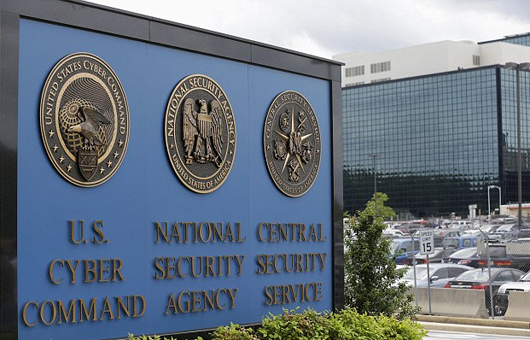
Jeddah, Jan 16: The US National Security Agency (NSA) has implanted software in nearly 100,000 computers around the world allowing it to carry out surveillance on those devices and also provide a digital highway for cyber attacks, the New York Times reported on Tuesday.

Saudi Arabia is among the countries where such surveillance software has been covertly installed, according to The Times which cited NSA documents, computer experts and US officials in its report.

The Times reported that the technology, used by the agency since at least 2008, relies on radio waves that can be transmitted from tiny circuit boards and USB cards inserted covertly into the computers.

The NSA calls the effort an “active defense” and has used the technology to monitor units of the Chinese Army, the Russian military, drug cartels, trade institutions inside the European Union, and sometime US partners against terrorism like Saudi Arabia, India and Pakistan, the Times reported.

Among the most frequent targets of the NSA program, code-named Quantum, has been the Chinese Army.

“NSA’s activities are focused and specifically deployed against — and only against — valid foreign intelligence targets in response to intelligence requirements,” Vanee Vines, an agency spokeswoman, said in a statement to the Times.

“We do not use foreign intelligence capabilities to steal the trade secrets of foreign companies on behalf of — or give intelligence we collect to — US companies to enhance their international competitiveness or increase their bottom line.”

Parts of the program have been disclosed in documents leaked by Edward Snowden, the former NSA systems analyst, the Times reported.

A Dutch newspaper published the map showing where the United States has inserted spy software, sometimes with the help of local authorities. Der Spiegel, a German newsmagazine, published information about the NSA’s hardware products that can secretly transmit and receive signals from computers, according to the Times.

The Times said that it withheld some of those details, at the request of US intelligence officials, when it reported in summer 2012 on American cyber attacks on Iran.

President Barack Obama is scheduled to announce on Friday what recommendations he is accepting from an advisory panel on changing NSA practices. The panel agreed with Silicon Valley executives that some of the techniques developed by the agency to find flaws in computer systems undermine global confidence in a range of American-made information products like laptop computers and cloud services.

Embracing Silicon Valley’s critique of the NSA, the panel has recommended banning, except in extreme cases, the NSA practice of exploiting flaws in common software to aid in American surveillance and cyber attacks.

It also called for an end to government efforts to weaken publicly available encryption systems, and said the government should never develop secret ways into computer systems to exploit them, which sometimes include software implants.

Comments

Add new comment

  • Coastaldigest.com reserves the right to delete or block any comments.
  • Coastaldigset.com is not responsible for its readers’ comments.
  • Comments that are abusive, incendiary or irrelevant are strictly prohibited.
  • Please use a genuine email ID and provide your name to avoid reject.
Agencies
March 23,2020

Riyadh, Mar 23: King Salman on Sunday issued an order imposing a curfew across Saudi Arabia from Monday evening to control the spread of the COVID-19 disease.

A royal court statement carried by the Saudi Press Agency (SPA) said the curfew will start at 7 p.m. until 6 a.m. every day for 21 days from the evening of 28 Rajab 1441 in the Hijri calendar, equivalent to March 23, 2020 in the Gregorian calendar.

King Salman's order followed an announcement by the Health Ministry of 119 new coronavirus cases on Sunday, raising the total number in the Kingdom to 511.

The order enjoins citizens and residents alike to stay in their homes during the curfew hours for their own safety.

The statement said the Ministry of Interior will undertake the necessary measures to implement the curfew, and all civil and military authorities are ordered to cooperate fully.

Exclusions

A subsequent statement issued by the Ministry of Interior and carried by SPA said those excluded from the curfew are workers from the following vital industries and government services:

• Food sector (points of sale) such as catering and supermarkets And poultry and vegetable shops, meat, bakeries, food factories and laboratories;

• Health sector, such as pharmacies and the like, medical clinics (dispensaries), hospitals, laboratories, factories, factories and materials and medical devices;

• Media sector in its various means;

• Transportation sector, such as those transporting goods, parcels, customs clearance, warehouses, warehouses, logistics services, supply chains for the health sector, the food sector, and port operations;

• E-commerce activities such as those working in the electronic procurement applications for the excluded activities and those working in the delivery applications of the excluded activities;

• Accommodation services activities such as hotels and furnished apartments;

• Energy sector such as gas stations and emergency services for the electric company;

• Financial services and insurance sector, such as direct accidents (Najm), urgent health insurance services (approvals), and other insurance services;

• Telecom sector as Internet and communication network operators;

• Water sector, such as the water company emergency services and home drinking water delivery service (graying).

Additional exclusions

The Interior Ministry statement also said movement during the curfew time will be allowed for security, military and health cars, government regulatory services vehicles, and activity vehicles excluded in the vital industries and services mentioned above. 

Delivery services through smart device applications (express delivery services) during the curfew will be allowed for food and drug needs and other essential goods and services that are excluded and delivered to homes. Excluded activities can be known by calling the toll-free number in all regions of the Kingdom 999, except for the Makkah Al-Mukarramah region, which is called at 911.

Muezzins will be allowed to access mosques to lift the call to prayer at the time of the curfew.

Workers in diplomatic missions and international organizations and the like residing in the Diplomatic Quarter will be allowed to move during the curfew period to and from their business headquarters in the neighborhood.

Comments

Add new comment

  • Coastaldigest.com reserves the right to delete or block any comments.
  • Coastaldigset.com is not responsible for its readers’ comments.
  • Comments that are abusive, incendiary or irrelevant are strictly prohibited.
  • Please use a genuine email ID and provide your name to avoid reject.
News Network
May 20,2020

Cairo, May 20: A senior Kuwaiti lawmaker has called for imposing a tax on expatriates’ remittances to shore up the country’s finances.

MP Khalil Al Saleh, the head of the parliament’s Human Resources Committee, has presented a draft law on the proposed tax to the legislature.

“Imposing fees on expatriates’ transfers will have a role in improving the state's revenues and diversify sources of income,” he told Al Rai newspaper.

Migrant workers transfer about 4.2 billion dinars annually from Kuwait, he added, citing figures from Kuwait’s Central Bank.

“This system is in effect in most countries of the world and in more than one Gulf country. Expats there have not objected to it. Allowing this money to exit the country is very dangerous and has a direct effect on economy,” MP Al Saleh said.

“We do not target brotherly expats because imposing symbolic fees on financial transfers will not affect their money, but will have a positive effect on the state’s sources,” he said. “This has become a necessity after the money transferred outside Kuwait has reached 4.2 billion dinars annually without the state [Kuwait] making any benefit from this.”

Foreign workers make up 3.3 million of Kuwait’s 4.6 million population.

Several Kuwaiti public figures have recently pushed for redrawing the demographic imbalance in the country, accusing expatriates of straining health facilities and increasing the Covid-19 threat.

Comments

Add new comment

  • Coastaldigest.com reserves the right to delete or block any comments.
  • Coastaldigset.com is not responsible for its readers’ comments.
  • Comments that are abusive, incendiary or irrelevant are strictly prohibited.
  • Please use a genuine email ID and provide your name to avoid reject.
Agencies
July 19,2020

Occupied Jerusalem, Jul 19: Israeli Prime Minister Benjamin Netanyahu’s corruption trial resumed on Sunday.

Netanyahu is charged with fraud, breach of trust and accepting bribes in a series of scandals in which he is alleged to have received lavish gifts from billionaire friends and exchanged regulatory favors with media moguls for more agreeable coverage of himself and his family.

Netanyahu denies wrongdoing, painting the accusations as a media-orchestrated witchhunt pursued by a biased law enforcement system.

The trial opened in May. Just before appearing in front of the judges, Netanyahu took to a podium inside the courthouse and flanked by his party members bashed the country’s legal institutions in an angry tirade.

Netanyahu was not expected to appear at Sunday’s hearing, which is taking place at an occupied Jerusalem court and is mostly a procedural deliberation.

The trial resumes as Netanyahu faces widespread anger over his government’s handling of the coronavirus crisis.

While the country appeared to have tamped down a first wave of infections, what’s emerged as a hasty and erratic reopening sent infections soaring. Yet even amid the rise in new cases Netanyahu and his emergency government — formed with the goal of dealing with the crisis — appeared to neglect the numbers and moved forward with other policy priorities and its reopening plans.

It has since paused them and even re-impose restrictions, including a weekend only lockdown set to begin later this week.

Netanyahu’s government has been criticized for a baffling, halting response to the new wave, which has seen daily cases rise to nearly 2,000. It has been slammed for its handling of the economic fallout of the crisis.

His trial thus comes at inopportune timing. Netanyahu had hoped to ride on the goodwill he gained from overcoming the first wave of infections going into his corruption trial, but the increasingly souring mood has affected his approval rating and may deny him the public backing he had hoped for. The anger has sparked protests over the past few weeks that have culminated in violent clashes with police.

Comments

Add new comment

  • Coastaldigest.com reserves the right to delete or block any comments.
  • Coastaldigset.com is not responsible for its readers’ comments.
  • Comments that are abusive, incendiary or irrelevant are strictly prohibited.
  • Please use a genuine email ID and provide your name to avoid reject.