US must 'greatly strengthen' its nuclear capability: Trump

December 23, 2016

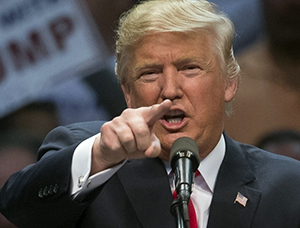
Washington, Dec 22: President-elect Donald Trump said today that America must massively boost its nuclear capability until the "world comes to its senses."donald

"The United States must greatly strengthen and expand its nuclear capability until such time as the world comes to its senses regarding nukes," Trump wrote on Twitter, without explaining what he meant.

His comment marks a jarring departure from President Barack Obama's rhetoric, who in a famous speech in Prague in 2009 called for the elimination of nuclear weapons.

Trump's tweet came the day after he met with a group of Pentagon brass including Vice Admiral James Syring, who heads the Missile Defense Agency.

The conversations centered on cutting costs to various military programs.
America currently has an estimated arsenal of about 7,000 nuclear warheads, second only to Russia, which has a few hundred more.

The Pentagon wants to replace or modernise all three legs of its "triad," a three-pronged nuclear attack force comprising intercontinental ballistic missiles (ICBMs), submarines and bombers.

Experts estimate the cost will hit USD 1 trillion over the next 30 years.

During the presidential campaign debates, Trump was unable to provide specifics when asked what his priority would be for the nuclear triad, saying "the power, the devastation is very important."

"I think we need somebody absolutely that we can trust, who is totally responsible, who really knows what he or she is doing. That is so powerful and so important," he said at the time.

"The biggest problem we have today is nuclear, nuclear proliferation and having some maniac, having some madman go out and get a nuclear weapon. That's in my opinion, that is the single biggest problem that our country faces right now."

Comments

Add new comment

  • Coastaldigest.com reserves the right to delete or block any comments.
  • Coastaldigset.com is not responsible for its readers’ comments.
  • Comments that are abusive, incendiary or irrelevant are strictly prohibited.
  • Please use a genuine email ID and provide your name to avoid reject.
News Network
July 20,2020

Paris, Jul 20: Two coronavirus vaccine candidates have proven safe for humans and produced strong immune reactions among patients involved in separate clinical trials, doctors said on Monday.

The first trial among more than 1,000 adults in Britain found that the vaccine induced "strong antibody and T cell immune responses" against the novel coronavirus.

A separate trial in China involving more than 500 people showed most had developed widespread antibody immune response.

The studies, published in The Lancet medical journal, constitute a major step on the road towards a COVID-19 vaccine that is effective and safe for widespread use.

The authors of the studies said that they encountered few adverse side-effects from the vaccine candidates.

However, they cautioned that more research was needed, particularly among older adults, who are disproportionately at risk of dying of COVID-19.

Co-author Sarah Gilbert from the University of Oxford said the results "hold promise".

"If our vaccine is effective, it is a promising option as these types of vaccine can be manufactured at large scale."

Comments

Add new comment

  • Coastaldigest.com reserves the right to delete or block any comments.
  • Coastaldigset.com is not responsible for its readers’ comments.
  • Comments that are abusive, incendiary or irrelevant are strictly prohibited.
  • Please use a genuine email ID and provide your name to avoid reject.
News Network
January 23,2020

Beijing, Jan 23: China is putting on lockdown a city of 11 million people considered the epicenter of the new coronavirus outbreak that has killed 17 and infected nearly 600 people, as health authorities around the world work to prevent a global pandemic.

The previously unknown coronavirus strain is believed to have emerged late last year from illegally traded wildlife at an animal market in the central Chinese city of Wuhan. Cases have been detected as far away as the United States, stoking fears the virus is already spreading worldwide.

Wuhan's local government said it would shut down all urban transport networks and suspend outgoing flights from the city as of 10 a.m. (0200 GMT) Thursday, state media reported, adding that the government is urging citizens to not leave the city in the absence of special circumstances.

Contrasting with its secrecy over the 2002-03 Severe Acute Respiratory Syndrome (SARS), which killed nearly 800 people, China's communist government has this time given regular updates to try to avoid panic as millions of people travel for the Chinese Lunar New Year holiday.

Chinese authorities have confirmed 571 cases and 17 deaths as of end-Wednesday, state television reported on Thursday. There are eight other known cases around the world - Thailand has confirmed four cases, while the United States, Taiwan, South Korea and Japan have each reported one.

Vice Premier Sun Chunlan said during a visit to Wuhan that authorities needed to be open about the spread of the virus and their efforts to contain it, the official Xinhua news agency reported on Thursday, comments likely to reassure global health experts.

After a meeting at its Geneva headquarters on Wednesday, the World Health Organization (WHO) said it would decide on Thursday whether to declare the outbreak a global health emergency, which would step up the international response.

If it does so, it will be the sixth international public health emergency to be declared in the last decade.

WHO Director-General Tedros Adhanom Ghebreyesus told reporters in Geneva that China's actions so far were "very strong" but called in Beijing to take "more and significant measures to limit or minimise the international spread".

"We stressed to them that by having a strong action not only they will control the outbreak in their country but they will also minimise the chances of this outbreak spreading internationally. So they recognise that," he said.

A senior U.S. State Department official also called on China to "play a bigger role in global health so they taking more and significant measures to limit or minimise the international spread".

"The lack of transparency in the past, especially with SARS ... gives us concern that that may be the case here," the official said, adding however that there were "positive signs that they have taken action in Wuhan".

Fears of a pandemic initially spooked markets but they regained their footing on Wednesday, with investors citing the robust response from authorities as reassuring.

VIRUS SPREADING

The outbreak began in Wuhan, a major transportation hub as well as central China's main industrial and commercial centre, and has now spread to other major population centers including Beijing, Shanghai and Hong Kong.

There is no known cure for the virus. Symptoms include fever, difficulty in breathing and cough, similar to many other respiratory illnesses, and can cause pneumonia.

Chinese authorities are still investigating the origins of the virus, though they confirmed the outbreak began at a market in Wuhan with illegal wildlife transactions and that it can spread from one person to another via respiratory transmission. Among confirmed patients are 15 medical workers, further adding to worries about a possible global pandemic.

Many Chinese were canceling trips, buying face masks, avoiding public places such as cinemas and shopping centers, and even turning to an online plague simulation game as a way to cope.

Airports globally stepped up screening passengers from China and the European Centre for Disease Control and Prevention (ECDC) said in a risk assessment that further global spread of the virus was likely.

Britain joined other countries including Australia in advising citizens against all but essential travel to Wuhan.


Comments

Add new comment

  • Coastaldigest.com reserves the right to delete or block any comments.
  • Coastaldigset.com is not responsible for its readers’ comments.
  • Comments that are abusive, incendiary or irrelevant are strictly prohibited.
  • Please use a genuine email ID and provide your name to avoid reject.
News Network
May 21,2020

Canberra, May 21: Australian Prime Minister Scott Morrison and his Indian counterpart, Narendra Modi, are looking forward to deepening the countries' strategic relationship, with both sides expected to sign a range of pacts from defence to trade in strategic sectors amid heightened tensions with China over Beijing's response to coronavirus pandemic.

During a virtual summit, scheduled to take place on June 4, both leaders are expected to ramp up efforts to diversify Australia's export markets and find trusted suppliers of vital products and components, a local newspaper, The Australian reported on Tuesday.

The new agreements will focus on reliable supply chains in key strategic sectors, including medical goods, technology and critical minerals, amid heightened tensions with China over Beijing's response to coronavirus pandemic.

The leaders will seal a new defence agreement allowing reciprocal access to bases and co-operation on military technology projects, while a new education partnership will be on the table to help overcome Australian university reliance on Chinese students.

The talks in terms of strategic convergence, now have greater significance as COVID-19 exacerbates the strategic contest between the US and China, and forces like-minded countries to seek out reliable partners.

Australian farmers could also benefit, with talks underway on expanding agricultural exports to India, including barley, as China throws up new trade barriers, media reports stated.

The virtual summit follows the cancellation of Morrison's planned state visit to India in January due to the bushfires.

Morrison said last year, ahead of his planned visit, that India was "a natural partner for Australia", referring to the countries' "shared values" -- a point of differentiation with China.

Former Department of Foreign Affairs and Trade secretary Peter Varghese, who wrote a landmark report on the bilateral relationship in 2018, was quoted by the newspaper as saying that India would be even more important to Australia in the post-COVID world. "If one of the lessons from COVID is that countries need to spread their risk, then finding new markets or building up existing markets is a crucial part of that," he added.

Varghese noted that India, a member of the Quadrilateral Security Dialogue along with Australia, Japan and the US, was a vital strategic partner to Australia in helping "constrain China's ambitions to be the predominant power".

"That shared objective between Australia and India of not wanting to see the region dominated by China is a key component of building up our geopolitical relationship," he told The Australian.

The summit also follows recent talks between Australian Foreign Minister Marise Payne and Indian counterpart Subrahmanyam Jaishankar on the pandemic response and Australia's call for an independent inquiry, which was overwhelmingly backed at the World Health Assembly on Tuesday.

Australia wants to support India to develop a domestic critical minerals processing industry, which would provide Western nations with an alternative to sourcing the materials from China.

Meanwhile, India has strong expertise as a manufacturer of drugs and medical equipment, while Australia is a centre of biomedical research, opening the possibility for closer co-operation in the key sector, the media reported further.

Comments

Add new comment

  • Coastaldigest.com reserves the right to delete or block any comments.
  • Coastaldigset.com is not responsible for its readers’ comments.
  • Comments that are abusive, incendiary or irrelevant are strictly prohibited.
  • Please use a genuine email ID and provide your name to avoid reject.